The Valentine 1 V1 Gen2 is a major step for the brand, with long-range performance that rivals the Uniden R7, especially on Ka band. Vortex Radar's testing confirmed the detection gains, though early units ran into reliability trouble including display problems and hardware failures. The interface is updated with new volume controls and improved LED indicators, and integrated Bluetooth connects to third-party apps. Range and filtering options are excellent, but the missing GPS and the early quality control record will give cautious buyers pause.
Full review
Design Evolution and Interface
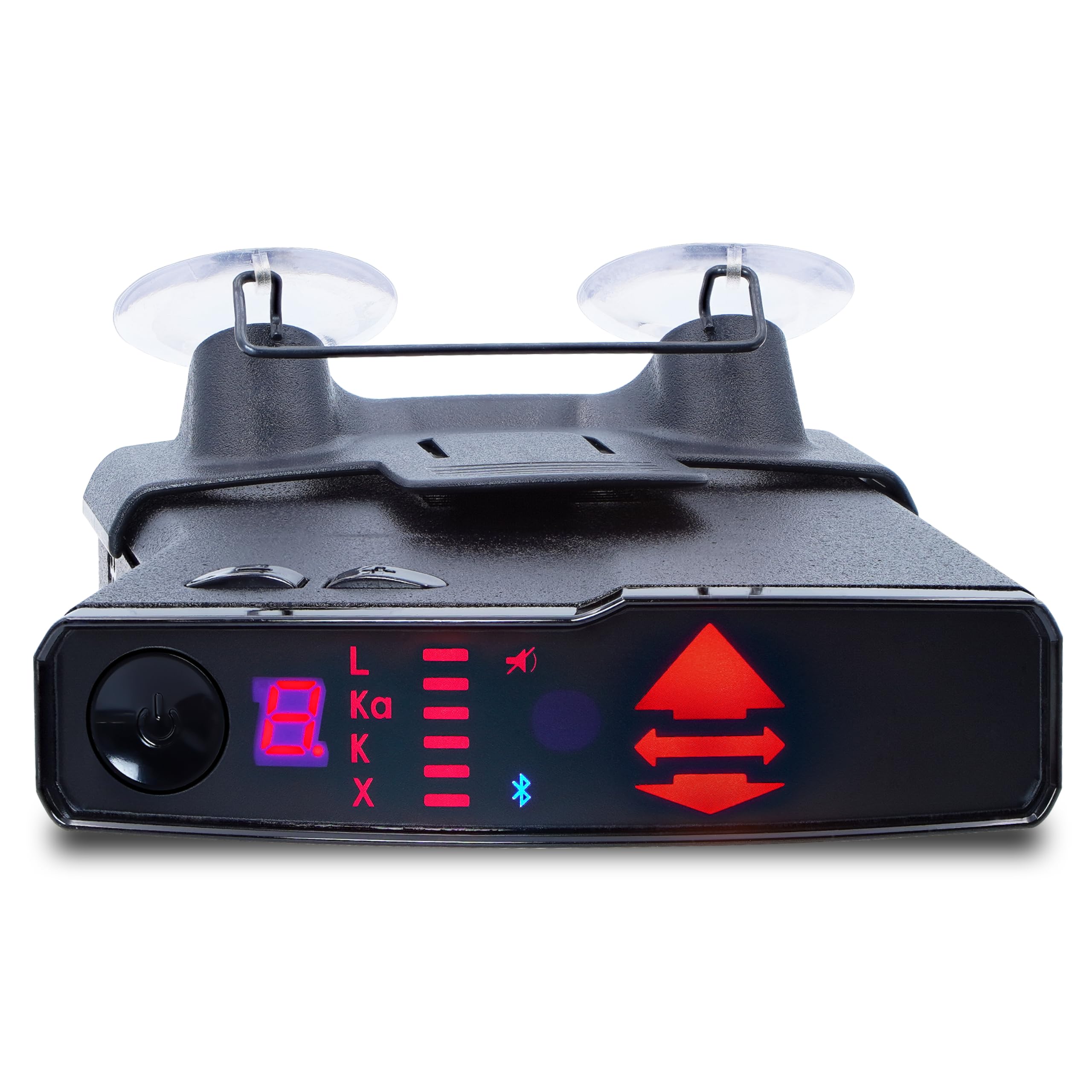
The Valentine 1 Gen2 represents a significant visual overhaul from its predecessor, featuring a sleeker profile that's thinner and more refined than the original V1. Vortex Radar's review notes that the new design incorporates customer feedback from the past three decades, resulting in a more ergonomic form factor. The most notable interface changes involve the replacement of dual volume control knobs with a single power/mute button and top-mounted volume controls. This redesign was intended to address confusion over the original muting volume lever's function and to improve usability for motorcycle riders wearing gloves. However, the change has divided users, with some preferring the original knob-based system for quick volume adjustments during rides.
The LED indicator system has been upgraded with a special diffusing film that creates smoother light emission, as noted by Vortex Radar. The band indicators now use larger red LED letters instead of white text next to small red dots, making them easier to read at a glance, particularly at night. While some users have expressed disappointment that the unit doesn't feature a modern multi-color OLED display, Valentine Research explains this choice was made for reliability reasons, as LEDs are easier to see in direct sunlight and don't suffer from the same burn-in issues as OLED technology after months or years of use.
Long Range Detection Performance
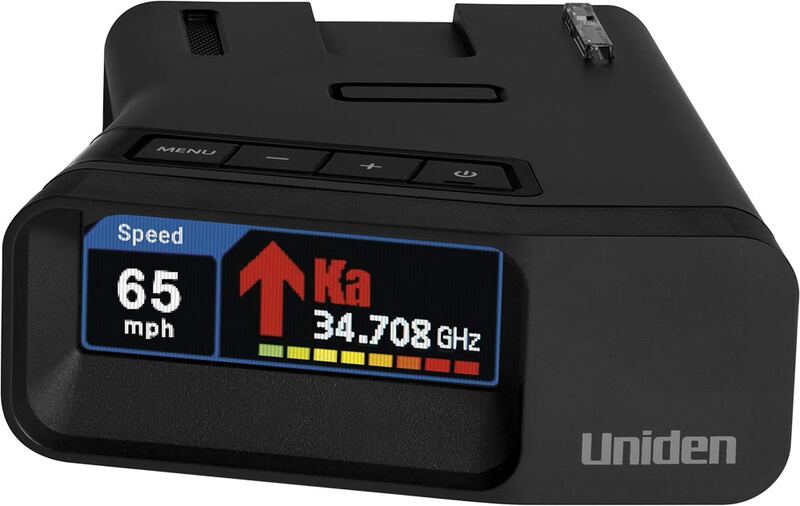
The V1 Gen2's long-range performance has been widely praised, with Vortex Radar's testing showing it can compete directly with the Uniden R7, considered the king of long-distance range. In their comparative tests, the Gen2 achieved impressive results across different frequencies. On 33.8 GHz, it beat out nearly every other detector, only being surpassed by the R7. At 34.7 GHz, it managed to edge out the R7, and on 35.5 GHz, it consistently outperformed all other top options. These tests were conducted using the red barn test course with a maximum detection range of about half a mile, with minimal traffic interference. The results demonstrate that the Gen2 offers exceptional sensitivity on Ka band, particularly at the higher frequencies where detection becomes more challenging.
K band performance shows more complexity due to various filtering options. When K Verifier filters are enabled (which is the default setting), the R7 remains significantly more sensitive at maximum sensitivity. However, Vortex Radar's testing found that the V1 Gen2 provides roughly the same range as the R7 set to 40% sensitivity. The Gen2's K band sensitivity cannot be cranked up to match the R7's levels, which may be a limitation for users seeking maximum sensitivity. Despite this, the Gen2's performance on K band with filters enabled demonstrates its capability to handle the challenging conditions while maintaining reasonable false alert filtering.
False Alert Filtering Capabilities
The V1 Gen2 introduces significant improvements in false alert filtering through its Logic modes (A, L, and Advanced Logic). Vortex Radar's testing shows that the Gen2's filtering system is highly effective, particularly in reducing false alerts from non-police radar sources. The All Bogies mode (A mode) provides basic filtering, while Logic mode (L mode) and Advanced Logic mode (L mode) offer more sophisticated filtering algorithms. The system's ability to distinguish between legitimate radar threats and false positives has been a major selling point for users who have previously struggled with over-alerting units. However, some users have reported issues with excessive false alerts, particularly on Ka band, suggesting that the filtering system may need further refinement for certain environments.
The Gen2's Advanced Logic mode has been particularly praised for its ability to maintain high detection sensitivity while minimizing false alerts. According to Vortex Radar, this mode provides a good balance between sensitivity and filtering, making it suitable for most driving conditions. The system's ability to track multiple signals and provide directional information helps users better understand the threat landscape. However, some users have noted that the filtering effectiveness can vary depending on the specific environment and the presence of other electronic devices in the vehicle.
Reliability and Quality Concerns
Despite its impressive performance, the V1 Gen2 has faced significant reliability issues, documented at length by Vortex Radar. Reddit user sccues reported having to send the unit back to Valentine for repair twice, with the first repair being ineffective. The unit exhibited erratic behavior, flashing forward and rear arrows repeatedly with high bogey counts, even when sitting idle in the driveway. This type of hardware malfunction has been a recurring concern among early adopters, with some users experiencing power-related failures and display issues. Vortex Radar's review notes that many early units have been plagued with poor reliability and various hardware failures, with even repaired detectors continuing to fail.
Additional quality issues have been reported, including power off failures, display bleed, and display covers peeling off. The mute button has been noted to stick in some units, and signal ghosting has occurred in certain installations. These problems have led some users to question whether the Gen2 is more reliable than its predecessor, with some users expressing disappointment that the Gen2 didn't improve upon the Gen1's proven reliability. The manufacturing differences between units have also been noted, with some users experiencing inconsistent performance across different devices.
Bluetooth Integration and Third-Party Support
One of the most significant improvements in the V1 Gen2 is its integrated Bluetooth connectivity, which enables support for third-party smartphone applications. Vortex Radar's review highlights that this feature allows for enhanced functionality through apps like V1Driver and JBV1, which provide additional features and customization options. The integration with smartphone apps has been described as a game-changer, offering users more control over their radar detection experience. The Valentine APP provides a Bluetooth connection to phones, enabling features such as comprehensive demo programs for verification and easier setup procedures.
The Bluetooth integration allows for seamless pairing with various devices, including Garmin XT, Android phones, and Cardo Packtalk Edge systems. Users have reported that the pairing process is straightforward and that the system works well with existing communication setups. The ability to integrate with popular GPS and communication systems makes the V1 Gen2 a versatile option for users who want to enhance their existing technology ecosystem. However, some users have noted that the lack of computer-based updates (unlike Escort units) can be limiting when troubleshooting issues.
Comparison with Competitors
When compared to competing radar detectors like the Uniden R7, the V1 Gen2 holds its own in terms of long-range detection, particularly on Ka band. Vortex Radar's testing shows that the Gen2 can match or exceed the R7's performance at 34.7 and 35.5 GHz, while the R7 maintains an edge at maximum sensitivity on K band. The Gen2's performance is particularly notable because it's one of the first windshield mount detectors to rival the R7's range capabilities. However, the R7's ability to adjust sensitivity levels more dramatically gives it an advantage in certain applications where maximum sensitivity is required.
Compared to the Escort Max 360c, V1 Gen2's performance is competitive, though the Max 360c offers different advantages such as its own unique filtering algorithms and potentially better integration with certain vehicle systems. The Radenso Pro M, while offering good performance, was noted to be less sensitive than the V1 Gen2 when tested with Ka filters disabled, though it performed similarly with filters enabled. The V1 Gen2's advantage lies in its combination of long-range detection, improved filtering, and the added Bluetooth functionality that other competitors lack.
Best for max range despite early hardware issues
The V1 Gen2 is best suited for users who prioritize long-range detection capabilities and are willing to accept some potential reliability concerns. It's particularly appealing to riders who frequently encounter speed traps and want maximum sensitivity on Ka band frequencies. Users who value the integration of smartphone apps and Bluetooth connectivity will find the Gen2's features particularly valuable. The unit is ideal for those who want a high-performance radar detector with advanced filtering capabilities and don't mind the potential for hardware issues that have been reported by some early adopters.
However, the V1 Gen2 may not be the best choice for users who prioritize reliability above all else. Those who have had positive experiences with the V1 Gen1 and are looking for a more dependable unit might want to consider sticking with the Gen1 or exploring other options with better track records for long-term reliability. Users who frequently encounter false alerts from other electronic devices in their vehicles might find the filtering system helpful, but those who experience persistent issues with Ka band false alerts may want to consider alternatives.
Value and Considerations
At $499, the V1 Gen2 represents a premium price point that reflects its advanced features and performance capabilities. Vortex Radar's review notes that while the unit offers significant improvements over previous models, the reliability issues and hardware failures have been a concern for many users. The upgrade cost from Gen1 to Gen2 is substantial, and the value proposition depends heavily on whether users prioritize the performance improvements over the potential reliability concerns. The unit's ability to integrate with third-party apps and its Bluetooth connectivity add value for users who want enhanced functionality.
The repair and support experience has been mixed according to user reports. While some users have had positive experiences with the repair process, others have reported that repairs are ineffective or that the units are returned in the same condition as when they were sent in. This inconsistency in repair quality has led some users to lose confidence in the product. The lack of computer-based updates also limits troubleshooting options, which may be a drawback for users who want to maintain their units effectively. For users who have had positive experiences with the Gen2, the performance improvements and features justify the cost, but those who have experienced reliability issues may find the price not worth the risk.
Strengths
- +Significantly improved long-range detection, particularly on Ka band where it outperforms the Uniden R7
- +New LED design with larger red LED letters for easier nighttime band identification
- +Integrated Bluetooth with support for third-party apps like V1Driver and JBV1
- +Improved false alert filtering with All Bogies mode (A mode), Logic mode (l mode), and Advanced Logic mode (L mode)
Watch-outs
- −Early units suffered from reliability issues including power off failures, display bleed, and mute button sticking
- −No GPS functionality
- −Lack of multi-color OLED display despite sunlight visibility concerns with LED design
How it compares
The Valentine 1 V1 Gen2 matches or exceeds the Uniden R7 in Ka band detection range, but lacks the GPS functionality and built-in Auto Mute Memory that the R7 provides. While it offers improved false alert filtering and Bluetooth support, the R7's dual antenna system and more comprehensive feature set make it a better choice for drivers wanting directional awareness and smart location learning.
Rating sources
Our 3.5 score is the average of these published ratings. Ratings marked * were derived from the reviewer’s written analysis or video transcript — the publisher didn’t print an explicit numeric score, so we inferred one from their own words. Click through to verify. More about methodology.