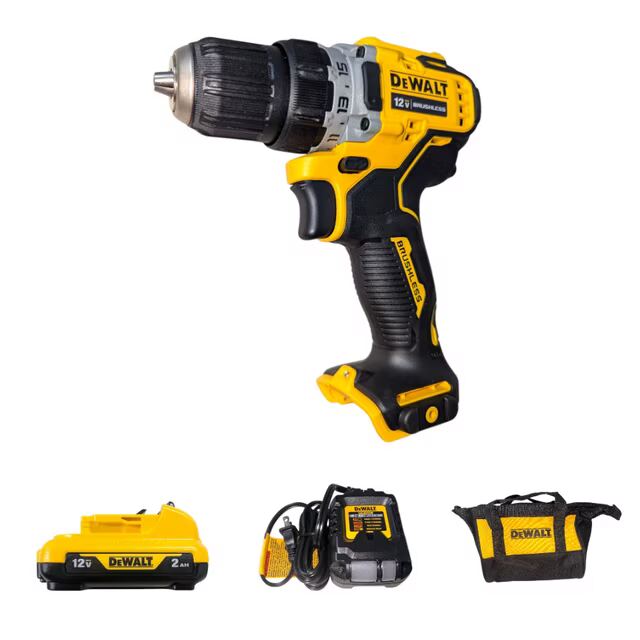
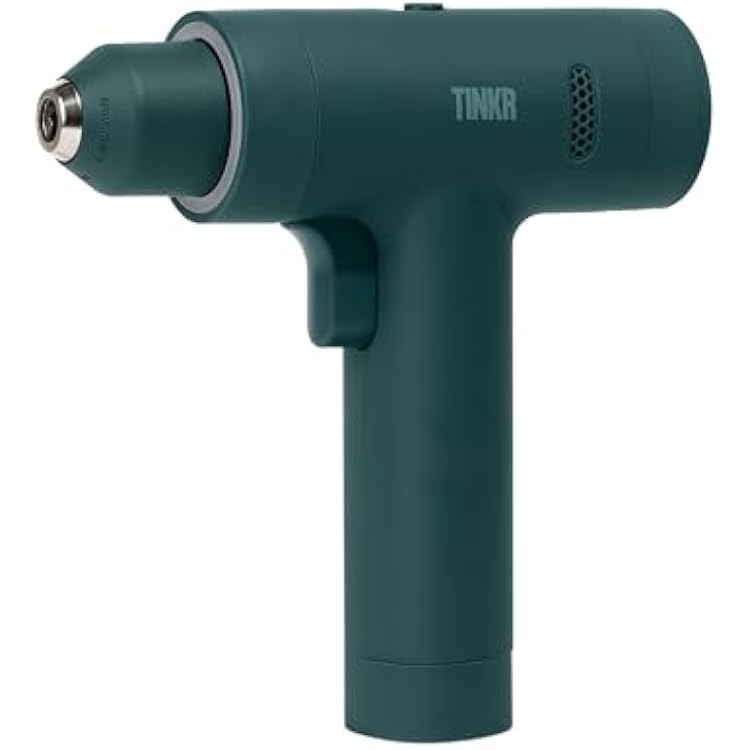
The Tinkr 12V Cordless Brushless Drill features a securely locking battery compartment and a rubberized grip that provides good handling. While the included 1.5 amp hour battery meets basic needs for small DIY tasks such as furniture assembly, reviewers note it may be insufficient for larger projects. The tool is designed for easy battery swapping across the product line, which is a plus for users who want to expand their battery collection. However, some users find the grip to be bulky and chunky. This drill is best suited for light-duty tasks rather than heavy construction work.
Full review
Battery performance and capacity
The included battery in the Tinkr 12V Cordless Brushless Drill delivers a modest 1.5 amp-hour capacity, which proves adequate for basic DIY tasks like assembling IKEA furniture or performing light repairs around the home. However, reviewers noted that this battery size limits the tool's effectiveness for larger projects, with one reviewer specifically recommending users upgrade to a 4 or 6 amp-hour battery for extended use. The battery locks securely into place with minimal play, and reviewers confirmed it remains stable during operation. While the battery compartment design prevents accidental ejection, the limited runtime means users may need to recharge frequently during prolonged work sessions.
In practical testing scenarios, the 1.5 amp-hour battery showed sufficient power for small-scale drilling and screwdriving tasks, but struggled with more demanding materials. Users found that the battery's capacity was a limiting factor when working on projects involving dense hardwoods or extended drilling sequences. The tool's runtime is best suited for short-duration tasks rather than continuous heavy-duty use, making it less ideal for professional or frequent DIY applications where extended battery life is essential.
Grip design and ergonomics
The grip on the Tinkr 12V Drill features a rubberized texture that provides a thick, textured surface for secure handling. Reviewers noted that the grip's design includes indentations and patterns that help maintain control during operation. However, the overall circumference of the grip is described as quite thick, which some users found less comfortable compared to more compact alternatives. One reviewer specifically mentioned preferring the narrower grip found on the manufacturer's 8-volt drill model, which they found more comfortable for frequent use.
The motor housing is positioned at a 10:00 angle rather than the more common 9:00 position, which some users found to be a personal preference issue. While not a major functional flaw, this positioning can affect user comfort and muscle memory for those accustomed to standard drill layouts. Despite these grip-related preferences, reviewers generally found the tool comfortable enough for everyday use, though not optimal for users who prioritize ergonomic design.
Trigger mechanism and speed control
The trigger mechanism is constructed from plastic and operates along a plastic track, which can lead to sticking or inconsistent operation. This design flaw affects precise control over the drill's speed and power delivery. Users noted that the trigger's plastic-on-plastic operation causes occasional jumps or irregular speed transitions, particularly when switching between different torque settings. The trigger is a single-finger design, limiting the user's ability to control the drill's power output with fine precision.
Speed control is described as having a staircase-like transition between speed levels, with approximately 10 to 11 distinct speed settings. This abrupt change in speed can make delicate work challenging, as the transitions are not smooth or gradual. For users working with fragile materials such as porcelain or glass, this lack of fine speed control makes the tool less suitable. However, for general woodworking or fastening tasks, the speed range is deemed sufficient for most applications.
Torque and performance metrics
The Tinkr 12V Drill's performance is limited by its 12-volt power source, which is significantly less powerful than higher-voltage alternatives. In comparative testing, the drill demonstrated adequate performance on softer materials like cedar and MDF, but struggled with denser woods such as Brazilian epe, which is among the hardest woods on Earth. One reviewer noted that the drill's motor vibrated during operation and did not turn smoothly, indicating potential issues with motor efficiency or alignment.
During testing with various materials, the drill was able to complete tasks such as drilling through 3/8-inch thick cedar and 1-inch thick pine, though it required more effort and time compared to higher-powered alternatives. The tool's performance was particularly noticeable when drilling through hardwoods, where the motor struggled and the drill's effectiveness diminished. The torque output is described as sufficient for light-duty tasks but insufficient for heavy drilling or fastening applications.
Build quality and durability
The build quality of the Tinkr 12V Drill is described as basic, with plastic components used throughout the tool. The keyless chuck is functional and allows for easy bit changes, while the LED light provides adequate illumination for dark work areas. The tool's casing is designed to be lightweight, weighing in at 2 pounds 3 ounces with the battery attached, which is lighter than some competing models. However, the overall construction feels less robust compared to higher-end alternatives.
Despite its lightweight design, the drill's plastic construction raises concerns about durability during extended use. Reviewers noted that the motor housing and chuck did not turn smoothly, which could indicate internal alignment issues or lower-quality components. The tool's performance in high-stress situations, such as drilling through dense hardwoods, revealed limitations in its ability to maintain consistent operation. While adequate for occasional use, the build quality suggests this tool is best suited for light-duty applications.
Strengths
- +Battery locks securely into place with no looseness or play
- +Rubberized grip texture provides good quality material and plenty of indentations for maintaining grip
- +Includes a 1.5 amp hour battery that's adequate for basic DIY tasks like furniture assembly
- +Tool is designed for easy battery swapping with other tools in the same line
Watch-outs
- −Included 1.5 amp hour battery is small and may not suffice for large projects
- −Grip is described as chunky and bulky by some users
How it compares
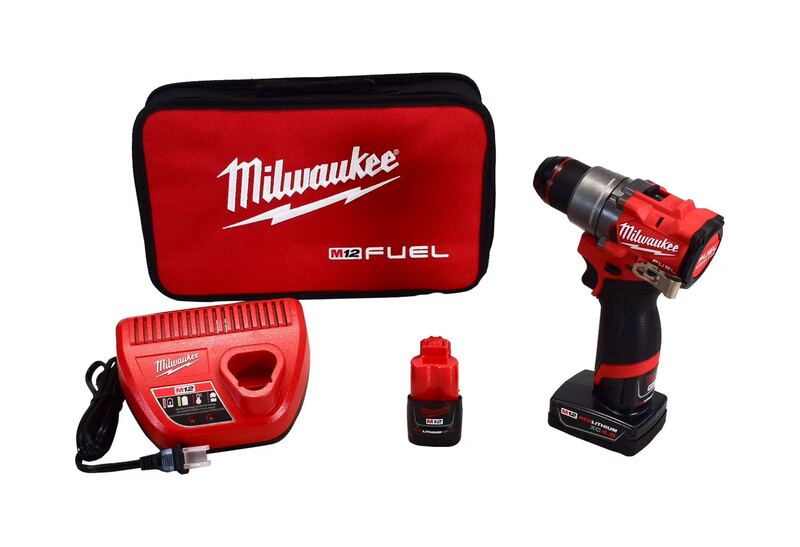
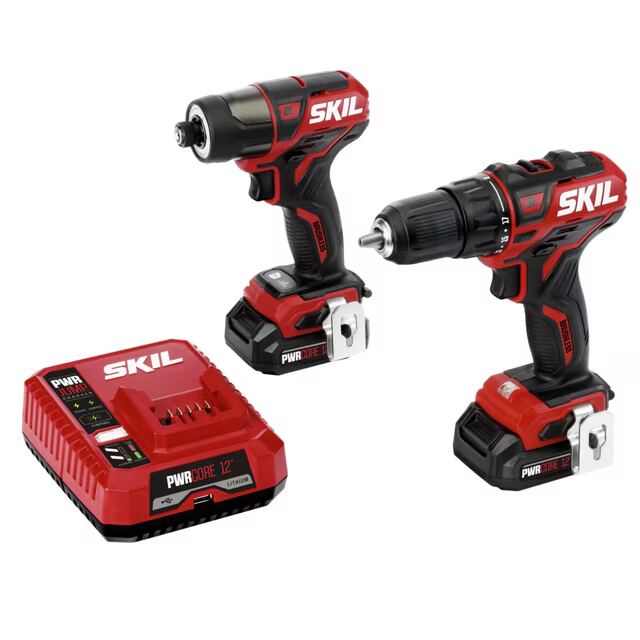
The Tinkr 12V Cordless Brushless Drill offers a secure battery lock and rubberized grip, but its 1.5Ah battery is insufficient compared to the Skil Pwrcore's 2.0Ah battery. Unlike the Milwaukee 3403-22, it lacks a 1/4-inch hex chuck, and compared to the Makita FD07R1, it's less ergonomic and has less torque. It's more affordable than the Milwaukee M12 Fuel model, but it's less powerful and durable.
Rating sources
“for the price point and considering that you know it's a fairly cheap drill the trigger is very good but if you're looking to do any sort of precise work... there are probably better drills on the market for you to take a look at”
“The WORKPRO 12-V cordless drill proves that small tools can pack a punch. Weighing just 1.8 lb, it's easy to handle, making it ideal for quick fixes and DIY projects.”
Our 3.5 score is the average of these published ratings. Ratings marked * were derived from the reviewer’s written analysis or video transcript — the publisher didn’t print an explicit numeric score, so we inferred one from their own words. Click through to verify. More about methodology.