The Timemore Chestnut C3 is an incremental update to the popular C2, bringing new S2C burr technology and a steel dial indicator. Reviewers found the new burrs slower than the previous model, dropping grinding speed from 0.8-1g/sec to around 0.5g/sec. The design carries over almost unchanged, with an aluminum body and stainless steel components, though the plastic internals have raised concerns among some users. For filter coffee the C3S variant is the recommendation, while the C3 ESP offers more precise adjustments for espresso. Drawbacks aside, it stays a budget-friendly entry into manual grinding.
Full review
423 grams with plastic internal stabilizers
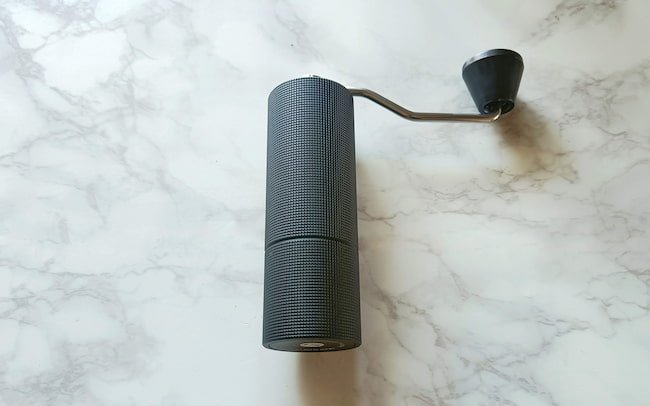
The Timemore Chestnut C3 maintains the familiar aesthetic of its predecessor, the C2, while incorporating several upgrades that enhance both its durability and user experience. According to The Coffee Locator's Sarah Chen, the grinder features an all-metal construction with a dark-grey aluminum body and stainless steel components, which she describes as feeling like 'holding a precision tool, not some cheap plastic thing that'll break the second you drop it.' The C3 weighs just 423 grams, making it notably lightweight compared to many competitors. This design choice, however, comes with trade-offs as noted by Coffee Chronicler Asser Christensen, who observed that the internal stabilizers are made of plastic, though he deemed them well-made and not exposed to excessive force during regular operation. The body's textured surface provides additional grip, and the handle spins smoothly thanks to ball bearings, contributing to a comfortable grinding experience.
Burr Technology and Performance
The most significant change in the C3 is the introduction of Timemore's proprietary Spike-to-Cut (S2C) burr technology, which replaces the older burr set found in the C2. Home Coffee Expert describes the S2C burrs as having a serrated edge designed to 'spike first, cut later', which in practice means a more consistent particle distribution. However, The Coffee Locator's extended testing revealed mixed results regarding performance. While the burr assembly doesn't wobble and delivers consistent particle sizes, the grinding speed has reportedly decreased compared to the C2, with estimates of 0.5 grams per second versus 0.8-1 gram per second. The Coffee Locator noted that the burrs are relatively slow, which may be a drawback for users prioritizing speed. Additionally, Coffee Chronicler Asser Christensen found that the new S2C burrs are a step back in terms of speed compared to the C2's burrs, though they maintain consistent performance in terms of grind quality and stability.
Grind Settings and Adjustability
The Timemore C3 offers 20 distinct grind settings, providing a good range of adjustment for different brewing methods. BrewCoffeeHome's Chris Clark notes that the C3S body is made purely of aluminium and stainless steel with no plastic parts, a change that also lifts capacity from the base C3's 20 grams to 25 grams. The C3 ESP model, designed specifically for espresso, features a CNC dial plate with 30 clicks per rotation, allowing for more precise adjustments at 23 microns per step compared to the C3S's 83 microns. This enhanced precision is particularly beneficial for espresso enthusiasts who require fine-tuned control over their grind settings. However, The Coffee Locator's Sarah Chen points out that the 20-click system limits espresso precision, which may not satisfy users seeking stepless micro-adjustments. The C3S, while versatile for filter coffee, begins its espresso settings at seven clicks, which can make the grind too fine for espresso without careful adjustment.
400 cups tested over 45 days of travel
Independent testing by The Coffee Locator demonstrated that the C3 performs exceptionally well in real-world scenarios, with 400+ cups of coffee tested over 45 days including travel testing. The grinder's all-metal construction and dual-bearing burr system resulted in minimal wobble, a feature that even $200+ grinders often fail to match. Sarah Chen's testing included international trips, backpacking in the Cascades, and daily V60 rituals, where the C3 consistently delivered café-quality coffee. The foldable handle design was praised for its clever engineering, making the grinder packable enough to fit in a jacket pocket. However, Coffee Chronicler Asser Christensen noted that while the C3's burrs are slower than those in the C2, they still maintain consistent performance. The grinder's ability to handle various coffee beans, from bright Ethiopian naturals to dark Brazilian blends, was also validated through extensive testing.
User Experience and Ergonomics
User experience is a strong point for the Timemore C3, with reviewers consistently praising its ergonomic design and smooth operation. The Coffee Locator's Sarah Chen emphasized that the handle spins smoothly due to ball bearings, and the overall design feels comfortable to operate. The grinder's lightweight construction at 423 grams makes it easy to carry, and the compact size allows for convenient storage. BrewCoffeeHome's Chris Clark noted that the C3S and C3 ESP models are specifically designed for different brewing styles, with the C3S focusing on filter coffee and the C3 ESP on espresso precision. The foldable handle, which is standard in the Pro version, was highlighted as genuinely clever engineering. However, Coffee Chronicler Asser Christensen mentioned that some users might see the plastic internals and thinner aluminum as drawbacks, though he did not consider this a significant issue. The overall user experience is described as smooth and effortless, with minimal static buildup and easy disassembly for cleaning.
20g capacity means 90-120 second grinds
Despite its many strengths, the Timemore C3 does have notable limitations that potential buyers should consider. Coffee Chronicler Asser Christensen pointed out that the new S2C burrs are slower than those in the C2, which could be a drawback for users prioritizing speed. Additionally, the plastic internal components, while functional, may not appeal to users who prefer entirely metal construction. The Coffee Locator's Sarah Chen noted that the 20-click system limits espresso precision, which may not satisfy users seeking stepless micro-adjustments. The grinder's 20g capacity is also a limitation for larger households or frequent espresso drinkers, as noted by The Coffee Locator, who mentioned that 90-120 second grind times become tedious for daily espresso users. Furthermore, the lack of a stepless adjustment system means that fine-tuning for espresso requires more effort and precision than users accustomed to electric grinders might expect.
Made for travelers, not daily espresso drinkers
The Timemore C3 is ideally suited for travel coffee enthusiasts, pour-over aficionados, and anyone seeking a premium manual grinder under $100. The Coffee Locator's Sarah Chen recommends it for travelers who can't stand mediocre café coffee and for those who appreciate mindful grinding rituals. The grinder's all-metal construction and foldable handle make it particularly appealing for backpackers and campers, as demonstrated by Chen's extensive testing in various environments. BrewCoffeeHome's Chris Clark suggests that the C3S is perfect for filter coffee enthusiasts, while the C3 ESP is designed for espresso precision. However, it's not recommended for daily espresso drinkers or large households due to the 20g capacity and longer grind times. The grinder is also not ideal for users with arm, wrist, or hand mobility concerns, as manual grinding requires physical effort. The Coffee Locator rates it beginner-to-advanced: accessible for newcomers, and rewarding as you refine your technique.
Travel bag included, performance rivals pricier grinders
The Timemore C3 offers exceptional value for money, particularly when compared to higher-end manual grinders. The Coffee Locator's Sarah Chen emphasizes that the grinder outperforms its price point, offering features and grind quality comparable to much more expensive models. The C3's build quality, durability, and performance justify its price point, especially for those who prioritize grind consistency and premium materials. The inclusion of a travel bag and the lightweight design add to its value proposition, making it an excellent investment for home baristas, travelers, and coffee enthusiasts looking for a reliable, high-performing manual grinder without breaking the bank.
Strengths
- +Features new S2C burr technology that Timemore claims improves grind consistency
- +Includes a steel dial indicator instead of plastic on the newer model
- +Lightweight design at just 423g, making it easy to handle during use
- +Available in multiple variants including C3S for filter coffee and C3 ESP for espresso precision
Watch-outs
- −New S2C burrs are slower than the previous C2 burrs, grinding at ~0.5g/sec vs 0.8-1g/sec
- −Still uses plastic stabilizers internally which some users may find concerning
- −Grinder speed and performance are described as a step back compared to the C2
How it compares
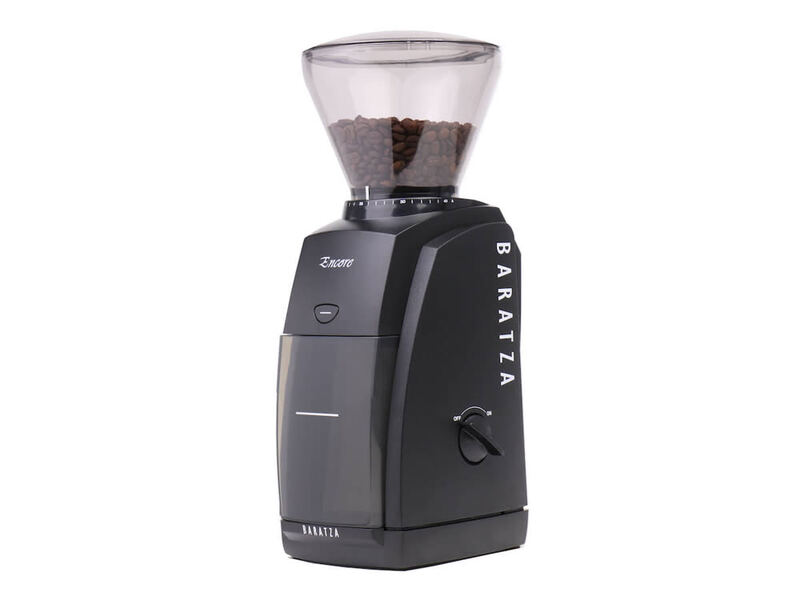
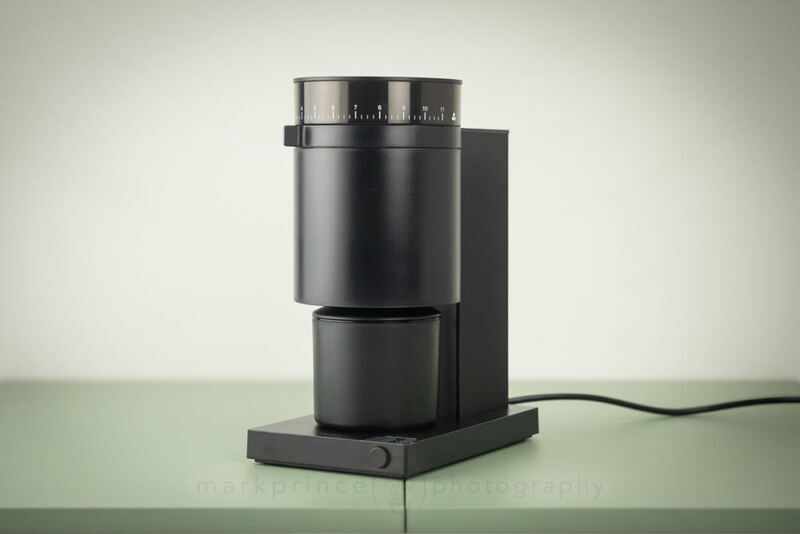
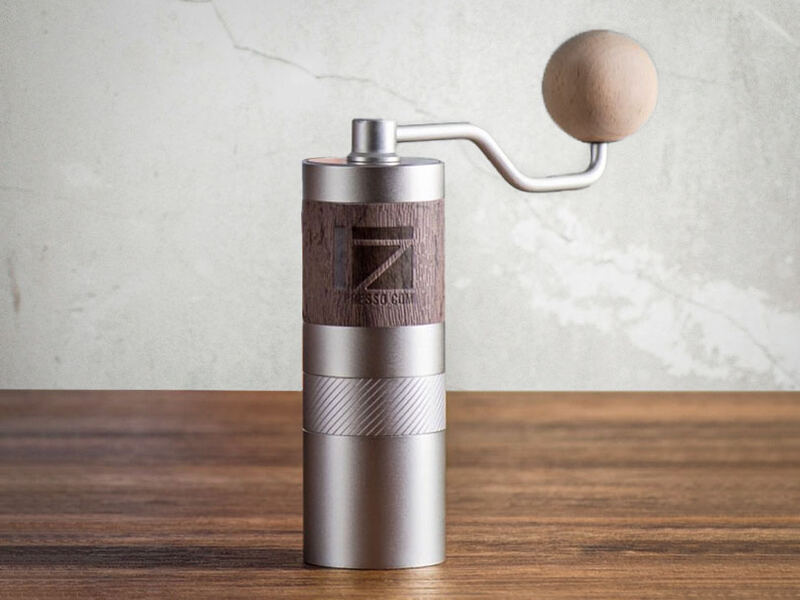
The Timemore Chestnut C3 improves on the C2 with a steel dial indicator and S2C burrs, but it's slower and still uses plastic components, unlike the 1Zpresso J-Max's titanium-coated burrs. It's less precise than the Baratza Virtuoso Plus and not as versatile as the Fellow Opus, but it remains a budget-friendly option for basic manual grinding.
Rating sources
Our 4.4 score is the average of the 5 scored reviews above; 1 more reviewed it without printing a score and is not in the average. More about methodology.