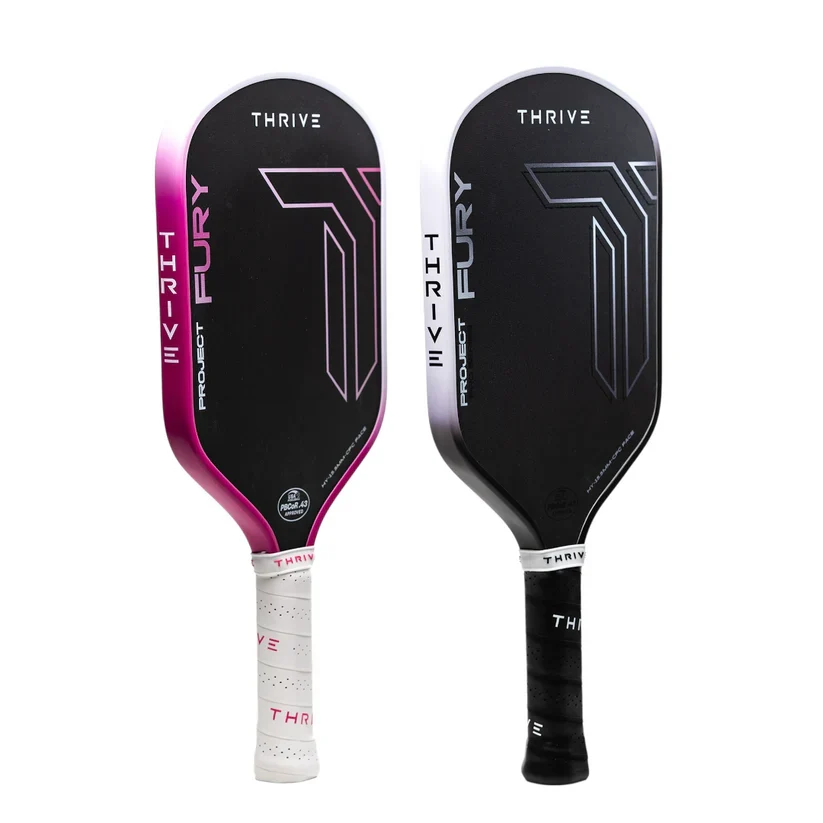
The Thrive Project Fury Hybrid delivers a more aggressive, poppy feel thanks to its carbon fiber/fiberglass layup, making it ideal for net play and explosive shots. Reviewers noted it's sharper and more dynamic than the JOOLA Pro IV, though this comes at the cost of reduced control for soft shots. The hybrid shape offers extended sweet spot and good balance, but some users reported early core durability concerns. It's a solid choice for players seeking power and speed, but those prioritizing finesse may want to consider alternatives.
Full review
Hybrid shape with fiberglass pop
The Thrive Project Fury Hybrid represents a distinctive approach to paddle design, combining a hybrid shape with a carbon-fiber/fiberglass/carbon fiber layup that delivers a notably stiffer and more aggressive feel compared to all-carbon alternatives like the JOOLA Pro IV. According to Pickleball Studio's Chris Olson, the fiberglass layer makes the Fury 'stiffer, poppier, and more aggressive than the Pro IV,' which manifests most prominently at the net where 'flicks feel quick, hands battles feel explosive.' This design choice is echoed by Pickleheads' Taylor Gervais, who described the paddle as 'probably the poppiest paddle I've ever played with,' noting that 'the ball flies off this paddle face faster than any other, with zero dwell time.' The result is a paddle that excels in attacking scenarios and counters, though it comes with tradeoffs in control and soft touch execution.
Swing weight and handling characteristics
Thrive's innovation in offering selectable swing weights between 111 and 113 sets the Fury apart from most competitors, according to Pickleball Studio. The company's approach allows players who want to use multiple paddles to maintain consistency in their swing weight, which is a significant advantage for customization. Matt Khoury from Matt's Pickleball Blog confirmed the paddle's swing weight of 111.8, which he noted is 'well below the 114.6 average, making it quicker through the air, easier to reset, and more forgiving for players who want to add weighted tape without overshooting their swing limit.' The low swing weight contributes to a fast, maneuverable feel that's particularly effective in hand battles and net play, though it also makes soft shots and resets more challenging, as observed by both Pickleball Studio and Pickleheads.
Performance metrics and power delivery
Performance testing by Matt Khoury revealed that the Fury Hybrid delivers strong power metrics, with serve speeds reaching 60.5 mph (100th percentile for power) and punch volleys at 36.7 mph (50th percentile). The paddle achieved a firepower rating of 75 in Khoury's system, reflecting its ability to generate high-speed shots. The spin potential was measured at 2,203 RPM, which is mid-pack among paddles tested. The carbon-fiberglass-carbon face layup contributes to a firm, fast rebound that enhances power output. As noted by Pickleball Studio, the paddle's design allows for 'strong power scaling' and delivers '60.5 mph serves (100th percentile), 36.7 mph punch volleys (50th percentile)'—a performance level that places it among the more powerful paddles in its category. However, the lack of dwell time, as emphasized by Pickleheads, makes it difficult to control soft shots and dinks, which may not suit all playing styles.
Sweet spot and control tradeoffs
Despite its aggressive nature, the Fury Hybrid offers a surprisingly forgiving sweet spot, according to Pickleheads' Taylor Gervais. He noted that 'the sweet spot is a good size' and that 'when they hit outside the center of the paddle face, you can still keep the ball in play because there's a consistent bounce and accuracy.' However, the paddle's stiffness and lack of dwell time make it less suitable for players who rely heavily on soft touch, dinks, or resets. Pickleball Studio's Chris Olson highlighted that 'the added fiberglass gives it extra pop, which makes flicks and hands battles a blast. The tradeoff is that resets, dinks, and soft touches become harder to control.' The paddle's design makes it particularly effective for aggressive play but less ideal for players seeking finesse in their game, especially those at beginner or intermediate levels who are still developing control over their shots.
Durability and warranty concerns
Pickleball Studio's Chris Olson reported that 'one of my units even had a rattle right out of the box, and another developed one after just a few hours of play.' While the rattling did not affect performance, it raises concerns about long-term reliability. Additionally, the warranty is a significant drawback: Pickleball Studio warned that 'if you tend to stick with a paddle for a long time or value coverage, that shorter window is a real drawback,' and its coverage is shorter than the one-year warranty offered by JOOLA Pro IV. This shorter coverage period, combined with the limited number of replacements (only two within the 6-month window), makes the Fury less appealing to players who value long-term durability and support. Pickleball Studio's bottom line is the same trade-off: 'For some players, the $100 savings on the Fury will be worth it,' but 'if warranty is a top priority, you may be better off sticking with JOOLA.'
Comparison with JOOLA Pro IV
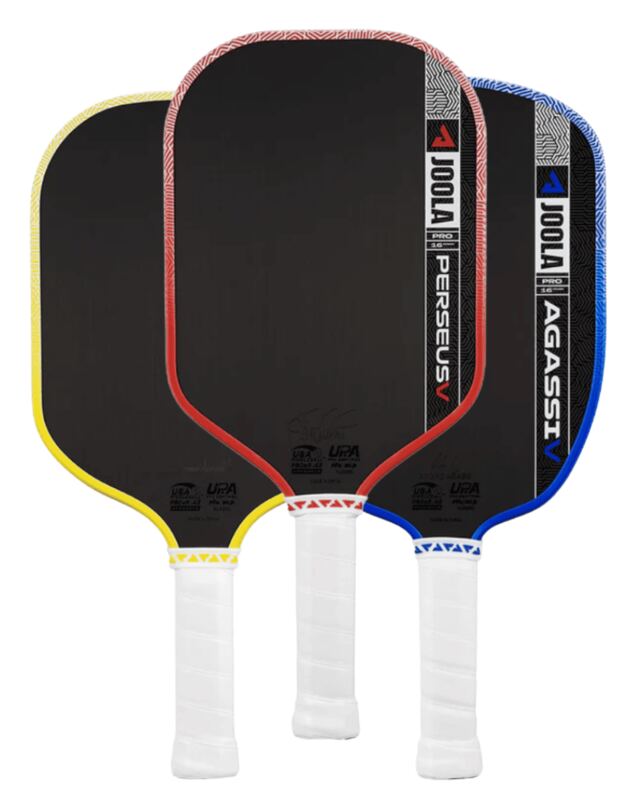
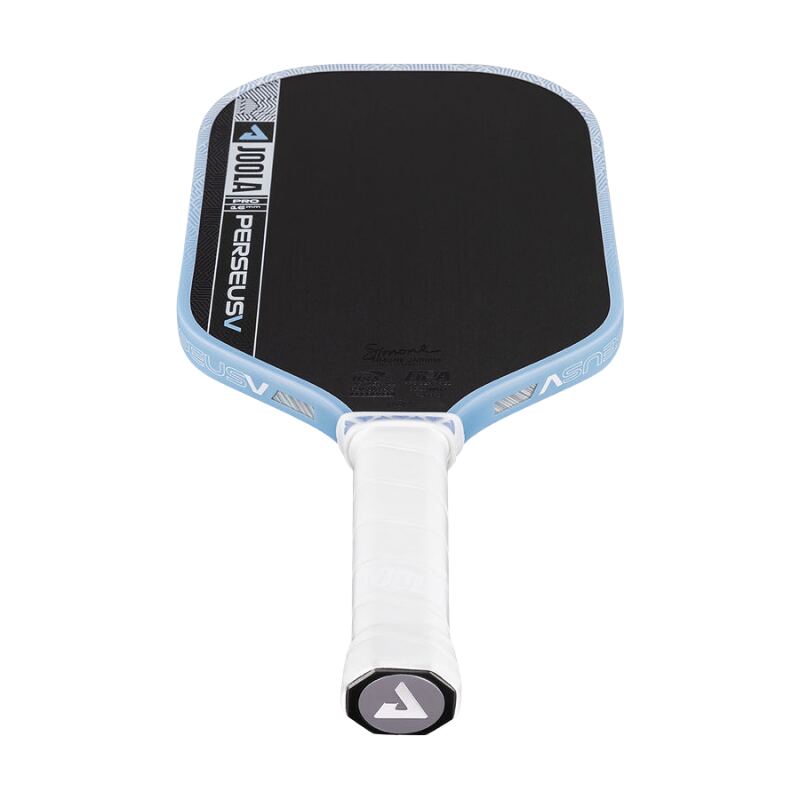
The Thrive Project Fury is frequently compared to the JOOLA Pro IV, with reviewers noting that it essentially functions as a 'JOOLA Pro IV if you added fiberglass and wrapped it in a hybrid shape.' This comparison is supported by both Pickleball Studio and the YouTube reviewer, who noted that 'the internals of these paddles are essentially identical,' with the main difference being the addition of fiberglass and the hybrid shape. The Pro IV's all-carbon construction provides more control and a softer feel, while the Fury's fiberglass layer offers more pop and aggression. As Pickleball Studio's Chris Olson observed, 'the added pop really shows up at the net. Flicks feel quick, hands battles feel explosive, but you do give up some control, especially when compared to the JOOLA Pro IV.' This makes the Fury a better choice for aggressive players, while the Pro IV suits those who prefer a more balanced and controlled approach.
Target audience and suitability
The Thrive Project Fury Hybrid is best suited for intermediate to advanced players who prioritize power and aggression over control and finesse. Pickleheads' Taylor Gervais recommended it for 'intermediate and advanced players who want to play super aggressively,' while Pickleball Studio's Chris Olson noted that 'the Fury is a great paddle, but in terms of control, it's not ideal for players who want to focus on soft touches or dinks.' The paddle's design and performance characteristics make it less suitable for beginners, who may struggle with the lack of dwell time and control. However, for players looking for a poppy, spinny paddle with a high level of power, the Fury Hybrid is a strong contender. As noted by a YouTube reviewer, 'I’m a huge fan, especially at the price of $180 after code,' suggesting that the paddle's value proposition is particularly strong for players who appreciate its aggressive playstyle and are willing to accept its limitations in soft touch.
Strengths
- +Faster and more aggressive pop due to fiberglass layer
- +Sharp and explosive performance at the net for flicks and hands battles
- +Well-balanced with a swing weight of 111-113
- +Hybrid shape offers extended sweet spot and control
Watch-outs
- −Less control for soft touches, resets, and dinks compared to carbon-only models
- −Potential durability issues with core crush and rattling reported out of the box
How it compares
The Thrive Fury Hybrid provides more aggressive pop and explosive net play compared to the Six Zero Coral Hybrid, which is more focused on precision and control. While it excels in fast hand speed and net play, it lacks the control for soft touches that the Six Zero offers, making it a better choice for players who prioritize power and speed over finesse.
Rating sources
“To put it simply, this paddle is basically a JOOLA Pro IV if you added fiberglass and wrapped it in a hybrid shape.”
“This paddle was sent to me for review, no script, no paid involvement. But if you want to try it, code MPB gets you 10% off, bringing the price to $180 and kicking a small amount back to help keep this content going.”
“I’m a huge fan, especially at the price of $180 after code Hybrid shape: awesome power paddle with plenty of grit. Stiffer feel (which I like) but definitely feels like a higher level paddle that I'd recommend for 4.5+ players looking for a poppy spinny paddle”
Our 4.5 score is the average of these published ratings. Ratings marked * were derived from the reviewer’s written analysis or video transcript — the publisher didn’t print an explicit numeric score, so we inferred one from their own words. Click through to verify. More about methodology.