OutdoorGearLab found that the Tenaya Mastia offers a comfortable alternative to typical high-performance climbing shoes thanks to its soft uppers that conform well to the foot. Climbingshoereview highlighted the shoe's asymmetric shape and stiff forefoot, which provide incredible support on small edges while maintaining sensitivity for smearing. While reviewers praised its versatility across sport climbing and bouldering, some noted it lacks the ultimate precision of specialized models on vertical walls or artificial holds. This shoe is best suited for climbers seeking a comfortable, high-volume fit with strong edging capabilities rather than those prioritizing maximum sensitivity.
Full review
Comfort and fit dynamics of unlined microfiber
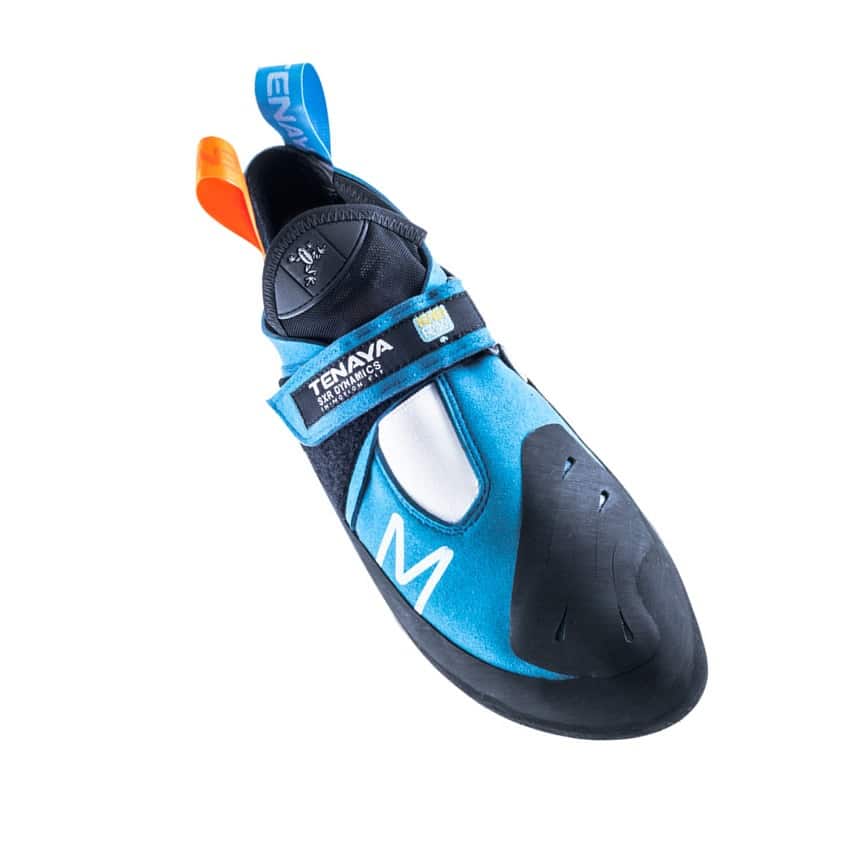
The Tenaya Mastia distinguishes itself through a slipper-like comfort profile that defies the typical pain associated with aggressive climbing footwear. OutdoorGearLab found the upper materials to be significantly softer than those on many competing shoes, allowing them to conform closely to the foot's natural shape without causing immediate discomfort. The unlined microfiber construction eliminates internal seams that often create pressure points, while a stretchy mesh tongue and elastic gusset provide expansion room in the midfoot area. This combination allows climbers to wear the shoe for extended periods on steep terrain without the usual fatigue or hot spots that plague rigid performance shoes.
The anatomical shape of the Mastia features a broad arch before tapering into a rounded toe box, accommodating a wider range of foot volumes than previous Tenaya models like the Oasi. Climbing reported that testers wished they had sized down more aggressively, with some going two full sizes off their street shoe size compared to the usual one and a half size reduction for the brand. Ukclimbing noted that while other Tenaya models felt too narrow, the Mastia provided a perfect fit for wider feet without sacrificing performance. The synthetic materials do not stretch significantly over time, meaning the initial fit is critical; buying them snug but comfortable ensures they remain usable rather than becoming painful after a few climbs.
Asymmetric design delivers power on tiny edges
The highly asymmetric shape of the Mastia drives the big toe toward the front of the shoe, creating an exceptional power transfer mechanism for standing on microscopic footholds. Climbingshoereview described the precision as feeling like a surgeon executing millimeter-precise movements, allowing the shoe to confidently stick to even the smallest crystals and pockets. The stiff forefoot provides a solid platform that makes small edges feel substantially larger underfoot. This design choice transforms terrifying vertical terrain into manageable challenges, giving climbers immense confidence on holds that would typically cause hesitation in softer shoes.
Everythingaboutclimbing.wordpress.com highlighted that while the front of the shoe maintains medium stiffness for edging power, the midsole remains soft and responsive due to a split sole under the arch. This dual-characteristic construction allows the forefoot to adapt to varying angles on both slabby and overhung terrain without losing its structural integrity. The result is a shoe that excels at honing in on tiny features while still maintaining enough flexibility to conform to the rock's surface. Climbers seeking maximum power on technical vertical routes will find this asymmetric geometry particularly effective, as it concentrates force exactly where precision is needed most.
Heel construction secures aggressive heel hooks
The heel cup of the Tenaya Mastia represents a significant engineering advancement, featuring dual rubber runners that flank each side to provide secure grip during tight pulls and heel hooks. Everythingaboutclimbing.wordpress.com praised this design as the best heel Tenaya has ever produced, noting that it goes high up on the Achilles for added stability. The fully rubberized heel stays put even on the hardest and most powerful maneuvers, eliminating the slippage issues common in other performance shoes. This robust construction allows climbers to commit fully to dynamic heel hooks without worrying about the shoe losing its position or causing discomfort around the ankle bone.
Climbing noted that the sensitive heel design contributed heavily to the shoe's overall smearing and toe-hooking capabilities. The large Velcro closure patch allows testers to tweak the fit back and forth, enabling them to focus either on toe tension or heel security depending on the route demands. This adjustability ensures that the secure heel connection remains consistent throughout a climbing session, even as the foot swells slightly from exertion. The combination of high-cut rubber coverage and precise strap adjustment makes the Mastia exceptionally reliable for moves requiring significant posterior chain engagement.
Sensitivity trade-offs on artificial gym holds
While the Mastia excels outdoors, its sensitivity profile reveals limitations when used on slippery artificial surfaces. OutdoorGearLab found that the lack of sensitivity was more noticeable in the gym environment, particularly on smooth or polished synthetic holds. The shoe's focus on edging support and structural rigidity means it does not conform to volumes as intimately as specialized bouldering shoes like the Scarpa Drago. These ultra-sensitive alternatives are designed specifically for smearing and volume climbing but often sacrifice the edging power that makes the Mastia so effective on rock.
The Vibram XS Grip rubber, while sticky enough to handle most outdoor conditions, does not provide the maximum stickiness required for challenging gym problems where friction is paramount. Climbers who primarily train indoors may find themselves reaching for a softer, more specialized shoe when tackling highly technical boulders that require precise toe placement on small volumes. However, this trade-off is intentional; the Mastia prioritizes a balance of support and responsiveness over pure sensitivity, making it a better all-around performer across varied terrain rather than a niche gym tool.
Versatility spans vertical routes to steep caves
The Mastia bridges the gap between edging support for vertical terrain and sensitivity for smearing, making it suitable for sport climbing, bouldering, and even moderate trad. Alpineclub.org.nz noted that once the terrain gets steeper, such as during indoor bouldering or cave problems, the shoe's responsiveness becomes evident as it conforms to both macro and micro holds admirably. For lower-angled terrain like face climbs in Wānaka, the supportive platform provides crucial power without compromising comfort. This versatility allows climbers to use a single pair of shoes for diverse climbing styles, from vertical limestone routes to overhung Spanish caves.
Ukclimbing observed that while not the first choice for trad climbing due to its aggressive shape, the Mastia is entirely unsuitable only if personal taste dictates otherwise. On steeper ground, the shoe's downturned profile becomes less of a hindrance and more of an asset, allowing climbers to maintain tension on small footholds without excessive foot fatigue. The soft midsole provides good feedback about what is happening under the shoe, helping climbers apply the perfect amount of pressure to avoid popping off holds suddenly. This balance makes it an excellent choice for long, varied sport pitches where both precision and endurance are required.
Sizing down significantly ensures performance fit
Achieving the correct fit with the Mastia requires a substantial reduction from street shoe size, often up to two full sizes. Ukclimbing provided a concrete example where an 8.5 in normal shoes required a minuscule 6 in the Mastia for a comfortable but performance-oriented fit. This aggressive downsizing is necessary because the synthetic materials do not stretch much over time, and any excess volume will result in poor power transfer and reduced sensitivity. Climbers must prioritize this precise sizing to unlock the shoe's full potential, even if it feels uncomfortably tight initially.
Climbing reported that testers wished they had sized down more aggressively, with some going two full sizes off their street shoe size versus the usual one and a half for Tenaya. This discrepancy highlights how the Mastia's unique last shape accommodates wider feet while still requiring a snug fit to prevent slippage. The large Velcro closure patch allows for fine-tuning this tension, but the underlying volume must be correct from the start. Buying them too loose will compromise the edging power and heel security that define the shoe's performance profile.
Strengths
- +Highly asymmetric design with a stiff forefoot provides exceptional power transfer and confidence on tiny edges and technical holds.
- +Superior heel cup construction featuring dual rubber runners that deliver secure grip during aggressive heel hooks and pulls.
- +Versatile performance balance, effectively bridging the gap between edging support for vertical terrain and sensitivity for smearing.
Watch-outs
- −Requires significant downsizing (up to two full sizes) from street shoe size due to minimal synthetic stretch in the upper material.
- −Lacks precision and sensitivity on slippery artificial gym holds compared to specialized, ultra-sensitive bouldering shoes.
How it compares
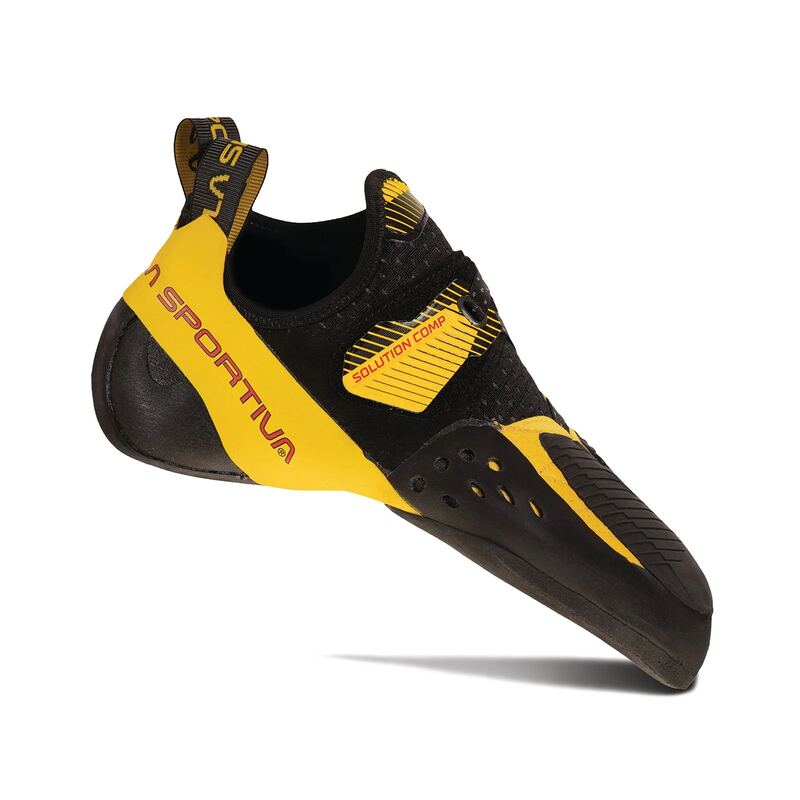
The Tenaya Mastia offers outstanding comfort and a slipper-like fit due to its unlined microfiber uppers, making it more comfortable for long sessions than the tight-fitting La Sportiva Solution Comp. Its stiff forefoot provides exceptional power transfer on tiny edges.
Rating sources
Counts as 4.06/5 in our score — this publisher's 149 scores on the site average 3.69, so its scores are adjusted up to compare fairly with other publishers.
Counts as 4.28/5 in our score — this publisher's 1 scores on the site average 4.30, so its scores are adjusted down to compare fairly with other publishers.
“As a performance all-arounder, the Mastia strikes a solid balance between comfort and power, making it a great choice for difficult multi-pitch, bouldering, and long, varied sport pitches.”
Our 4.2 score is the average of the 2 scored reviews above, each adjusted for how strictly its publisher scores; 6 more reviewed it without printing a score and are not in the average. More about methodology.