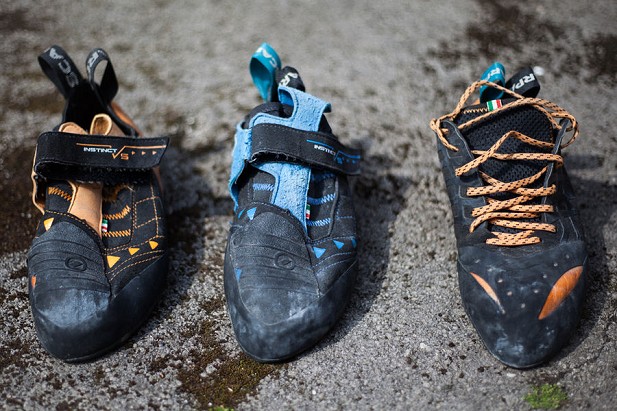
The Scarpa Instinct VS combines a stiff forefoot and Vibram XS Edge rubber to deliver exceptional precision on small edges and granite crystals, while its split-sole design enables effective toe-hooking and tension on steep overhangs. OutdoorGearLab found this versatile architecture makes the shoe suitable for both vertical face climbing and boulder problems, though Climbingzine noted that the rigid sole construction significantly reduces sensitivity for smearing on slabs or reading subtle textures. The synthetic upper materials ensure minimal stretch but require a lengthy break-in period before comfort is achieved, and the relatively high-volume toe box makes crack climbing and thin jams difficult and uncomfortable. This performance shoe fits climbers with medium to wide feet seeking precision on steep terrain, while those prioritizing slab sensitivity or traditional crack climbing should look elsewhere.
Full review
Split-sole design enables steep terrain tension
The Scarpa Instinct VS utilizes a split-sole construction that separates the forefoot from the midfoot, creating a unique balance between rigidity and flexibility. Gripped found this architecture allows the shoe to bend easily through the middle while keeping the toe box extremely rigid. This specific combination enables climbers to engage their toes on far-away holds and maintain tension on overhangs without losing precision. The moderate downturn and medium asymmetry make it ideal for precise footwork, allowing the shoe to perform equally well on steep sport routes and boulders.
OutdoorGearLab noted that this split-sole design makes the Instinct VS a chameleon of a shoe, capable of toeing in on tiny edges, smearing up slabs, and adapting to any hold. The flexibility through the midfoot allows for high degrees of smearing ability on low-angle features or volumes indoors, though it sacrifices some sensitivity compared to fully soft shoes. This versatility makes it a strong candidate for climbers who want one shoe that can handle both vertical face climbing and overhung boulder problems.
Vibram XS Edge rubber excels on dime edges
The forefoot of the Instinct VS is clad in Vibram XS Edge rubber, a compound chosen specifically for its durability and edging capabilities rather than pure stickiness. The stiff forefoot allows climbers to stand on dime edges with confidence, generating amazing power through the toes even on small granite crystals or shallow pockets.
Coolofthewild emphasized that there is a ton of sensitivity through the toes when edging, providing stickiness that can be trusted on even the tiniest features. The rubber patch covering the top of the toe box adds friction and durability for secure toe hooking, a feature that Switchbacktravel found so effective it encouraged more frequent use of toe-hooking moves during climbing sessions. This combination of stiff rubber and textured coverage makes the shoe exceptional for crimping and precise foot placements.
Heel design provides secure hooking platform
Coolofthewild described this as a super stiff heel cup that keeps the foot firmly secured, providing an excellent base for reliable and aggressive heel hooks. The extra thickness of the rubber allows climbers to feel if their heel is going to pop off a hold while still maintaining significant grip on steep terrain.
Climbingzine reported that the heel fit is flawless, slipping around with a satisfying pop and leaving no patches of air inside. This secure fit translates directly into hooking power, making the shoe a trusty companion for demanding heel hooks required by many hard climbs. The synthetic upper materials ensure the heel cup holds its shape over time, preventing the looseness that can occur in leather equivalents after extended use.
Bi-Tension system distributes weight across foot
Scarpa incorporates a Bi-Tension system into the Instinct VS, which features a supportive arch of material stretching from the tip of the shoe down its sides. Gripped explained that this design distributes weight away from the ends of the toes to the entire foot, allowing for a high-performance fit without crushing the Achilles or mashing the toes against the front of the shoe. This structural support is crucial for maintaining comfort during long sessions on steep terrain.
The Bi-Tension system works in tandem with the split-sole design to provide stability where it is needed most. While the midfoot remains flexible for hooking, the arch support prevents foot fatigue when standing on small edges for extended periods. This makes the Instinct VS a surprisingly comfortable performance shoe, especially for climbers with medium-wide feet who need adequate space in the toe box without sacrificing precision.
Synthetic upper requires lengthy break-in period
The synthetic microsuede and leather upper of the Instinct VS holds its shape longer than traditional leather shoes but does not stretch as much, leading to a demanding break-in process. Coolofthewild noted that these shoes are not instantly comfortable and take time to soften before becoming easy to wear. The tight, slipper-like fit requires perseverance during the initial weeks, as the materials gradually conform to the foot's contours.
Climbingzine described the experience of wearing new Instinct VS shoes as undergoing Japanese foot-binding initially, with a pained gait while walking due to the highly down-turned shape and tight synthetic construction. After three weeks of consistent gym use, however, the shoe becomes significantly more comfortable. The lack of stretch ensures that the performance fit remains stable over time, preventing the bagginess that can develop in leather shoes.
Rigid sole reduces sensitivity on smearing terrain
The same rigidity that makes the Instinct VS exceptional for edging also detracts from its performance on smeary, slabby terrain. Gripped found the shoe to be insensitive for reading delicate, subtle textures due to the stiff forefoot and thick rubber layers. Climbingzine reported that smearing hurts when using these shoes, as the lack of flexibility prevents the foot from conforming to flat surfaces effectively.
Coolofthewild observed that there is very little flex through the toe, making it challenging to feel what is going on under the foot or gain meaningful grip on low-angle features. While the shoe can smear on gym volumes or low-angle slabs once broken in, it is not an ideal choice for climbers who prioritize slab climbing or routes with subtle textures. The trade-off between edging precision and smearing sensitivity is a defining characteristic of this model.
High-volume toe box limits crack climbing utility
The Instinct VS features a roomy, high-volume toe box designed to accommodate wider feet and prevent painful compression during aggressive toeing. Switchbacktravel noted that this wide toe box is not ideal for those with narrow feet and does not fit well in thin cracks. The generous rubber patch on the toes adds durability but further reduces the shoe's ability to perform foot jams effectively.
Gripped stated that the relatively high-volume toe box makes thin jams difficult and uncomfortable, rendering the Instinct VS a poor choice for crack climbing. Climbingzine agreed that while the extra space in the toe box does not matter when toes are compressed into a power position on steep terrain, it becomes a liability during traditional climbing or boulder problems requiring foot jams. The shoe is clearly optimized for face climbing and hooking rather than jamming.
Fit accommodates medium to wide feet comfortably
The Instinct VS is particularly well-suited for climbers with normal to wide feet, offering a roomier fit in the toe box compared to many high-performance climbing shoes. OutdoorGearLab found that the forefoot offers enough space to make the shoe a good option for wider-footed climbers who struggle with narrow lasts. The synthetic upper materials hold their shape without excessive stretching, ensuring a consistent fit over time.
Everythingaboutclimbing.wordpress.com reported that the Instinct line is most comfortable for normal to wide feet, especially in the toe box area. Climbingzine noted that even with very narrow feet, the extra room in the toe box does not detract from performance when the toes are engaged in a power position. The Bi-Tension system helps distribute pressure evenly, allowing climbers to achieve a tight fit without experiencing painful hotspots or crushing sensations.
Strengths
- +Stiff forefoot and Vibram XS Edge rubber provide exceptional precision on small edges and granite crystals.
- +Split-sole design with a flexible midfoot allows for effective toe-hooking, heel-hooking, and tension on steep overhangs.
- +Bi-Tension arch support system distributes weight away from the toes, offering comfort despite the aggressive fit.
- +Synthetic upper materials ensure minimal stretch, maintaining shape and performance longevity.
Watch-outs
- −The rigid sole construction significantly reduces sensitivity for smearing on slabs or reading subtle textures.
- −Tight synthetic uppers require a lengthy break-in period before the shoe becomes comfortable to wear.
- −The relatively high-volume toe box makes crack climbing and thin jams difficult and uncomfortable.
How it compares
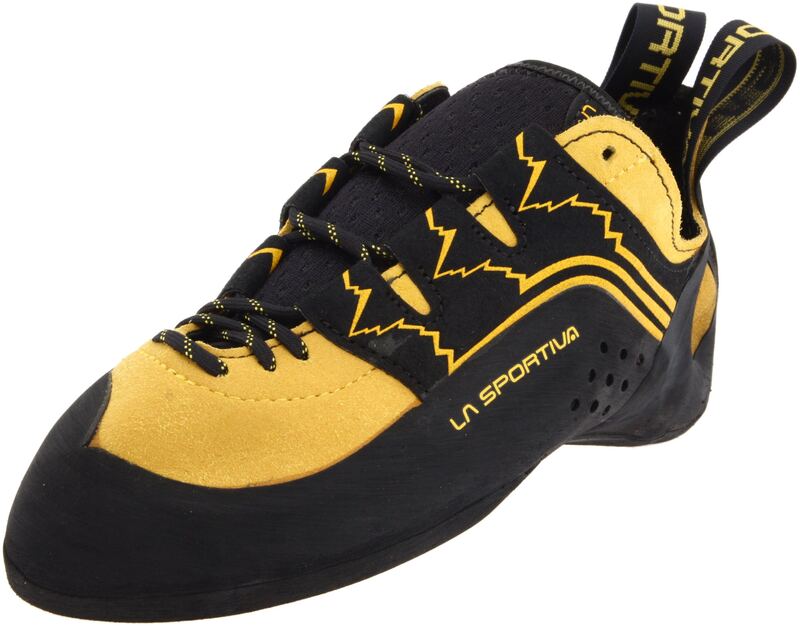
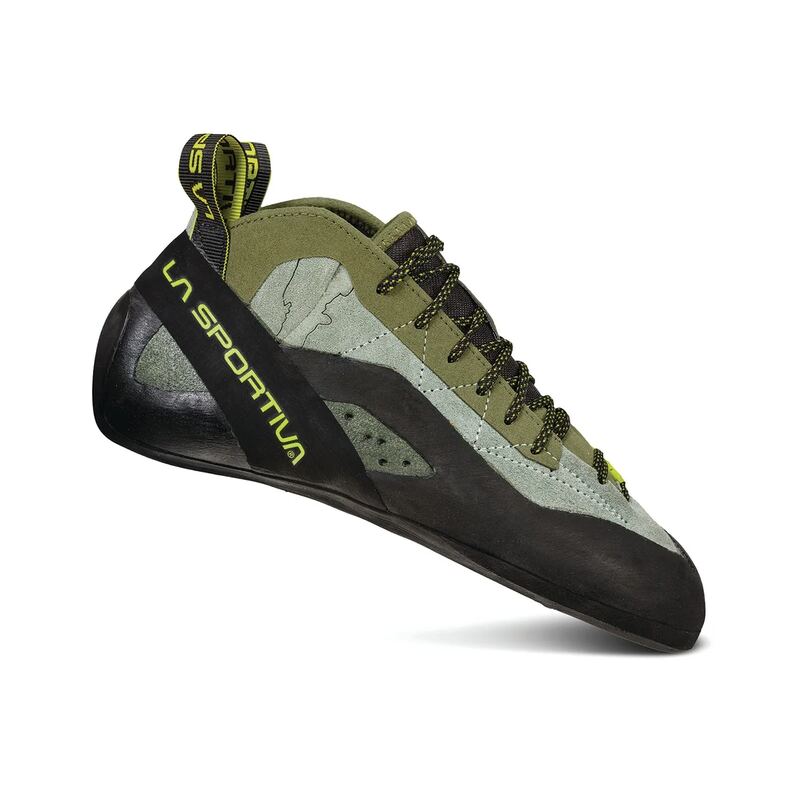
The Scarpa Instinct VS uses Vibram XS Edge rubber like the La Sportiva Katana Lace, but in a split-sole Velcro design with a flexible midfoot rather than a stiff lace-up. Its relatively high-volume toe box makes thin jams difficult, so the flat La Sportiva TC Pro is the better fit for crack climbing.
Rating sources
Counts as 4.36/5 in our score — this publisher's 149 scores on the site average 3.69, so its scores are adjusted up to compare fairly with other publishers.
“One of the most versatile high-performance shoes we’ve tested.”
“Its not a shoe model that Ive worn in the past but after this testing period, its now one that I will continue to wear into the future.”
Our 4.4 score is the average of the 1 scored review above, each adjusted for how strictly its publisher scores; 6 more reviewed it without printing a score and are not in the average. More about methodology.