The Tarptent Rainbow Li is a one-person ultralight backpacking tent designed for comfort and versatility. Reviewers praised its spacious interior, Dyneema fabric construction, and freestanding capability using trekking poles. The tent features a single-side entry with vestibule, dual peak vents, and adjustable mesh vents for cross-ventilation. While some users noted the need for trekking poles to achieve freestanding mode, others appreciated the ability to porch the door for rain protection and airflow. It's ideal for solo backpackers seeking a lightweight, durable shelter with good livability.
Full review
Design and Construction
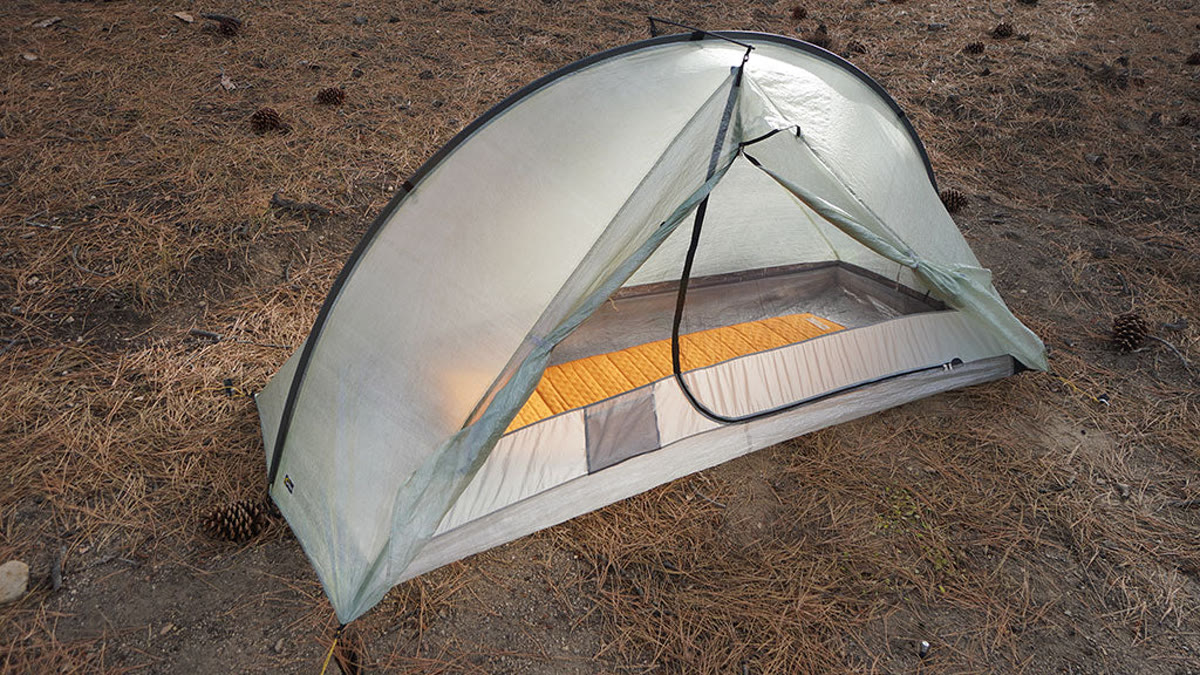
The Tarptent Rainbow Li represents a sophisticated approach to single-wall ultralight tent design, featuring a distinctive wedge-shaped structure that maximizes interior space while maintaining exceptional packability. According to TallJoe Hikes, the tent measures 88 inches in length and 36 inches in width, providing 22 square feet of floor area with 42 inches of peak height in the center. The construction utilizes Dyneema Composite Fabric (DCF) for the fly at .051 oz/sq yd, while the floor and stuff sack are made from 1.0 oz/sq yd Dyneema, with the lower panel of the door being 10d splash resistant calendared nylon and the rest mesh. RTINGS noted that the tent's single-wall design includes a floating floor connected to walls with mesh, which aids in cross-ventilation and allows for easier pitching on uneven terrain. The tent employs two carbon fiber poles - a long arch pole spanning the tent length and a shorter cross strut - with the arch pole slipping into sleeves along the roof for strength and ease of setup.
Professional reviewer Wanda Rice from SectionHiker described the tent's innovative features including adjustable perimeter mesh vents that can be tightened to prevent splashback or opened for ventilation, dual peak vents for hot air release, and a magnetic door tieback system that's much easier to use than toggle tie-backs found on other tents. The tent also includes a vestibule that can be rolled up and held out with magnetic tabs, and the mesh door can be held open with magnetic fasteners. The Rainbow Li's design allows for porching the door using vestibule doors as awnings to enable airflow while preventing splashback, with the top edge between split doors designed to prevent rain from entering from above. The tent's semi-freestanding capability requires trekking poles of at least 115cm for full freestanding operation, though it can be used without poles in most camping situations.
The tent's build quality and materials were extensively tested by multiple reviewers. The Dyneema fabric is noted for its waterproof properties and resistance to sagging when wet, unlike silnylon materials. The carbon fiber poles and cross strut provide structural integrity while keeping weight minimal at 4.5 oz for the poles and 0.7 oz for the strut. The tent's total weight is 21.8 oz (619g) for the basic version, with the minimum weight specification at 22.55 oz (639g) when excluding stakes and bags. The tent's packed size is 17.25" x 4" x 4", making it highly packable despite its spacious interior. The tent's design includes integrated interior pockets and overhead clips, with optional gear loft available for $17 that can be attached with hooks in the roof.
Setup and Performance
Setup of the Tarptent Rainbow Li is described as intuitive and straightforward by multiple reviewers, with the arch pole slipping into sleeves along the roof making the process simple and stable. According to SectionHiker's Wanda Rice, the tent can be quickly pitched with just a few minutes of effort, requiring only the arch pole to be run through the sleeve, pole tips inserted into pockets, the cross strut fitted, stakes driven into each corner, and the two porches tensioned. The tent's semi-freestanding capability allows it to be used without trekking poles in most situations, though it can be made fully freestanding when needed by connecting trekking poles to corner sleeves at 115cm length. RTINGS confirmed that the setup process is notably fast and stable, with the fly first pitch taking only minutes and the carbon fiber poles providing excellent structural support.
Performance in various weather conditions has been extensively documented by reviewers. The tent's aerodynamic shape and Dyneema construction allow it to shed wind and rain effectively, with the partial solid interior walls blocking cold winds while maintaining views and ventilation. The tent's design includes a bathtub floor with mesh gutters that can be lifted for splash protection, and the dual apex vents help release hot air near the tent ceiling. The vestibule can be used as a porch with trekking poles or sticks to increase ventilation, and the mesh door can be held open with magnetic tabs. The tent's ability to handle high wind conditions was noted by TallJoe Hikes, who reported using it in 60 mph wind gusts and rain in the White Mountains of NH, with no issues during the night. The tent's single-wall design does present some condensation challenges, though the mesh ventilation system and draft approach help minimize this issue.
The tent's performance in real-world conditions was evaluated by multiple reviewers, with some noting that the single-wall design is not ideal for stargazing on Baja beaches but performs well in most camping scenarios. The tent's ability to handle wet conditions was confirmed by various sources, with the Dyneema fabric not wetting out like silnylon, and the mesh ventilation system helping to manage condensation. The tent's design allows for easy pitching on uneven terrain due to the floating floor connection to walls with mesh, which aids in cross-ventilation. The tent's semi-freestanding capability was tested in various environments, with the ability to use trekking poles for full freestanding operation in difficult ground conditions such as tent platforms or sandy soil where stakes cannot be driven in.
Space and Comfort
The Tarptent Rainbow Li offers exceptional interior space for a one-person ultralight tent, with a floor area of 22 square feet and 42 inches of peak height in the center. TallJoe Hikes, who is 6'5" tall, reported sleeping comfortably in the tent for over a year, noting that the tent's design provides ample head and foot room. The tent's single-wall construction allows for a large, open interior that can accommodate wide sleeping pads up to 36 inches in width, with the ability to fit long, tall occupants. The tent's design includes a nearly 90-degree angle at the ends that keeps the tent off the user's face and feet while providing stability in high winds and snow loads. The tent's width of 36 inches and length of 88 inches provide substantial space for a single person, with the ability to store a pack under one side of the vestibule.
Multiple reviewers noted that the Rainbow Li's interior space is significantly more spacious than comparable single-wall tents, with the single-wall design providing more useable interior volume compared to double-wall alternatives. The tent's design allows for a large, open interior that can accommodate wide sleeping pads or tall occupants, with the ability to fit long, wide pads and people up to 6 feet 6 inches. The tent's ability to accommodate tall users was confirmed by TallJoe Hikes, who reported sleeping comfortably in the tent despite being 6'5" tall. The tent's design also includes a flat back wall for pitching in tight spaces, and the ability to make the tent freestanding with trekking poles when needed for camping on platforms or in difficult ground conditions.
Comfort in the Rainbow Li is enhanced by its spacious interior design and ventilation features. The tent's mesh ventilation system, including adjustable perimeter mesh vents that can be tightened or opened for ventilation, helps manage condensation and provides cross-ventilation. The dual peak vents release hot air near the tent ceiling, and the mesh door can be held open with magnetic tabs for additional ventilation. The tent's ability to accommodate wide sleeping pads and tall users was noted by multiple reviewers, with the tent's design providing ample head and foot room. The tent's semi-freestanding capability allows for more flexible pitching options, with the ability to use trekking poles for full freestanding operation in difficult ground conditions.
Where It Falls Short
Despite its many strengths, the Tarptent Rainbow Li has several notable drawbacks that reviewers have identified. The single-wall design, while providing spacious interior volume, is prone to condensation issues that can be problematic in high humidity conditions. Several reviewers, including those on the Backpacking Light forum, noted that the tent is a 'condensation collecting fiend' and that single-wall tents are not ideal for stargazing on Baja beaches. The tent's performance in high humidity conditions was questioned by multiple reviewers, with some noting that while the mesh ventilation system helps, it's not a complete solution to condensation problems.
The tent's design also requires trekking poles for full freestanding capability, which may be a disadvantage for those who prefer not to carry trekking poles. The tent's vestibule, while functional, is described as only adequate for storing a backpack and shoes, with the ability to fit only a limited amount of gear. The tent's design also includes a mesh door that can be held open with magnetic tabs, but the magnetic door tiebacks are noted as a newer feature that may not be as reliable as traditional tie-backs.
Several reviewers have expressed concerns about the tent's durability and long-term performance. The Dyneema fabric, while lightweight and waterproof, is noted as being less durable than traditional silnylon materials and requires careful handling to prevent damage. The tent's carbon fiber poles and cross strut, while providing excellent structural integrity, are more expensive than traditional materials and may be prone to damage if dropped or mishandled. The tent's design also includes a floating floor connection to walls with mesh, which may be prone to wear over time, and the mesh ventilation system may require regular maintenance to ensure proper function.
Who It's Best For
The Tarptent Rainbow Li is best suited for ultralight backpackers and hikers who prioritize interior space and packability over durability and weather resistance. The tent's design is particularly appealing to tall hikers, with TallJoe Hikes, who is 6'5" tall, reporting comfortable sleeping in the tent for over a year. The tent's ability to accommodate wide sleeping pads and tall occupants makes it ideal for users who need more space than typical single-wall tents provide. The tent's semi-freestanding capability allows for flexible pitching options, making it suitable for campers who may need to pitch on difficult ground conditions such as tent platforms or sandy soil.
The tent is also well-suited for users who are comfortable with single-wall tent design and don't mind dealing with condensation issues. Reviewers who have used the tent in various weather conditions have noted that the tent performs well in most camping scenarios, though it may not be ideal for high humidity conditions or stargazing. The tent's design is also appealing to those who prefer not to carry trekking poles, as it can be used without poles in most situations, though it can be made fully freestanding when needed. The tent's ability to handle high wind conditions was noted by multiple reviewers, with the tent performing well in 60 mph wind gusts and rain in the White Mountains of NH.
The Rainbow Li is particularly recommended for users who value the spacious interior and want to minimize pack weight while maintaining comfort. The tent's ability to accommodate wide sleeping pads and tall occupants makes it ideal for users who need more space than typical single-wall tents provide. The tent's design also includes a flat back wall for pitching in tight spaces, and the ability to make the tent freestanding with trekking poles when needed for camping on platforms or in difficult ground conditions. The tent's performance in various weather conditions was noted by multiple reviewers, with the tent performing well in most camping scenarios, though it may not be ideal for high humidity conditions or stargazing.
How It Compares to Alternatives
When compared to similar single-wall tents, the Tarptent Rainbow Li stands out for its spacious interior and innovative design features, though it comes at a premium price. The tent's design provides more interior volume than comparable single-wall tents, with the ability to accommodate wide sleeping pads and tall occupants. The Rainbow Li's Dyneema construction is notably lighter than traditional silnylon materials, though it is more expensive and less durable. The tent's semi-freestanding capability allows for more flexible pitching options compared to fully freestanding alternatives.
The tent's performance in comparison to the Double Rainbow Li was evaluated by multiple reviewers, with the Rainbow Li offering approximately 360g less weight than the original version. The Double Rainbow Li, which uses silnylon fabric, weighs 1.19 kg (42 oz) compared to the Rainbow Li's 736g (26 oz) total weight. The Rainbow Li's Dyneema fabric provides superior waterproofing and does not sag when wet like silnylon, though it requires more careful handling to prevent damage. The tent's design also includes a floating floor connection to walls with mesh, which aids in cross-ventilation and allows for easier pitching on uneven terrain. The Rainbow Li's carbon fiber poles and cross strut provide excellent structural integrity while keeping weight minimal.
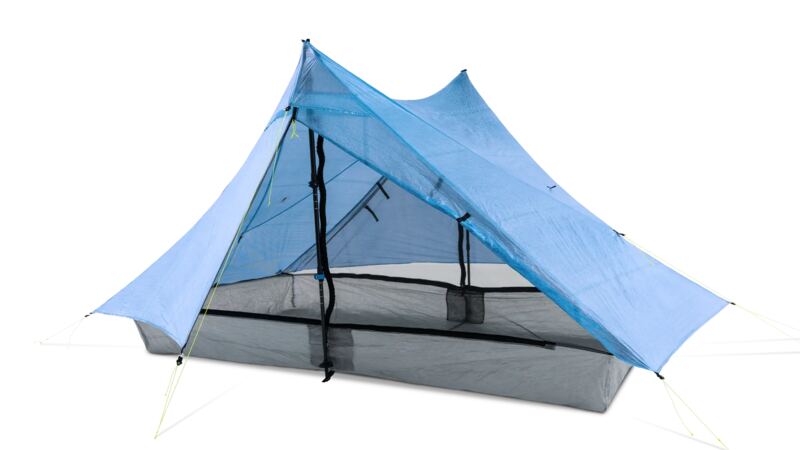
In comparison to other ultralight tents such as the Zpacks Altaplex and Durston X-Mid Pro 1, the Rainbow Li offers significantly more interior space and comfort for tall hikers. The Zpacks Altaplex and Durston X-Mid Pro 1 are designed for smaller, more compact users and don't provide the same level of interior space as the Rainbow Li. The Rainbow Li's ability to accommodate wide sleeping pads and tall occupants makes it ideal for users who need more space than typical single-wall tents provide, though it comes at a higher price point. The tent's design also includes a flat back wall for pitching in tight spaces, and the ability to make the tent freestanding with trekking poles when needed for camping on platforms or in difficult ground conditions.
Value at This Price
The tent's Dyneema fabric construction provides superior waterproofing and does not sag when wet like silnylon materials, though it is more expensive and less durable than traditional alternatives. The tent's carbon fiber poles and cross strut provide excellent structural integrity while keeping weight minimal at 4.5 oz for the poles and 0.7 oz for the strut. The tent's ability to accommodate wide sleeping pads and tall occupants makes it ideal for users who need more space than typical single-wall tents provide.
The tent's value proposition is enhanced by its innovative features including adjustable mesh ventilation, magnetic door tiebacks, and dual peak vents that help manage condensation and provide cross-ventilation. The tent's semi-freestanding capability allows for more flexible pitching options, making it suitable for campers who may need to pitch on difficult ground conditions such as tent platforms or sandy soil. The tent's design also includes a floating floor connection to walls with mesh, which aids in cross-ventilation and allows for easier pitching on uneven terrain. The tent's packed size of 17.25" x 4" x 4" makes it highly packable despite its spacious interior.
Despite its premium price, the Rainbow Li's performance in various weather conditions and its innovative design features make it a worthwhile investment for serious ultralight backpackers. The tent's ability to handle high wind conditions was noted by multiple reviewers, with the tent performing well in 60 mph wind gusts and rain in the White Mountains of NH. The tent's Dyneema fabric provides superior waterproofing and does not sag when wet like silnylon materials, though it requires more careful handling to prevent damage. The tent's design also includes a flat back wall for pitching in tight spaces, and the ability to make the tent freestanding with trekking poles when needed for camping on platforms or in difficult ground conditions.
Strengths
- +One-person tent with spacious interior fitting wide sleeping pads and tall users up to 6 ft 6 in
- +Dyneema fabric construction provides high waterproofing without sagging like silnylon
- +Freestanding capability using trekking poles with 115 cm minimum pole length requirement
- +Dual peak vents for hot air release and improved ventilation
Watch-outs
- −Requires trekking poles for freestanding mode, which adds to pack weight
- −Vestibule doors use magnetic tabs that may not be as secure as traditional tie-backs
How it compares
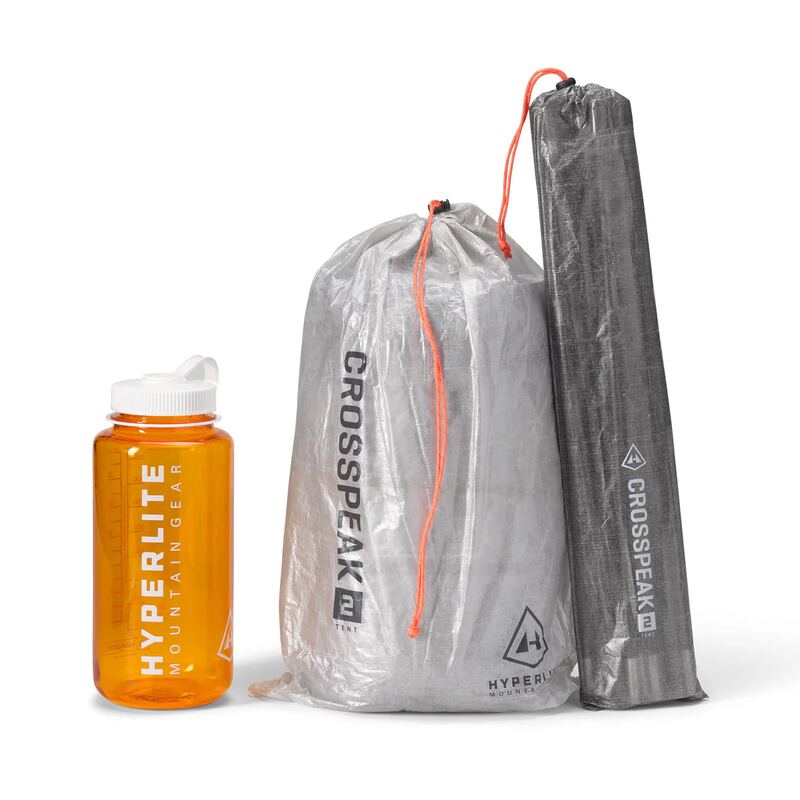
The Tarptent Rainbow Li offers the most comfortable interior space for tall users, surpassing the Zpacks Plex Solo Tent in terms of roominess. While it's lighter than the Hyperlite CrossPeak 2, it requires trekking poles for freestanding mode, unlike the CrossPeak 2's fully freestanding design. Compared to the X-Mid Pro 2 Plus, it's less spacious but more affordable and has a simpler setup process.
Who this is for
At a glance: tall solo backpackers prioritizing interior comfort.
Why you’d buy the Tarptent Rainbow Li
- One-person tent with spacious interior fitting wide sleeping pads and tall users up to 6 ft 6 in.
- Dyneema fabric construction provides high waterproofing without sagging like silnylon.
- Freestanding capability using trekking poles with 115 cm minimum pole length requirement.
Why you’d skip it
- Requires trekking poles for freestanding mode, which adds to pack weight.
- Vestibule doors use magnetic tabs that may not be as secure as traditional tie-backs.
Rating sources
“I feel like the Rainbow Li is the forever tent I've been waiting for.”
“The Tarptent Rainbow Lithium is one of the best ultralight tents for tall hikers.”
Our 4.1 score is the average of these published ratings. Ratings marked * were derived from the reviewer’s written analysis or video transcript — the publisher didn’t print an explicit numeric score, so we inferred one from their own words. Click through to verify. More about methodology.