Sony's E-mount lineup needed an affordable, compact 50mm prime, and the FE 50mm f/1.8 filled the gap. Digital Camera World praised its smooth bokeh and good image quality; Photography Blog noted the lightweight design and the plastic build quality. Both flagged significant vignetting at wide aperture and audible autofocus noise, the latter a real problem for videographers. With no weather-seals and no internal stabilization, it fits still photography enthusiasts looking for an entry-level fast prime more than professionals shooting in challenging conditions.
Full review
Compact Build and Plastic Construction
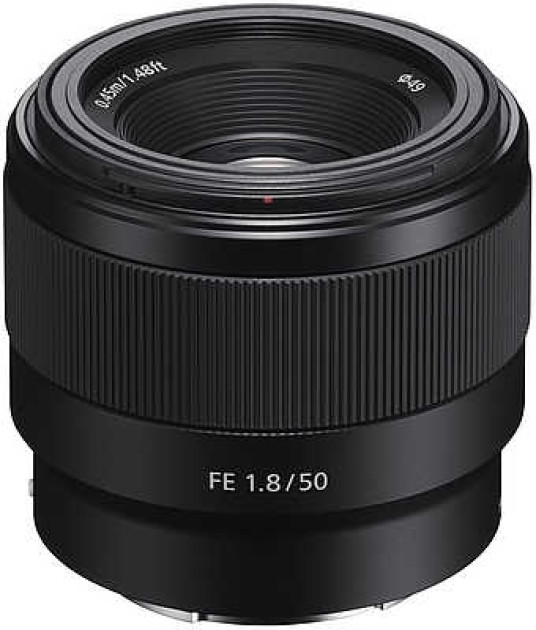
The Sony FE 50mm f/1.8 is defined by its extreme portability, weighing just 186 grams and measuring 69mm in diameter by 60mm in length. Ken Rockwell describes it as a 'flyweight' lens, noting it weighs less than one-quarter of the heavier Zeiss T* FE 50mm f/1.4 while delivering nearly identical results in real-world conditions. The construction is entirely plastic, which keeps the weight down but lacks the premium feel of metal-barreled alternatives. Photography Blog notes that while the barrel is plastic, the mount is metal, providing a sturdy connection to the camera body. Digital Camera World confirms the lens feels basic, lacking on-board switches or a focus distance scale, yet the plastic does not feel flimsy. This minimalist design makes it an ideal 'grab-and-go' option for street photographers who prioritize carrying minimal gear over tactile luxury.
Despite its lightweight nature, the lens lacks weather sealing, a significant omission for users shooting in harsh environments. Robb Sutton points out that the absence of weather seals means extra care is required when shooting in rain or dust. The lens also features a 49mm filter thread, which is a common and affordable size for accessories. The included hood is a simple bayonet-fit design rather than a petal shape, further emphasizing the lens's utilitarian approach. For photographers who value size above all else, the FE 50mm f/1.8 is one of the smallest full-frame primes available, easily fitting into small bags or even large pockets when paired with compact mirrorless bodies like the Sony A7C or A6000 series.
Autofocus Performance and Noise Levels
Autofocus performance is the most debated aspect of this lens, driven by its use of a basic DC motor rather than a faster linear or ultrasonic motor. Photography Blog reports that the focusing can be slow and noisy, often requiring approximately one second for the lens to hunt for focus, particularly in lower light conditions. While the system is usually accurate, the audible whirring is reminiscent of older screw-drive AF systems, which can be distracting for videographers. Digital Camera World describes the autofocus as 'reasonably quick and very quiet, although not completely silent,' highlighting a discrepancy in perception between reviewers. Some users find the noise negligible for still photography, while others note it is clearly audible during video recording, making it less ideal for professional video work where silence is paramount.
Ken Rockwell notes that the autofocus isn't particularly fast and makes a little noise, but emphasizes that it covers the entire frame effectively on bodies like the Sony A9. The focus ring is large and smooth, allowing for precise manual focus via a fly-by-wire electronic coupling, though it does not rotate during autofocus operation. However, Cameralabs points out that the focus ring has a non-linear gearing, which makes smooth focus pulling for video nearly impossible. This electronic coupling means there is no direct mechanical link to the lens elements, which some purists dislike. For still photographers, the autofocus is generally reliable, but those who need rapid, silent, and precise focus tracking for sports or wildlife should look elsewhere.
Image Quality and Sharpness Characteristics
Image quality from the Sony FE 50mm f/1.8 is generally praised for its sharpness, especially when stopped down. Robb Sutton reports that the lens delivers sharp and vibrant photos, with pleasing bokeh that is smooth and free from harsh edges. At f/1.8, the lens provides a shallow depth of field that is excellent for isolating subjects in portraits. However, sharpness drops off noticeably when shooting wide open, with some softness in the corners. Digital Camera World confirms that while there is 'very good sharpness and contrast' overall, the center sharpness is best when stopped down to f/2.8 or f/4. The optical design includes one aspherical element to minimize aberrations, resulting in minimal chromatic aberration and distortion. Photography Blog notes that fringing is very resistant, even without in-camera correction, and distortion is negligible, with only a trace of wavy barrel distortion visible in extreme geometric shots.
Vignetting is a more prominent issue, particularly at the maximum aperture. Digital Camera World highlights 'severe vignetting at f/1.8,' which is still visible at f/2.8. Photography Blog agrees, noting noticeable falloff wide open, which persists slightly at f/4. This light fall-off can be corrected in post-processing or via in-camera settings, but it is a characteristic to be aware of for those shooting wide open. The 7-blade circular aperture contributes to smooth bokeh, though Photography Blog mentions that distant out-of-focus foliage can look slightly messy. Overall, the lens punches above its weight in terms of optical performance, delivering professional-looking results that are difficult to distinguish from more expensive lenses in typical shooting scenarios.
Value Proposition and Market Position
The Sony FE 50mm f/1.8 is positioned as an affordable entry point into full-frame prime photography, typically priced around $230. Cameralabs describes it as a 'no-brainer' for Alpha owners starting out, noting that it is by far the most affordable 50mm option in Sony's lineup. Compared to the Zeiss FE 55mm f/1.8 ZA, which costs around four times as much, the FE 50mm f/1.8 offers a compelling alternative for budget-conscious photographers. Robb Sutton emphasizes that the lens strikes a great balance between price and performance, making it an excellent choice for hobbyists and beginners. The ability to assemble a low-cost trio of primes with the FE 28mm f/2 and FE 85mm f/1.8 further enhances its value proposition for those building a versatile kit without breaking the bank.
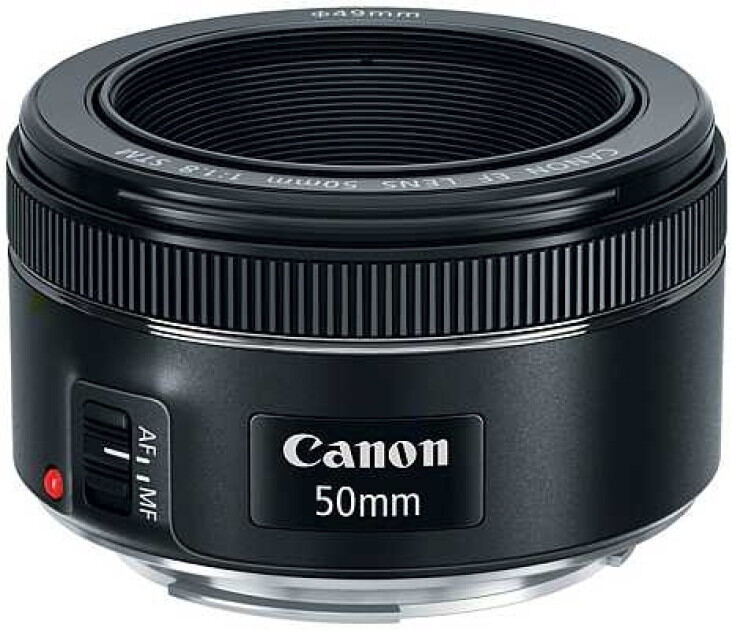
While the price is higher than the Canon EF 50mm f/1.8 STM, which retails for around $125, the Sony lens offers full-frame coverage and a more modern optical design. Photography Blog notes that Sony doesn't want to keep margins too tight, but the new optical design with an aspherical element justifies the cost for E-mount users. The lens fills a gap in Sony's lineup, providing a fast, standard prime that is accessible to a wide range of users. For those who cannot afford the higher-end Zeiss or Sony G Master lenses, the FE 50mm f/1.8 provides a significant upgrade in image quality and low-light performance compared to kit zooms, making it a smart investment for anyone looking to improve their photography without a hefty financial commitment.
Audible autofocus motor that hunts in low light
Despite its strengths, the Sony FE 50mm f/1.8 has several notable drawbacks that may deter some users. The most significant is the lack of weather sealing, which is a standard feature on many higher-end lenses and even some mid-range options. Robb Sutton and Digital Camera World both highlight this as a major con, making the lens less suitable for outdoor shooting in inclement weather. Additionally, the autofocus noise and speed can be a limitation for videographers and photographers who need rapid, silent focus acquisition. The DC motor is audible and can hunt in low-light conditions, which is a step backward from the near-silent performance of newer Sony lenses. The plastic build, while lightweight, feels less premium and durable compared to metal-bodied alternatives, raising concerns about long-term robustness.
Another area of concern is the severe vignetting at f/1.8, which can be distracting in unedited images. While correctable, it requires post-processing effort that some users may not want to undertake. The non-linear focus ring gearing also makes manual focus pulling for video difficult, limiting its utility for hybrid shooters. Furthermore, the lens lacks image stabilization, relying entirely on the camera body's in-body stabilization. While this is common for prime lenses, it means users with older Sony bodies without IBIS will not have any stabilization benefit. These shortcomings are trade-offs for the low price, but they are significant enough to consider when deciding if this lens meets specific professional or enthusiast needs.
Acts as a 75mm equivalent on APS-C bodies
The Sony FE 50mm f/1.8 is best suited for beginners and enthusiasts entering the Sony E-mount ecosystem who want a versatile, affordable prime lens. It is an excellent choice for portrait photographers who need a fast aperture for shallow depth of field and low-light performance without investing in expensive glass. Street photographers will appreciate its compact size and light weight, making it easy to carry for extended periods. Ken Rockwell recommends it for those who understand that the whole point of mirrorless is small size and light weight, and who want a 'non-imposing' lens for grab shots. The lens is also ideal for APS-C users, where it acts as a 75mm equivalent, perfect for portraiture and general photography.
However, it is not the best choice for professional videographers who require silent autofocus and smooth focus pulling, nor for photographers who frequently shoot in harsh weather conditions due to the lack of sealing. Users who demand the absolute highest corner-to-corner sharpness wide open may find the softness at f/1.8 disappointing and should consider the more expensive Zeiss or G Master alternatives. Those who prioritize tactile build quality and metal construction may also find the plastic barrel unsatisfying. Ultimately, the lens is a strong fit for shoppers who need a reliable, budget-friendly standard prime for still photography, but those who care more about weather resistance, silent AF, or premium build should look elsewhere.
Strengths
- +Compact and lightweight at 186g with 68.6mm diameter
- +Smooth bokeh quality with 7-blade circular aperture
- +Good image quality with minimal chromatic aberrations
- +Affordable price point at $229
Watch-outs
- −Severe vignetting at f/1.8 aperture
- −Audible autofocus motor noise during operation
- −No weather-seals or internal image stabilization
How it compares
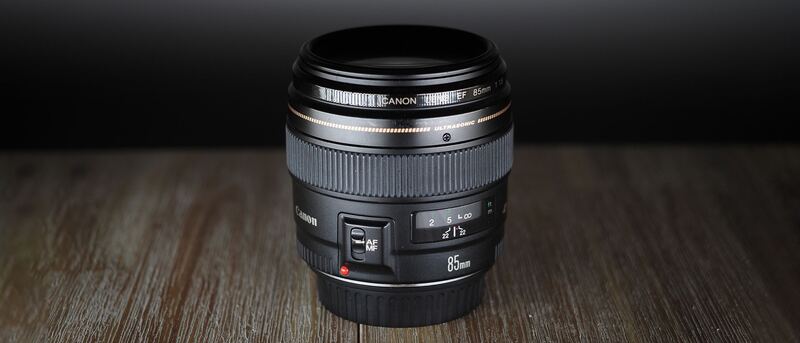
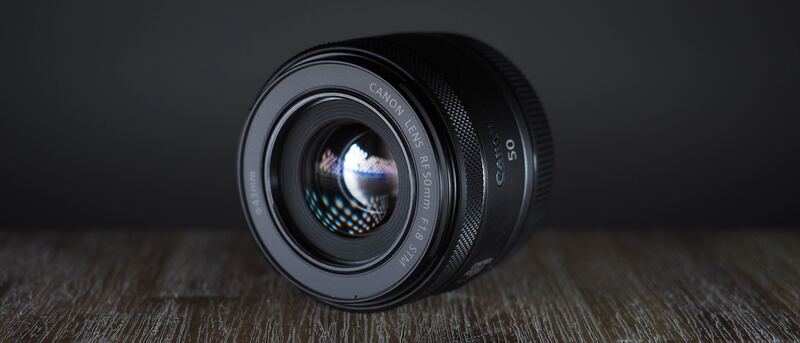
The Sony FE 50mm f/1.8 stands out for its compact design and affordable price, but it falls short compared to the Canon RF50mm F1.8 STM in terms of optical quality and close-focusing capability. Unlike the Canon EF 50mm f/1.8 STM, it suffers from severe vignetting and audible autofocus noise, making it less suitable for videographers. While it's lighter than the Canon EF 85mm f/1.8 USM, it lacks the telephoto reach and professional build quality that would make it competitive with higher-end options.
Rating sources
Our 4.2 score is the average of these published ratings. More about methodology.