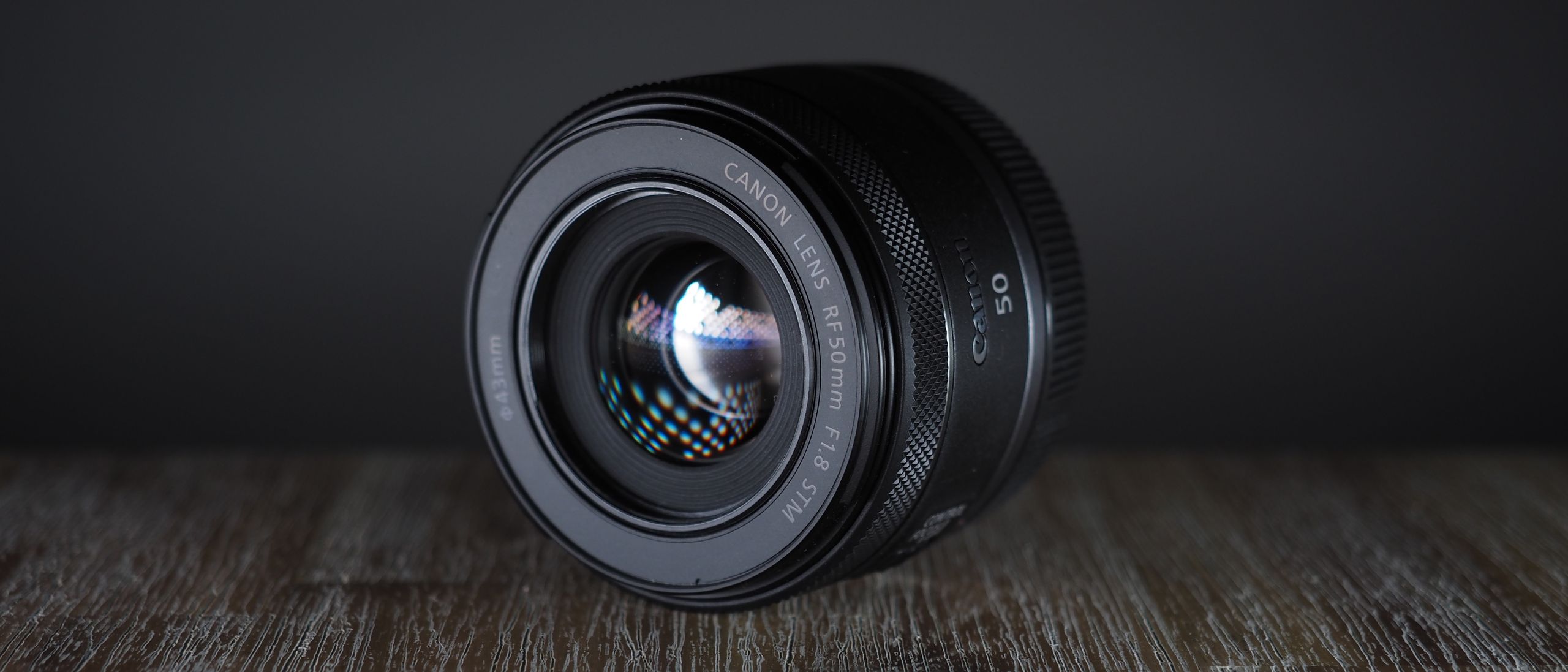
Canon rebuilt the optics of its classic 50mm f/1.8 for the RF mount, and the result punches well above its price. Digital Camera World praised it as 'everything you want a nifty fifty to be,' while Ken Rockwell noted its 'superb optics' and 'very close focussing.' It carries the first aspherical element in any Canon 50mm f/1.8 design since 1987, and sharpness holds up against the far pricier RF 50mm f/1.2L. Reviewers flagged the missing image stabilization and weather sealing, which points it at casual photographers and EOS R users who want an affordable standard lens rather than professionals who need heavy-duty build quality.
Full review
The smallest optic in the EOS R system
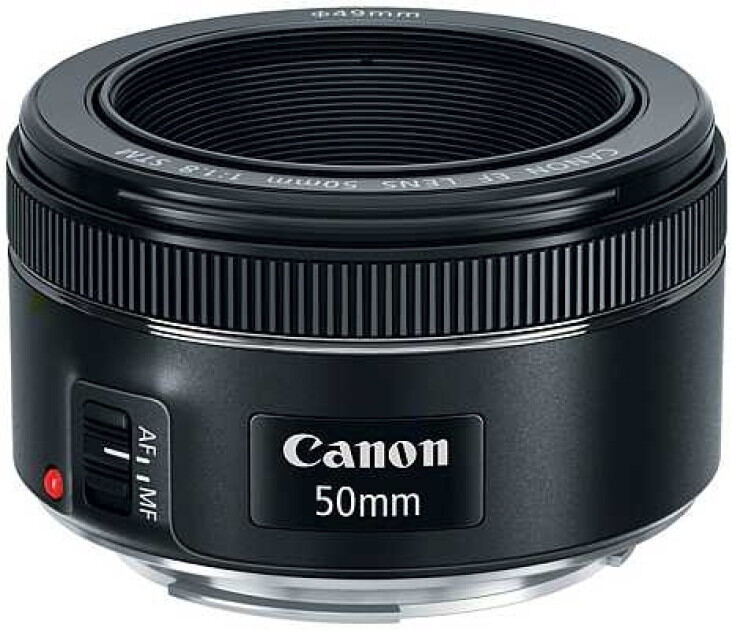
The Canon RF 50mm f/1.8 STM represents a significant redesign from its EF predecessor, featuring a more compact form factor that sits closer to the sensor. According to Ken Rockwell, the new lens is "quite different" from the 2015 EF 50mm f/1.8 STM, with optics positioned much closer to the sensor, resulting in a smaller overall package. Digital Camera World's James Artaius notes the lens measures 69.2 x 40.5mm and weighs 160g, which is "truly pocket-sized" and "the smallest optic for the EOS R system." The lens employs six elements in five groups with seven aperture blades, and features a 43mm filter thread, a reduction from the 49mm thread on the EF version. However, the build quality has received mixed reviews, with Lenses Pro describing it as "mostly plastic" that "gives it a less metal, more budget feel than pricier glass," though still "not flimsy" and "comfortably balanced on a mid-sized DSLR or mirrorless body."
Optical Performance and Sharpness
Optical performance of the Canon RF 50mm f/1.8 STM shows marked improvements over previous iterations, particularly in sharpness and contrast. Ken Rockwell highlights that this is "the first optical redesign of the Canon 50mm f/1.8 since 1987," incorporating an aspherical element for the first time in any Canon 50mm lens slower than f/1.2. Digital Camera World's review confirms that it delivers "great image quality (on par in some areas with the RF 50mm f/1.2L, which costs over ten times as much!)" in a "truly pocket-sized lens." However, Fstoppers' Michael Breitung notes that "wide open, it is nearly unusable," with only the center of the frame sufficiently sharp, and that "soft corners are unacceptable" for landscape photography. Cameralabs' Gordon Laing states that while it's "noticeably sharper across more of the frame when wide-open," it doesn't reach the same standard as the RF 35mm f/1.8 and RF 85mm f/2, which are "sharper across more of the frame" and offer better quality at close range.
Autofocus and Handling
Autofocus performance is described as "deceptively capable" by Lenses Pro, with the STM drive operating "nearly silently" and providing "reliable" results for portraits and street work. The lens features a custom control ring that allows for quick adjustments of exposure or ISO and works well for video. According to Cameralabs, the lens employs Canon's STM focusing motor with "internal barrels that extend and retract during use," and while both the EF and RF versions are "audible when focusing for movies," the RF version has a "single ring towards the end of the barrel that turns more smoothly" than the EF version's scratchy mechanism. The lack of an AF/MF switch on the lens itself, as noted by Ken Rockwell, means all switching happens through the camera body or the control ring.
A low-profile choice for street photography
Real-world testing reveals the lens to be highly functional for everyday photography, particularly in portrait and street photography scenarios. Michael Breitung from Fstoppers reports using the lens for landscape, architecture, and street photography and "never regretted my purchase," noting that it "solves this problem while adding only another 160 g to my backpack" and is "perfect for street photography" where "you usually want to keep a low profile." The lens's compact size and lightweight design make it ideal for travel and everyday use, as noted by Lenses Pro, which states it's "pocketable and nicely balanced" on small mirrorless bodies. However, the lens does show limitations in low-light conditions and with fast action, as it lacks in-lens stabilization and has modest subject-tracking capabilities, according to Lenses Pro. Digital Camera World's review confirms the lens is "a fantastic everyday lens that pairs well with any RF body," particularly suitable for the Canon EOS RP if you want a "sleek, street-friendly setup."
Nearly unusable wide open for landscapes
Despite its many strengths, the Canon RF 50mm f/1.8 STM has several notable drawbacks that may deter certain users. Ken Rockwell explicitly lists "No AF/MF switch" and "No stabilization switch" as missing features, while Lenses Pro points out the lack of weather sealing, stating it "has no mount gasket or sealing" and should be avoided in rain or dusty conditions. Cameralabs' Gordon Laing notes that while it's "noticeably sharper across more of the frame when wide-open," it doesn't match the quality of the RF 35mm f/1.8 and RF 85mm f/2, which are "sharper across more of the frame" and offer better close-up quality and optical stabilization. Additionally, the lens's performance at wide apertures is limited, with Fstoppers' Michael Breitung noting that it's "nearly unusable wide open" and that "soft corners are unacceptable" for landscape photography. The lack of in-lens stabilization also limits its use in handheld situations without body stabilization, as mentioned by Lenses Pro.
Aimed at everyday and hybrid photo/video shooters
The Canon RF 50mm f/1.8 STM is best suited for photographers seeking an affordable, compact, and lightweight standard lens for everyday use, particularly those who value portability and versatility. According to Digital Camera World, it's "an essential (and truly affordable) lens for the EOS R family" and "a fantastic everyday lens that pairs well with any RF body," especially for users looking for a "sleek, street-friendly setup." Lenses Pro identifies it as ideal for "everyday shooters, street and portrait photographers, and hybrid photo/video users" who want "less strain and more time shooting." However, it's not recommended for professional or demanding applications, as noted by Cameralabs, where users seeking "better quality and close-ups" will likely prefer the RF 35mm f/1.8 and RF 85mm f/2. The lens is also not ideal for those requiring weather sealing or high-performance in low-light situations, as highlighted by Lenses Pro and Fstoppers, who note its limitations in these areas.
Under a tenth of the f/1.2L's price
Priced at around $179 new, the Canon RF 50mm f/1.8 STM offers exceptional value for its price point, particularly when compared to other lenses in the Canon RF lineup. Digital Camera World notes that it's "a less than a tenth of the price of its f/1.2L bigger brother" and "the cheapest native lens in the RF system to date." Ken Rockwell emphasizes that it's "the cheapest 50mm lens in the Canon system" and "a superb lens in spite of its giveaway price," while Cameralabs' Gordon Laing notes that it's "the cheapest model in the RF catalogue to date" and "set to become a best-seller in the EOS R mirrorless system." However, the lens's value is somewhat tempered by its limitations in low-light performance and lack of weather sealing, which may be important considerations for some users. Despite these drawbacks, the lens's compact size, lightweight design, and overall performance make it a compelling option for those seeking an affordable prime lens for everyday photography.
Lighter and cheaper than Nikon's Z 50mm f/1.8
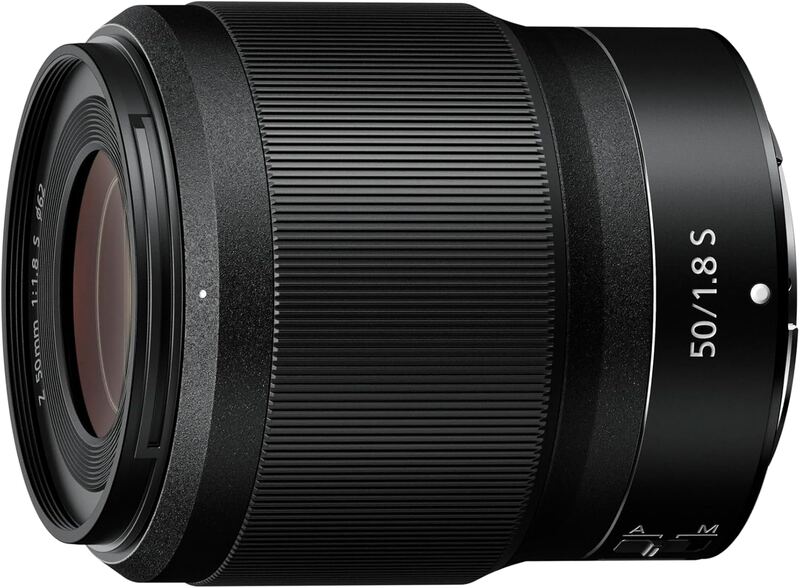
When compared to other lenses in the Canon RF lineup, the RF 50mm f/1.8 STM stands out as the most affordable option, but it doesn't match the performance of higher-end alternatives like the RF 50mm f/1.2L USM, which costs over ten times as much. Digital Camera World's review notes that it delivers image quality "on par in some areas with the RF 50mm f/1.2L," though the latter is "astonishingly expensive" and "dominated by prestige lenses and premium-grade, professional optics." Cameralabs' Gordon Laing compares it to the RF 35mm f/1.8 and RF 85mm f/2, stating that while these are "sharper across more of the frame" and offer better quality at close range, they're "still up to three times more expensive." The lens also compares favorably to the Nikon Z 50mm f/1.8, which is "2½ times as heavy, over twice as long and three times as expensive," according to Ken Rockwell. However, the RF 50mm f/1.8 STM's performance at wide apertures is limited compared to these alternatives, making it less suitable for certain demanding applications.
Strengths
- +Superb image quality with very sharp performance and no barrel distortion
- +World's closest-focussing non-macro 50mm lens at 0.3m minimum focus distance
- +First Canon 50mm f/1.8 with aspherical element for improved optics
- +Compact and lightweight design at 160g and 69.2 x 40.5mm dimensions
Watch-outs
- −No image stabilization or weather sealing
- −No AF/MF switch or stabilization switch
How it compares
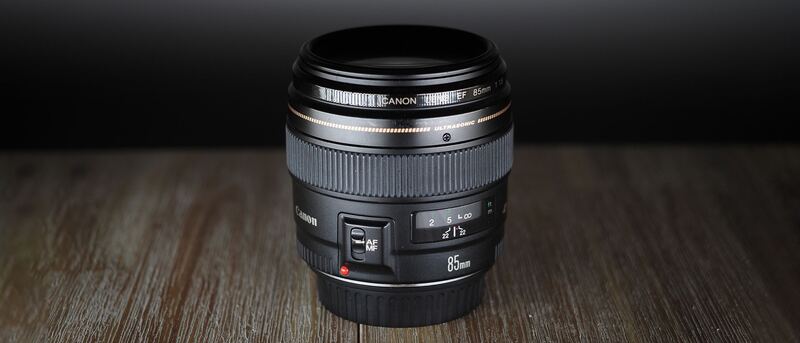
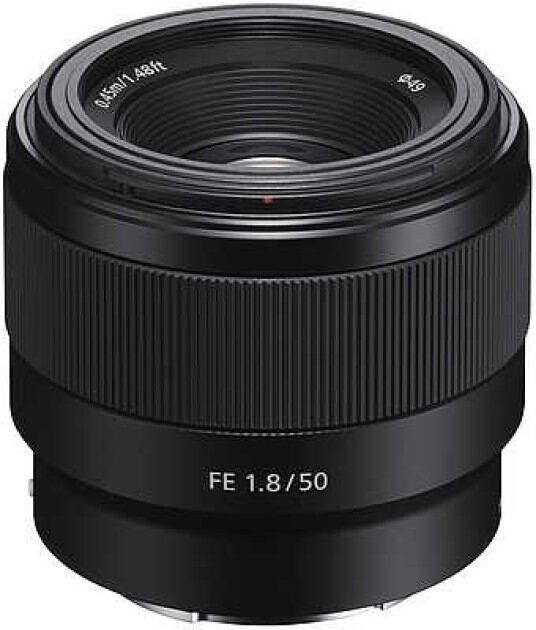
The Canon RF50mm F1.8 STM outperforms the Sony FE 50mm f/1.8 with its first aspherical element and superior close-focusing distance, but it's not as compact as the Canon EF 50mm f/1.8 STM. Compared to the Canon EF 85mm f/1.8 USM, it lacks the telephoto reach and hood included, though it offers better overall image quality and more advanced optical design. It's the most technically advanced of the group but still lacks image stabilization and weather-sealing.
Rating sources
“Canon RF 50mm f/1.8 STM (43mm filters, 5.6 oz./159g, 1'/0.3m close focus, $179 new or about $99 used).”
“And yes, wide open, it is nearly unusable.”
Our 4.4 score is the average of the 4 scored reviews above; 2 more reviewed it without printing a score and are not in the average. Ratings marked * were derived from the reviewer’s written analysis or video transcript — the publisher didn’t print an explicit numeric score, so we inferred one from their own words. Click through to verify. More about methodology.