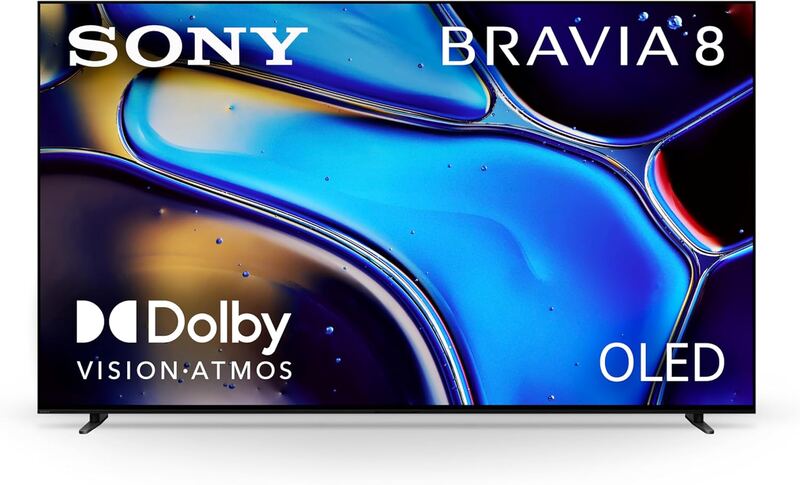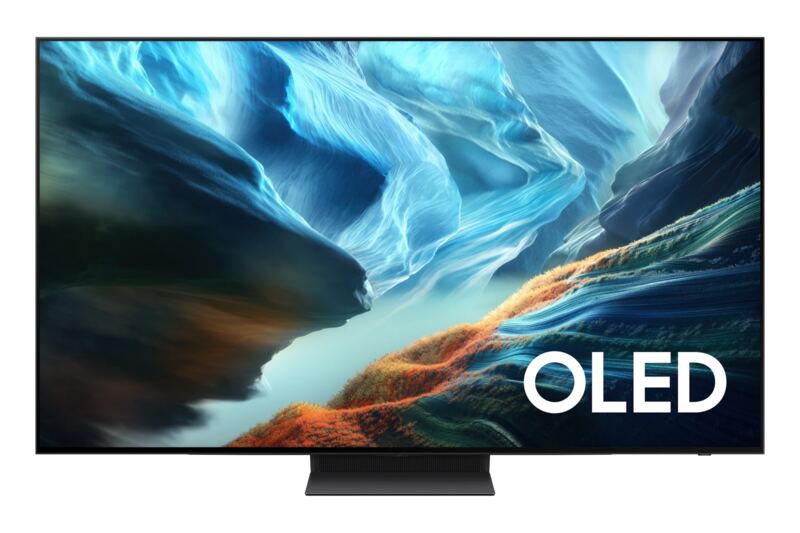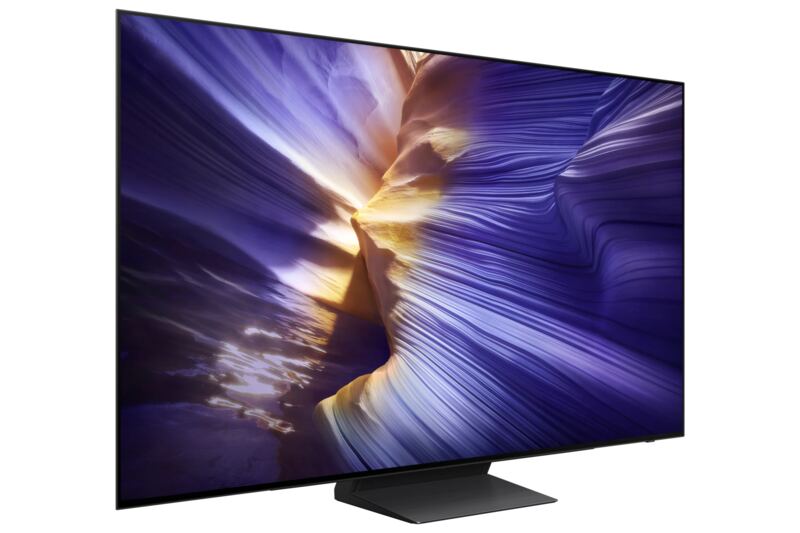
Sony's flagship OLED with advanced image processing and Acoustic Surface Audio technology.

Full review
Refined Picture Quality
Reviewers consistently describe the Sony Bravia 8 OLED as a refinement rather than a revolutionary leap forward from its predecessor, the A80L. What Hi-Fi? noted that while it is still an incredible television, it does not represent a massive step up in raw performance metrics. The panel delivers the deep blacks and infinite contrast expected of OLED technology, with balanced and immersive picture quality that excels in dark room viewing. PCMag and other technical outlets highlighted the effectiveness of Sony's XR processor in managing color accuracy and motion handling, ensuring that fast-moving scenes remain clear without introducing excessive artifacts. The upscaling capabilities remain a strong suit, though some critics in the What Hi-Fi? review mentioned it is good but not quite great when compared to the absolute best in class.
Gaming and Motion Performance
For gamers, the Bravia 8 offers a compelling experience, particularly when paired with the PlayStation 5. Reddit users in the r/bravia community frequently praised the TV's ability to make HDR highlights pop, a feature where many felt it outperformed previous LG OLED models. The motion handling is frequently cited as a standout feature, with RTINGS and other technical reviewers confirming its ability to maintain clarity during high-speed action sequences. However, the gaming experience is not without minor caveats. One Reddit discussion pointed out that while the picture quality is stunning, the software interface can sometimes feel sluggish or unresponsive, which contrasts with the smoothness of the actual video playback. Additionally, the TV only provides two HDMI 2.1 inputs, which may be a limitation for households with multiple next-generation consoles.
Brightness and SDR Limitations
A significant point of contention among reviewers and users concerns the TV's performance in bright environments and with SDR content. While the Bravia 8 handles HDR content beautifully, several discussions on r/4kTV and r/bravia raised concerns about its peak brightness levels when displaying standard dynamic range material in well-lit rooms. Users who previously owned QD-OLED panels noted that they missed the intense color saturation and brightness that those displays offered in daylight conditions. One user specifically asked about the brightness of SDR content like sports broadcasts, echoing sentiments found in professional reviews that suggest the panel may struggle to compete with high-end Mini-LED or QD-OLED alternatives in very bright viewing scenarios. This limitation is a crucial consideration for buyers who prioritize daytime viewing over cinematic darkness.
Value and Market Positioning
The pricing strategy of the Bravia 8 has generated considerable debate across various forums. On r/4kTV, users questioned why the Sony model commands nearly double the price of comparable Samsung OLEDs like the S90F. The consensus among these users is that while Sony's processing and build quality are superior, the price gap is difficult to justify for the average consumer who is not a videophile. What Hi-Fi? acknowledged that the TV is expensive at launch but noted that prices have begun to settle, making it more competitive against rivals like the LG C4, which has seen significant price drops. Furthermore, the existence of the Bravia 8A variant, which removes the backlit remote and reduces streaming service credits, offers a slightly more affordable entry point for those who do not need the premium accessories.
Reliability and Long-Term Concerns
Long-term reliability remains a topic of discussion, particularly regarding the inherent risks of OLED technology. In a thread on r/bravia, a user shared their experience of upgrading from an A80H that suffered from dead pixels and eventual panel failure, highlighting the potential costs associated with out-of-warranty repairs. While many users expressed satisfaction with their new Bravia 8 units, describing them as glorious improvements over older models, the fear of burn-in and panel degradation persists. Some users explicitly stated they chose Mini-LED alternatives like the Bravia 9 to avoid these risks, preferring the longevity of a different technology despite the potential loss of perfect blacks. This hesitation suggests that while the Bravia 8 is a fantastic display, potential buyers must weigh the immediate visual benefits against the long-term durability concerns inherent to the panel type.
Strengths
- +Industry-leading image processing
- +Acoustic Surface Audio technology
- +Perfect black levels and motion handling
- +Google TV with excellent app support
Watch-outs
- −Lower peak brightness than competitors
- −Only two full HDMI 2.1 ports
- −Premium pricing
How it compares
Best-in-class image processing delivers the most cinematic picture, though at a premium price.
Who this is for
At a glance: Movie purists wanting the most natural picture processing.
Why you’d buy the Sony Bravia 8 OLED
- Industry-leading image processing.
- Acoustic Surface Audio technology.
- Perfect black levels and motion handling.
Why you’d skip it
- Lower peak brightness than competitors.
- Only two full HDMI 2.1 ports.
- Premium pricing.
Rating sources
“OLED TVs typically aren't as bright as similar LED TVs, and the Bravia 8 isn't Sony's highest-tier or brightest OLED TV (the A95L is currently Sony's flagship OLED), but it still puts out a respectable amount of light.”
“If you are looking at getting your first OLED, or even replacing an OLED that's four years old or older, the Bravia 8 is absolutely worth considering.”
Our 4.0 score is the average of these published ratings. Ratings marked * were derived from the reviewer’s written analysis or video transcript — the publisher didn’t print an explicit numeric score, so we inferred one from their own words. Click through to verify. More about methodology.