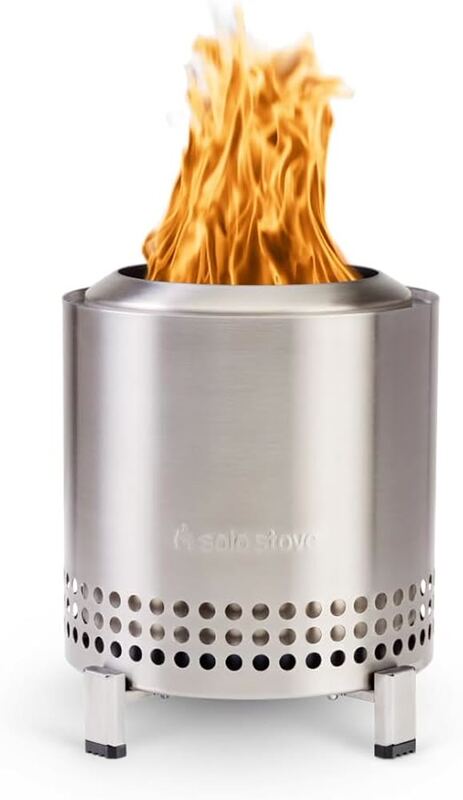
Outdoor Gear Lab made Solo Stove's flagship 27-inch smokeless wood pit its overall pick for 2026, ahead of 16 competitors on both heat output and smoke reduction. The Yukon 2.0 keeps the original's double-wall airflow and finally adds the removable ash pan owners begged for. It's the priciest pick in this lineup, but the lifetime warranty and the way it handles full-size logs get a backyard pit as close to a true campfire as you can get without the smoke.
Full review
Heat Output and Burn Quality
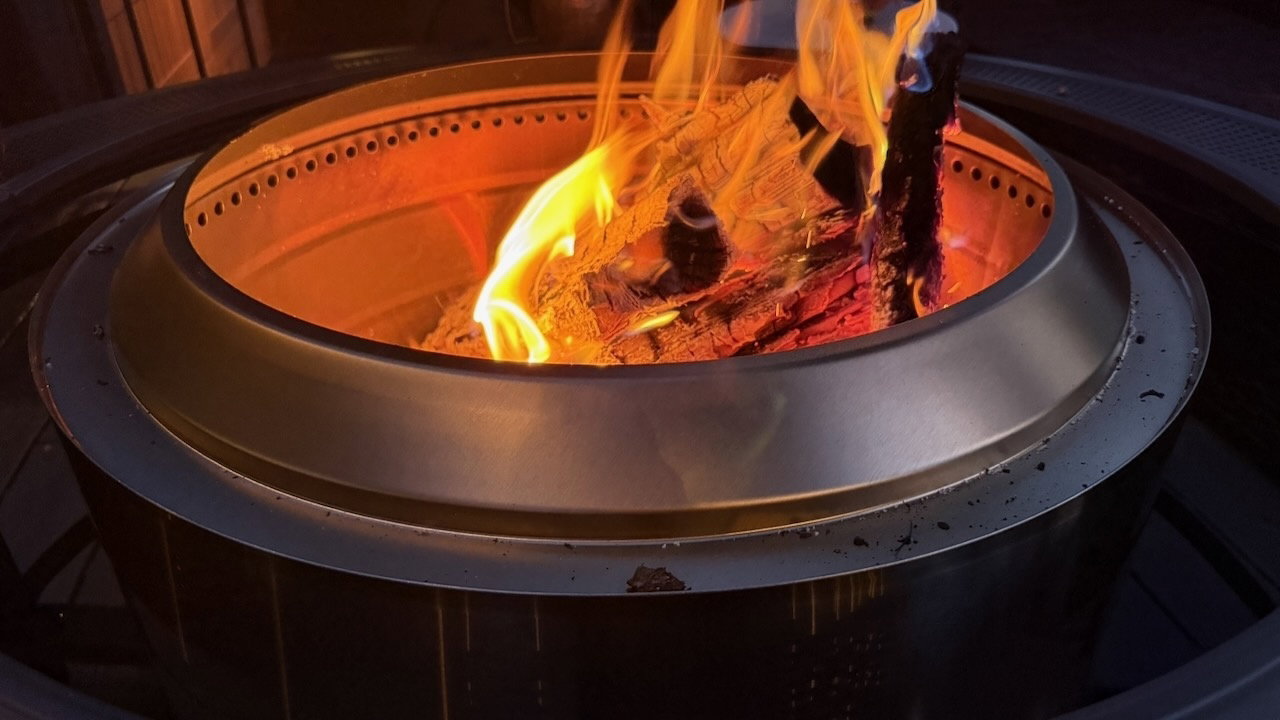
Outdoor Gear Lab measured infrared temperatures up to 1,000F at the Yukon 2.0's surface during its own testing and tracked heat dispersion past 6 feet from the pit, the highest readings in their 17-pit field. The Yukon's double-wall design forces preheated air through a ring of upper burn holes. That secondary combustion is what makes the Yukon feel meaningfully warmer than wider but shallower wood pits at the same fuel load.
Burn time on a single load lands around 70 minutes per Outdoor Gear Lab's measurement, putting the Yukon mid-pack on fuel efficiency rather than at the top. The trade-off is that the larger firebox accepts logs up to 22 inches long, so you spend less time splitting wood than you would with the Bonfire. For households burning seasoned hardwood, the Yukon delivers the most usable heat per session in this draft.
Smokeless Performance
The Yukon 2.0 is the strongest smokeless performer in Outdoor Gear Lab's 2026 fire pit test. Their reviewer wrote that 'no other pit reduced smoke particles as much as the Yukon 2.0,' attributing the result to the double-chambered walls and the top-and-bottom vent rings that drive secondary combustion. In practice, that means clothes and hair come away noticeably less smoky after an evening around the pit, especially with dry wood.
The caveat every Solo Stove review repeats applies here too: smokeless does not mean zero smoke. Wet or green wood will still smolder until the secondary burn kicks in, and the first few minutes of any fire produce visible smoke before the airflow loop is hot enough to consume it. Once the Yukon hits temperature, though, the smoke essentially vanishes.
Removable ash pan fixes the original Yukon's flaw
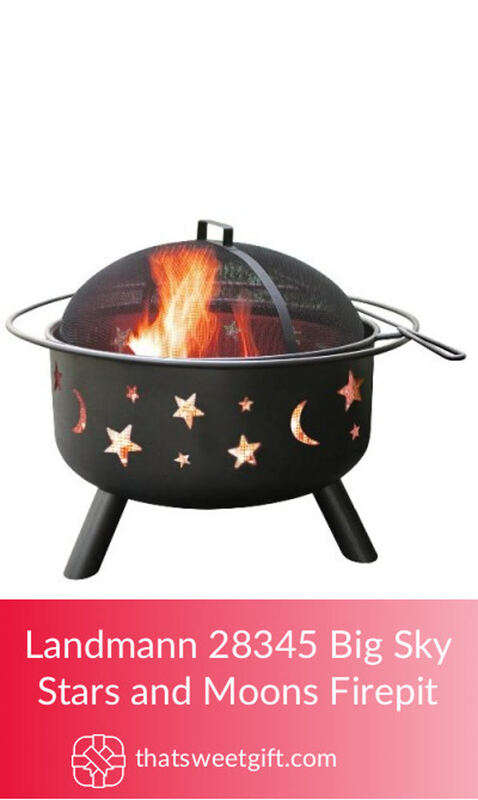
Construction is 304 stainless steel throughout, the same grade Solo Stove uses across their consumer line and the reason the Yukon carries a lifetime warranty. The walls are noticeably thicker than the Landmann Big Sky's painted steel, and there are no exposed welds or visible seams on the outer shell. The 2.0 revision adds a removable ash pan that drops out from under the base plate, which fixes the original Yukon's biggest cleanup complaint.
Stainless will develop a heat-discoloration patina around the burn holes after the first few uses, which Solo Stove acknowledges as cosmetic only. The base plate, ash pan, and shell are all separable, so any individual piece can be replaced under warranty without buying a new pit.
Setup and Portability
There is no assembly. The Yukon ships fully built and ready to burn in under a minute once you unbox it. At 42 lbs, though, it is not what most people would call portable. Outdoor Gear Lab specifically called out that the Yukon 'can be awkward to carry and does not come with a stand,' noting the lack of proper carrying handles given the weight. Two-person lifts are the practical answer for moving it across the yard.
Solo Stove sells an optional stand that lifts the pit off heat-sensitive surfaces like wood decks and is effectively required for deck use — the base radiates enough heat to scorch composite decking after a long burn. Budget another $50 to $80 for the stand if you do not have a stone or concrete pad.
Fuel Cost and Practicality
Wood is cheap or free depending on your situation, and the Yukon happily burns hardware-store fire bundles, seasoned firewood, or Solo Stove's own pellets. Two-to-three logs deliver a roughly 70-minute burn at full output, so an evening of fire across three reloads typically clears one standard $7 fire bundle.
Versus the propane picks in this draft, the Yukon trades convenience for ambiance and operating cost. There is no tank to refill, no regulator to fuss with, and no 10-second startup — you build a fire the traditional way, with kindling and time. For anyone who genuinely wants the crackle and the dancing flame, that trade is the point.
Heat fades after 5 to 6 feet
The two real weaknesses are portability and price. At $400-plus and 42 lbs, this is not the pit you toss in the truck for a beach trip — the Outland 893 Deluxe is a far better camping companion. The Yukon is meant to live in one spot in the yard. Outdoor Gear Lab's portability score for the Yukon was their lowest among the top five.
Heat radiates outward less aggressively than wider-but-shallower pits because the double-wall geometry pushes heat upward through the secondary burn. People sitting more than 5 to 6 feet away will feel the warmth fade. If you primarily want a backyard heater for a wide patio circle, a propane fire table will do a better job of throwing heat in every direction.
Built for permanent backyard hosting, not travel
The Yukon 2.0 is the right pit for a household that hosts regularly, has a permanent backyard or patio spot for the fire, and cares about the campfire experience more than tank-and-go convenience. It is built for groups of six or more and rewards the buyer who feeds it real seasoned wood. The lifetime warranty makes the $400 outlay easier to swallow.
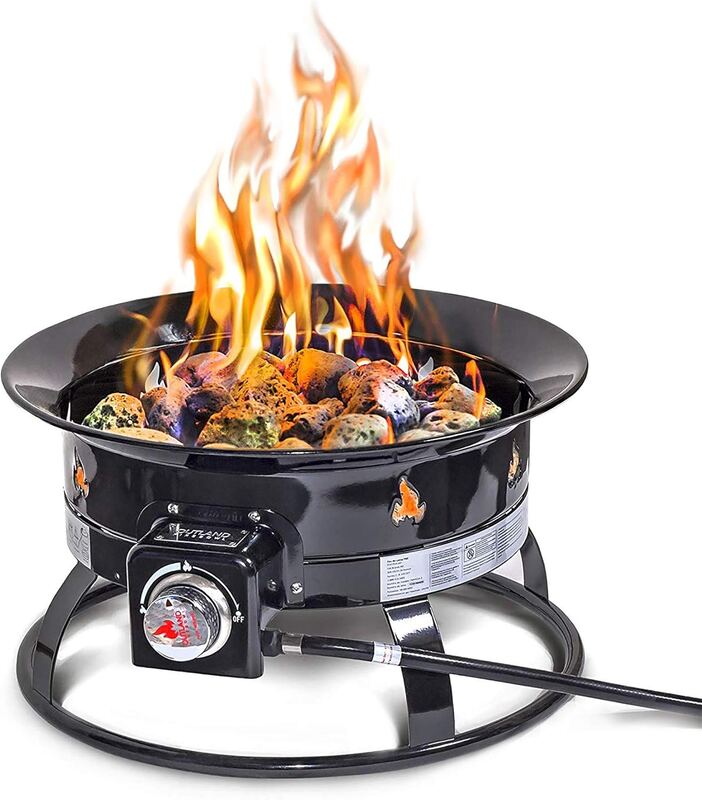
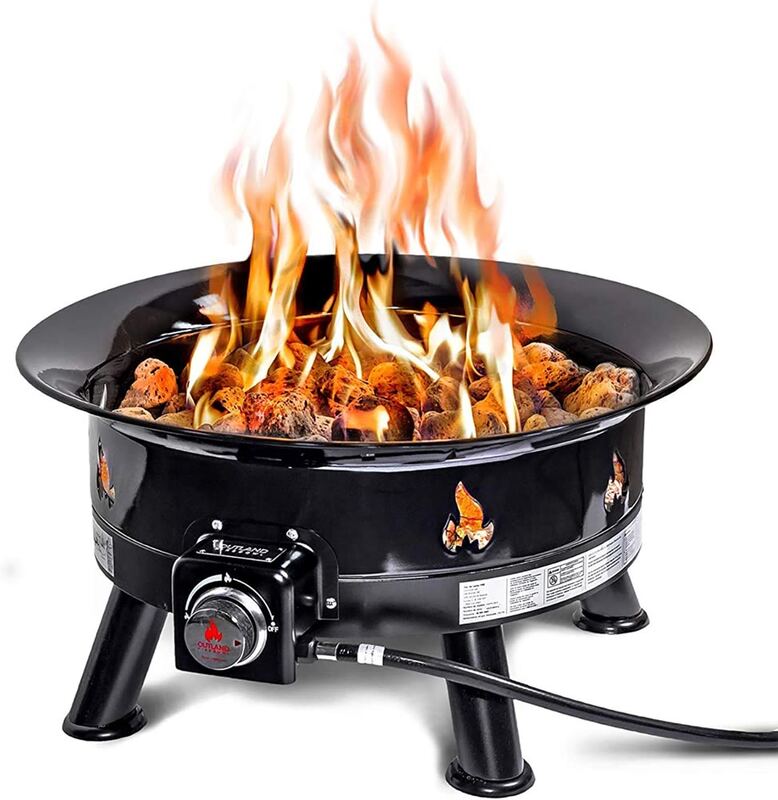
It is the wrong pit for renters who move often, anyone who needs portability, and anyone burning under HOA or municipal restrictions that ban wood fires. In those cases, the Outland Mega 883 or 893 Deluxe gets you most of the social experience with none of the smoke or storage hassle.
Drops to $330 during Memorial Day sales
At a routine selling price around $399 to $449 depending on bundle, the Yukon 2.0 is the most expensive pick in this draft by a wide margin. The justification is the lifetime warranty, the 304 stainless build, and the test-verified smoke reduction — none of the cheaper wood pits match all three. The Bonfire 2.0 saves roughly $150 but gives up the larger firebox and 4-foot flames.
Solo Stove discounts the Yukon meaningfully on holidays. Patient buyers who wait for Memorial Day or Black Friday can typically pick one up in the $330-$370 range, which is where the value math becomes hard to argue with.
Ash cleanup only once a year
Long-term ownership reviews paint the most flattering picture of the Yukon. The reviewer at Rad Family Travel, who has owned theirs for nearly four years, summarized the experience this way: 'You'll love sitting by the fire without smelling like one. Ash clean up is not only easier, you still will only have to do it like once or so a year.' Once-a-year ash cleanup is a meaningful break from the weekly scoop-and-bag chore traditional wood pits demand.
Active Gear Review described the Yukon's secondary combustion this way: 'Air silently vents and circulates throughout the fire pit, sustaining an ever growing, hot flame, that eliminates smoke and helps create fine ashes.' The same review notes the cost of that efficiency — 'you will be going through a lot more wood' — but it is what makes the Yukon feel like a real bonfire rather than an oversized brazier, especially after dark when the orange wash on surrounding faces is the centerpiece of the social experience.
Another consistent thread across owner reviews is the absence of post-fire smell on clothes. Traditional wood pits leave that distinctive campfire scent in everything that was sitting downwind, including hair, jackets, and patio cushions. The Yukon's secondary combustion cuts that almost entirely — by the time the smoke particles would normally make it past your seated guests, they have already been burned a second time inside the firebox. For households that host neighbors who do not want to launder a wool sweater after every fire, that single property is worth most of the price premium.
Scored 84 to the Bonfire's 83 in testing
Within the Solo Stove line, the Yukon sits one tier above the Bonfire 2.0 in this draft and one tier below the now-discontinued Solo Stove Pi Prime pizza oven attachment as a backyard centerpiece. Outdoor Gear Lab placed the Yukon 1 point above the Bonfire (84 vs 83 in their 17-pit test), so the gap is small on raw score but meaningful on the social experience around a larger fire.
Outside the Solo Stove line, the closest true competitor at this price point is the Breeo X Series X24, which ODL scored 73/100 in the same test — meaningfully behind the Yukon on smoke management and ash cleanup. Buyers cross-shopping the Breeo for the cooking-grate accessory ecosystem may still prefer it, but for pure backyard-bonfire ambiance the Yukon wins on test scores and review consensus.
Strengths
- +Outdoor Gear Lab's #1 of 17 tested fire pits at 84/100, with infrared readings up to 1,000F and heat dispersion past 6 feet
- +Double-wall 360-degree airflow burns off smoke better than any other pit ODL tested
- +27-inch diameter inner bowl accepts 22-inch logs for true backyard bonfires that warm 6+ people
- +New removable ash pan and base plate makes cleanup a 30-second job instead of tipping a 42-lb shell
- +304 stainless steel build backed by Solo Stove's lifetime warranty
Watch-outs
- −At 42 lbs with no built-in carry handles, moving it across the yard is awkward
- −Stand sold separately and is required to protect wood decks from radiated floor heat
- −Wood pellets and small kindling burn through fast at this firebox volume
How it compares
The Yukon outclasses the Solo Stove Bonfire 2.0 on heat output and group capacity — its 27-inch diameter takes 22-inch logs versus the Bonfire's 16-inch max — but costs roughly $150 more and is harder to move. Compared to the Outland Living Mega 883, the Yukon delivers more radiant warmth and zero ongoing fuel cost, while the Mega ignites in 10 seconds and skips smoke management entirely.
Rating sources
“With infrared thermometer readings of up to 1,000 degrees and heat dispersion well past 6 feet, the Yukon was one of the best-performing pits.”
“You'll love sitting by the fire without smelling like one. Ash clean up is not only easier, you still will only have to do it like once or so a year.”
“The flame reaches up to 4 feet and the secondary combustion nearly eliminates all smoke.”
Our 4.4 score is the average of these published ratings. Ratings marked * were derived from the reviewer’s written analysis or video transcript — the publisher didn’t print an explicit numeric score, so we inferred one from their own words. Click through to verify. More about methodology.