Verdict
Top Score · #1 of 4Reviewed by Mike Hun·May 5, 2026

Samsung Galaxy Ring

Averaged from 5 published ratings
The verdict

The Samsung Galaxy Ring offers a compelling smart ring experience for Samsung users, with seamless integration for notifications and controls. PCMag's Andrew Gebhart praised its comfortable design and accurate health tracking, though noted limited utility for non-Samsung users. TechRadar highlighted its water resistance and all-day comfort. The device falls short for those outside the Samsung ecosystem, and battery life may disappoint heavy users. This ring is best suited for Samsung smartphone owners seeking a minimalist wearable for health monitoring and basic smart features.

Samsung Galaxy Ring

Full review

Design and Build Quality

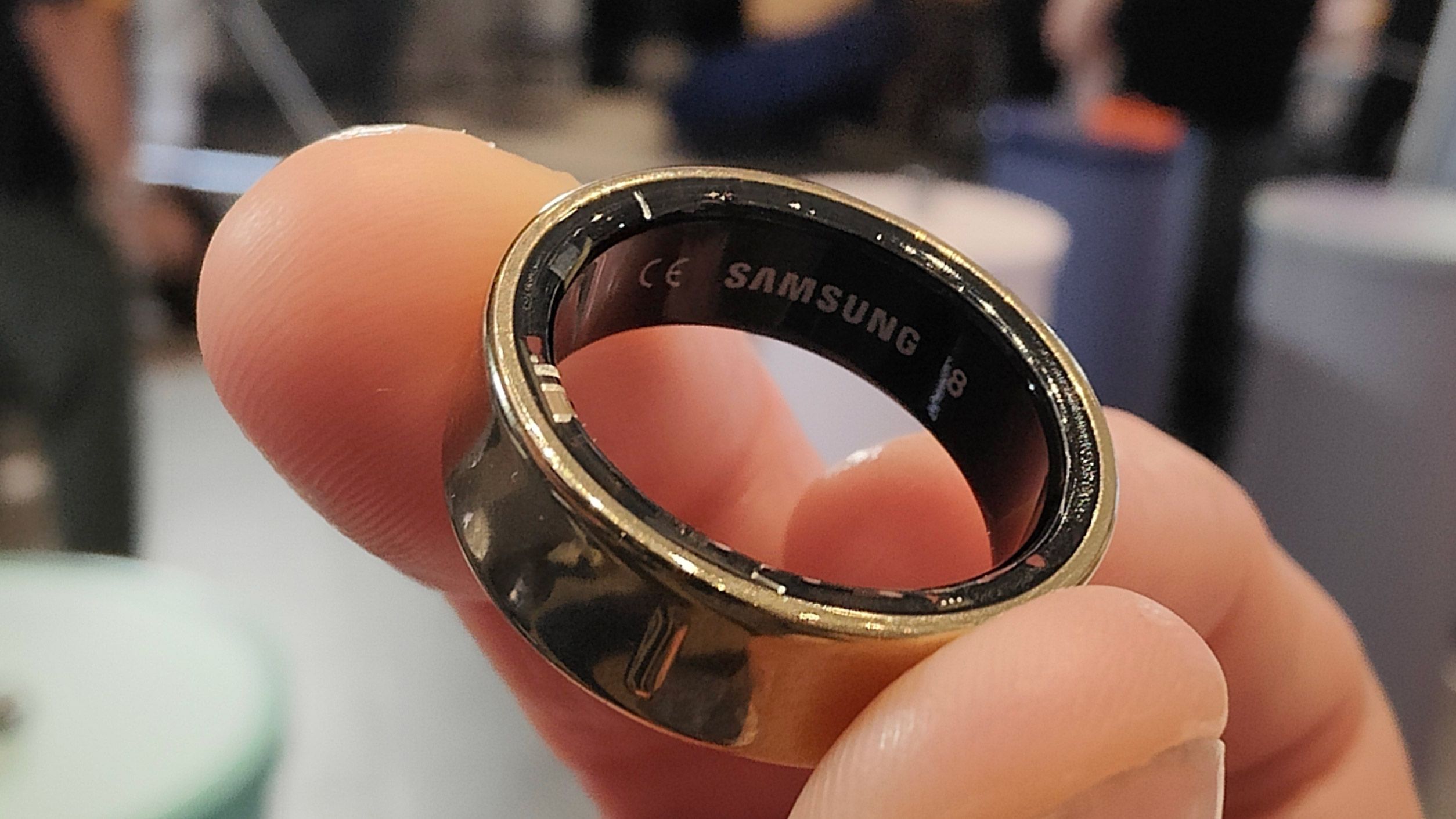
Samsung Galaxy Ring presents a minimalist, titanium-based design that stands out for its thin profile and durability. At 7.0mm wide and 2.6mm thick, the ring is notably slimmer than competitors like the Oura Ring 4 (7.9mm) and Ultrahuman Air (8.1mm), according to a Runner's World review. The concave center design, as noted by Women's Health's Hattie Parish, helps minimize scratches and wear over time. The ring comes in four finishes — titanium black, silver, gold, and two-tone — with nine sizes available through a free sizing kit. TechRadar's review emphasized the ring's unobtrusive nature, particularly when worn on the non-dominant index finger, which many users found comfortable after an initial adjustment period. The charging case, described as resembling a jewelry box by Business Insider's Rachael Schultz, is compact and portable, measuring smaller than an AirPods case. It can charge the ring up to 1.5 times without wall connection, offering a significant advantage for travelers. The ring's weight, ranging from 2.3g to 3g depending on size, was noted as minimal by Runner's World's Kieran Alger, who found it comfortable for daily wear, though he did take it off during gym sessions to avoid interference with heavy lifting.

Setup and Compatibility

Setup of the Samsung Galaxy Ring is straightforward, according to PCMag's Andrew Gebhart, who noted that users simply download the Samsung Health app and connect the ring via Bluetooth. The process includes setting daily targets for steps, active time, and calorie burn, as well as presetting favorite exercises. Gebhart also highlighted the ability to customize tracking parameters, such as switching off tracking during evenings or weekends. However, the ring's compatibility is strictly limited to Samsung and Android devices, as noted by Business Insider's Rachael Schultz, who emphasized that iPhone users must look elsewhere. This limitation was also confirmed by Runner's World's Kieran Alger, who stated that the ring is designed to work seamlessly with the Samsung Health app, which is inaccessible to non-Samsung users. The ring's integration with the Samsung ecosystem is a key selling point for Samsung users, but it creates a significant barrier for those outside that ecosystem. The lack of a screen means all data is accessed through the Samsung Health app, which requires a Samsung phone to function optimally. As Women's Health's Hattie Parish pointed out, the ring's AI algorithm needs a baseline of user activity levels to calculate daily energy scores, making setup more involved than typical wearables.

Health and Fitness Tracking

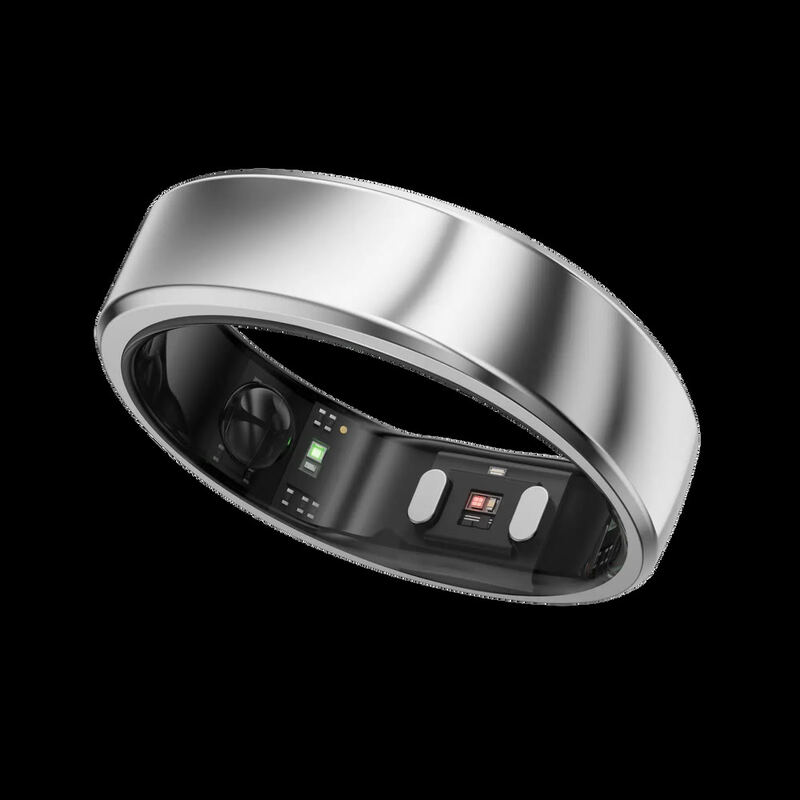
Samsung Galaxy Ring's tracking capabilities are extensive but not without limitations. The ring uses three sensors on its inner surface — an accelerometer, optical heart rate monitor, and skin temperature sensor — to collect data, according to Women's Health's Hattie Parish. These sensors are designed to track heart rate, sleep quality, activity levels, and menstrual cycle, with the AI algorithm generating daily energy scores and detailed health reports. TechRadar's review noted that the ring excels in sleep tracking, with accurate sleep stage detection and heart rate variability (HRV) monitoring. However, the ring's automatic workout detection is limited to walks and runs, as reported by Business Insider's Rachael Schultz, who found it lacked autotracking for other activities. Runner's World's Kieran Alger noted that while the ring offers heart rate tracking and stress monitoring, it doesn't provide the same level of workout performance data as Garmin or other dedicated running watches. The ring's inability to track GPS independently means it relies on the connected Android phone for distance data during workouts, which may impact accuracy. The menstrual cycle tracking feature, as mentioned by Women's Health, was praised for its integration into the Samsung Health app, but its depth was questioned by some reviewers. The ring's skin temperature monitoring, while present, was described as limited by Business Insider, with only basic insights provided.

Battery Life and Charging

Battery life is one of the Galaxy Ring's strongest points, with PCMag's Andrew Gebhart reporting up to seven days of use on a single charge. The ring's charging case, described as a 'jewelry box' by Business Insider's Rachael Schultz, is both functional and aesthetically pleasing. It can charge the ring up to 1.5 times without wall connection, making it ideal for travelers. Gebhart noted that the case is compact and portable, fitting easily into a bag for on-the-go charging. The ring's charging process is seamless, with a glowing LED light around the perimeter indicating battery status, as observed by Women's Health's Hattie Parish. The charging case itself is designed to hold its own charge, offering convenience for users who travel frequently. Runner's World's Kieran Alger appreciated the case's portability and noted that it was less likely to be lost compared to traditional charging docks. However, the ring's battery life is somewhat inconsistent, with TechRadar's review suggesting that typical usage may result in around six days of battery life. The charging case's ability to provide multiple charges without wall connection was highlighted as a significant advantage for users who travel frequently, according to Business Insider.

User Experience and App Integration

The Samsung Galaxy Ring's user experience is heavily dependent on the Samsung Health app, which serves as the primary interface for all data. According to PCMag's Andrew Gebhart, the app provides daily insights and energy scores, with personalized recommendations for recovery and activity. The app's integration with Samsung's ecosystem is seamless, but this also means that iPhone users are excluded from using the ring's full capabilities. Women's Health's Hattie Parish noted that the ring's AI algorithm generates a daily energy score based on sleep quality, activity, and heart rate data, which was helpful for understanding overall wellness. However, the app's interface was described as less intuitive by some reviewers, particularly when compared to more established fitness apps. Runner's World's Kieran Alger found the app's data presentation to be clear but noted that it lacks the depth of insight provided by dedicated running apps. The ring's ability to automatically detect walks and runs was praised by Business Insider's Rachael Schultz, though the lack of automatic tracking for other activities was seen as a limitation. The dual-app setup, involving both the ring and the Samsung Health app, was described as clunky by some users, according to Business Insider's review. The ring's ability to integrate with Samsung Galaxy Watch was noted as a key advantage, though this requires additional investment in Samsung's ecosystem.

Where It Falls Short

Despite its strengths, the Samsung Galaxy Ring falls short in several key areas. The most significant limitation is its exclusive compatibility with Samsung and Android devices, as noted by Business Insider's Rachael Schultz and confirmed by Runner's World's Kieran Alger. This restriction excludes a large portion of the market, particularly iPhone users who represent a significant segment of wearable device buyers. The ring's automatic workout tracking is limited to walks and runs, with no autotracking for cycling, swimming, or other activities, according to Business Insider's review. The skin temperature capabilities were described as limited by Business Insider, with only basic insights provided, and the ring lacks GPS functionality, relying on the connected phone for distance tracking. TechRadar's review noted that while the ring excels in sleep tracking, it lacks the depth of insight found in competitors like the Oura Ring 4. The ring's price point, which is around $50 more than similar smart rings such as the Oura Ring 4, was seen as a drawback by Business Insider, especially when compared to the Oura Ring's subscription-free model. Additionally, the ring's dual-app setup was described as clunky by some reviewers, according to Business Insider's analysis. The ring's inability to provide detailed workout performance data was also a recurring criticism, with Runner's World's Kieran Alger stating that it's not a replacement for Garmin or other dedicated running watches.

Who It's Best For

The Samsung Galaxy Ring is best suited for Samsung users who want a discreet, long-lasting health tracker with minimal setup. According to TechRadar's review, it's ideal for those already invested in the Samsung ecosystem, particularly those with Samsung Galaxy Watches, as it provides enhanced battery life and more accurate insights. The ring's sleek design and comfortable fit make it suitable for users who prefer minimal wearables over traditional smartwatches, as noted by Women's Health's Hattie Parish. The ring's battery life and charging case make it particularly appealing to travelers, according to Business Insider's Rachael Schultz. However, it's not recommended for iPhone users or those who need GPS tracking for workouts, as highlighted by Runner's World's Kieran Alger. The ring's limited automatic workout tracking and lack of subscription fees make it attractive to users who prioritize basic health insights over advanced fitness analytics. For those who don't need the full suite of features offered by dedicated running watches, the Galaxy Ring provides a solid alternative, though it falls short of being a true replacement for devices like the Garmin Forerunner series. The ring's menstrual cycle tracking and energy score generation are particularly valuable for users interested in holistic wellness, as noted by Women's Health's review.

Comparison to Competitors

When compared to the Oura Ring 4, the Samsung Galaxy Ring offers a more affordable entry point without a subscription fee, according to Business Insider's Rachael Schultz. However, the Oura Ring provides more in-depth sleep insights and a broader range of health metrics, as noted by Women's Health's Hattie Parish. The Galaxy Ring's design is thinner than the Oura Ring, but it lacks the latter's comprehensive health analytics and community features. Runner's World's Kieran Alger compared the Galaxy Ring to the Ultrahuman Air, noting that while both are scratch-resistant and thin, the Galaxy Ring's lack of GPS and limited workout tracking make it less suitable for serious athletes. The ring's automatic workout detection is limited compared to dedicated fitness devices, as highlighted by TechRadar's review. In contrast, the Galaxy Ring's integration with Samsung's ecosystem provides unique advantages for Samsung users, particularly those with Galaxy Watches, as noted by PCMag's Andrew Gebhart. The ring's absence of GPS and limited automatic tracking makes it less competitive against Garmin and other running watch manufacturers, according to Runner's World's analysis. The Galaxy Ring's value proposition lies in its simplicity and seamless integration with Samsung devices, rather than its advanced tracking capabilities, as noted by multiple reviewers.

Value and Overall Verdict

The Samsung Galaxy Ring offers solid value for Samsung users who want a sleek, long-lasting health tracker without the need for subscriptions. According to TechRadar's review, the ring's seven-day battery life, scratch-resistant titanium design, and seamless integration with Samsung's ecosystem make it a strong contender in the smart ring market. However, the ring's limitations in automatic workout tracking and GPS functionality, as noted by Runner's World's Kieran Alger, prevent it from being a true replacement for dedicated fitness devices. Business Insider's Rachael Schultz emphasized that while the ring is a comfortable and well-designed option, it lacks the depth of insights found in competitors like the Oura Ring 4. The ring's price point, which is $50 more than similar smart rings, was seen as a drawback by Business Insider, particularly when compared to the Oura Ring's subscription-free model. PCMag's Andrew Gebhart concluded that while the ring is a good option for Samsung users, it's not a revolutionary device and falls short of being a game-changer in the smart ring category. The Galaxy Ring's value lies in its simplicity and integration with Samsung's ecosystem, rather than its advanced features, as noted by multiple reviewers. For those already invested in Samsung's ecosystem and looking for a basic health tracker, it's a solid choice, but those seeking advanced fitness analytics should look elsewhere.

Strengths

  • +Seamless integration with Samsung ecosystem for notifications and controls
  • +Comfortable wear with lightweight design suitable for all-day use
  • +Accurate heart rate monitoring and sleep tracking capabilities
  • +Water resistant up to 50 meters for swimming and showering

Watch-outs

  • Limited functionality for non-Samsung users with minimal third-party app support
  • Battery life lasts only about 5 days with regular use

How it compares

The Samsung Galaxy Ring excels in ecosystem integration for Samsung users, but it's less versatile than the Oura Ring Gen 4, which offers more comprehensive health data without requiring a subscription. Unlike the RingConn Gen 2 Air, it provides better health tracking, though it lacks the long battery life and third-party app support that the Ultrahuman Ring Air offers.

Who this is for

At a glance: Samsung users seeking minimalist smart features.

Why you’d buy the Samsung Galaxy Ring

  • Seamless integration with Samsung ecosystem for notifications and controls.
  • Comfortable wear with lightweight design suitable for all-day use.
  • Accurate heart rate monitoring and sleep tracking capabilities.

Why you’d skip it

  • Limited functionality for non-Samsung users with minimal third-party app support.
  • Battery life lasts only about 5 days with regular use.

Rating sources

Our 4.3 score is the average of these published ratings. More about methodology.
Frequently asked questions

Is the Samsung Galaxy Ring worth buying?
The Samsung Galaxy Ring offers a compelling smart ring experience for Samsung users, with seamless integration for notifications and controls. PCMag's Andrew Gebhart praised its comfortable design and accurate health tracking, though noted limited utility for non-Samsung users. TechRadar highlighted its water resistance and all-day comfort. The device falls short for those outside the Samsung ecosystem, and battery life may disappoint heavy users. This ring is best suited for Samsung smartphone owners seeking a minimalist wearable for health monitoring and basic smart features.
What is the Samsung Galaxy Ring's biggest strength?
Seamless integration with Samsung ecosystem for notifications and controls
What is the main drawback of the Samsung Galaxy Ring?
Limited functionality for non-Samsung users with minimal third-party app support
What sources back the 4.3/5 rating?
Our 4.3/5 rating is the average of scores from 5 independent smart rings reviews — techradar, pcmag, lifehacker, mashable, and techadvisor. Click any source on the product page to read the original review.

How it compares

See all 4
Samsung Galaxy Ring
4.3/5· $199
Check Price on Amazon