The RØDE PodMic is a budget-friendly dynamic microphone aimed at podcasters who want professional sound quality without a complex setup. Soundphile Review rated it 8/10, praising the sturdy build and clear sound, and Podcastage's Bandrew Scott called it a compelling option for entry-level podcasters at $100. A built-in pop filter and cardioid pickup pattern keep background noise out. Reviewers did note that limited clearance for XLR connectors rules out vertical stands, so budget for a separate base. Beginners and experienced podcasters alike get reliable performance at an affordable price point.
Full review
865-gram metal build needs a sturdy stand
The RØDE PodMic impresses with its substantial build quality, weighing in at 865 grams and constructed entirely from metal, which gives it a solid, robust feel that belies its affordable price point. According to Soundphile Review's Riccardo Robecchi, the microphone's design is 'fairly classic, yet modern at the same time,' featuring a silver grille encased in a black cage. The build quality is reinforced by its entirely metal construction, which makes it feel 'quite solid' and 'sturdy.' However, the weight does require a decent table stand or arm capable of supporting it, as noted by both Soundphile Review and Podcastage's Bandrew Scott. The microphone includes a swing clip that allows for both table stand and arm mounting, though this design prevents vertical positioning due to insufficient clearance for an XLR connector, a minor but notable limitation according to Robecchi.
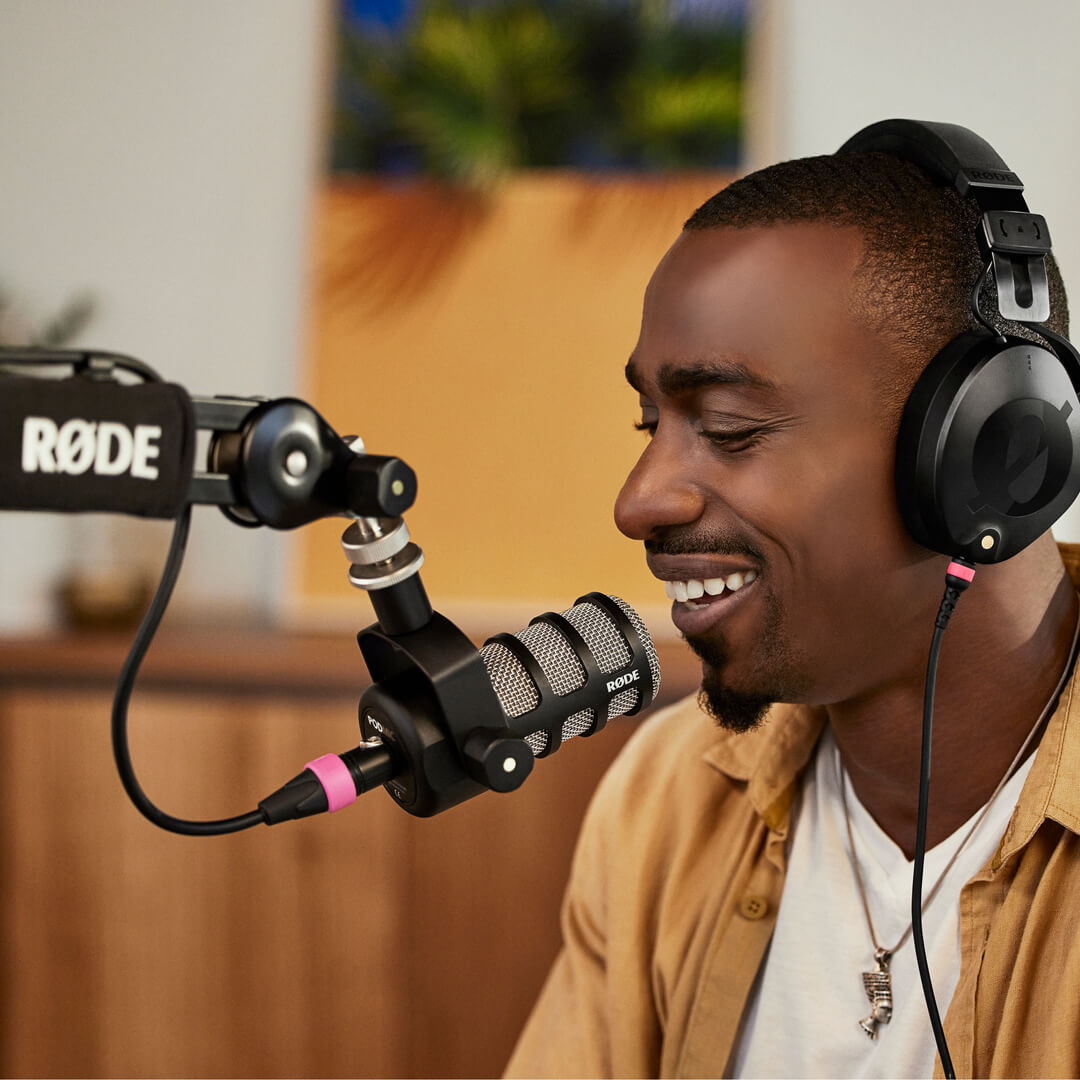
The PodMic's design includes a built-in pop filter that hides beneath the metal grille, a feature that Soundphile Review praised for preventing clutter and helping contain plosives and sibilants. However, Frary Guitar's Peter Kun Frary noted that the internal pop filter performs 'mediocre' in controlling plosives, recommending the purchase of an external WS14 pop filter for better results. The microphone's end-address design, where you speak into the end rather than the side, is typical of dynamic microphones and is reinforced by its 12cm length, which is half that of the Shure SM7B. The rear of the microphone features a LED indicator and thumb-wheel for headphone gain, with no additional controls, according to Frary's review. The PodMic's metal construction and military-grade finish are noted as particularly impressive by Frary, who also mentioned that the plastic components are 'beefy plastic' and likely serve as handles for underlying steel bolts, providing a secure mounting experience.
Despite its robust construction, the PodMic's packaging and accessories are minimal, containing only the microphone itself and an adapter for 3/8-inch supports, with no base included, as noted by Soundphile Review. The microphone does not come with a storage pouch or sleeve, unlike some competitors such as the Shure SM58, which was mentioned as a disappointment by Robecchi. The inclusion of a long USB-C cable is appreciated by SoundandGo, which noted this as 'super practical' compared to other manufacturers who often supply cables that are too short. The PodMic's design allows for both XLR and USB connectivity, with the USB-C port providing headphone output with volume control, DSP capabilities, and audio interface functionality, according to SoundandGo's review. This dual connectivity makes the PodMic versatile for both podcasters and streamers, though the lack of a tripod or stand in the box requires an additional purchase.
Performs well even 50cm from the capsule
In Soundphile Review’s testing, Riccardo Robecchi found a "slightly warm sound signature that works really well with human voices". The microphone's cardioid pattern effectively rejects ambient noise, making it suitable for recording multiple people, each with their own microphone. Robecchi noted that the integrated pop filter helps deliver clean, clear sound with minimal editing required, and that plosives are barely an issue unless one makes an effort to overload the capsule. The microphone is described as 'fairly sensitive' with a sensitivity of -57 dB re 1 Volt/Pascal (1.60mV @ 94 dB SPL) ± 2 dB @ 1kHz, according to Soundphile Review. The PodMic's ability to perform well at distances greater than 50 cm is also noted, with the microphone delivering good results even when not speaking directly into it, which is particularly useful for podcasters who prefer not to hunch over their microphones.
The PodMic's performance under various conditions was tested by The Podcast Host's Sarah Buchynski, who found that it performs well in rejecting room noise, with raw recording levels at -24 dB RMS and room noise at -63.30 dB RMS. When boosted to -16 LUFS, the noise from fans increased to -48.61 dB RMS, which she deemed acceptable. However, she noted that the microphone is unforgiving for off-axis pickup, with a dramatic drop in loudness when moving slightly to the side of the capsule, making centered positioning crucial for consistent tone. The built-in shock mount was found to be impressive for a built-in feature, though it doesn't completely eliminate vibration and hum from external sources, as noted by Frary Guitar's Peter Kun Frary, who had to use an external shock mount to reduce hum and vibration from computer fans and hard drives.
According to the PCMag review, the PodMic's performance is particularly strong in terms of clarity and noise rejection, though it does require more gain than some competitors like the Shure MV7, though PCMag notes two PodMics cost less than a single Shure MV7. The microphone's dynamic nature means it has a fuller bass and slightly less clean highs compared to condenser microphones, but it still achieves a sound that is 'full in the bass and yet clear in the treble' according to SoundandGo's review. The PodMic's ability to work with both USB and XLR connections provides flexibility for different setups, and its plug-and-play functionality allows for quick setup in software like Zoom, Teams, Audacity, and Audition, as noted by SoundandGo. The microphone's performance in podcasting scenarios was also evaluated by Podcastage's Bandrew Scott, who found it to be a compelling option for entry-level podcasters at $100, with a sound that is 'very well tuned for spoken word.'
Sound Quality and Audio Characteristics
The RØDE PodMic's sound signature is described as 'neutral-ish, slightly warm,' which according to Soundphile Review's Riccardo Robecchi, works particularly well with human voices. The microphone's sensitivity of -57 dB re 1 Volt/Pascal (1.60mV @ 94 dB SPL) ± 2 dB @ 1kHz allows it to capture sounds between 20 Hz and 20 kHz, with an output impedance of 320 Ω, as noted by Soundphile Review. The PodMic's cardioid pattern effectively rejects noise from around the user, making it suitable for environments with ambient sounds. The microphone's performance in terms of clarity and noise rejection was also tested by The Podcast Host's Sarah Buchynski, who found that it performs well in rejecting room noise, with raw recording levels at -24 dB RMS and room noise at -63.30 dB RMS, which she deemed acceptable.
The microphone's ability to handle plosives and sibilants is another key aspect of its sound quality. Soundphile Review's Riccardo Robecchi noted that the integrated pop filter helps deliver clean, clear sound with minimal editing required, and that plosives are barely an issue unless one makes an effort to overload the capsule. However, Frary Guitar's Peter Kun Frary observed that the internal pop filter performs 'mediocre' in controlling plosives, recommending the purchase of an external WS14 pop filter for better results.
The PodMic's performance with regard to proximity effect was tested by The Podcast Host's Sarah Buchynski, who noted that when speaking closer to the microphone, the proximity effect doesn't muddy up the voice too much, though her higher-pitched voice was an exception. The microphone's ability to maintain consistent tone at various distances was also evaluated, with the PodMic performing well at distances greater than 50 cm, though it is unforgiving for off-axis pickup, with a dramatic drop in loudness when moving slightly to the side of the capsule, as noted by Buchynski. The microphone's sound quality was also tested by Podcastage's Bandrew Scott, who found it to be 'very well tuned for spoken word,' with a sound that needs very little intervention or preparation.
Feels like pro gear at a budget price
Reviewers consistently praised the RØDE PodMic's build quality and robust construction, with Soundphile Review's Riccardo Robecchi noting that the microphone feels 'quite solid' and 'sturdy' due to its entirely metal construction, which he described as 'fairly classic, yet modern at the same time.' The microphone's ability to deliver a 'clean, clear sound' with minimal editing required was also highlighted, particularly by Robecchi, who noted that the integrated pop filter helps contain plosives and sibilants effectively. The PodMic's affordability was another major point of praise, with Robecchi stating that it is 'quite affordable despite being built and sounding like pro gear,' and that it is 'a great microphone for beginners and experts alike.'
The microphone's versatility in connectivity was also a significant point of praise, with SoundandGo's review noting that the dual mode in XLR and USB, along with good software and high-quality connections, ensures 'safe connectivity.' The PodMic's ability to work with both USB and XLR connections provides flexibility for different setups, and its plug-and-play functionality allows for quick setup in software like Zoom, Teams, Audacity, and Audition, as noted by SoundandGo. The microphone's performance in podcasting scenarios was also evaluated by Podcastage's Bandrew Scott, who found it to be a 'compelling option for entry-level podcasters' at $100, with a sound that is 'very well tuned for spoken word.'
The microphone's ability to work with both USB and XLR connections was also appreciated by Frary Guitar's Peter Kun Frary, who noted that the dual connectivity makes the PodMic versatile for both podcasters and streamers. The PodMic's ability to function with mobile devices via USB-C, including smartphones, was also highlighted, with Frary noting that it allows for 'recording on the go or without a laptop using the Røde Capture iOS app, for example.' The microphone's performance in terms of clarity and noise rejection was also praised by PCMag, which noted that the PodMic's performance is particularly strong in these areas, making it a solid choice for podcasters seeking a reliable microphone.
Off-axis pickup causes a dramatic volume drop
Despite its many strengths, the RØDE PodMic has several notable drawbacks that reviewers have pointed out. One major limitation is the lack of a tripod or stand in the box, requiring users to purchase a separate mounting solution, which was noted by Soundphile Review's Riccardo Robecchi as a minor but inconvenient detail. The microphone's design prevents vertical positioning due to insufficient clearance for an XLR connector, as mentioned by Robecchi, which can be problematic for some users. Additionally, the built-in pop filter is described as performing 'mediocre' in controlling plosives by Frary Guitar's Peter Kun Frary, who recommends purchasing an external WS14 pop filter for better results.
Another significant limitation is the microphone's performance with off-axis pickup, which was noted by The Podcast Host's Sarah Buchynski as 'unforgiving,' with a dramatic drop in loudness when moving slightly to the side of the capsule, making centered positioning crucial for consistent tone. The built-in shock mount, while impressive for a built-in feature, does not completely eliminate vibration and hum from external sources, as noted by Frary Guitar's Peter Kun Frary, who had to use an external shock mount to reduce hum and vibration from computer fans and hard drives. The microphone's weight, while contributing to its solid feel, also requires a strong boom arm or stand, as mentioned by Frary, which can be a challenge for some users.
The PodMic's lack of a storage pouch or sleeve for the microphone when not in use was also noted as a disappointment by Soundphile Review's Riccardo Robecchi, who compared it unfavorably to other dynamic mics such as the Shure SM58. Additionally, while the microphone is described as 'gain hungry' by The Podcast Host's Sarah Buchynski, which is typical for dynamic mics, this can be a challenge for users who do not have an external preamp such as the SS-1, which is recommended to avoid extra noise from the interface itself. The microphone's performance in terms of sibilance control was also noted as a limitation, with Frary Guitar's Peter Kun Frary stating that the WS14 pop filter does little for sibilance and that users need to control S and T syllables.
Works with smartphones over USB-C
The RØDE PodMic is best suited for podcasters who are looking for an affordable yet robust microphone that delivers professional-quality sound without requiring extensive setup or technical expertise. According to Soundphile Review's Riccardo Robecchi, it is 'a great microphone for beginners and experts alike,' and is particularly recommended for those who prefer to use an audio interface for more control over their sound. The microphone's ability to work with both USB and XLR connections makes it versatile for different setups, and its plug-and-play functionality allows for quick setup in software like Zoom, Teams, Audacity, and Audition, as noted by SoundandGo. The PodMic's performance in terms of clarity and noise rejection makes it ideal for podcasters who want a reliable microphone that can handle various recording environments.
The microphone is also well-suited for streamers and content creators who need a microphone that can function with both USB and XLR connections, as noted by SoundandGo's review. Its ability to work with mobile devices via USB-C, including smartphones, makes it particularly useful for recording on the go or without a laptop, as mentioned by Frary Guitar's Peter Kun Frary. The PodMic's performance in podcasting scenarios was also evaluated by Podcastage's Bandrew Scott, who found it to be a 'compelling option for entry-level podcasters' at $100, with a sound that is 'very well tuned for spoken word.' The microphone's ability to deliver clean, clear sound with minimal editing required makes it ideal for users who want to focus on content creation rather than audio post-processing.
However, the PodMic may not be ideal for users who require a more advanced microphone with features such as built-in effects or extensive software integration. The microphone's lack of a storage pouch or sleeve for the microphone when not in use, as noted by Soundphile Review's Riccardo Robecchi, may be a drawback for users who value portability and protection. Additionally, the microphone's performance with off-axis pickup is 'unforgiving,' which may be a challenge for users who need to record multiple people in a group setting, as noted by The Podcast Host's Sarah Buchynski. The microphone's weight, while contributing to its solid feel, also requires a strong boom arm or stand, which may be a challenge for some users, as mentioned by Frary Guitar's Peter Kun Frary.
Cheaper than the Shure MV7 with similar value
The RØDE PodMic stands out among its competitors for its balance of affordability and professional sound quality, with Soundphile Review's Riccardo Robecchi noting that it is 'quite affordable despite being built and sounding like pro gear.' When compared to the Shure MV7, which is noted as a 'slightly more expensive' alternative by PCMag, the PodMic offers a compelling value proposition, particularly for entry-level podcasters. The Shure MV7 is described as a more expensive but still viable option, according to SoundandGo's review, which notes that the PodMic 'puts the PodMic ahead' in terms of value for money. The PodMic's dual connectivity in XLR and USB, along with its plug-and-play functionality, makes it more flexible than some alternatives, as noted by SoundandGo.
In comparison to the Shure SM58, which is noted by The Podcast Host's Sarah Buchynski as a more traditional dynamic microphone, the PodMic offers a more modern design and additional features such as built-in pop filtering and shock mounting. However, the SM58's lack of a built-in pop filter and shock mount means that users may need to purchase additional accessories, which is not the case with the PodMic. The PodMic's ability to work with both USB and XLR connections provides more flexibility than the SM58, which is typically used with XLR connections only. The PodMic's performance in terms of clarity and noise rejection was also praised by PCMag, which noted that the PodMic's performance is particularly strong in these areas, making it a solid choice for podcasters seeking a reliable microphone.
When compared to the sE Electronics V7 and Sennheiser E835, also tested by Podcastage's Bandrew Scott, the RØDE PodMic offers a more affordable option with a sound that is 'very well tuned for spoken word.' The PodMic's dual connectivity and plug-and-play functionality make it more versatile than some alternatives, as noted by SoundandGo's review. However, the PodMic's performance with off-axis pickup is 'unforgiving,' which may be a challenge for users who need to record multiple people in a group setting, as noted by The Podcast Host's Sarah Buchynski. The PodMic's ability to work with mobile devices via USB-C, including smartphones, makes it particularly useful for recording on the go or without a laptop, as mentioned by Frary Guitar's Peter Kun Frary, which may give it an edge over some competitors.
Long USB-C cable is a practical bonus at $99
At a price point of $99, the RØDE PodMic offers exceptional value for money, according to Soundphile Review's Riccardo Robecchi, who noted that it is 'quite affordable despite being built and sounding like pro gear.' The microphone's ability to deliver professional-quality sound without requiring extensive setup or technical expertise makes it an attractive option for both beginners and experienced podcasters. SoundandGo's review also emphasized that the PodMic is 'great value for money' at around €239, noting that it puts the PodMic ahead of more expensive alternatives such as the Shure MV7, which is described as 'slightly more expensive' but still a viable option. The microphone's dual connectivity in XLR and USB, along with its plug-and-play functionality, makes it more flexible than many alternatives, as noted by SoundandGo.
The PodMic's value is further enhanced by its versatility in connectivity, which allows it to work with both USB and XLR connections, providing flexibility for different setups. The inclusion of a long USB-C cable is also appreciated, as noted by SoundandGo, which described this as 'super practical' compared to other manufacturers who often supply cables that are too short. The microphone's ability to function with mobile devices via USB-C, including smartphones, makes it particularly useful for recording on the go or without a laptop, as mentioned by Frary Guitar's Peter Kun Frary.
The microphone's ability to deliver clean, clear sound with minimal editing required is another factor that contributes to its value proposition, as noted by Soundphile Review's Riccardo Robecchi. The integrated pop filter helps contain plosives and sibilants, reducing the need for post-processing, which saves time and effort for podcasters. The PodMic's performance in podcasting scenarios was also evaluated by Podcastage's Bandrew Scott, who found it to be a 'compelling option for entry-level podcasters' at $100, with a sound that is 'very well tuned for spoken word.' The microphone's ability to work with both USB and XLR connections, along with its plug-and-play functionality, makes it an attractive option for users who want a reliable microphone that can handle various recording environments without requiring extensive setup or technical expertise.
Strengths
- +Sturdy, robust build with metal construction weighing 865g
- +Neutral-ish, slightly warm sound signature that works well with human voices
- +Built-in pop filter effectively reduces plosives and sibilants
- +Compatible with wide variety of audio interfaces due to no phantom power requirement
Watch-outs
- −Doesn't leave enough space for XLR connector when using table stand
- −Requires separate base for table stand setup
How it compares
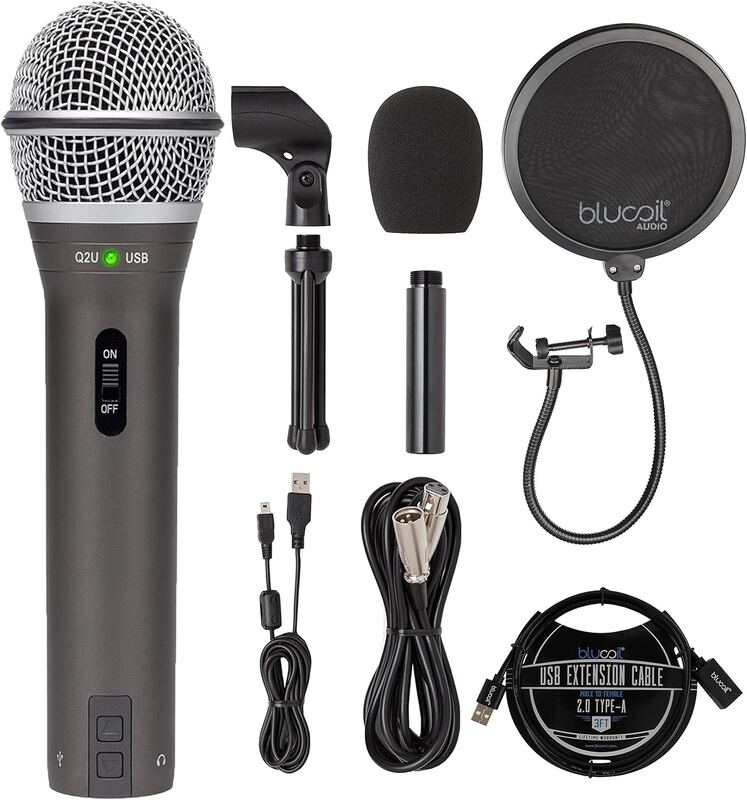
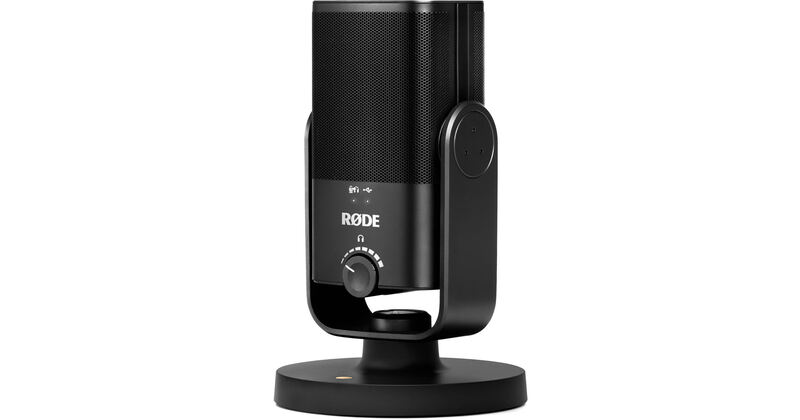
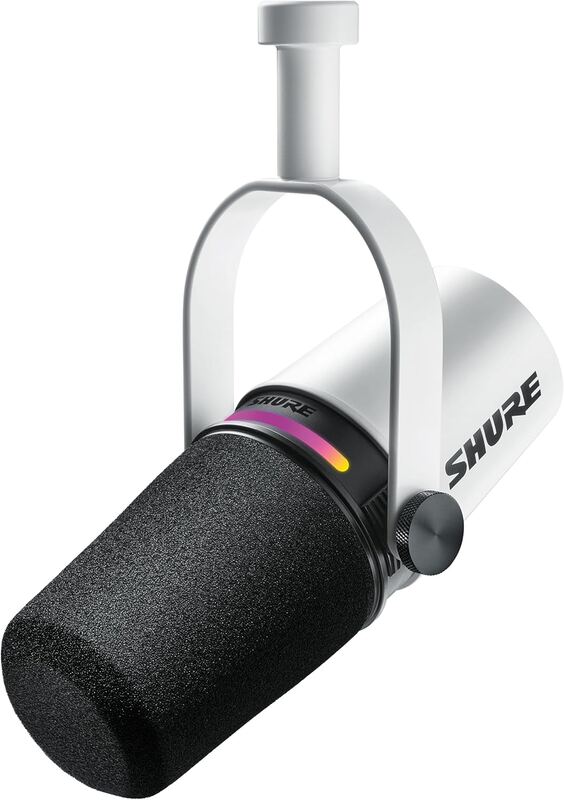
The Rode PodMic excels in build quality and noise rejection compared to the Samson Q2U, offering a more robust metal construction and better sound signature. However, it's less versatile than the Blue Yeti due to its lack of multiple polar patterns and doesn't include a built-in pop filter like the Shure MV7+. Unlike the Rode NT-USB Mini, it doesn't support USB-C connection and requires a separate base for table stand setups, but it's more affordable and easier to set up for beginners.
Rating sources
“This microphone seems to be tuned specifically for spoken word, and it does it's job very well. At $100, Rode has made a very compelling option for entry level podcasters.”
Our 4.2 score is the average of the 4 scored reviews above; 2 more reviewed it without printing a score and are not in the average. Ratings marked * were derived from the reviewer’s written analysis or video transcript — the publisher didn’t print an explicit numeric score, so we inferred one from their own words. Click through to verify. More about methodology.