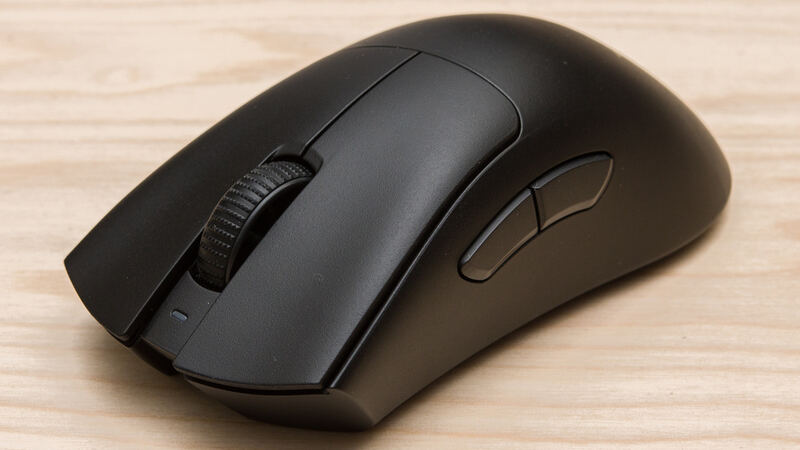
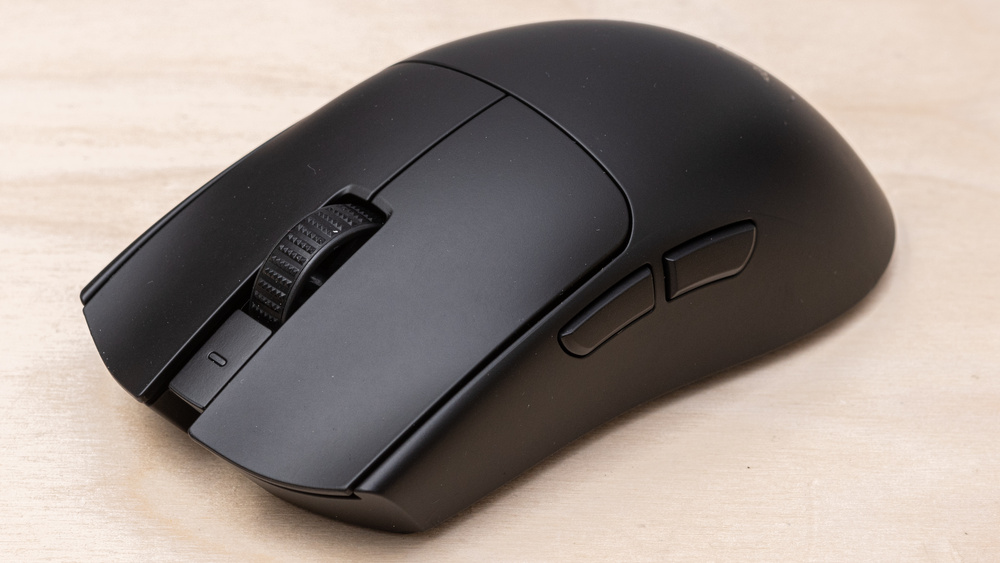
For the ambidextrous crowd, the Viper V3 Pro is Razer's symmetrical flagship: a 54 g magnesium-alloy chassis, the Focus Pro 35K sensor, optical mouse switches rated for 90 million clicks, and 8000 Hz wireless polling. IGN gave it 9/10 for the responsiveness and weight, calling it the answer to Logitech's G Pro X Superlight 2 for FPS pros who prefer claw or fingertip grips. Full configuration requires Razer Synapse software.
Full review
Ergonomic Design Evolution
The Razer Viper V3 Pro marks a significant departure from its predecessor, introducing a physical design that blends the symmetrical form of the Viper V3 Hyperspeed with the rear-shifted hump characteristic of the latest DeathAdder models. HowToGeek noted that the flattened sides juxtapose against this pronounced hump, creating a natural and comfortable grip for most hand sizes. YouTube reviewers highlighted that the top of the mouse is now approximately two millimeters higher, bringing the total height to nearly forty millimeters, which provides substantial support for the palm and knuckles during claw or spider grips. This shape adjustment appears to be a direct response to user feedback, aiming to accommodate a wider range of hand sizes while maintaining the lightweight profile that the Viper series is known for.
Build Quality and Tactile Feel
Reviewers consistently praised the build quality, describing the mouse as feeling like a tank despite its featherlight fifty-four gram weight. One YouTube reviewer emphasized that there is no side flex, rattling, or loose scroll wheel, calling the construction S-tier. The Gen 3 optical switches have been retuned with tighter tolerances, eliminating the pre-travel and wobble that plagued earlier models. This results in a crisp, solid click that feels distinct from the Gen 4 switches found in other Razer mice. The coating has also been refined; while it retains a smooth matte finish, it offers better grip than the textured surface of the Viper V2 Pro and resists fingerprints effectively. PCMag and other sources noted that the side buttons are larger and better separated, preventing accidental presses that were common on previous iterations.
Performance and Sensor Capabilities
Internally, the Viper V3 Pro is powered by the Focus Pro 35K Gen 2 sensor, which boasts ninety-nine point eight percent resolution accuracy and improved tracking on glass surfaces. A major selling point is the inclusion of the 8K Hz HyperPolling wireless dongle in the box, a feature that previously required a separate purchase. Users can configure the mouse to switch polling rates automatically, running at 1K Hz for general use to save battery and jumping to 8K Hz during gaming sessions. While some Reddit users debated whether the wireless performance difference between Razer and competitors like Pulsar or Lamzu was perceptible, the consensus is that the sensor performance is flawless. The mouse also features a new DPI button relocated to the bottom, which doubles as the power switch, solving the finger-pinching issue found on the Viper V2 Pro.
Mouse Feet and Glide Issues
Despite the high praise for most aspects of the mouse, the stock mouse feet have drawn criticism from several reviewers. The new design features two large PTFE skates that cover roughly two-thirds of the bottom surface, replacing the split design of previous models. One YouTube reviewer demonstrated that these large skates can make micro-adjustments feel jerky, particularly when used with control-oriented mouse pads like the Artisan Zero or GSR2. The reviewer noted that the glide feels slower and less fluid compared to other high-end mice, suggesting that users might need to swap to third-party split skates to achieve optimal performance. This is a notable downside for a flagship product, as the inability to use aftermarket feet from previous Viper generations further complicates the user experience for those who prefer custom setups.
Comparisons and Market Context
In the crowded high-end gaming mouse market, the Viper V3 Pro is frequently compared to the Logitech G Pro X Superlight 2 due to their similar shapes and weights. Reddit users in r/MouseReview often discuss whether the Viper V3 Pro offers a tangible advantage over the Logitech, with some noting that the Viper's shape feels more comfortable for claw grips while others prefer the Logitech's ergonomics. One user mentioned switching between the Viper V3 Pro and the DeathAdder V4 Pro without noticing a difference in wireless performance, suggesting that the wireless implementation is now a commodity feature among top-tier brands. However, the Viper V3 Pro distinguishes itself with the included 8K dongle and the refined switch feel, which many find superior to the haptic triggers introduced in the Logitech Pro X2 Superstrike.
Strengths
- +Focus Pro 35K sensor
- +59g ultra-lightweight
- +Gen-3 optical switches
- +90-hour battery life
Watch-outs
- −Expensive
- −Limited customization without software
- −Shape may not fit larger hands
How it compares
Razer's most refined wireless FPS mouse with cutting-edge sensor and improved build quality.
Rating sources
“It’s clear Razer wasn’t concerned with versatility or being flashy when designing the Viper V3 Pro, so those looking for an all-purpose mouse that’s still suited for gaming may want to look elsewhere.”
“Razer Viper V3 Pro: $159 @ Razer Razer's latest wireless mouse offers many notable features, but the most exciting is the 8000Hz wireless polling rate.”
“The flattened sides juxtapose against a pronounced hump in such a way that most hands should be able to find a natural, comfortable grip.”
Our 4.4 score is the average of these published ratings. Ratings marked * were derived from the reviewer’s written analysis or video transcript — the publisher didn’t print an explicit numeric score, so we inferred one from their own words. Click through to verify. More about methodology.