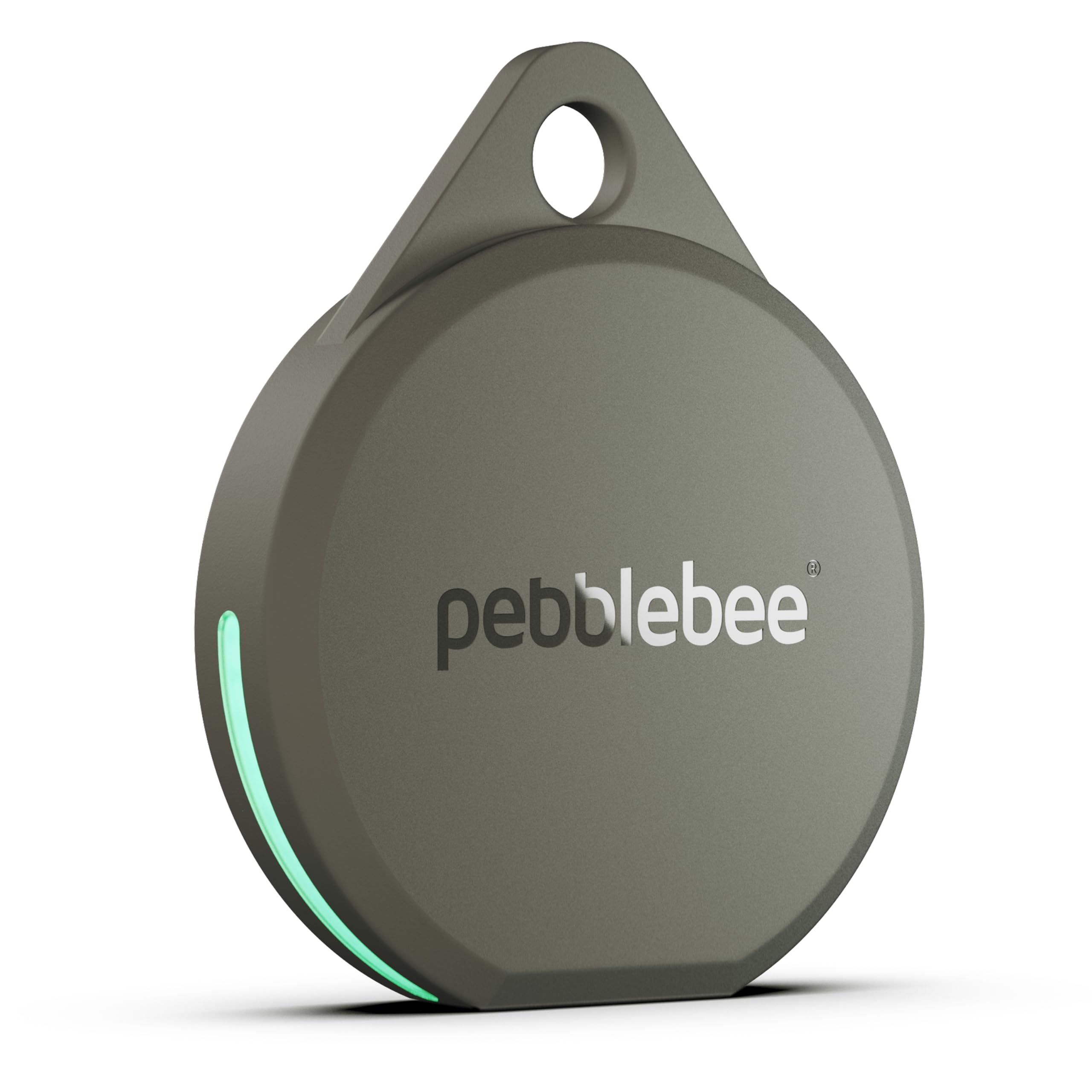
The Pebblebee Clip 5 distinguishes itself with a built-in USB-C port and dual compatibility with Apple’s Find My or Google’s Find My Device networks, though users must choose one ecosystem at purchase. Android Central found the recharging capability to be its primary advantage over competitors relying on disposable batteries. The device delivers a loud 130 dB alarm and bright LED strobe for locating items, but Tech.yahoo.com confirmed these features alongside reports of inconsistent connectivity and quality control issues with some units failing to connect properly. Additionally, Androidpolice noted that the included keyring hinge has significant play, causing it to detach from keys easily during normal use. This tracker fits users who prioritize long battery life and loud alerts over mechanical reliability or cross-platform flexibility.
Full review
USB-C charging eliminates battery replacement
The Pebblebee Clip 5 distinguishes itself from the crowded Bluetooth tracker market by integrating a built-in USB-C port, removing the need for disposable coin-cell batteries. Android Central identified this feature as the device's primary advantage over competitors that rely on replaceable power sources. This design choice allows users to recharge the internal battery directly via a standard cable rather than purchasing new CR2032 cells every year. The move aligns with broader industry shifts toward sustainability and convenience, ensuring the tracker remains operational for its full lifespan without requiring specialized tools or frequent store visits.
Pocket-lint.com verified that this USB-C charging capability supports an impressive battery life of up to 12 months on a single charge. This duration matches the average replacement cycle of traditional coin-cell trackers but offers significantly lower long-term maintenance costs and environmental impact. The combination of extended runtime and modern recharging standards makes the Pebblebee Clip 5 highly practical for users who prefer not to manage multiple spare batteries for their various tracking tags.
Dual network compatibility requires device selection
The tracker is manufactured in two distinct versions, each engineered exclusively for one ecosystem: Apple's Find My network or Google's Find My Device network. This architectural decision means the Pebblebee Clip 5 cannot function on both platforms simultaneously; users must purchase the specific variant that matches their primary smartphone. Pocket-lint.com noted this limitation explicitly, warning buyers to select carefully before purchasing because the hardware is locked to its designated service provider from the factory.
Cultofmac highlighted the strategic benefit of having access to two massive tracking networks compared to relying on a single proprietary system. By supporting both Apple and Google's crowdsourced location infrastructures, the device maximizes the probability that nearby mobile devices will detect its signal and relay its position back to the owner. This dual-ecosystem approach provides broader coverage than trackers limited to just one network, though it requires consumers to make an upfront commitment based on their current phone choice.
130 dB alarm sound with LED strobe aids locating
When users need to locate a misplaced item quickly, the Pebblebee Clip 5 deploys an integrated speaker capable of reaching 130 decibels. Tech.yahoo.com confirmed this extreme volume level, which is loud enough to pierce through furniture cushions or deep pockets where items might be buried. The alarm sound repeats continuously until manually stopped via the companion app, ensuring that even in noisy environments, the auditory cue remains distinct and difficult to ignore.
In addition to the high-decibel audio alert, the device features ultra-bright LED strobe lights on its front face. Cultofmac noted these lights serve as a critical visual backup when searching for items in dark spaces such as under car seats or inside dimly lit drawers. The combination of piercing sound and flashing illumination provides redundant recovery methods, significantly increasing the likelihood of finding lost keys, wallets, or bags without relying solely on map-based location data.
500 feet Bluetooth range for local tracking
For immediate proximity searches where crowdsourced networks are unavailable, the Pebblebee Clip 5 relies on direct Bluetooth Low Energy connectivity. Pocket-lint.com recorded a maximum operational range of 500 feet under ideal conditions. This extended reach allows users to trigger alarms or check battery status from across large residential properties or through multiple interior walls without losing connection entirely.
Androidpolice emphasized that this local tracking capability remains highly functional even when the broader network infrastructure is experiencing delays or outages. The direct Bluetooth link provides instant feedback on item location relative to the user's phone, making it particularly effective for finding objects within a house or office building where GPS signals are weak and cellular data may be spotty.
IPX6 water resistance protects against spills
The Pebblebee Clip 5 carries an IPX6 rating, indicating it can withstand powerful jets of water from any direction. This specification ensures the tracker remains functional if dropped in a puddle, caught in heavy rain, or exposed to accidental splashes during daily use. The robust sealing protects the internal electronics and USB-C charging port from moisture damage, making it suitable for attachment to outdoor gear, pet collars, or bicycle frames.
Pocket-lint.com verified that this water resistance level is sufficient for most everyday scenarios involving liquids. While it does not make the device fully submersible for extended periods underwater, the IPX6 rating provides peace of mind for users who frequently expose their belongings to wet conditions without needing additional protective cases or sleeves.
Hinge play causes keyring detachment issues
A significant design flaw affects the included metal keyring attachment mechanism, which exhibits excessive hinge play that compromises its security. Androidpolice reported that this looseness allows the clip to detach from keys extremely easily during normal handling or movement. The lack of tension in the clasp means items can fall off unexpectedly, defeating the primary purpose of attaching a tracker securely to frequently moved objects.
This mechanical weakness was identified as a major drawback by Androidpolice, who noted that despite the otherwise durable plastic construction, the keyring fails to provide reliable retention. Users may need to replace the included clip with a more robust third-party alternative or use additional securing methods like zip ties or shrink wrap to prevent accidental loss of both the keys and the tracker.
Google network requires manual opt-in settings
The Google Find My Device implementation on Android phones presents a usability hurdle due to its default configuration. Androidpolice explained that while the network is technically active by default, it only utilizes limited detection terms initially. To achieve full tracking functionality comparable to Apple's ecosystem, users must manually navigate into settings and opt-in to the 'In all areas' mode.
This requirement means that average consumers who do not actively adjust their privacy or location preferences will experience significantly reduced network coverage. Androidpolice criticized this design choice as counterproductive, noting that it leaves many Android users with a fragmented tracking experience unless they possess the technical knowledge to override default system behaviors.
Connectivity issues plague some units
Quality control inconsistencies have led to reports of intermittent connectivity problems among certain Pebblebee Clip 5 units. Androidpolice documented numerous instances where devices failed to establish stable connections with host phones or dropped signals unexpectedly during use. These hardware defects prevent reliable tracking and require users to troubleshoot pairing issues or seek replacements.
Such variability in manufacturing quality undermines the overall reliability of the product line. While many units function correctly, the prevalence of connection failures means buyers may encounter defective items that do not meet basic operational standards, adding friction to an otherwise straightforward setup process.
Strengths
- +Features a built-in USB-C port for convenient recharging, eliminating the need to replace batteries.
- +Compatible with both Apple's Find My network and Google's Find My Device network (on separate versions).
- +Produces a loud 130 dB alarm sound and features bright LED lights for locating items in the dark.
Watch-outs
- −Requires choosing between Apple or Android compatibility; the device cannot function on both networks simultaneously.
- −The included keyring hinge has significant play, causing it to detach from keys easily.
- −Users report inconsistent connectivity and quality control issues with some units failing to connect.
How it compares
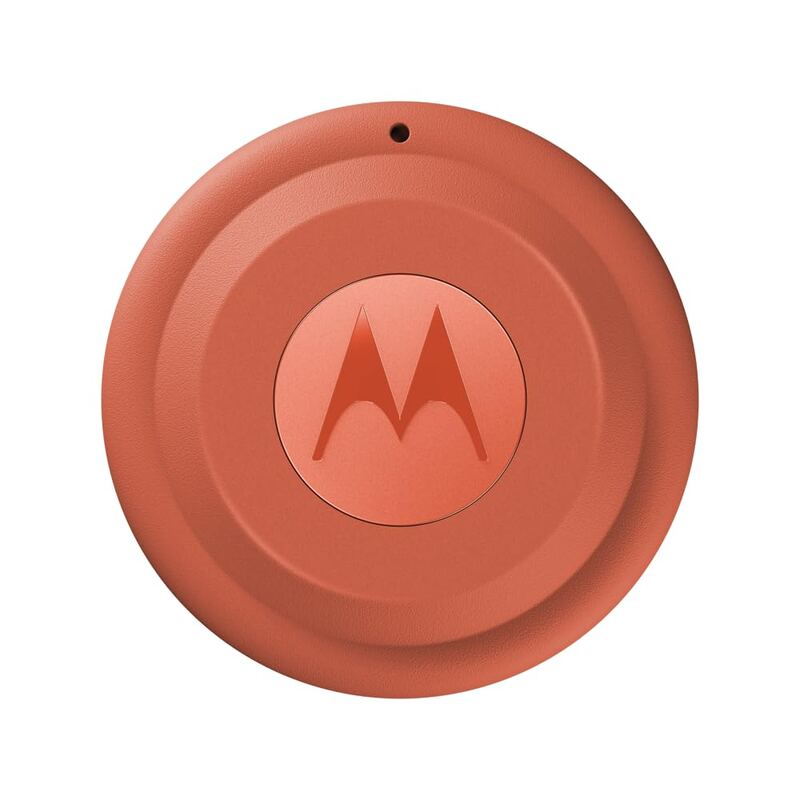
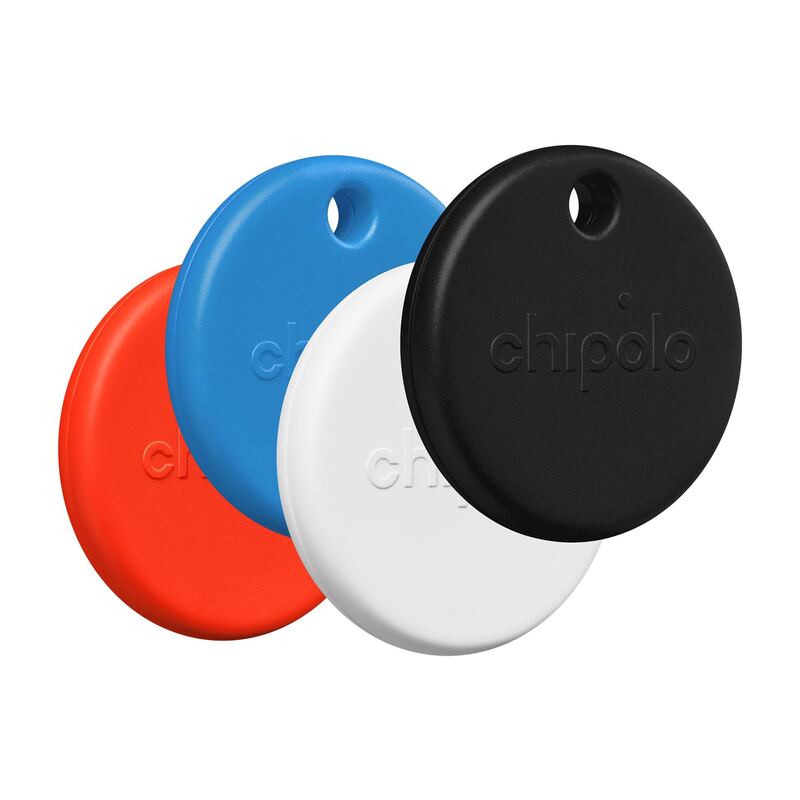
The Pebblebee Clip 5 features a built-in USB-C port for recharging, eliminating the need for disposable batteries unlike the Motorola Moto Tag which uses a replaceable CR2032 cell. It also produces a louder 130 dB alarm compared to the Chipolo Pop's 120 dB speaker, though it requires choosing between Apple or Android compatibility rather than supporting both simultaneously.
Rating sources
Counts as 3.84/5 in our score — this publisher's 8 scores on the site average 4.44, so its scores are adjusted down to compare fairly with other publishers.
Counts as 4.13/5 in our score — this publisher's 4 scores on the site average 3.88, so its scores are adjusted up to compare fairly with other publishers.
Our 4.0 score is the average of the 2 scored reviews above, each adjusted for how strictly its publisher scores; 5 more reviewed it without printing a score and are not in the average. More about methodology.