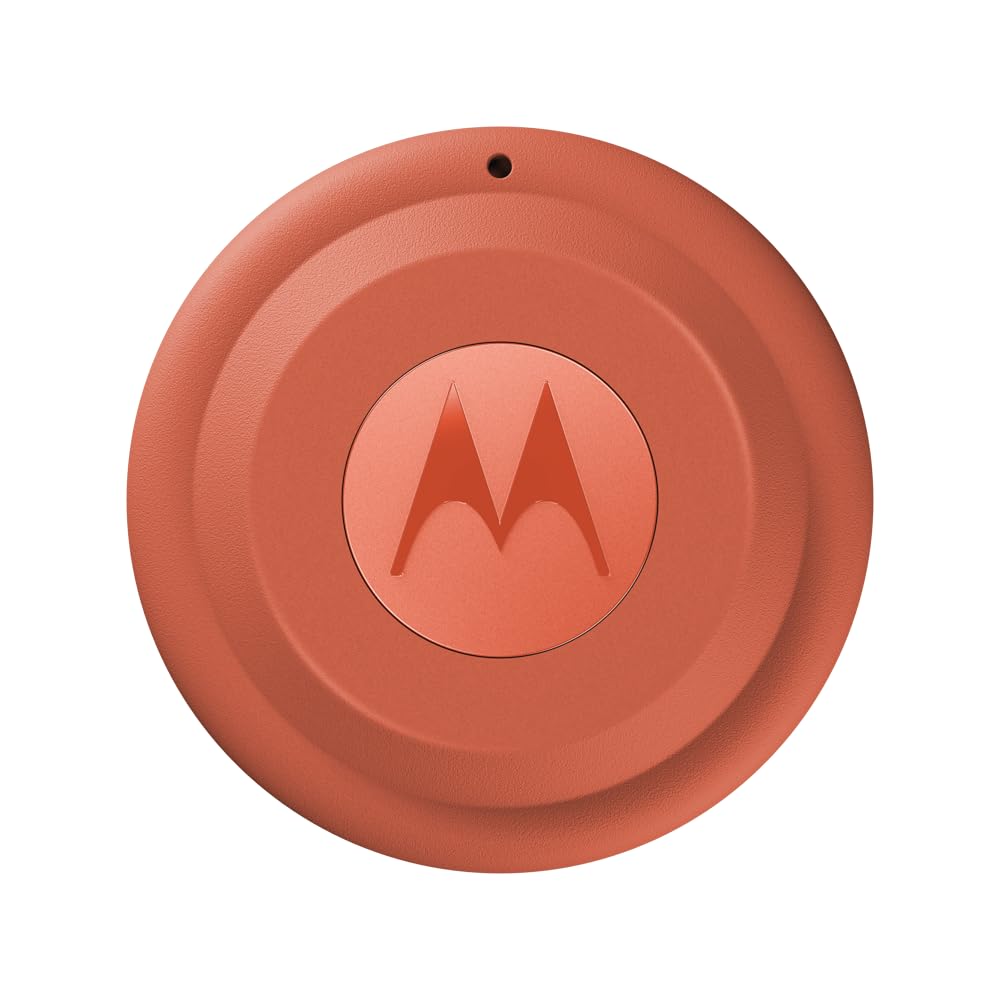
The Motorola Moto Tag leverages Google's Find My Device network to provide precise location tracking via Bluetooth and Ultra Wideband, offering broad compatibility with any Android 9.0 or higher device that supports Bluetooth Low Energy. Howtogeek found that this open ecosystem allows the tracker to utilize a global crowd-sourced grid for distant locations while maintaining directional accuracy when nearby. However, En.mobil.se reported extreme frustration during battery replacement due to the smooth plastic casing's lack of grip, making maintenance unnecessarily difficult without assistance. The device also lacks an integrated attachment mechanism, forcing users to purchase separate holders or accessories to secure it to keys or bags. While Gadgetguy.com.au noted its compact 1.26 x 1.26 x 0.31-inch design and IP67 water resistance are suitable for everyday carry, the dual-app requirement creates friction in managing features like camera remotes. This tracker fits Android users seeking a universal alternative to proprietary networks but may disappoint those expecting immediate plug-and-play utility or easy maintenance.
Full review
Google Find My Device network as primary tracker
The Motorola Moto Tag distinguishes itself from rival trackers by leveraging Google's expansive Find My Device network rather than a proprietary or brand-locked ecosystem. Howtogeek found that this architecture allows the device to locate items using Bluetooth and ultra-wideband (UWB) technology when within close range, while simultaneously relying on Android phones across the globe to report locations for distant tags. This approach mirrors Apple's Find My Network but extends compatibility far beyond Motorola hardware.
Gadgetguy.com.au noted that this open ecosystem means any smartphone running Android 9.0 or higher with Bluetooth Low Energy support can participate in locating a lost Moto Tag. Unlike Samsung Galaxy SmartTags which require Samsung devices, the Moto Tag allows practically every Android phone released in the last five years to contribute anonymously to the search grid. This universality provides a significant advantage for users who do not own flagship Motorola phones but still want access to a dense network of location reporting.
TechRadar highlighted that this reliance on Google's infrastructure is the primary win for Android users, offering precise directional tracking when near the item and crowd-sourced location updates when far away. The Moto Tag app serves as a secondary interface for basic functions like checking battery levels or triggering the ringer, but the heavy lifting of geolocation is handled entirely by Google's Find My Device application.
Dual-application setup creates friction
Setting up and managing the Moto Tag requires users to navigate two distinct software applications, a workflow that Howtogeek found initially confusing. The process begins by registering the tracker within Google's Find My Device app before switching to the dedicated Motorola Moto Tag application for firmware updates and specific device settings. This split functionality means that location tracking is isolated from secondary features like using the tag as a remote camera shutter or finding a nearby lost phone.
En.mobil.se described this dual-app requirement as cumbersome, noting that users must constantly switch contexts to manage their devices fully. The Motorola app handles simpler tasks such as making the tracker beep when it is hidden under furniture, while Google's application manages the map interface and long-range tracking data. This fragmentation prevents a unified user experience where all device management occurs within a single cohesive software environment.
The separation of duties also means that security protocols are duplicated; accessing location history in Google's Find My Device app requires re-entering the phone's unlock code, adding an extra layer of friction to routine checks. While this ensures high security for lost item data, it complicates the user journey compared to competitors like Tile, which consolidate all tracking and management features into one dedicated application.
Battery replacement mechanics are difficult
The physical design of the Moto Tag presents a significant hurdle when it comes to maintenance. En.mobil.se reported extreme frustration during battery replacement, describing an experience where twisting the plastic casing yielded no results despite repeated attempts. The tag is powered by a standard CR2032 watch battery intended to last 12 months, but accessing it requires precise torque and grip that the smooth plastic exterior fails to provide.
The reviewer noted that they eventually required assistance from a friend who managed to open the device immediately, only for both of them to struggle with snapping the cover back into place. This mechanical difficulty suggests that while Motorola includes a replaceable battery to reduce electronic waste, the execution makes routine maintenance unnecessarily stressful for average consumers.
The design choice forces users to rely on specialized grip or external leverage tools to open the sealed unit. Without this assistance, replacing a dying battery becomes a potentially damaging process where excessive force might crack the plastic housing. This mechanical weakness stands in stark contrast to the ease of use expected from modern consumer electronics accessories.
Missing attachment mechanisms increase cost
The Moto Tag arrives as a smooth, disc-shaped device with no integrated hole or clip for direct attachment. Gadgetguy.com.au pointed out that this design forces users to purchase separate holders or accessories just to secure the tag to keys, bags, or wallets. The tracker lacks even a basic lanyard loop found on many competing Bluetooth trackers.
To solve this omission, users must rely on third-party solutions. Because the Moto Tag shares identical dimensions with Apple's AirTag, owners can utilize existing AirTag holders and keychains. However, this workaround adds an unexpected layer of cost to the initial purchase, as the tag itself cannot function as a standalone attachment point.
This design limitation is particularly frustrating for users who expect immediate utility out of the box. The reliance on external accessories means that losing the tag without its holder renders it difficult to carry conveniently. Motorola's decision to omit even a simple keyring hole suggests a focus on minimalist aesthetics over practical everyday usability.
Crowd-sourced network density impacts speed
The effectiveness of the Moto Tag in recovering lost items is directly tied to the density of Google's Find My Device network in a given geographic area. En.mobil.se conducted tests where the tag was left with a companion driving through Stockholm, revealing that updates only appeared when the device came back into direct contact with the owner's phone.
This delay occurred because the companion used an iPhone and therefore could not contribute to locating the Moto Tag via Google's network. The reviewer concluded that while the technology works flawlessly in close proximity, long-range tracking suffers if the local population of compatible Android devices is low or inactive. Success depends entirely on whether other users have opted into the anonymous reporting feature.
Google has recently moved to actively encourage more users to join the network, but official figures on participation remain undisclosed. Until adoption rates match those of Apple's ecosystem in Western markets, Moto Tag owners may experience significant gaps in location updates when their items are lost outside their immediate vicinity.
Physical dimensions and water resistance
The Motorola Moto Tag measures 1.26 x 1.26 x 0.31 inches, making it a compact disc that can be hidden easily in pockets or bags without adding noticeable bulk. Gadgetguy.com.au noted that the device weighs only 7.5 grams and features an IP67 rating for dust and water resistance. This ruggedness ensures the tracker can survive accidental drops into puddles or exposure to heavy rain.
The plastic construction keeps the weight minimal while maintaining a sleek profile similar to Apple's AirTag. The compact form factor allows it to slide into wallet slots or keychains without creating an awkward bulge. However, the smooth finish that contributes to its slim profile is also what makes gripping the device for battery changes so difficult.
The IP67 rating provides peace of mind for outdoor use, but the lack of a secure attachment mechanism means users must ensure their third-party holders are equally durable. The combination of small size and water resistance makes it suitable for everyday carry, provided owners invest in quality accessories to keep it safely tethered to their belongings.
Strengths
- +Uses Google's Find My Device network to locate items via a massive global crowd-sourced Android phone network.
- +Supports Ultra Wideband (UWB) for precise, directional tracking when the tag is in close proximity.
- +Compatible with any smartphone running Android 9.0 or higher that supports Bluetooth Low Energy.
- +Features a replaceable CR2032 battery to extend device lifespan and reduce electronic waste.
Watch-outs
- −Requires two separate applications—the Google Find My Device app for location tracking and the Motorola Moto Tag app for secondary features like a camera remote.
- −Lacks an integrated attachment mechanism, forcing users to purchase third-party accessories or holders separately.
- −The plastic casing is difficult to open for battery replacement without specialized grip or assistance.
How it compares
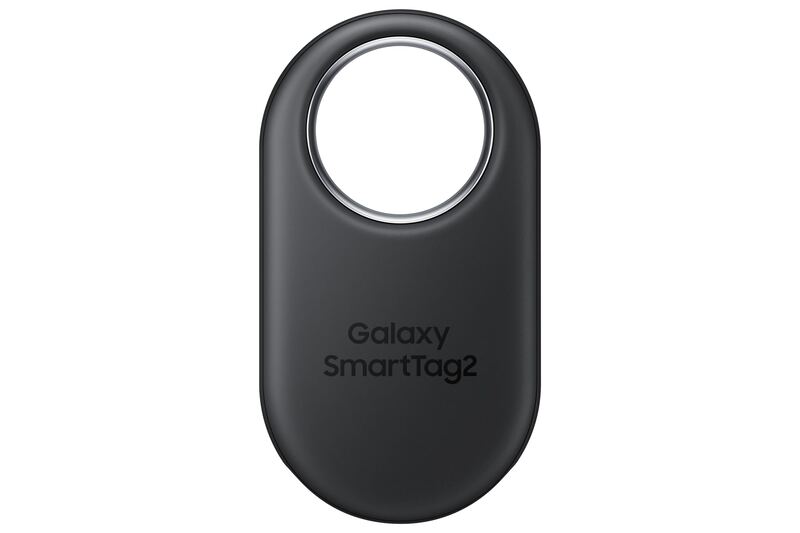
The Motorola Moto Tag leverages Google's Find My Device network for broad Android compatibility, contrasting with the Samsung Galaxy SmartTag 2 which is restricted exclusively to Samsung devices.
Rating sources
Counts as 3.34/5 in our score — this publisher's 8 scores on the site average 4.44, so its scores are adjusted down to compare fairly with other publishers.
Counts as 4.24/5 in our score — this publisher's 18 scores on the site average 3.86, so its scores are adjusted up to compare fairly with other publishers.
Counts as 4.18/5 in our score — this publisher's 4 scores on the site average 4.00, so its scores are adjusted up to compare fairly with other publishers.
Our 3.9 score is the average of the 3 scored reviews above, each adjusted for how strictly its publisher scores; 3 more reviewed it without printing a score and are not in the average. More about methodology.