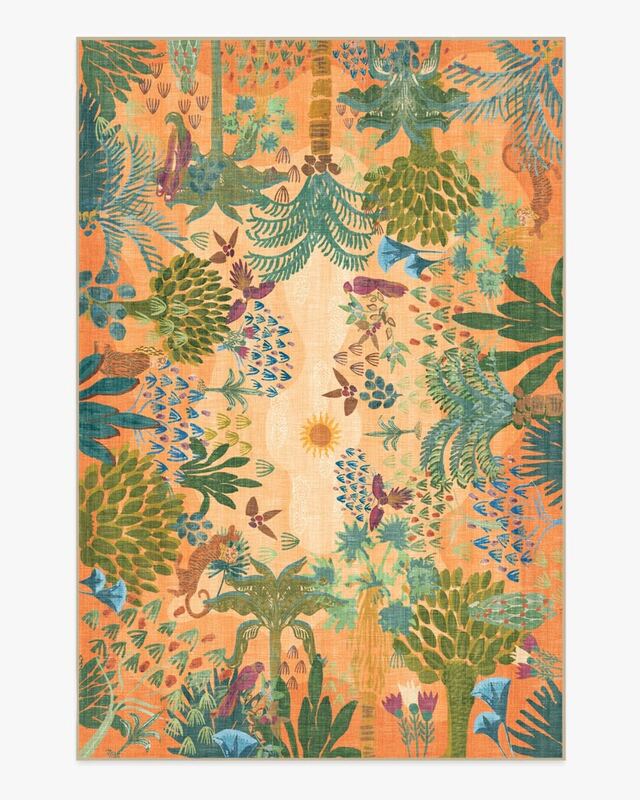
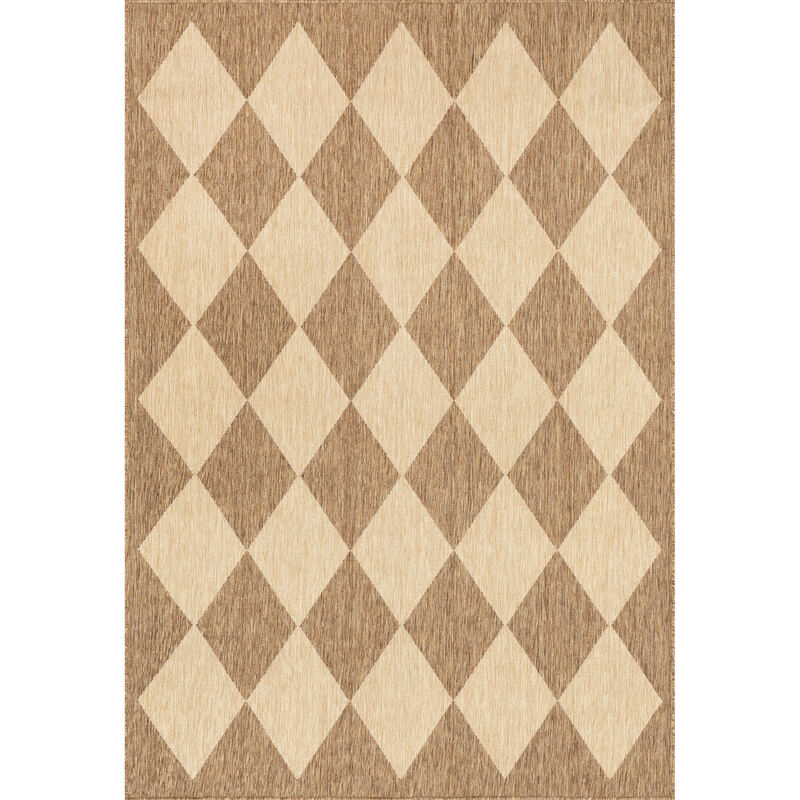
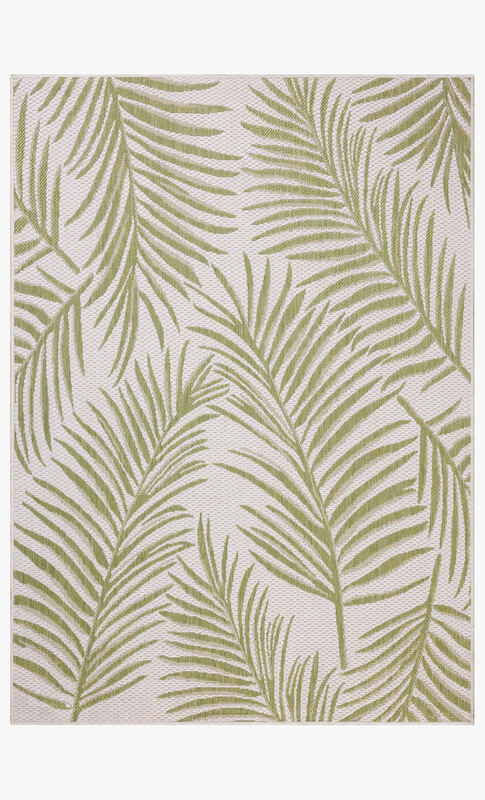
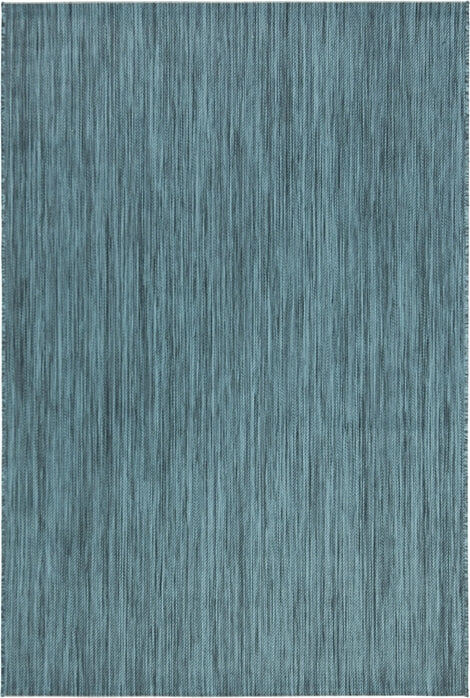
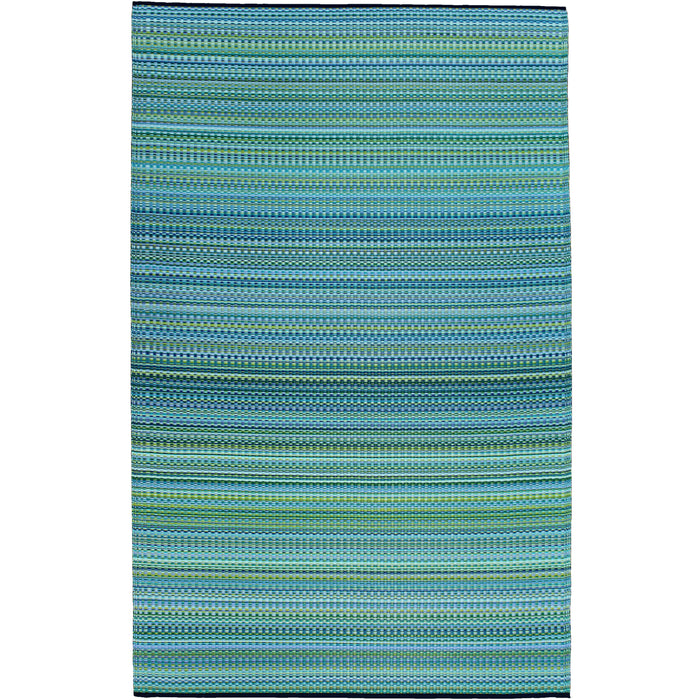
The Mad Mats Mix Tropical is the sustainability and value pick — hand-loomed in Thailand from 100% recycled plastic tubes, fully reversible, with a one-year color guarantee. At $175 for the 5x8 and $225 for the 6x9, it lands at roughly half the price-per-square-foot of the Loloi Easton or Ruggable Josephine in equivalent sizes. The trade-off is texture (plastic ribbon, not soft polypropylene) and sizing (caps at 6x9). Mad Mats reviewers have reported owning the same rug for 10+ years with continued performance.
Full review
Build Quality and Pile
Mad Mats hand-looms in Thailand from 100% recycled polypropylene tubes — a fundamentally different construction than the power-loomed flatweave polypropylene in the Sabina, Beach House, and Easton. The tubes are woven into a flat ribbon pattern that's open enough to drain water through to the surface below, which makes the rug dry in minutes after a rinse. The Good Trade flagged Mad Mats in their 2026 sustainable-rug roundup as one of the few options where the recycled-materials claim is the actual construction story rather than a single-component marketing line.
The texture trade-off is real. Plastic ribbon feels harder and slicker underfoot than the polypropylene flatweaves above; barefoot use isn't unpleasant but isn't plush. The reversibility is genuine — both faces are finished, and the inverse color pattern reads as clean on the secondary side as the primary. Hand-loomed construction means minor pattern variations between rugs, which Avocado Decor calls out as a feature rather than a defect.
Weather Resistance and UV Fade
Mad Mats publishes a one-year color guarantee — uncommon in the polypropylene outdoor-rug category, where most manufacturers leave fade performance to disclaimers about shaded placement. The UV coating is applied to the recycled polypropylene tubes before weaving, which embeds the protection into the fiber rather than relying on surface treatment. Long-term reviewers on Amazon and the Mad Mats site reported owning the rugs for 10+ years with continued color retention — that's longer than any of the other rugs in this lineup have published lifespan data for. The open-weave construction also helps with weather behavior: water doesn't pool on the surface, so freeze-thaw cycles in northern climates don't degrade the weave the way they would on a latex-backed polypropylene rug.
Washability and Cleaning
Sweep or shake to remove loose debris; hose off for dirt; wipe with mild detergent for stubborn stains. The open weave is the cleaning advantage — sand, pollen, and pet hair pass through to the surface below rather than embedding into the pile. That same property is the cleaning disadvantage: if you don't lift the rug periodically, dust and grit accumulate underneath. Mad Mats recommends shaking the rug out monthly and hosing it off seasonally. Drying is fast — the lightweight construction air-dries in 30-60 minutes in sun, compared to several hours for a latex-backed rug.
Reversibility and Design
The Mix Tropical pattern combines a contemporary floral-inspired design with soft palettes — the reversible face inverts the color scheme so flipping the rug shifts the entire visual emphasis. Mad Mats sells over 30 patterns including geometric (Casa Blanca, Basic, Mix), botanical (Wild Flower, Daisy), oriental (Turkish), and scallop colorways, all reversible. The Avocado Decor listing reads the design as 'extra-heavy traffic durability rating' suitable for porches, RVs, camping, and beach houses — Mad Mats' core customer base is buyers who need a rug that takes abuse and doesn't fade.
Size and Coverage Options
Sizing caps at 6x9, which is the biggest limitation. The lineup is 2'6"x6' runner, 4x6, 5x8, and 6x9 — no 8x10 or larger. That cap is a function of hand-loomed Thai production capacity rather than a design choice, but the practical effect is the same: Mad Mats isn't the rug for a full pergola or a 6-seat dining table. For a small balcony, an entryway, a kitchen mat, a deck under 9 feet, or a covered patio with a small bistro set, the sizing is fine. For anything bigger, the Sabina, Beach House, or Easton are the picks.
Pricing scales as $95 for 4x6, $175 for 5x8, and $225 for 6x9 from Avocado Decor. Amazon ASIN-level pricing varies by color and seller but tracks similarly. Per square foot, the 6x9 lands cheaper than the Loloi Easton 5'-3"x7'-6" and well under the Ruggable Josephine 5x7 cover, while offering recycled material and full reversibility.
Where It Falls Short
Three weaknesses to weigh. First, the 6x9 size cap rules out large patios outright — this isn't the rug for an 8x10 or 9x12 footprint. Second, the open-weave construction lets dirt fall through to the deck or concrete beneath, which is great for cleaning the rug but creates dirt buildup underneath that needs periodic attention. Third, texture — the plastic-ribbon weave is harder underfoot than the polypropylene flatweaves and won't satisfy buyers who expect rug softness. None of these are deal-breakers for the use case Mad Mats fits; they're hard caps if you need the rug to scale beyond its sweet spot.
Who It's Best For
Buy the Mad Mats Mix Tropical if you want recycled-plastic construction, true reversibility, and a sub-$250 outdoor rug that lasts a decade — and your patio, balcony, or deck is 6x9 or smaller. Long-term reviewer reports of 10+ year ownership make this the durability champion in the value tier. Skip it if you need 8x10 or larger (Sabina, Beach House, or Easton), if you want a soft barefoot feel (Ruggable), or if you don't want to deal with periodically lifting the rug to sweep underneath.
Long-Term Durability
This is where Mad Mats genuinely wins. Mad Mats site reviews and Amazon long-term reviews include multiple accounts of the same rug surviving 10+ years of outdoor use, hosed seasonally, with color and weave intact. That's substantially longer than the 2-3 year practical lifespan most polypropylene flatweaves deliver in unprotected installations. The combination of recycled plastic tubes (which don't degrade like polyester does under UV), open-weave drainage (which prevents freeze damage), and Thai hand-looming quality (tighter than mass-produced power looming) creates the long-tail durability profile. For a buyer thinking about lifetime cost rather than upfront price, the math leans Mad Mats.
How It Compares to Alternatives
Versus the Loloi II Easton ESN-06, both reverse but the construction is different — Mad Mats is hand-loomed recycled plastic tubes from Thailand, Easton is power-loomed polypropylene from Turkey. Mad Mats wins on sustainability, price-per-square-foot, and reviewer-reported long-term lifespan; the Easton wins on pattern refinement and on offering an 8x10 footprint Mad Mats can't deliver. Versus the nuLOOM Sabina Diamond Trellis 8x10, Mad Mats is half the price at the 6x9 cap but can't scale to the Sabina's 10x14.
Versus the Ruggable Josephine Sunrise, Mad Mats trades machine washability and saturated print for genuine 100% recycled construction and a 10+ year reviewer-reported lifespan. The sustainability story is cleaner on Mad Mats — the entire rug is recycled plastic, while the Ruggable uses recycled polyester over a polyurethane barrier. Versus the Safavieh Beach House BHS218 at 5x7 or 5x8 sizes, Mad Mats costs more upfront but delivers reversibility and the recycled-materials story; the Beach House wins purely on dollars.
Value at This Price
$175 for the 5x8 lands roughly between the Safavieh Beach House BHS218 in equivalent small sizes (cheaper) and the Loloi II Easton 5'-3"x7'-6" (more expensive). On a price-per-year basis, the Mad Mats math is the strongest in the lineup if the 10+ year reviewer lifespan claims hold for a buyer's specific climate — $175 over 10 years works out to $17.50 per year, vs. roughly $90-100 per year for a Beach House replaced every two years. The catch is that long lifespan depends on covered or shaded placement, the same caveat that applies to every polypropylene rug in this category. In direct full sun, the one-year color guarantee is the meaningful warranty, not the 10-year reviewer anecdote.
There's also a non-financial value lever specific to Mad Mats: the recycled-plastic construction story is verifiable and meaningful. The Good Trade flagged the brand in their 2026 sustainable-rug roundup specifically because the entire rug — not just one component — is recycled material. Buyers who prioritize sustainability are paying the upcharge over the Safavieh Beach House for that story; whether the upcharge is worth it depends on how much weight that placement carries in the purchase decision.
Strengths
- +Made of 100% recycled plastic — the most sustainable construction in the lineup
- +Hand-loomed in Thailand from recycled polypropylene tubes for genuine artisanal weave
- +Fully reversible with distinct color patterns on each face
- +UV-coated for fade resistance plus mold and mildew proofing
- +One-year color guarantee from the manufacturer — uncommon in this category
Watch-outs
- −Open-weave construction lets dirt, sand, and pet hair fall through onto the surface below
- −Hand-loomed sizing tops out at 6x9 — no 8x10 or larger for big patios
- −Plastic-ribbon texture feels harder underfoot than polypropylene flatweaves like the Sabina or Easton
How it compares
The Mad Mats is the only recycled-plastic pick in this lineup — the Sabina, Beach House, and Easton are virgin polypropylene, the Ruggable Josephine is recycled polyester with a polyurethane barrier (not the same as Mad Mats' plastic-tube weave). At $175 for a 5x8 it competes on price with smaller Safavieh Beach House sizes but wins on sustainability and reversibility; it loses to the Beach House on size availability (Mad Mats caps at 6x9).
Who this is for
At a glance: Small-to-medium patios, balconies, decks under 9 ft, and buyers who prioritize recycled materials and reversibility over plush feel.
Why you’d buy the Mad Mats Mix Tropical Reversible Recycled Plastic Outdoor Rug
- Made of 100% recycled plastic — the most sustainable construction in the lineup.
- Hand-loomed in Thailand from recycled polypropylene tubes for genuine artisanal weave.
- Fully reversible with distinct color patterns on each face.
Why you’d skip it
- Open-weave construction lets dirt, sand, and pet hair fall through onto the surface below.
- Hand-loomed sizing tops out at 6x9 — no 8x10 or larger for big patios.
- Plastic-ribbon texture feels harder underfoot than polypropylene flatweaves like the Sabina or Easton.
Rating sources
“UV resistant, water repellent, made of 100% recycled materials, and holds up to wear and tear.”
“Hand-loomed construction from Thailand; weather-resistant with rapid drying capability; extra-heavy traffic durability rating.”
“Best outdoor rugs made with sustainable materials — 100% recycled PET and recycled polypropylene options.”
Our 4.4 score is the average of these published ratings. Ratings marked * were derived from the reviewer’s written analysis or video transcript — the publisher didn’t print an explicit numeric score, so we inferred one from their own words. Click through to verify. More about methodology.