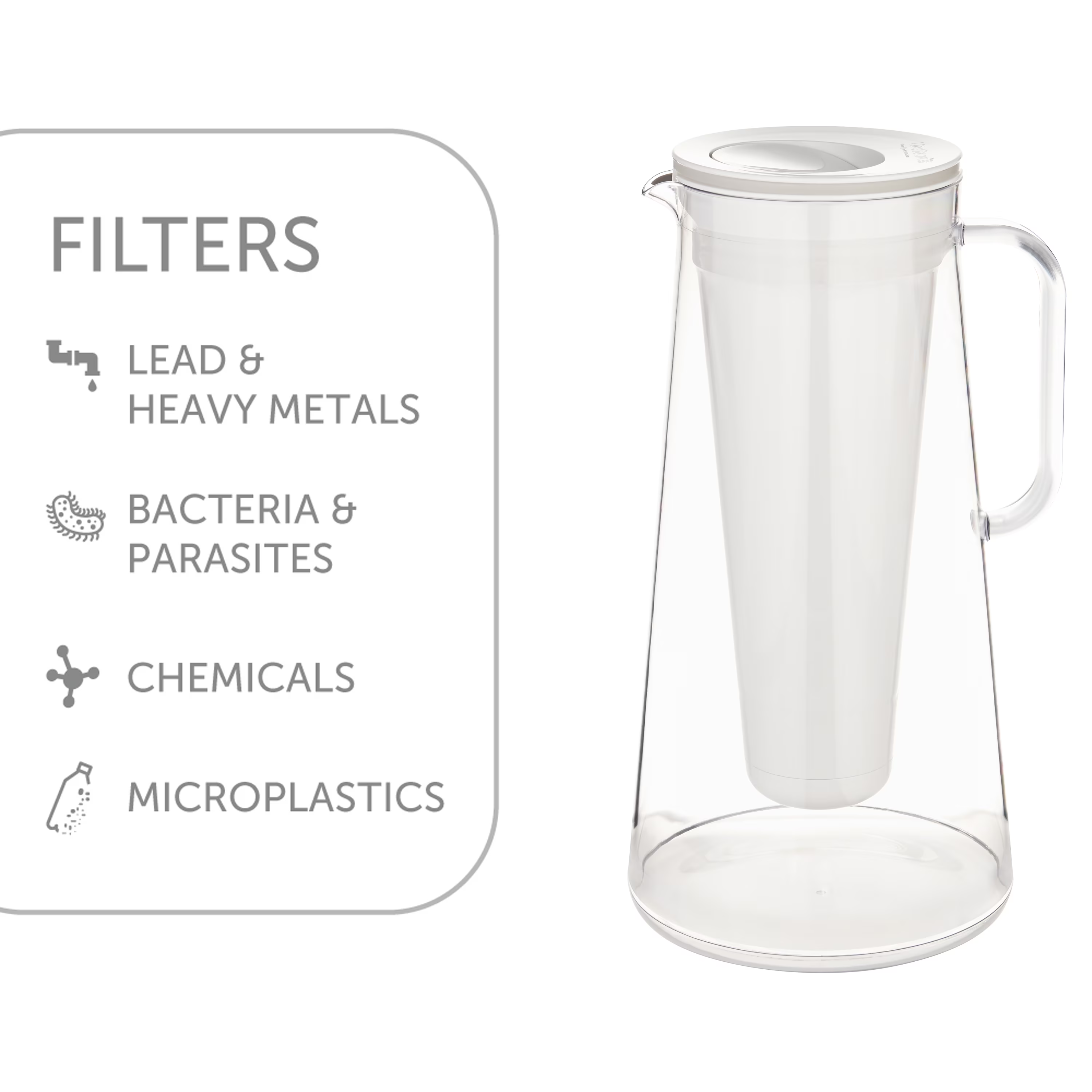
Trailandkale found that the LifeStraw Home’s two-stage filtration effectively removes bacteria, parasites, microplastics, lead, mercury, and PFAS while delivering smoother, fresher-tasting water. Greenactivefamily confirmed these performance benefits, noting the removal of chlorine allows natural minerals to shine without chemical aftertastes. However, Foodandwine reported that this rigorous process requires waiting over ten minutes for a full reservoir, and connect.mayoclinic.org users described disassembly as nearly impossible due to tight internal components. Trailandkale also noted the carbon filter needs replacing every two months, which adds to long-term costs. This pitcher fits individuals or couples prioritizing purity in small households but is unsuitable for families needing rapid access or easy maintenance.
Full review
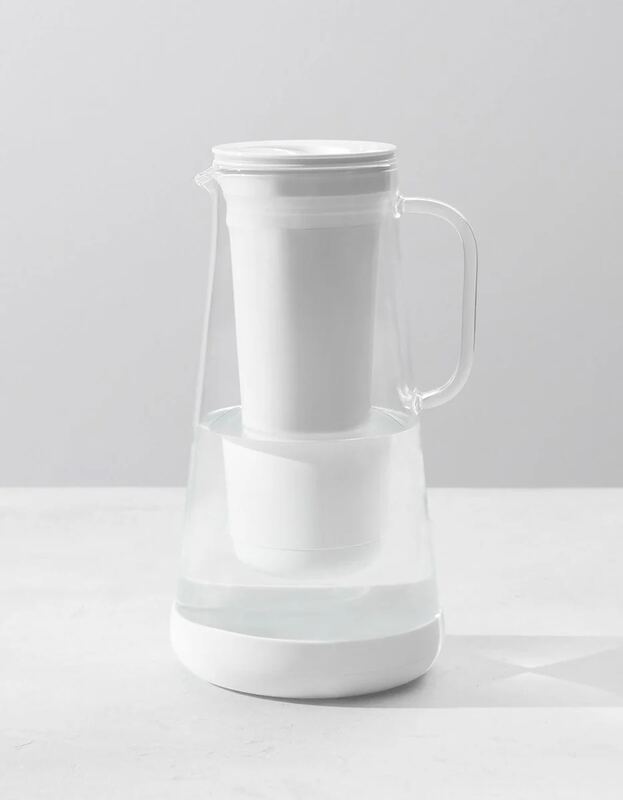
Borosilicate glass construction and silicone base
The LifeStraw Home water pitcher distinguishes itself from standard plastic alternatives by offering a version crafted from hand-blown borosilicate glass. This material choice directly addresses consumer concerns regarding microplastic shedding, as the primary vessel holding the filtered water contains no plastic components that could leach particles over time. The design includes a silicone sleeve at the base which provides cushioning against hard countertops, preventing the clinking sound associated with direct glass contact and offering minor protection against impacts. This aesthetic approach results in a sleek, non-clunky profile that reviewers describe as having clean lines suitable for modern kitchen counters rather than hiding behind cabinetry.
While the main body is glass, the lid and filter housing remain constructed from BPA-free plastic. Reviewers note that this compromise is standard across almost all pitcher designs because water does not sit in prolonged contact with these upper components during storage. The transparent nature of the glass body allows users to visually monitor their water supply without lifting the heavy vessel, a practical feature for households monitoring daily consumption levels. The weight of the unit increases significantly when filled compared to lightweight plastic pitchers, making it less suitable for frequent pouring by children or individuals with limited grip strength.
Two-stage membrane and carbon filtration performance
Trailandkale found that the pitcher utilizes a dual-filtration approach combining a 0.2-micron hollow fiber membrane microfilter with an activated carbon and ion exchange filter. The membrane stage is responsible for physically blocking bacteria, parasites, and microplastics, achieving claimed removal rates of 99.999999 percent for bacteria and 99.999 percent for both parasites and microplastics. This physical barrier operates independently of the chemical filtration stage, providing a mechanical defense against particulate contaminants that standard carbon blocks cannot address on their own.
The second stage employs activated carbon combined with ion exchange media to target dissolved chemicals, heavy metals like lead and mercury, and organic compounds including pesticides and herbicides. Trailandkale noted this configuration reduces chlorine taste and odor while also addressing PFAS, commonly referred to as forever chemicals. The system is certified against multiple NSF standards, including NSF 42 for aesthetic effects, NSF 53 for health contaminants, and NSF P473 specifically for PFAS reduction. This multi-standard certification provides a higher level of verified performance compared to pitchers that only meet basic chlorine reduction requirements.
Greenactivefamily reported that the dual-stage system produces water with a noticeably smoother and more neutral taste compared to unfiltered tap water. The removal of chlorine allows the natural mineral content, such as magnesium and potassium, to remain in the water without being masked by chemical aftertastes. This flavor improvement was consistent across different household water sources, making it a reliable option for areas with heavily chlorinated municipal supplies or well water with distinct earthy notes.
Filtration speed and reservoir capacity limitations
Foodandwine found that the rigorous two-stage filtration process demands significant patience, noting it took over ten minutes to filter a full 7-cup reservoir on initial use. The flow rate is inherently slow because the water must pass through both the dense membrane and the carbon block sequentially, allowing sufficient contact time for chemical absorption and physical straining. While the speed improved slightly as the filters became fully saturated with water, users cannot rapidly dispense large volumes of clean water when thirsty or hosting guests.
The 7-cup capacity is explicitly sized for small households, typically one to three people, rather than larger families requiring high-volume hydration. For the pitcher format, users must plan their water intake around the slow filtration cycle, often filling the reservoir at night to ensure fresh water is available in the morning.
The small internal volume means that even with a full reservoir, the usable filtered output is limited before the user must top off the unfiltered section. The trap door lid allows for single-handed refilling without removing the entire cap, but the narrow opening requires users to pour carefully to avoid spills. This design prioritizes secure filtration over convenience speed, making it a poor choice for households that consume more than seven cups of water daily or require immediate access to large quantities.
Filter replacement frequency and ongoing costs
The maintenance schedule for the LifeStraw Home pitcher involves replacing two different filters at vastly different intervals, which impacts long-term ownership costs. The activated carbon and ion exchange filter must be replaced every 40 gallons or approximately two months to maintain its effectiveness against chemicals like PFAS and lead. In contrast, the membrane microfilter lasts significantly longer, rated for up to 264 gallons or one year of use. This disparity means users will frequently purchase the smaller carbon filters while enjoying extended periods between membrane replacements.
The recurring cost of replacement filters adds up over time. A multi-pack containing multiple carbon filters and a single membrane filter costs around sixty dollars, which represents a substantial annual maintenance expense compared to basic pitchers that only require one type of cartridge replacement annually. Users must track these dates carefully because using an expired carbon filter compromises the chemical filtration capabilities even if the membrane remains intact.
The manufacturer states that neither filter is designed to remove fluoride from water supplies. This limitation means households relying on fluoridated tap water for dental health benefits will not see a reduction in fluoride levels, though they will still benefit from the removal of other contaminants. Users seeking complete demineralization or specific chemical exclusions beyond the certified list should verify their local water composition against the NSF 53 and P473 standards before committing to this system.
Disassembly difficulty and cleaning challenges
Connect.MayoClinic.org users reported significant frustration with the tight fit of the internal filter housing, describing it as nearly impossible to remove using standard hand strength alone. The compression-fit design that secures the filters during operation makes disassembly for deep cleaning or replacement a struggle, often requiring tools like butter knives or spoons to pry the plastic components loose from the glass neck. This snug assembly creates a barrier to routine maintenance, discouraging users from performing necessary hygiene checks on the reservoir interior.
The narrow opening of the pitcher body complicates manual cleaning efforts, as standard dish sponges cannot reach the bottom surfaces where sediment or biofilm might accumulate. The silicone rings and crevices around the lid mechanism are particularly prone to trapping moisture and developing mold if not meticulously wiped down after every use. Because the entire unit is not dishwasher safe, all cleaning must be done by hand using mild detergents, adding time to the daily upkeep routine.
The filter housing cap itself lacks a grippy texture, making it difficult to twist open when hands are wet or soapy. Once opened, removing the membrane microfilter requires reaching deep into the narrow tube and pushing it out from the bottom, an action that reviewers with larger hands found physically awkward and impractical without assistance. This design flaw forces users to either perform delicate maneuvers with limited leverage or rely on external tools to manipulate the internal components.
Suitability for small households versus large families
The combination of slow filtration speed, limited 7-cup capacity, and difficult disassembly makes this pitcher best suited for individuals or couples who prioritize water purity over convenience. In a single-person household, the ten-minute wait time is negligible because the user can fill the reservoir overnight without disrupting their routine. The aesthetic appeal of the glass design also serves as a functional kitchen accessory that does not require hiding away in cabinets due to its attractive profile.
For larger families or high-traffic kitchens, the pitcher format becomes a bottleneck. The requirement to refill the unfiltered section multiple times to produce a full batch of clean water conflicts with the slow flow rate, creating a frustrating cycle for users needing immediate hydration. In these scenarios, LifeStraw's larger Home dispenser may be a better fit.
Users concerned specifically about microplastic exposure will find the glass construction particularly valuable as it eliminates plastic-to-water contact during storage. However, those who prioritize ease of use, rapid water access, or low-maintenance cleaning routines may find the compromises inherent in this design unacceptable. The product delivers on its filtration promises but demands a specific lifestyle adaptation to manage its operational limitations effectively.
Strengths
- +Two-stage filtration removes bacteria, parasites, microplastics, lead, mercury, and PFAS.
- +Available in a hand-blown borosilicate glass pitcher to avoid plastic contact with water.
- +Produces noticeably smoother and fresher tasting water by reducing chlorine.
- +Sleek design fits well on kitchen counters without looking clunky.
Watch-outs
- −Very slow filtration rate requires waiting over 10 minutes for a full reservoir to filter.
- −Carbon replacement filters must be swapped out every two months, increasing long-term costs.
- −The tight fit of the internal components makes disassembly and cleaning difficult.
How it compares
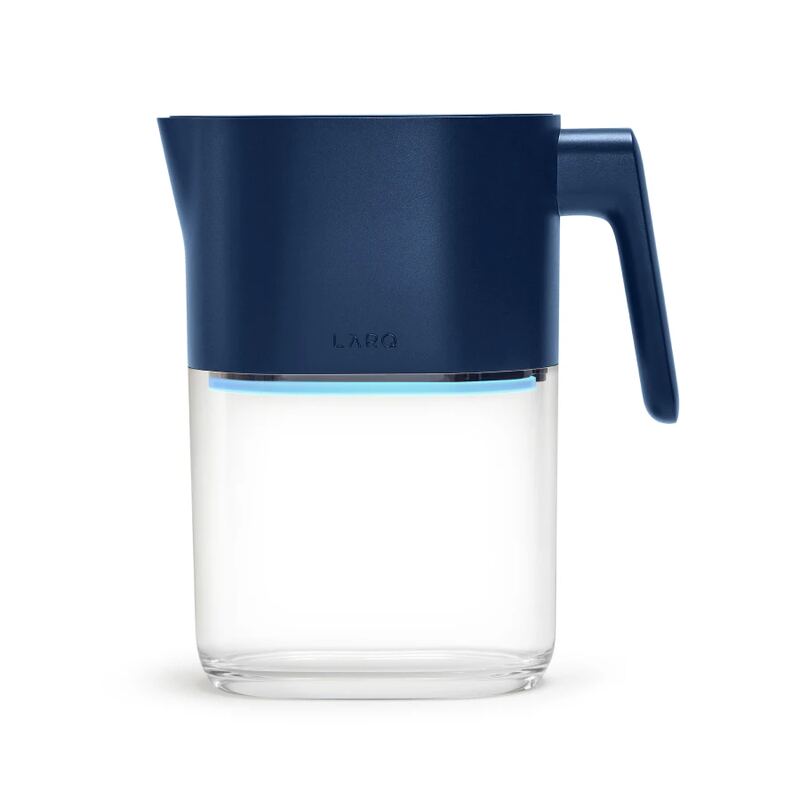
The LifeStraw Home Water Pitcher provides comprehensive certifications including NSF P473 for PFAS removal, whereas the Larq PureVis lacks formal performance certification from major bodies. Both models share a slow filtration rate requiring over ten minutes per batch, but the LifeStraw Home offers broader contaminant coverage compared to the Larq’s focus on bacterial prevention.
Rating sources
“Filtering is slow but the clean drinking water is well worth the wait.”
Our 4.5 score is the average of the 1 scored review above; 3 more reviewed it without printing a score and are not in the average. Ratings marked * were derived from the reviewer’s written analysis or video transcript — the publisher didn’t print an explicit numeric score, so we inferred one from their own words. Click through to verify. More about methodology.