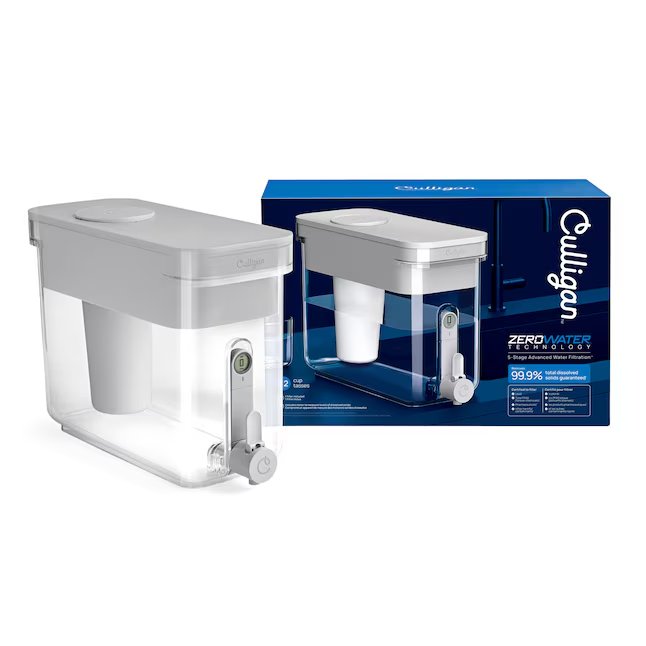
The Culligan pitcher delivers comprehensive contaminant reduction through a five-stage ion-exchange process that removes nearly all total dissolved solids, earning an IAPMO certification to four NSF/ANSI standards. TechGearLab found this aggressive filtration achieves a 96 percent TDS reduction, effectively eliminating metals and pharmaceuticals without requiring under-sink installation. However, the system’s short filter lifespan of just 20 gallons makes it one of the most expensive water filters to maintain, with costs potentially reaching $960 annually for high-volume users. Additionally, the complete removal of beneficial minerals results in slightly acidic water that some consumers find has a metallic taste. This model suits households prioritizing absolute purity and real-time monitoring via its integrated meter over mineral retention or low ongoing costs.
Full review
Contaminant removal across certified standards
waterfilterguru found that the Culligan pitcher achieved a contaminant reduction score of 9.65, driven by its ability to eliminate every health-related and aesthetic impurity present in their Colorado tap water samples. This comprehensive removal extends beyond basic heavy metals; the filter also targets pharmaceuticals and pesticides such as ibuprofen, DEET, BPA, and estrone under NSF/ANSI 401 certification.
The filtration mechanism relies on a five-stage process combining activated carbon with KDF media and mixed-bed ion exchange resin. This specific combination allows the pitcher to tackle stubborn contaminants that standard carbon filters often leave behind. TechGearLab noted that while most pitchers rely solely on an activated carbon screen, this addition of ion-exchange resin captures a significantly broader range of impurities. The result is water quality that approaches reverse osmosis performance without requiring permanent installation under a sink.
Certification depth distinguishes this model from many competitors in the pitcher category. It holds IAPMO certification to four separate NSF/ANSI standards covering 100 percent of its advertised claims. This includes NSF/ANSI 42 for chlorine and taste, NSF/ANSI 53 for lead and fluoride, NSF/ANSI 401 for emerging compounds like pharmaceuticals, and NSF/ANSI 372 for material safety regarding lead-free construction. The manufacturer only makes reduction claims that are backed by these rigorous third-party verifications rather than relying on vague marketing language.
Total dissolved solids reduction and acidity trade-off
The defining characteristic of this filtration system is its aggressive removal of total dissolved solids. Independent lab testing recorded a 96 percent reduction in TDS, dropping levels from 138 parts per million down to just 5 ppm. The integrated digital meter displays zero because it lacks the sensitivity to detect trace carbonate and bicarbonate ions that remain after deionization. While this indicates near-pure water, the complete stripping of minerals fundamentally alters the chemical profile of the output.
That mineral removal drives the pH level down from a neutral 7.6 in tap water to 6.6 in filtered water, making it slightly acidic. The absence of calcium and magnesium means the water lacks the natural buffering capacity found in typical municipal supplies. This demineralization creates a distinct sensory experience that divides users; some find the clean taste preferable, while others perceive a metallic or flat flavor profile because their palates are accustomed to mineral-rich water.
TechGearLab measured a 96 percent reduction in total dissolved solids and noted that this performance comes with significant trade-offs for daily consumption. The complete removal of beneficial minerals means users must consider whether they want to replace those nutrients through diet or bottled alternatives. For households prioritizing absolute contaminant elimination over mineral retention, the acidic output is an acceptable consequence; for others seeking balanced drinking water, the demineralized nature of the filter may be a deterrent.
Integrated TDS meter replaces handheld testing
The most significant hardware improvement over legacy ZeroWater models is the integration of the Total Dissolved Solids meter directly into the pitcher body. Previous generations required users to pull out a separate handheld device, pour water into a glass, and manually test it after every use. The new design features an always-on digital display that reads the filtered water in real time without any user intervention or extra tools.
This continuous monitoring provides immediate feedback on filter health. Users simply glance at the side of the pitcher to see current TDS levels. When the reading climbs past a six, it signals that the ion-exchange resin is saturated and the cartridge must be replaced. This eliminates guesswork regarding when the filter has lost its efficacy, ensuring users do not consume water with compromised contaminant removal capabilities.
The convenience of this integrated system addresses one of the most common complaints about traditional pitcher filters: the hassle of manual testing. By embedding the meter into the reservoir structure, Culligan ensures that monitoring water quality becomes a passive part of the daily routine rather than an active chore. The digital readout is positioned for easy viewing while filling glasses or placing the pitcher in the refrigerator.
Top-loading filter design eliminates leak risks
Installation mechanics have been completely overhauled from the bottom-threaded designs of older models. Legacy pitchers required users to twist filters into place from underneath the upper reservoir, a process that often demanded significant force and resulted in inconsistent watertight seals. The new Culligan pitcher features a top-loading filter cartridge that slides directly into the reservoir and locks with a simple clockwise twist.
This revised installation method provides an audible click when properly seated, giving users clear confirmation of a secure fit without the need for excessive torque or guesswork. The design prevents the common failure point where old filters would leak from the base due to improper threading. Users no longer have to fight with awkward angles or worry about damaging the plastic threads during routine filter changes.
The redesigned lid also contributes to improved usability and leak prevention. Older models featured loose-fitting lids that could slip off when tilting the pitcher, often causing spills on countertops. The new version utilizes a firm-fitting silicone seal that stays locked in place even when pouring vigorously. This structural stability ensures that water flows predictably from the open spout without splashing or overflowing.
Short filter lifespan increases maintenance costs
The aggressive ion-exchange filtration comes at a steep price regarding ongoing maintenance. TechGearLab calculated that maintaining this pitcher can cost up to $960 annually for high-volume users, making it one of the most expensive water filters to maintain in its class. The short filter life is directly tied to how quickly the resin becomes saturated with dissolved solids, particularly in areas with hard tap water.
Each replacement cartridge is rated for approximately 20 gallons of use before the TDS meter indicates a drop in performance. For an average household consuming four cups daily, this translates to changing filters roughly every two weeks depending on initial water quality. The frequent replacement schedule means users must budget significantly more for consumables compared to standard carbon block pitchers that last several months.
The high cost per gallon is the primary drawback cited by reviewers who value long-term affordability. While the upfront price of the pitcher is moderate, the recurring expense of cartridges adds up quickly. Users in regions with extremely high mineral content in their tap water may find themselves replacing filters even faster than the 20-gallon guideline suggests, further inflating annual maintenance costs.
Physical footprint and pouring mechanics
The pitcher features a substantial physical profile that requires careful consideration of kitchen storage space. The integrated TDS meter and the large filter cartridge make the unit taller than standard pitchers, often requiring users to adjust shelf heights or move other items like milk jugs to accommodate it in refrigerators. The overall weight also increases significantly once filled due to the dense resin media inside the cartridge.
Pouring dynamics have been smoothed out by removing the restrictive spout covers found on previous iterations. The new open smooth flow design allows water to pour evenly and predictably, eliminating the inconsistent flow rates that previously caused glasses to overflow. Users report that the pouring action feels natural and controlled, though the heavy weight of a full pitcher requires two hands for safe handling.
The large size of the filter cartridge itself can make removal slightly cumbersome during maintenance. Some users have noted that prying the oversized cartridge out from beneath the handle mechanism requires effort, especially when wet. Despite this minor ergonomic friction, the top-loading twist-lock design ensures that reinstallation remains straightforward and secure without the need for specialized tools or excessive force.
Strengths
- +IAPMO certified to NSF/ANSI standards 42, 53, 401 and 372 for comprehensive contaminant reduction claims.
- +Integrated TDS meter provides real-time monitoring of water quality without needing a separate handheld device.
- +Top-loading filter design with a twist-lock mechanism eliminates the leak-prone bottom-threaded installation of legacy models.
- +Reduces total dissolved solids by 96% to near-zero levels, effectively removing metals and inorganics.
Watch-outs
- −High ongoing maintenance costs due to short filter lifespan averaging only 20 gallons per cartridge.
- −Removes beneficial minerals resulting in slightly acidic water with a pH of 6.6 and potential metallic taste.
How it compares
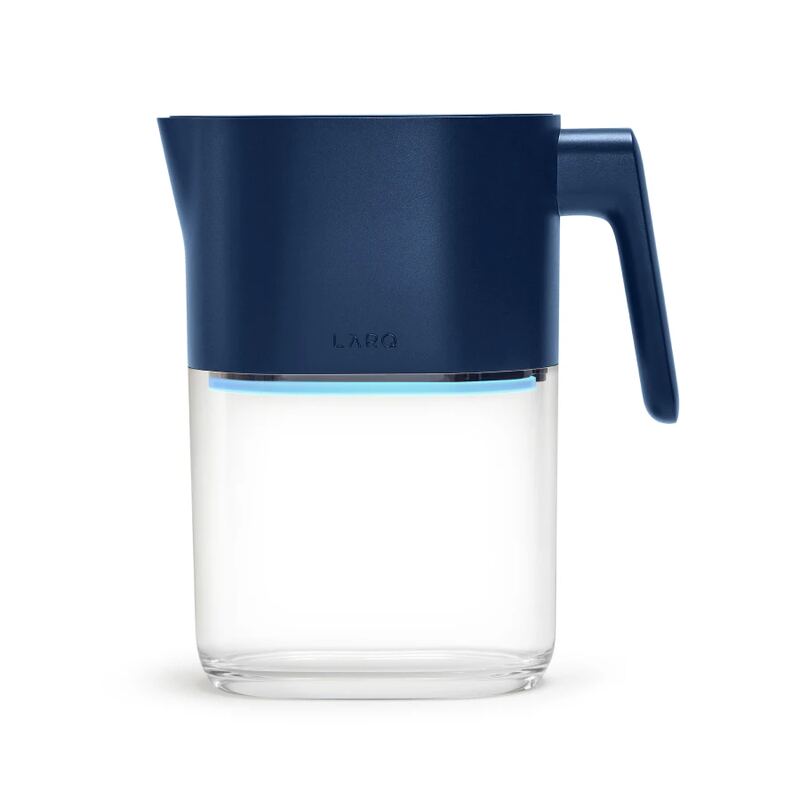
The Culligan pitcher achieves near-zero total dissolved solids through ion-exchange, a level of purity the Larq Pure Water Filter Pitcher cannot match due to its reliance on carbon and UV-C filtration. While it offers real-time TDS monitoring via an integrated meter, its 20-gallon filter lifespan is drastically shorter than the Brita Everyday Elite’s 120 gallons.
Rating sources
“It's easy to set up and takes up minimal space, but its short filter life makes it one of the most expensive water filters to maintain.”
Our 4.1 score is the average of the 2 scored reviews above; 1 more reviewed it without printing a score and is not in the average. Ratings marked * were derived from the reviewer’s written analysis or video transcript — the publisher didn’t print an explicit numeric score, so we inferred one from their own words. Click through to verify. More about methodology.