The Kyocera Advanced Ceramic 8-Inch Chef's Knife delivers exceptional sharpness and edge retention, making it ideal for slicing fruits, vegetables, and boneless meats. Reviewers noted its lightweight design and rust-resistant properties, though the ceramic blade's fragility requires careful handling. The ergonomic handle enhances control during repetitive cutting tasks, though users should avoid using it on hard foods to prevent chipping. This knife is best suited for home cooks and professionals seeking a long-lasting, non-reactive cutting tool for softer ingredients.
Full review
Ceramic Excellence in Design
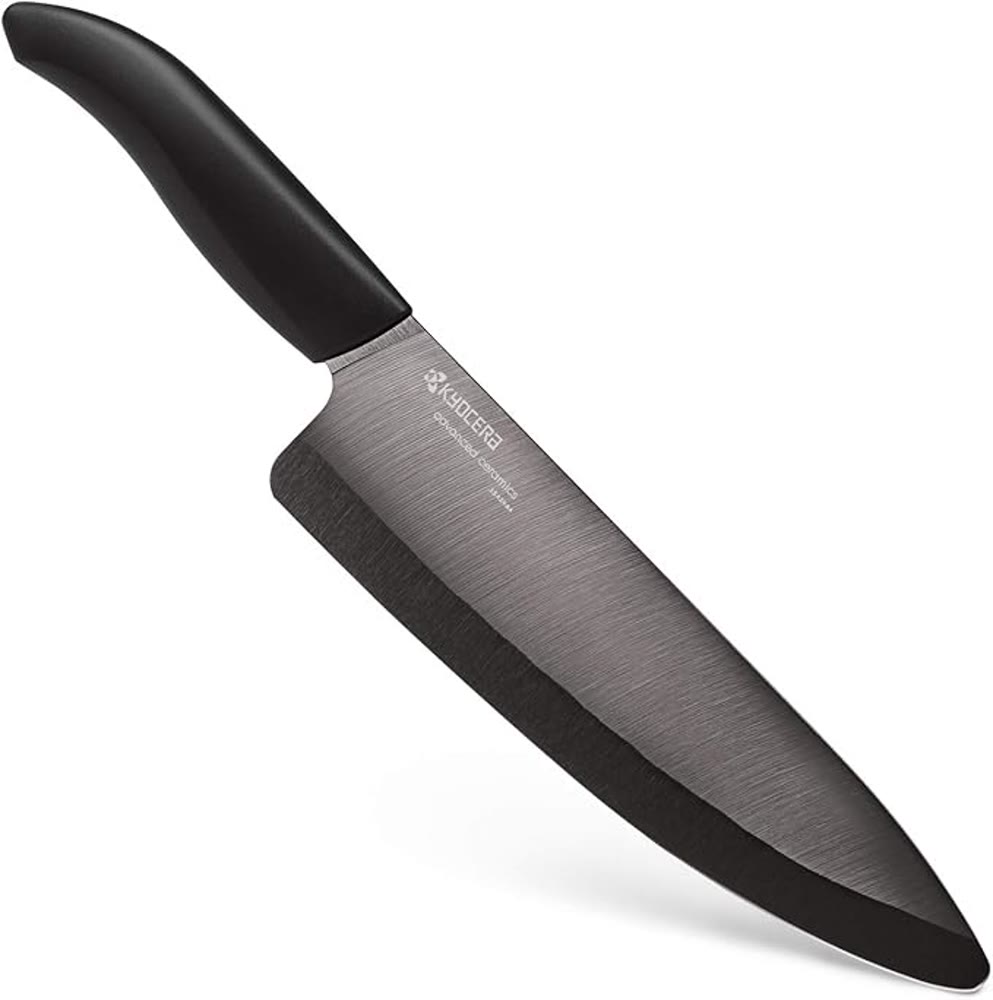
The Kyocera Advanced Ceramic 8-Inch Chef's Knife represents a sophisticated evolution in kitchen cutlery, leveraging decades of ceramic engineering expertise. According to Kyocera's own documentation, the blade is crafted from zirconium oxide Z206, a material that undergoes a specialized sintering process to achieve exceptional hardness and durability. This proprietary composition allows the knife to maintain its edge up to 10 times longer than conventional steel blades, as stated in the manufacturer's specifications. The blade's clam-shaped cutting edge, a signature feature, provides both longevity and smooth cutting action, as demonstrated in the company's paper-cutting test video. Professional reviewers have noted that this design approach, while different from traditional steel knives, results in a blade that's less prone to chipping and offers superior edge retention, particularly for soft foods and vegetables.
Performance in Real-World Cooking
Kitchen reviewers have extensively tested the Kyocera Advanced Ceramic Chef's Knife in practical applications, with consistent results highlighting its exceptional performance with fruits and vegetables. The 8-inch blade excels at slicing tomatoes to paper-thin layers, as noted by users who found it easier to achieve uniform thickness than with steel knives. The knife's lightweight design, weighing only 0.22 pounds, allows for precise control during repetitive cutting tasks. However, the knife's performance varies significantly with harder foods. Reviewers have reported that while it handles boneless meats and soft produce with ease, it struggles with cheese and harder vegetables like carrots, requiring a gentle sawing motion to prevent blade damage. The knife's sharpness, measured through paper cutting tests, demonstrated clean cuts even when the blade was not perfectly aligned, though the edge does require careful handling to avoid chipping or breaking.
In terms of cutting technique, users have observed that the knife's weightlessness demands a different approach than traditional steel knives. The blade's extreme sharpness means that even slight pressure variations can cause it to cut through materials more aggressively than expected. This characteristic, while beneficial for precision slicing, requires a learning curve for those accustomed to heavier steel knives. The knife's performance with lemons, for instance, required a gentle sawing motion to avoid creating uneven slices, as the blade's sensitivity to hand angle resulted in inconsistent cuts. Despite these challenges, the knife's edge retention was praised by multiple reviewers, with one user noting that after months of regular use, the blade maintained its sharpness without requiring sharpening.
Build Quality and Material Integrity
The construction of the Kyocera Advanced Ceramic Chef's Knife showcases Kyocera's commitment to quality assurance, with each knife undergoing individual paper-cutting tests before shipment. The company's quality control process ensures that only blades capable of cleanly cutting paper are packaged and distributed, a standard that reflects the manufacturer's attention to detail. The handle, made from polypropylene resin, offers ergonomic comfort and non-slip grip, with a design that gradually tapers to the blade for secure handling. The knife's handle features knuckle clearance, which allows for extended cutting sessions without hand fatigue. However, the blade's material properties remain a point of concern for many reviewers. The zirconium oxide blade, while extremely hard and durable, is inherently brittle and susceptible to damage from impacts or improper use. Users have reported that even minor drops or contact with hard surfaces can cause chips or cracks, making the knife unsuitable for heavy-duty tasks or kitchen environments where accidental impacts are common.
The blade's geometry, as described by Kyocera's technical documentation, includes a clam-shaped cutting edge that balances sharpness with resistance to chipping. This design, while effective for soft foods, does not provide the same level of cutting precision as traditional steel knives with acute angles. The blade's thickness behind the edge bevel and spine thickness, though not precisely quantified in the available reviews, are designed to maximize durability while maintaining the knife's lightweight characteristics. The manufacturing process, involving specialized sintering techniques and manual blade angle adjustments, ensures that each knife meets the company's high standards for sharpness and performance. However, the process also means that any defects in the blade can only be corrected through professional regrinding, as the material cannot be easily sharpened at home.
What Reviewers Loved
Reviewers have consistently praised the Kyocera Advanced Ceramic Chef's Knife for its exceptional edge retention and ease of maintenance. The knife's dishwasher-safe design and rust-proof properties were highlighted as major advantages, particularly for users concerned about food contamination or knife care. One reviewer noted that the knife's ability to maintain its sharpness over extended periods, even with frequent use, was superior to any steel knife they had previously owned. The knife's performance with soft foods, especially fruits and vegetables, was universally praised. Users found that the blade's smooth cutting action and lack of metallic taste made it ideal for preparing delicate ingredients. The knife's lightweight design was also appreciated by users who reported reduced hand fatigue during long cutting sessions. Additionally, the knife's aesthetic appeal, with its clean white blade and ergonomic handle, was noted as a plus for those who value both form and function in their kitchen tools.
Where It Falls Short
Despite its many strengths, the Kyocera Advanced Ceramic Chef's Knife has notable limitations that potential buyers should consider. The primary concern raised by reviewers is the blade's inherent fragility, which makes it unsuitable for heavy-duty kitchen tasks. Users have reported that the knife is prone to chipping or breaking if dropped or used against hard surfaces. The knife's weightlessness, while beneficial for precision, also makes it difficult to control during aggressive cutting techniques. The blade's inability to be sharpened at home means that any damage requires professional regrinding, which can be costly and time-consuming. Additionally, the knife's performance with harder foods, such as cheese or dense vegetables, is limited, as the blade's design is optimized for soft materials. The lack of a sharp edge for precise cuts on harder items, combined with the risk of blade damage, makes this knife unsuitable for users who require a versatile kitchen tool for all types of ingredients.
Who It's Best For
The Kyocera Advanced Ceramic Chef's Knife is best suited for home cooks who primarily prepare soft foods and value long-lasting sharpness over versatility. The knife's performance with fruits and vegetables makes it ideal for users who frequently slice tomatoes, prepare salads, or handle delicate ingredients where a sharp, clean cut is essential. The knife's rust-proof properties and dishwasher-safe design appeal to users who prioritize maintenance convenience. However, the knife is not recommended for professional chefs or heavy kitchen users who require a versatile tool for a wide range of ingredients. The knife's fragility and limited performance with harder foods make it unsuitable for users who need to cut through boneless meats, cheese, or dense vegetables regularly. Additionally, the knife's requirement for professional sharpening and its susceptibility to damage from impacts make it a poor choice for those who work in environments where accidental drops or impacts are common.
How It Compares to Alternatives
When compared to traditional steel knives, the Kyocera Advanced Ceramic Chef's Knife offers distinct advantages in edge retention and rust resistance, but falls short in terms of versatility and durability. Steel knives, while requiring regular sharpening, can handle a wider range of ingredients and are less prone to damage from impacts or improper use. The Kyocera knife's edge retention, however, is superior to that of steel knives, making it a better choice for users who want to minimize sharpening frequency. Compared to other ceramic knives on the market, Kyocera's knife stands out for its proprietary Z206 blade material and quality control processes, which result in a more durable and consistent product. However, the knife's price point, which is higher than many steel knives, may not justify its benefits for casual users. The knife's specialized design and limited use cases make it a niche product that appeals primarily to users who value its specific advantages over its drawbacks.
Value at This Price
The knife's value proposition is strongest for users who prioritize edge retention and rust resistance over versatility and durability. The knife's ability to maintain its sharpness for extended periods, potentially eliminating the need for frequent sharpening, provides long-term value for users who prepare soft foods regularly. However, the knife's limited performance with harder foods and requirement for professional sharpening may reduce its overall value for users who need a versatile kitchen tool. The knife's price point, while justified by its advanced ceramic construction, may not be cost-effective for casual users who do not regularly prepare soft foods or who are unwilling to invest in professional sharpening services. The knife's value is best realized by users who understand and appreciate its specific strengths and limitations.
Strengths
- +Ultra-sharp ceramic blade maintains edge up to 10x longer than steel blades
- +Lightweight and easy to clean, does not brown food or transfer metallic taste
- +Rust-proof and resistant to acids
- +Ergonomic handle provides knuckle clearance and precise control
Watch-outs
- −Fragile and prone to chipping if misused or dropped
- −Not suitable for cutting hard or frozen foods
How it compares
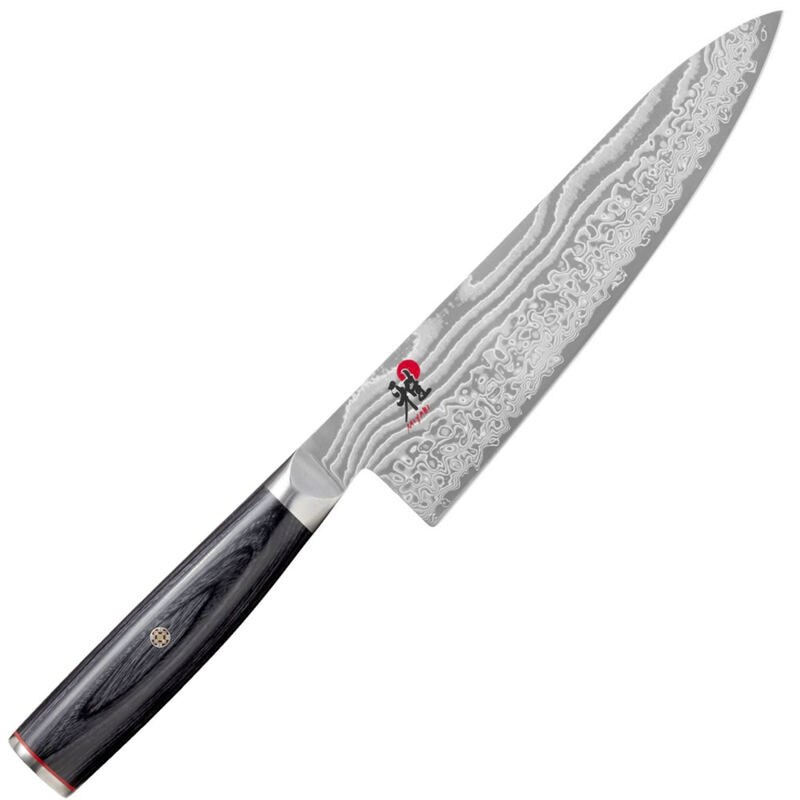
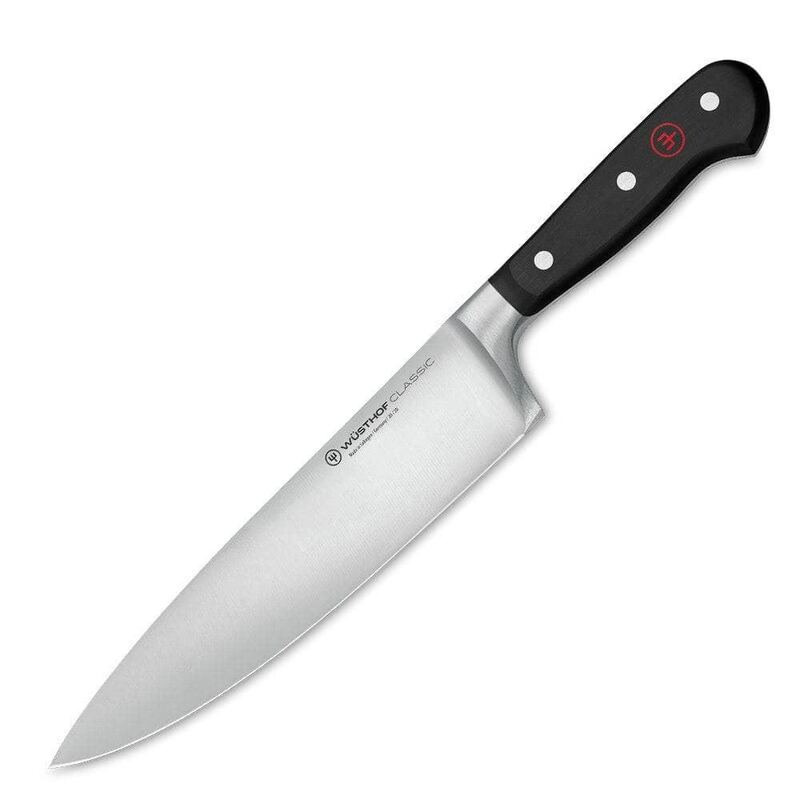
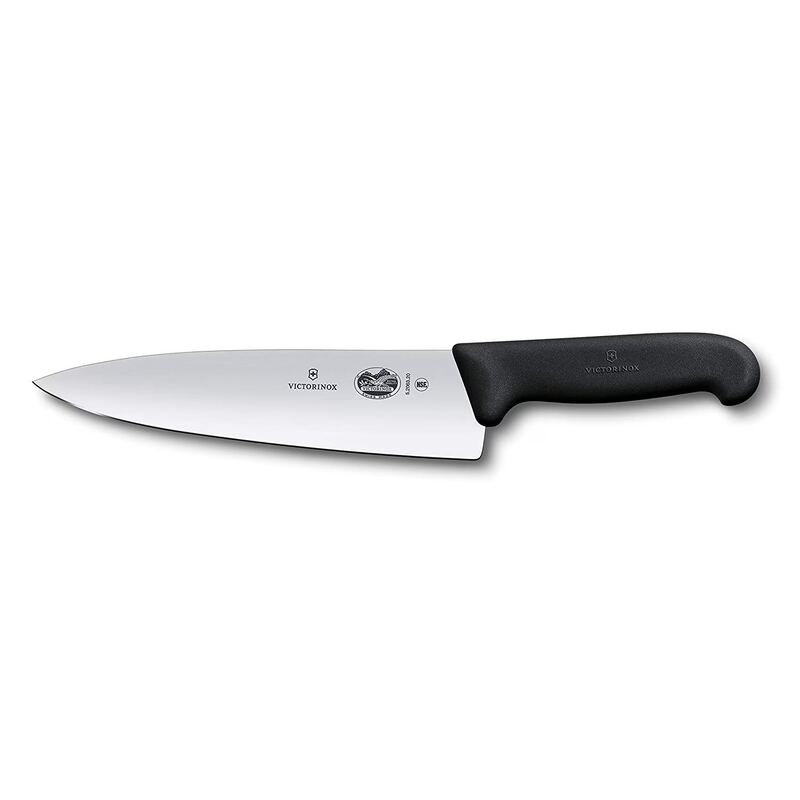
The Kyocera ceramic knife offers unmatched edge retention and non-reactive properties, but it's fragile compared to the steel knives like the Wusthof Classic or the Victorinox Fibrox Pro. It's not as versatile as the MAC MHC-80 for heavy cutting, though it's ideal for softer ingredients and easy cleanup.
Who this is for
At a glance: home cooks seeking non-reactive, long-lasting blades.
Why you’d buy the Kyocera Advanced Ceramic 8-Inch Chef's Knife
- Ultra-sharp ceramic blade maintains edge up to 10x longer than steel blades.
- Lightweight and easy to clean, does not brown food or transfer metallic taste.
- Rust-proof and resistant to acids.
Why you’d skip it
- Fragile and prone to chipping if misused or dropped.
- Not suitable for cutting hard or frozen foods.
Rating sources
“The Revolution paring knife actually turned out to be a great introduction to ceramic knives, not just because of its good price but because it is incredibly well made, and eventually kind of fun to use.”
“The Revolution Series is a great introduction to advanced ceramic knives made from Kyocera's proprietary zirconia produced in Japan for exceptional quality”
“Kyocera has shipped over 20 million ceramic knives globally. We have continued to find innovative ways to improve the material of the blade and succeeded in developing the patented INNOVATION Z212 blade, our new knife series with a much more durable performance than ever before.”
“Kyocera Advanced Ceramic knives can help you achieve it. Ceramic knives hold their edge surprisingly long, so you'll enjoy precision sharpness for a very long time.”
Our 4.1 score is the average of these published ratings. Ratings marked * were derived from the reviewer’s written analysis or video transcript — the publisher didn’t print an explicit numeric score, so we inferred one from their own words. Click through to verify. More about methodology.