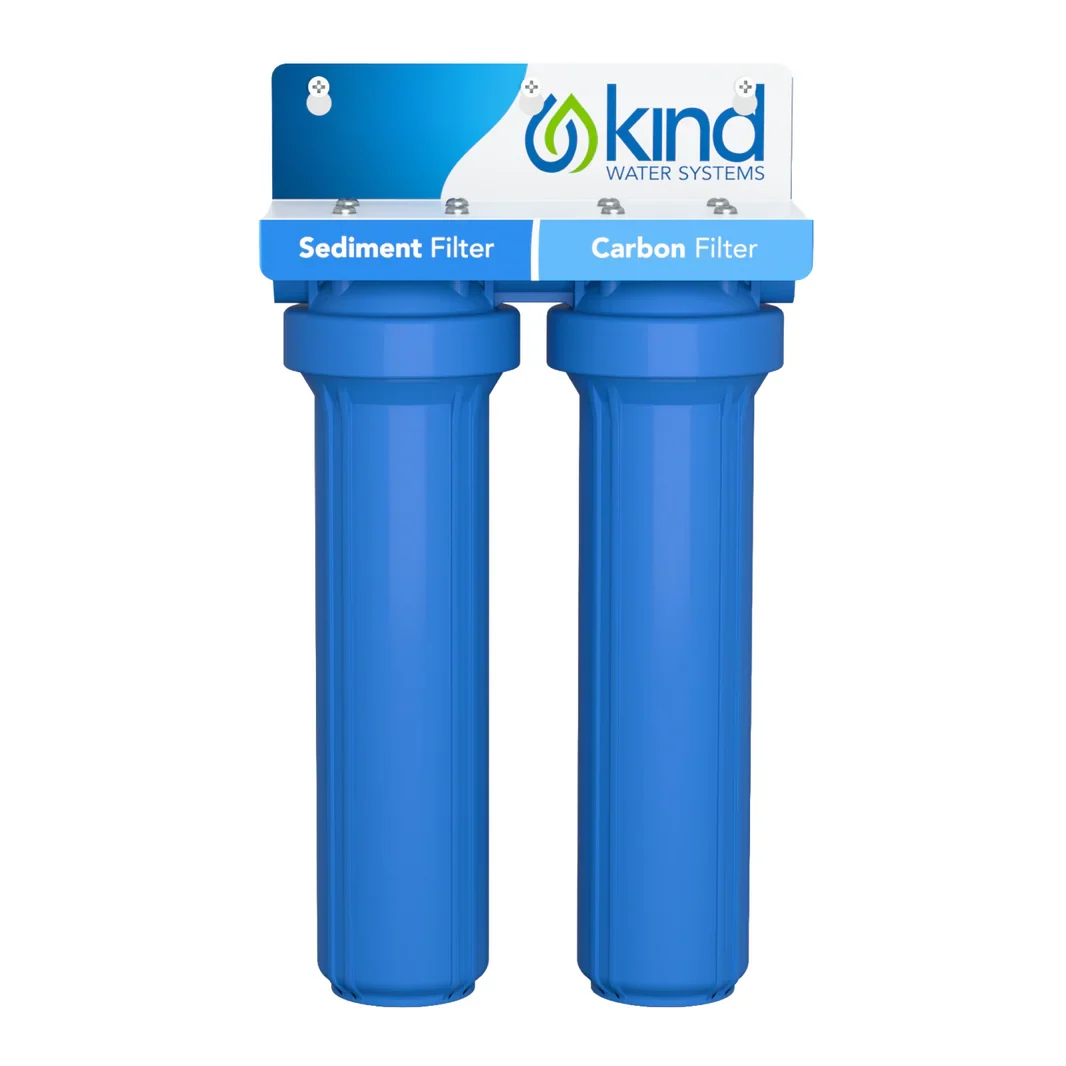
The Kind E-1000, formerly sold as the Evo E-1000, is a two-stage cartridge system with a washable sediment prefilter and a carbon cartridge rated for about 80,000 gallons and 15 GPM. Quality Water Lab rated it 4.5/5 after Tap Score lab testing showed trihalomethanes cut from 31.8 ppb to non-detect, turbidity down by about 88% and iron removed, with flow holding steady at 15 GPM across multiple taps. The same review notes that it is not NSF-certified as a complete system, needs a fair amount of wall width and gives no warning when a cartridge clogs. It suits city-water households that want chlorine and disinfection byproducts gone without a media tank; well-water users and anyone needing fluoride or PFAS removal should look elsewhere.
Full review
Disinfection byproducts cut to non-detect at full flow
Quality Water Lab sent before-and-after samples to Tap Score and reports total trihalomethanes falling from 31.83 ppb to non-detect, including chloroform, bromodichloromethane and dibromochloromethane. Turbidity dropped from 0.8 to 0.1 NTU, iron went from 10 ppb to non-detect and copper fell by 90%, lifting the overall Tap Score from 77/99 to 83/99. The reviewers say chlorine odour disappeared the same day the system went in and the water had no carbon break-in taste. Just as important for a cartridge system, flow held steady at 15 GPM even with three taps wide open, which the publication calls rare for this type of filter.
Simple upkeep, but it needs wall width
The E-1000 has no drain line, needs no electricity and has no moving parts, and Quality Water Lab says it runs silently and can be installed indoors or outdoors as long as temperatures stay above freezing. The 5-micron prefilter can be rinsed two or three times before it needs replacing, and cartridge changes took the reviewers about ten minutes once they learned not to overtighten the snug housings; a strap wrench helps. The trade-offs are physical: the twin canisters take more wall width than expected, which can make a narrow utility closet feel tight, and there is no clog alert, so a drop in pressure is the only sign a cartridge is due.
Certified components, not a certified system
Quality Water Lab is clear that the E-1000 is not NSF-certified as a complete unit, though its components are tested to NSF/ANSI 42, 61 and 372 and meet CSA B483.1; the publication argues its own lab results matter more for city water. It quotes a price of about $770, with upkeep of roughly $150 to $200 a year, and a lifetime warranty backed by a 120-day return window. The scope is narrow by design: Quality Water Lab says the system does not remove fluoride or PFAS and is not meant for private wells, recommending an under-sink reverse osmosis unit or a system matched to a well-water report instead.
Strengths
- +Cut trihalomethanes to non-detect in Quality Water Lab's Tap Score testing
- +Held 15 GPM with three taps open
- +Washable 5-micron prefilter can be rinsed and reused before replacement
- +No drain line, electricity or moving parts
- +Lifetime warranty and a 120-day return window
Watch-outs
- −Not NSF-certified as a complete system; only its components are
- −Twin canisters need more wall width than expected
- −No clog alert; a pressure dip is the only warning
How it compares
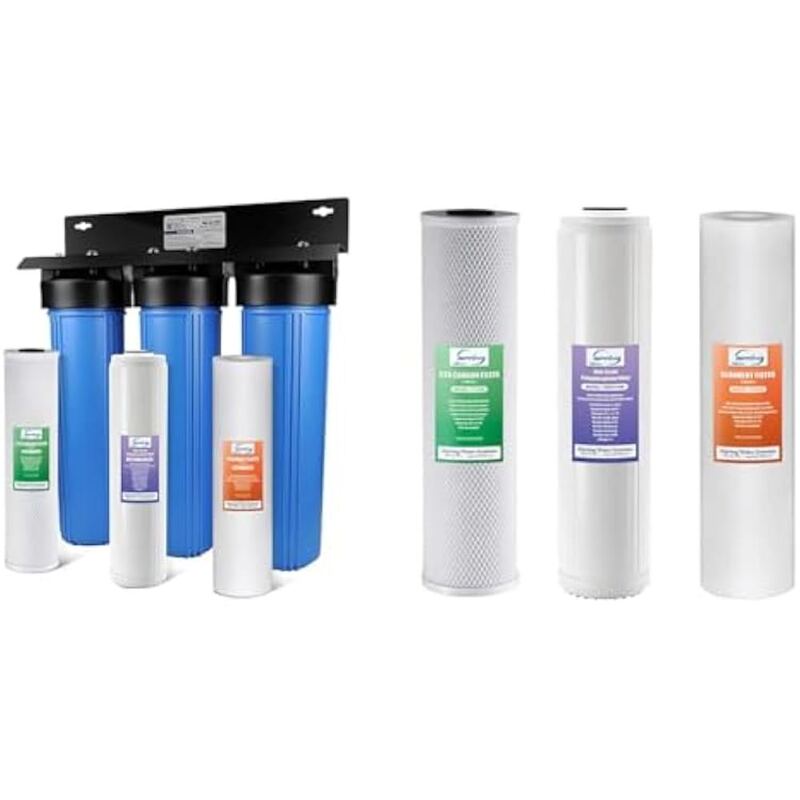
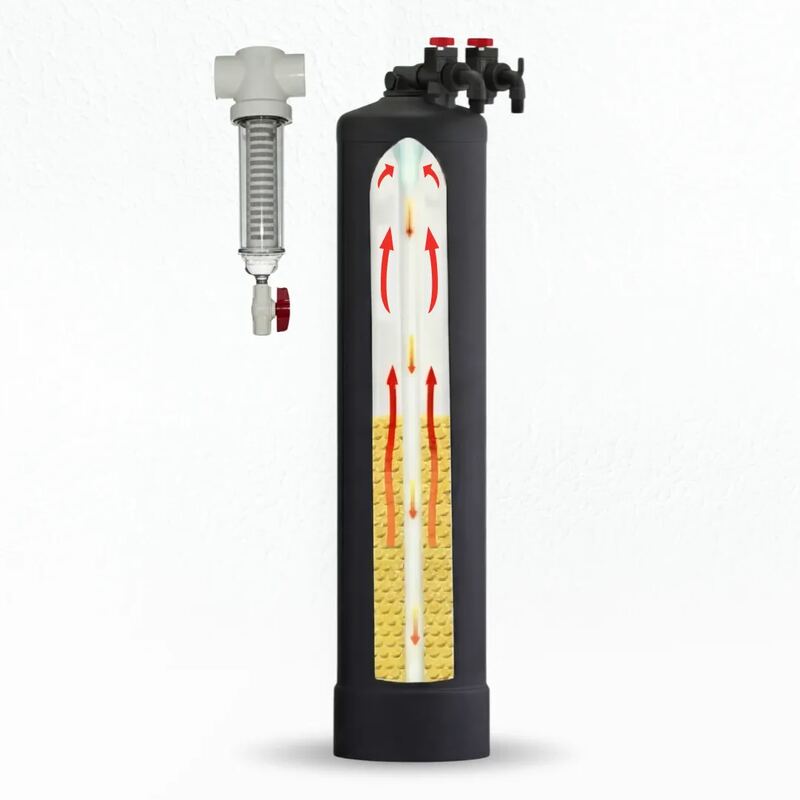
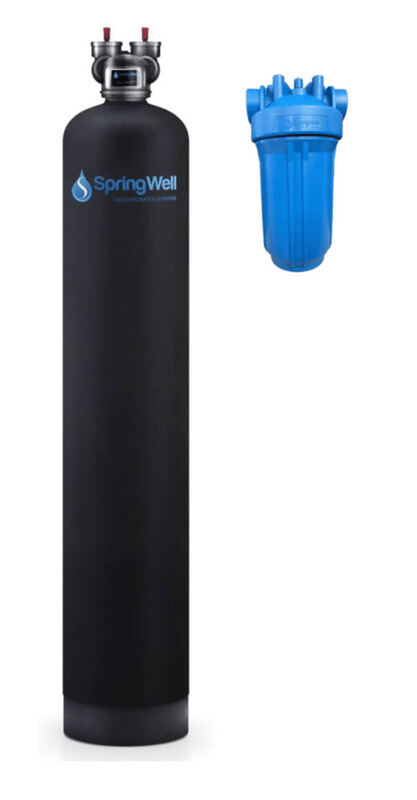
The E-1000 is a two-stage cartridge system, one stage fewer than the three-stage iSpring WGB32B and Express Water WH300SC. Quality Water Lab notes that SpringWell's tank-based CF1 is rated for 1,000,000 gallons against the E-1000's roughly 80,000-gallon carbon cartridge, but costs more up front.
Rating sources
Our 4.3 score is the average of these published ratings, each adjusted for how strictly its publisher scores. More about methodology.