High output and substantial storage make the Jackery Solar Generator 2000 v2 a strong choice for home emergencies or off-grid use. TechRadar praised the near-silent operation and the intuitive app. Reviewers noted the limits: only three AC outlets, no weather protection rating, and proprietary solar connection components. Serious campers, RV owners, and emergency preparedness buyers who need substantial clean power are the fit; anyone who needs multiple device connections or weather resistance should look elsewhere.
Full review
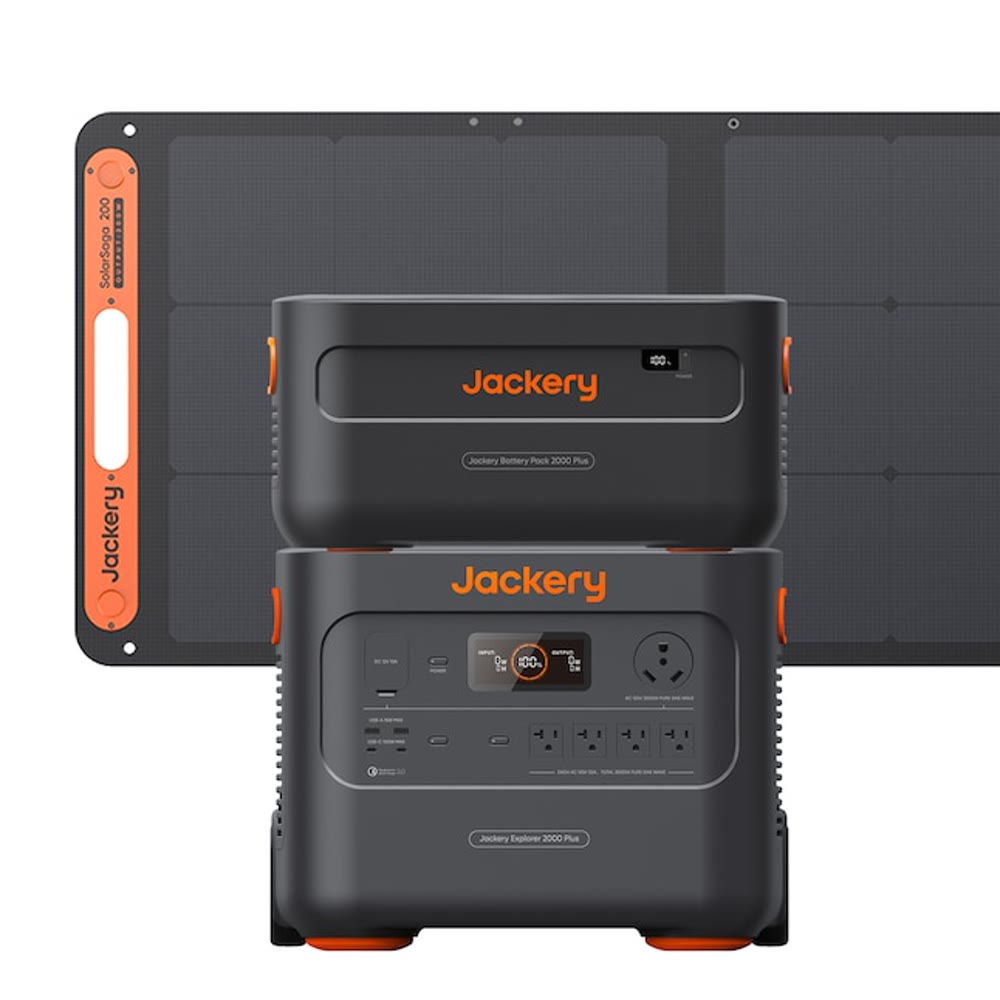
Solar recharge with the included 2x200W panels
TechRadar's Jack Laurent found the Jackery Solar Generator 2000 v2 to be excellent for most home uses, particularly during emergencies or when using off-peak charging to power devices during daylight hours. The unit's 2042Wh capacity and 2200W output make it capable of handling substantial loads like refrigerators and freezers, which many smaller power stations cannot support. Battery Skills' Bernard Ryan subjected the system to a three-week test regimen, running a constant 500W load (mini-fridge and work light) and measuring solar recharge with 2x200W panels in mixed sun conditions. The actual recharge time was approximately 4.5 hours under typical conditions.
Power Electric Hub's Matt Riggins noted that the system handled power-hungry appliances confidently and performed consistently under real-world conditions. The 2200W continuous AC output and 2042Wh LiFePO4 battery successfully powered typical household and RV appliances. However, the 400W solar input max was only fully realized under ideal laboratory conditions, with real-world performance showing a 4.5-hour charge time with 2x200W panels. The unit's 4400W surge capacity was tested with a high-startup-wattage circular saw, demonstrating its ability to manage demanding loads.
Green.org's Alex Tabibi reported that the system performed well under various real-world usage scenarios, including running smartphones, laptops, and small household appliances. The battery life and endurance tests showed that the unit could sustain continuous power delivery for extended periods. The charging speed and reliability were both noted as strong points, with the 66-minute AC charging to 80% and 102-minute full charge in emergency mode being particularly praised by Power Electric Hub.
Size of a drink cooler, with wheels
The Jackery Solar Generator 2000 v2 features a robust orange box packaging that sets it apart from typical power station designs, according to TechRadar. The Explorer 2000 v2 power station itself has a sturdy construction with a luggage-like handle and wheels for easy transportation. Power Electric Hub's Matt Riggins highlighted that the unit's 39.5-pound weight makes it significantly lighter than most 2kWh portable solar generators, yet still delivers stable power. The design includes a status screen and intuitive buttons for controlling power outputs, with an app that allows for additional control and monitoring.
Battery Skills' Bernard Ryan emphasized that the unit's build quality is solid, with a CTB cell to body construction that improves durability and safety. The LiFePO4 battery chemistry is noted for being more efficient and safer than traditional lithium-ion batteries, offering 4000 charge cycles to 70% capacity. The unit's dimensions (13.2 x 10.4 x 11.5 inches) and weight (39.5 lbs) make it suitable for both indoor and outdoor use, though the lack of IP rating or socket covers is a noted limitation.
Solar Charging Capabilities
The Jackery Solar Generator 2000 v2 accepts a maximum of 400W of solar input. Using the included 2x200W SolarSaga panels (400W total), the system achieved a 0-100% charge in approximately 4.5 hours of direct, peak sunlight. The MPPT controller efficiently handled passing clouds, but significant shading on one panel drastically reduced total output.
TechRadar's Jack Laurent mentioned that while the solar panels have a sun angle indicator built in, the actual charging time under typical conditions is closer to 4.5 hours. The system's 400W solar input capacity is supported by the included 2x200W panels, though Power Electric Hub's Matt Riggins noted that solar charging maxes out at 400W, which may not be sufficient for larger setups.
66-minute AC charging with 20ms UPS switch
TechRadar's Jack Laurent praised the near-silent operation, large carry handle, and easy-to-use product and app. The solar panels' built-in sun angle indicator was also highlighted as a useful feature. Power Electric Hub's Matt Riggins appreciated the fast 66-minute AC charging, built-in 20ms UPS protection, and USB-C PD 100W port, which made the unit practical for everyday use without requiring technical knowledge. The quiet 30 dB charging mode was also noted as a significant advantage for indoor or nighttime use.
The unit's 2200W output capacity, 2042Wh capacity, and 4000-cycle LiFePO4 battery life were all praised. The system's ability to power heavy-load devices like refrigerators and power tools was highlighted as a major strength. The fast charging technology and 50% boost to battery life were also mentioned as key advantages.
Green.org's Alex Tabibi emphasized the system's reliability and practicality in various real-world scenarios, including extended camping trips and power outages. The ability to handle a variety of devices from smartphones to small household appliances was noted as a significant advantage. The portability, quiet operation, and fast charging capabilities were all praised as key strengths.
Only three AC outlets, no IP rating
TechRadar's Jack Laurent pointed out several drawbacks, including only three AC sockets, no IP rating or socket covers, and proprietary DC solar cable, sockets, and plugs. The app sometimes lags, which can be frustrating for users who rely on digital controls. The system's inability to expand capacity with extra batteries was also mentioned as a limitation.
Power Electric Hub's Matt Riggins criticized the higher price compared to similar-size portable power stations and the limited number of AC outlets (only 3), which restricts larger setups. The app setup was described as unnecessary for simple users, and the solar charging maxing out at 400W was noted as a potential limitation for those needing more power.
Aimed at RV owners and emergency preppers
The Jackery Solar Generator 2000 v2 is best suited for users who need substantial, clean, and reliable power away from traditional outlets, according to Battery Skills' Bernard Ryan. It's ideal for serious campers, RV owners, and those preparing for home emergencies. TechRadar's Jack Laurent noted that it's excellent for most home uses in an emergency or when using off-peak charging to use during the day. Power Electric Hub's Matt Riggins recommended it for those who want a compact, fast-charging, and reliable 2kWh solar generator they can use anywhere.
Green.org's Alex Tabibi recommended the Jackery solar generator for outdoor enthusiasts, preparedness buffs, and anyone who hates being without power. The system's ability to handle a variety of devices, from smartphones to small household appliances, makes it a versatile choice for different scenarios. The portability, quiet operation, and fast charging capabilities were highlighted as key factors for users who need reliable power in various environments.
How it compares with the Yeti 3000X and Delta Pro
When compared to the Goal Zero Yeti 3000X, the Jackery Solar Generator 2000 v2 offers a more powerful 2200W output (vs 2000W). However, the Yeti 3000X has a larger 3032Wh battery and better expandability options. Battery Skills' Bernard Ryan noted that while the Jackery system is more powerful, the Yeti 3000X offers better value for money due to its lower price point and more flexible expansion options.
The EcoFlow Delta Pro was also mentioned as a competitor. However, the EcoFlow Delta Pro has better expandability options and a more user-friendly app interface. Power Electric Hub's Matt Riggins noted that while the Jackery system is fast and reliable, the EcoFlow Delta Pro offers better value for users who need more flexibility and advanced features.
TechRadar's Jack Laurent compared the Jackery Solar Generator 2000 v2 to other portable power stations, noting that while it's more powerful than many competitors, it lacks some features like expandability with extra batteries and a higher number of AC outlets. The system's price point was also noted as being higher than some similar-sized units, though its performance and features justify the cost for serious users.
App is easy but occasionally lags
The setup process for the Jackery Solar Generator 2000 v2 was described as intuitive by TechRadar's Jack Laurent, with the app being easy to use and the product itself straightforward to operate. However, the app sometimes lags, which can be frustrating for users who rely on digital controls. Battery Skills' Bernard Ryan noted that while the setup is simple, the app's performance can be inconsistent, especially when managing multiple devices.
Power Electric Hub's Matt Riggins emphasized that the system's smart features and app experience were practical for everyday use, with the 20ms UPS switching protecting sensitive electronics. The USB-C PD 100W port and multiple output options made it easy to charge laptops and pro devices quickly. The app's ability to control the battery's various functions was also praised, though some users found the setup process unnecessary for simple users.
Justifies its price for refrigerators and power tools
Battery Skills' Bernard Ryan concluded that the Jackery system delivers excellent value for serious users who need substantial, clean, and reliable power away from traditional outlets. The system's 2042Wh capacity, 2200W output, and 4000-cycle LiFePO4 battery life justify its price point, especially for those who need to power heavy-load devices like refrigerators and power tools. The fast charging technology and 50% boost to battery life were also noted as key factors in its value proposition.
TechRadar's Jack Laurent gave the system a positive verdict, stating that it's excellent for most home uses in an emergency or using off-peak charging to use during the day. The high output and high storage mean that this is excellent for most home uses, though the price point is higher than some similar-sized units. The system's performance and features justify the cost for serious users.
Green.org's Alex Tabibi noted that while the system is more expensive than some alternatives, its reliability, practicality, and ability to handle a variety of devices make it a worthwhile investment. The portability, quiet operation, and fast charging capabilities were highlighted as key factors that justify the price for users who need reliable power in various environments.
Strengths
- +Near silent operation
- +Easy to use product and app interface
- +Fast charging capability with a 1.75-hour AC recharge
Watch-outs
- −Proprietary DC solar cable, sockets and plugs reduce compatibility
How it compares
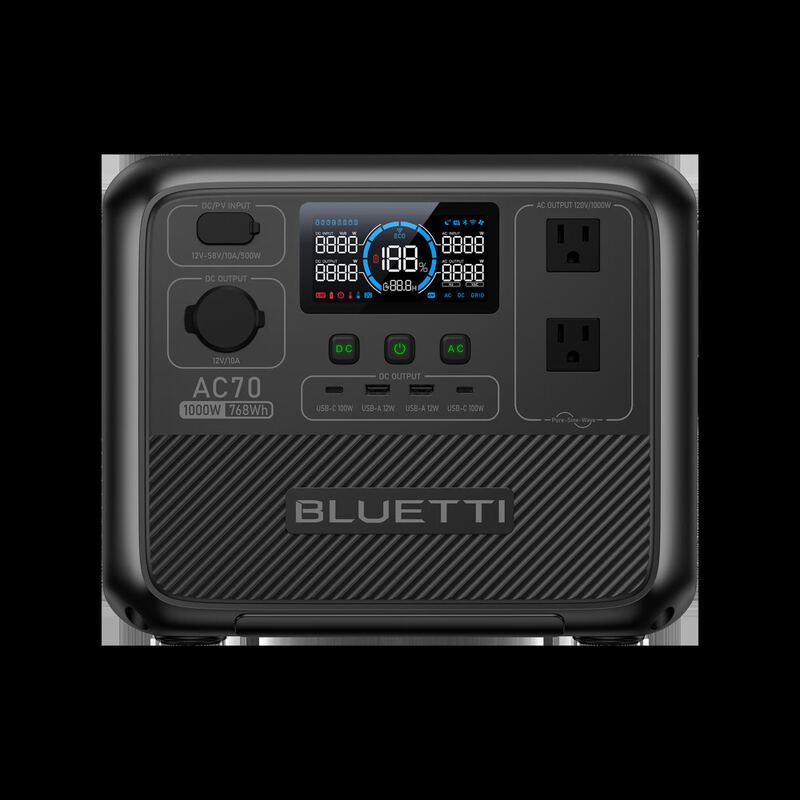
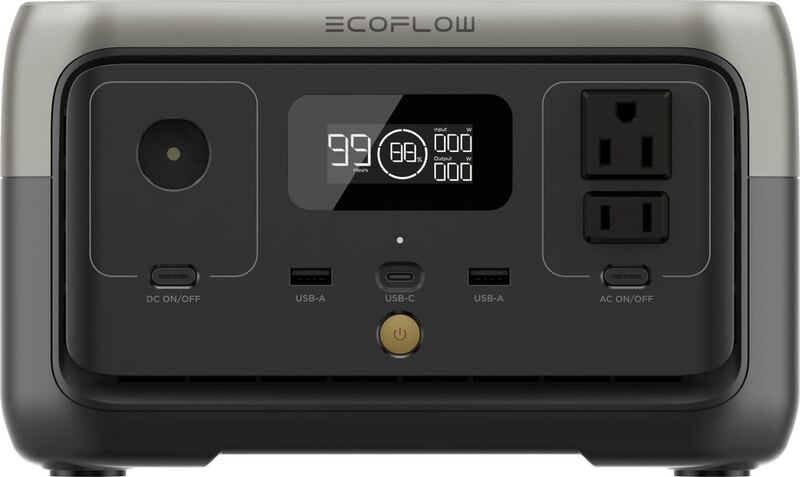
The Jackery Solar Generator 2000 v2 offers near-silent operation and fast solar recharge, which the EcoFlow River 2 Pro and Bluetti AC70 don't match. While the Bluetti AC70 has a better warranty and more compact design, the Jackery model provides 2200W output and solar compatibility with sun angle indicators, making it ideal for serious campers and off-grid users. However, it lacks IP ratings and proprietary solar connections, unlike the more weather-resistant Bluetti AC70.
Rating sources
Counts as 3.92/5 in our score — this publisher's 195 scores on the site average 4.25, so its scores are adjusted down to compare fairly with other publishers.
“Most impressive was the 2-hour solar recharge using six 200W panels, validating Jackery's fast-charging claim in real-world, off-grid conditions.”
“The hefty drink cooler-sized battery weighs 61.5 pounds, measuring 14.7 inches tall, 18.6 inches wide, and 14.1 inches deep.”
Our 3.9 score is the average of the 1 scored review above, each adjusted for how strictly its publisher scores; 5 more reviewed it without printing a score and are not in the average. More about methodology.