Verdict
Ranked #4 of 5Reviewed by Mike Hunter·May 24, 2026

HyperX Alloy Origins 60

Averaged from 3 derived from review text
The verdict

The Alloy Origins 60 is the build-quality value pick: an aircraft-grade aluminum 60% with zero flex, HyperX Red linear switches rated for 80 million keystrokes, and durable PBT keycaps, from a major brand at a reasonable price. RTINGS and TechRadar both praise the rock-solid construction. The compromises are a loud typing sound, soldered (non-hot-swap) switches, and no analog gaming features.
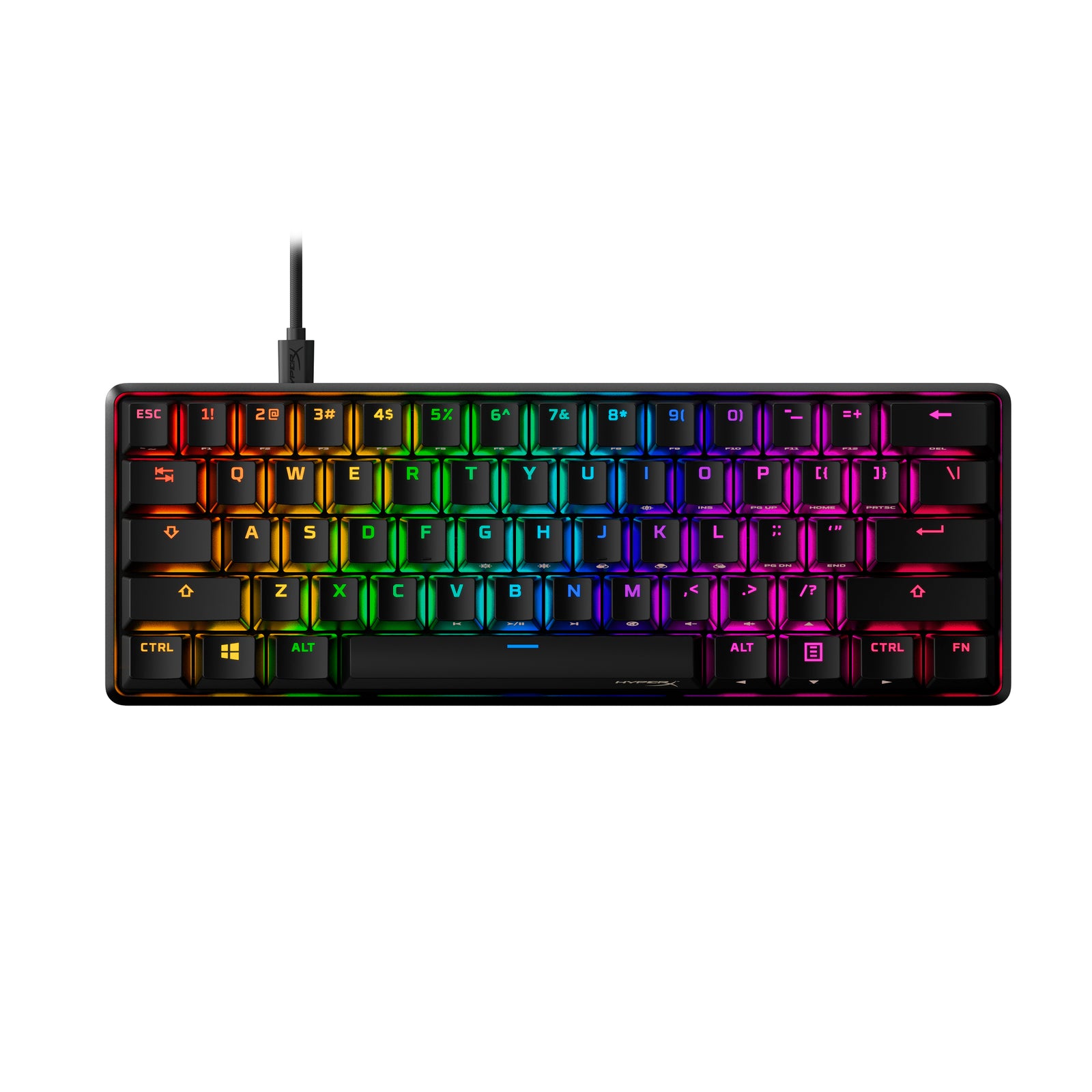
HyperX Alloy Origins 60

Full review

Build Quality and Design

Build is the Alloy Origins 60's headline. Reviewers are unanimous: TechRadar called the brushed aluminum case heavy and solid with absolutely no flex, and RTINGS rated it one of the most reliable and best-built compact keyboards available. The aircraft-grade aluminum body gives it a density and rigidity that the plastic-cased Ducky One 3 Mini and Royal Kludge RK61 cannot match, making it feel like a more expensive board than it is.

The practical touches are solid too: a detachable USB-C cable, three-angle adjustable feet via a two-step mechanism, and exposed-LED switches that make the RGB unusually bright. For a buyer who prioritizes a board that will survive years of abuse and never creak or bow, the Alloy Origins 60 is the most reassuring construction in this group.

Switches and Typing

The board uses HyperX Red linear switches with a 45g actuation force, a 1.8mm actuation point, and 3.8mm total travel, rated for an impressive 80 million keystrokes. Reviewers found them responsive and smooth, well suited to gaming where the light linear action helps with rapid inputs. RTINGS specifically praised the smooth switches alongside the build.

The catch is the sound. Reviewers consistently note the Alloy Origins 60 is loud, with TechRadar warning that the clicking and noise can be annoying if you want it to double as a work keyboard in a quiet room. It lacks the silicone-and-foam dampening that gives the Ducky One 3 Mini its refined acoustic profile, so out of the box it is the noisier, less polished typer of the two.

Gaming and Software

As a gaming board the Alloy Origins 60 is competent: the light, smooth HyperX Red switches and 60% footprint free up desk space for mouse movement, which is the whole point of the form factor for FPS players. NGENUITY software handles per-key lighting, macros, and a Game Mode that disables keys like the Windows key during play.

What it does not offer is analog actuation or rapid trigger. Against the Wooting 60HE v2 and SteelSeries Apex Pro Mini, both of which let you tune actuation depth and reset behavior per key, the Alloy Origins 60 is a traditional fixed-actuation board. For most gamers that is perfectly fine; for the competitive crowd chasing every advantage, those analog boards have a measurable edge.

Customization Limits

The biggest customization limit is that the Alloy Origins 60 is not hot-swappable. The HyperX Red switches are soldered to the PCB, so changing switch type means desoldering, which rules out the casual switch experimentation that the hot-swap Ducky One 3 Mini and Royal Kludge RK61 invite. What you buy is what you keep, switch-wise.

The PBT doubleshot keycaps are durable and resist wear, friction, and solvents, which is a genuine plus over the ABS caps on the budget Royal Kludge RK61. But between the soldered switches and the lack of analog features, the Alloy Origins 60 is a fixed-configuration board: excellent at what it is, but not a platform for tinkering.

Where It Falls Short

The Alloy Origins 60's weaknesses are the loud, undampened typing sound, the soldered non-hot-swap switches, and the absence of analog gaming features. As ProSettings put it, it is an extremely decent and very reliable 60% keyboard, but it's not more than that, the build is the star and the rest is solid-but-standard.

For a quiet office it is the wrong board, where the dampened Ducky One 3 Mini is far more pleasant. For competitive gaming it trails the analog Wooting 60HE v2 and SteelSeries Apex Pro Mini. Its appeal is narrow but clear: the most rugged metal build here at a price that undercuts the analog flagships.

Who It's Best For

Choose the Alloy Origins 60 if you want a rock-solid, all-aluminum 60% from a major brand at a sensible price, and you value durability and a no-flex build over hot-swap flexibility or analog gaming features. RTINGS' best-built endorsement and the 80-million-keystroke switch rating make it the reliability pick of this group.

Look elsewhere if you want a quiet, refined typing sound (Ducky One 3 Mini), analog actuation for competitive gaming (Wooting 60HE v2 or SteelSeries Apex Pro Mini), or hot-swap switch experimentation (Ducky One 3 Mini or Royal Kludge RK61). The Alloy Origins 60 is the rugged, fixed-configuration value pick.

Strengths

  • +Aircraft-grade aluminum body with zero flex, the most rigid build in this group
  • +HyperX Red linear switches rated for 80 million keystrokes
  • +Durable PBT doubleshot keycaps with bright exposed-LED RGB
  • +Detachable USB-C cable and three-angle adjustable feet
  • +Strong value for an all-metal 60% from a major brand

Watch-outs

  • Loud, clicky-sounding typing that can annoy in a quiet room
  • Not hot-swappable, so switches are soldered in
  • No analog actuation or rapid trigger for competitive gaming
  • Lacks the refined dampened sound of the Ducky One 3 Mini

How it compares

The build-quality value pick. Its all-aluminum body is more rigid than the plastic-cased Ducky One 3 Mini and Royal Kludge RK61, but it is noisier and less refined to type on than the dampened Ducky One 3 Mini. Unlike the Wooting 60HE v2 and SteelSeries Apex Pro Mini it has no analog actuation, and unlike the Ducky One 3 Mini and Royal Kludge RK61 its switches are soldered, not hot-swappable.

Who this is for

At a glance: gamers who want a rugged, no-flex all-metal 60% from a major brand at a sensible price.

Why you’d buy the HyperX Alloy Origins 60

  • Aircraft-grade aluminum body with zero flex, the most rigid build in this group.
  • HyperX Red linear switches rated for 80 million keystrokes.
  • Durable PBT doubleshot keycaps with bright exposed-LED RGB.

Why you’d skip it

  • Loud, clicky-sounding typing that can annoy in a quiet room.
  • Not hot-swappable, so switches are soldered in.
  • No analog actuation or rapid trigger for competitive gaming.

Rating sources

Our 4.4 score is the average of these published ratings. Ratings marked * were derived from the reviewer’s written analysis or video transcript — the publisher didn’t print an explicit numeric score, so we inferred one from their own words. Click through to verify. More about methodology.

Frequently asked questions

Is the HyperX Alloy Origins 60 worth buying?
The Alloy Origins 60 is the build-quality value pick: an aircraft-grade aluminum 60% with zero flex, HyperX Red linear switches rated for 80 million keystrokes, and durable PBT keycaps, from a major brand at a reasonable price. RTINGS and TechRadar both praise the rock-solid construction. The compromises are a loud typing sound, soldered (non-hot-swap) switches, and no analog gaming features.
What is the HyperX Alloy Origins 60's biggest strength?
Aircraft-grade aluminum body with zero flex, the most rigid build in this group
What is the main drawback of the HyperX Alloy Origins 60?
Loud, clicky-sounding typing that can annoy in a quiet room
What sources back the 4.4/5 rating?
Our 4.4/5 rating is the average of scores from 3 independent 60% mechanical keyboards reviews — rtings, techradar, and prosettings. Click any source on the product page to read the original review.

How it compares

See all 5
Wooting 60HE v2
#1 · Top Score

Wooting 60HE v2

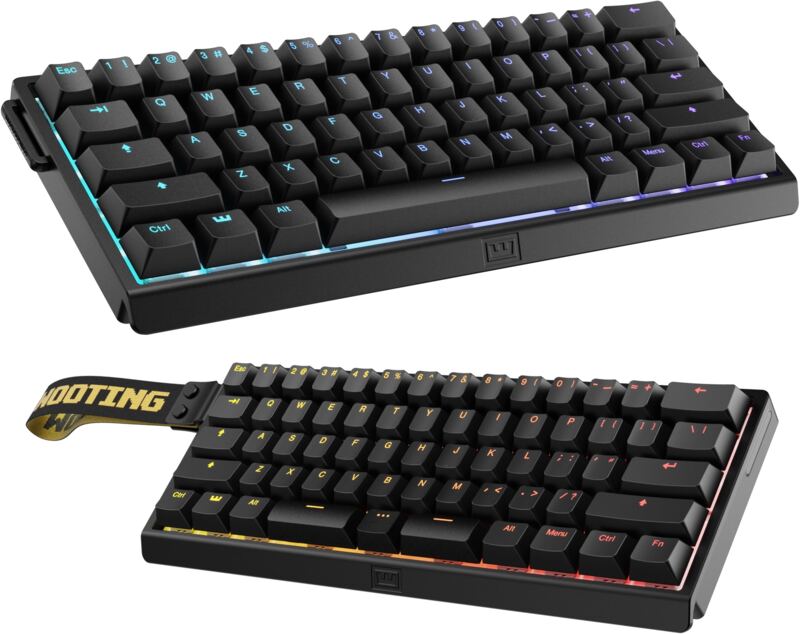
The performance leader. Its Hall-effect rapid trigger and 8 kHz polling beat the analog SteelSeries Apex Pro Mini on measured latency and crush the traditional mechanical Ducky One 3 Mini, HyperX Alloy Origins 60, and Royal Kludge RK61 for competitive gaming. The Ducky One 3 Mini offers a more traditional typing feel, and the Royal Kludge RK61 is a fraction of the price.

Ducky One 3 Mini
#2

Ducky One 3 Mini

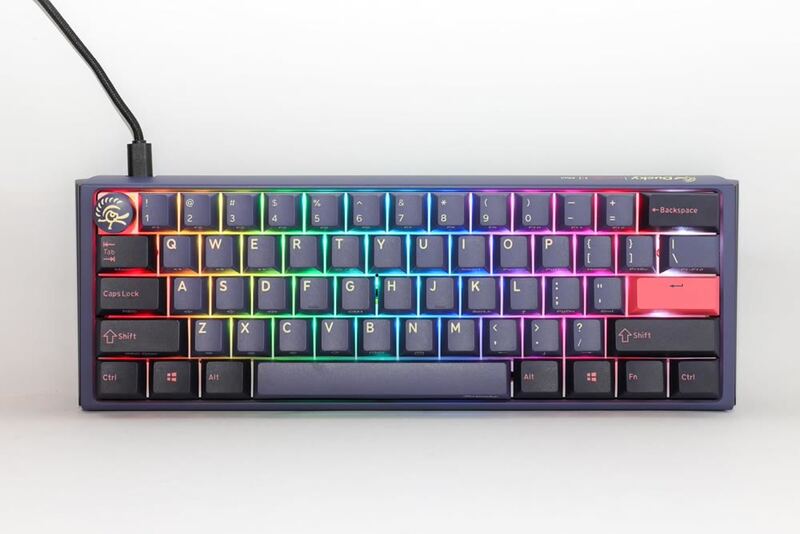
The enthusiast typing pick. Its factory-lubed stabilizers and QUACK Mechanics dampening give a better out-of-box typing sound than the Royal Kludge RK61, HyperX Alloy Origins 60, or even the gaming-focused Wooting 60HE v2 and SteelSeries Apex Pro Mini. It trades away the analog rapid-trigger gaming performance of the Wooting 60HE v2 and SteelSeries Apex Pro Mini for that traditional mechanical experience.

SteelSeries Apex Pro Mini
#3

SteelSeries Apex Pro Mini

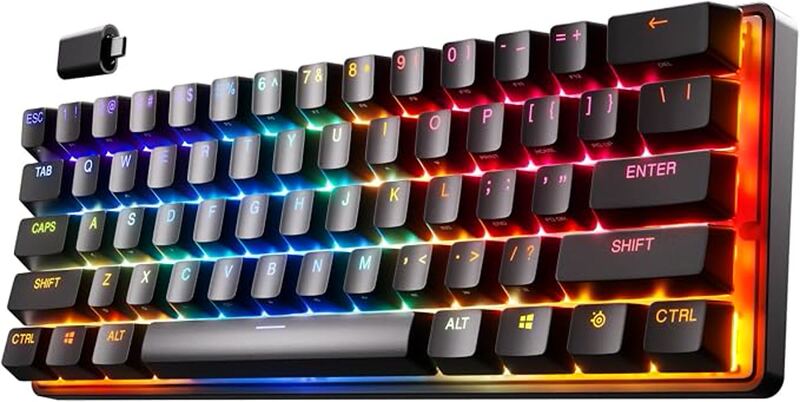
The premium analog alternative to the Wooting 60HE v2. Both use Hall-effect switches with rapid trigger and adjustable actuation, but the Wooting 60HE v2 measured lower latency and offers 8 kHz polling, while the Apex Pro Mini counters with optional wireless. It is far more gaming-focused than the typing-oriented Ducky One 3 Mini and pricier than the HyperX Alloy Origins 60 or Royal Kludge RK61.

Royal Kludge RK61
#5

Royal Kludge RK61

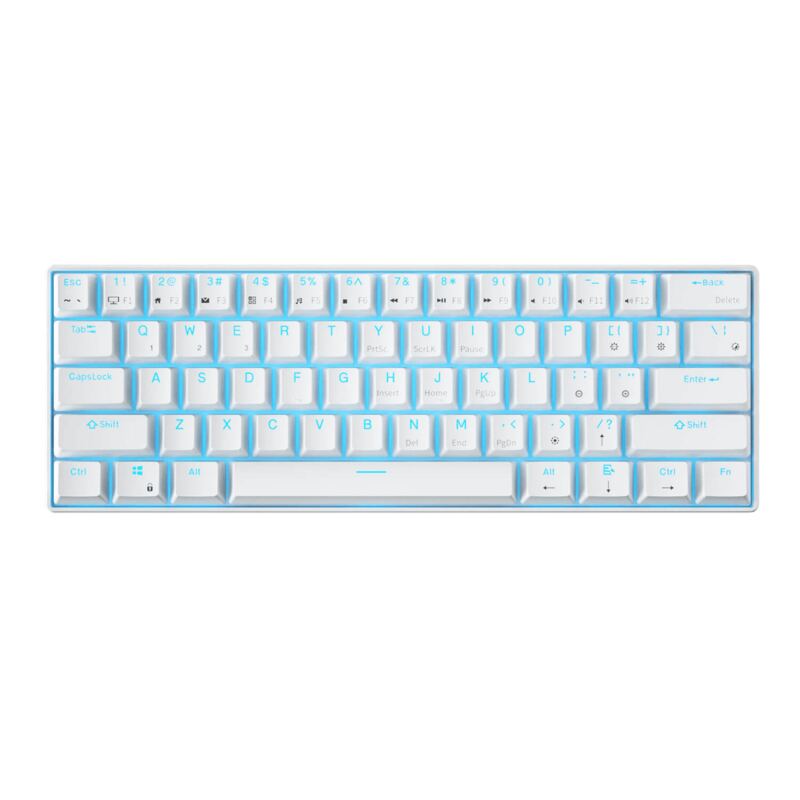
The budget pick. It costs a fraction of the Wooting 60HE v2, SteelSeries Apex Pro Mini, Ducky One 3 Mini, or HyperX Alloy Origins 60, yet adds triple-mode wireless that even the wired Ducky One 3 Mini and Wooting 60HE v2 lack. Its hot-swap PCB matches the Ducky One 3 Mini, but its ABS keycaps and rattly stabilizers fall short of the Ducky One 3 Mini's PBT caps and lubed stabilizers.

HyperX Alloy Origins 60
4.4/5· $99.99
Check Price on Amazon