At 9.7 lb dry, the Husqvarna 525L is the lightest 25cc pro-grade gas trimmer most homeowners will encounter, with the brand's X-Torq engine putting 1.21 hp into an 18.1-inch cutting swath. Pro Tool Reviews scored the closely related 525LS at 8.8/10 and ranked the 525LST third overall in their gas trimmer shootout at 89 points. Recoil is the soft spot, and you're still pumping mixed gas. For landscapers and homeowners running multi-acre lots in heavy growth, this is the trimmer that earns its keep all day.
Full review
High torque and wide cutting width enable heavy-duty use
The X-Torq engine in the 525L produces 1.21 hp at 6,500 rpm from 25.4 cc — modest on paper next to a 27cc gas trimmer, but the powerband is tuned for sustained mid-range torque rather than peak. Pro Tool Reviews tested the closely related 525LS in heavy Bahia and St. Augustine and reported it cut through the worst of it with relative ease. The 525LST sibling won the thick-grass cutting test in PTR's gas shootout at 10.9 seconds — fastest in the category.
The 18.1-inch cutting width is wider than most consumer trimmers, which translates to fewer passes along a fence line or driveway edge. Combined with the head's torque headroom, the 525L handles ditch cleanup and overgrown pasture work that would stall lighter homeowner-class gas trimmers. Long-term reviewers on Lawn Site and Lawn Care Forum report routinely tackling waist-high seasonal weed growth that battery trimmers can't approach without multiple stalls.
The trimmer ships with the T35 M10 Tap'n Go head loaded with 0.095-inch line as standard. Husqvarna also offers blade attachments for the 525 platform that turn this into a brush cutter capable of clearing saplings under an inch thick — a versatility no battery trimmer in this list can match.
Engine and Starting
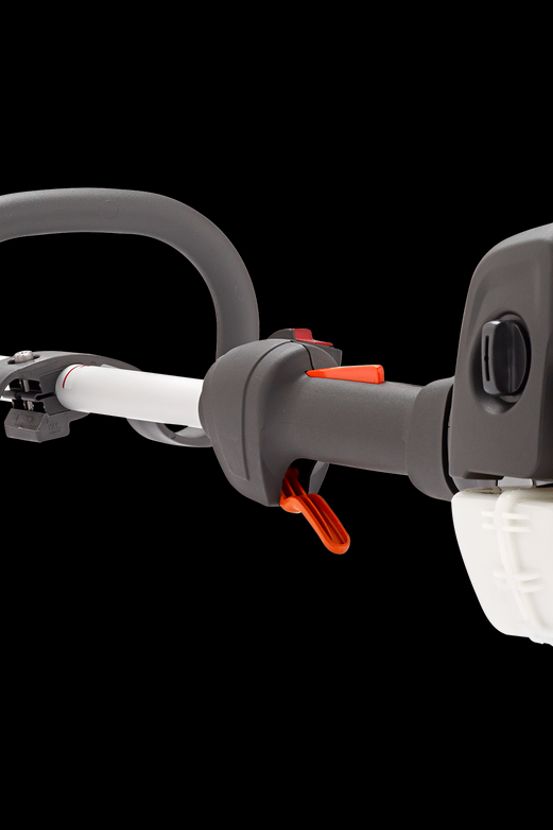
Husqvarna pairs the X-Torq engine with Smart Start technology, a primer bulb, and an auto-return stop switch that automatically resets so you don't accidentally try to start with the kill engaged. Pro Tool Reviews praised the air purge system for removing air from the carburetor and fuel system, making cold starts more consistent than older two-stroke designs. The starting sequence is consistent: prime the bulb 5-6 times, set the choke, pull once to fire, choke off, pull once more to run.
The recoil mechanism is the one part owners consistently flag. Long-term reviewers on Lawn Growth and BobIsTheOilGuy both note the recoil spring as the weakest point on the pull-start motor — though both ultimately conclude it's a common two-stroke wear item and not a reason to skip the platform. Husqvarna sells the replacement recoil assembly for under $40 and the swap takes 20 minutes with basic tools. For commercial users putting hundreds of hours on the engine, plan on a recoil rebuild every 2-3 seasons as routine maintenance. Authorized Husqvarna dealers also do warranty service if the recoil fails within the two-year window, but most owners find a self-repair faster than a shop visit.
Lightweight design and balanced handling reduce fatigue
At 9.7 lb dry (excluding cutting head and fuel), the 525L is exceptionally light for a pro-grade 25cc straight-shaft. Pro Tool Reviews specifically called out that very few competitors come in under ten pounds, which makes a real difference over a multi-hour landscaping route. Filled and head-on, working weight is closer to 11 lb.
The straight shaft puts the cutting head where you can see it on edge passes and gives you the reach to clear under hedges or fences. Rubber isolators in the handle and shaft cut vibration enough that Pro Tool Reviews reported minimal hand fatigue after extended use — though the 525LS-grade loop handle is more forward-biased than the D-handle on some competitors and some users prefer the latter.
A shoulder harness is available as an accessory and most landscapers add one for half-day or longer routes. Without the harness, the trimmer's natural balance point is just forward of the rear handle, which keeps the head down and the operator in a neutral stance — better long-session ergonomics than head-heavy designs that fatigue the leading hand.
Reliable bump-feed design prioritizes mechanical durability
The T35 M10 Tap'n Go head ships standard and is the most common pro-grade bump-feed design on the market. Tap the head on the ground while running and a measured length of line releases. Reloading is straightforward: pop the spool, wind on 0.095 or 0.105 inch line (sold by every hardware store), snap it back together. The aluminum drive shaft inside the head is robust enough to survive years of bump-feed cycles.
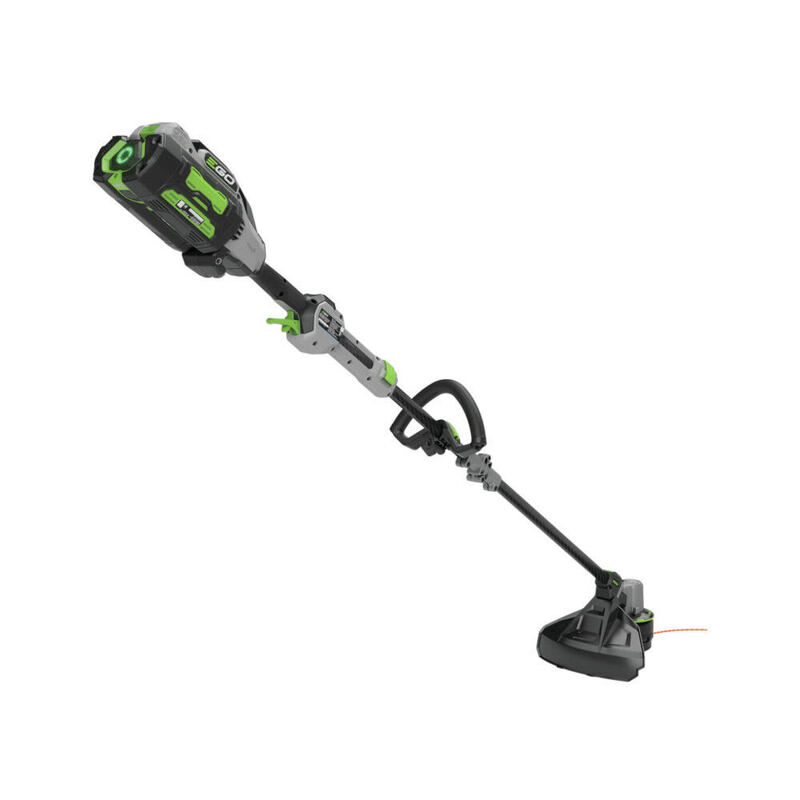
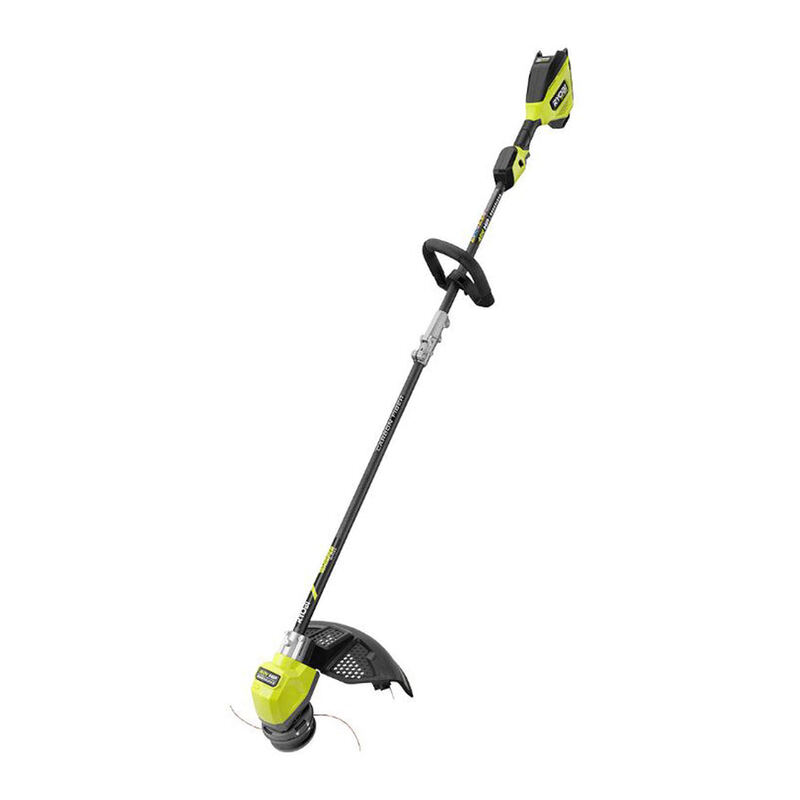
There's no auto-feed wizardry here like the EGO's Line IQ, but that's intentional — pro users typically prefer the mechanical reliability of bump-feed since there's nothing to fail electronically mid-route. The trade-off is the bump cadence, which is louder and more disruptive than the EGO's silent auto-feed. Husqvarna also offers a fixed-blade head accessory for heavy brush work, which the lighter EGO and Ryobi pickups can't run.
Runs 95 to 105 decibels at the operator's ear
Three real caveats. The recoil starter is the cited weak point across multiple long-term reviews. You're mixing two-stroke fuel at a 50:1 ratio, and stale ethanol gas will gum carburetors faster than the synthetic-oil fuel cans many homeowners forget to use. And the two-year limited warranty is shorter than EGO's five-year cordless coverage.
Noise is also real: gas trimmers in this class run 95-105 dB at the operator's ear, requiring hearing protection and earning the side-eye from neighbors who notice the difference vs. a battery trimmer. For city or HOA-restricted properties the EGO ST1623T at the top of this list is the better choice. California buyers should also note: gas trimmers face stricter emissions rules in some local jurisdictions and a few cities have begun banning two-stroke equipment outright.
Built for sessions longer than 30 to 45 minutes
Anyone who needs to trim more than 30-45 minutes at a stretch and doesn't want to swap batteries — landscapers running daily routes, large-property owners with multiple acres, anyone who maintains farm fence lines or pasture edges. The 525L's combination of light weight, real power, and serviceable build is purpose-built for that use case.
Skip it if you have a small flat suburban lot, neighbors close enough to hear, or no interest in two-stroke fuel storage and maintenance. The EGO ST1623T or Ryobi 40V picks below will satisfy that use case with less ongoing effort. Anyone who'd struggle with pull-starting a small gas engine — older users, those with shoulder injuries — should also default to cordless even on big lots.
Refuels in 30 seconds versus a 70-minute recharge
Against other 25cc-class gas trimmers in its category, the Husqvarna runs about 3 lb lighter dry (9.7 vs 12.95 lb on comparable competitors) and feels less front-heavy on long sessions. Competing pro-grade gas trimmers in this displacement class typically win on starting effort thanks to features like Easy2Start, but the X-Torq engine produces more usable torque per cc and supports a wider 18.1-inch cutting circle.
Against the EGO ST1623T cordless flagship at the top of this list, the Husqvarna trades quiet operation for unlimited runtime and the ability to refuel in 30 seconds vs. a 70-minute battery recharge. For homeowners on big lots that need multi-hour work, the Husqvarna's all-day capability is the deciding factor.
Long-Term Durability and Service
The 525-series engine block has been Husqvarna's pro-tier residential workhorse since the late 2010s, with strong long-term reports across the lineup. Long-term owners on BobIsTheOilGuy and Lawn Care Forum routinely log 500+ hours on these engines without major service beyond carburetor cleaning, plug replacement, and the eventual recoil spring rebuild. Husqvarna's authorized service network is broad enough that parts and warranty work are accessible in most US markets.
The X-Torq engine design specifically reduces unburned hydrocarbon emissions by routing fresh air ahead of the fuel charge — Husqvarna claims 60% fewer emissions and up to 20% fuel savings vs conventional 2-strokes. In practice that means cleaner running, less carbon buildup on the piston ring, and slightly longer intervals between deep carb cleanings. For commercial users billing time, that translates to less downtime per route.
Strengths
- +Pro-grade 25.4cc X-Torq engine produces 1.21 hp at 6,500 rpm
- +9.7 lb dry weight is exceptionally light for a 25cc straight-shaft
- +Tap'n Go bump head reloads quickly and accepts standard 0.095-inch line
- +Rubber-isolated handle keeps vibration to a long-session level
- +Built for daily landscaper use with serviceable, replaceable wear parts
Watch-outs
- −Pull-start recoil is the part most commonly cited as a weak point
- −Two-stroke fuel mixing required and emissions/noise rule it out for some neighborhoods
- −Two-year limited warranty trails some battery competitors on coverage
How it compares
Outcuts every battery option in this list — including the EGO ST1623T and Ryobi RY402110 — in tall heavy weeds thanks to the X-Torq powerband. The trade is the only gas pick here: fuel mixing and pull starts the cordless picks don't ask of you. About 3 lb lighter than other 25cc+ pro gas trimmers in its class.
Rating sources
“Power to weight ratio is exceptionally good with the 525LS.”
“Power to weight is the most outstanding in its class.”
Our 4.3 score is the average of these published ratings. Ratings marked * were derived from the reviewer’s written analysis or video transcript — the publisher didn’t print an explicit numeric score, so we inferred one from their own words. Click through to verify. More about methodology.