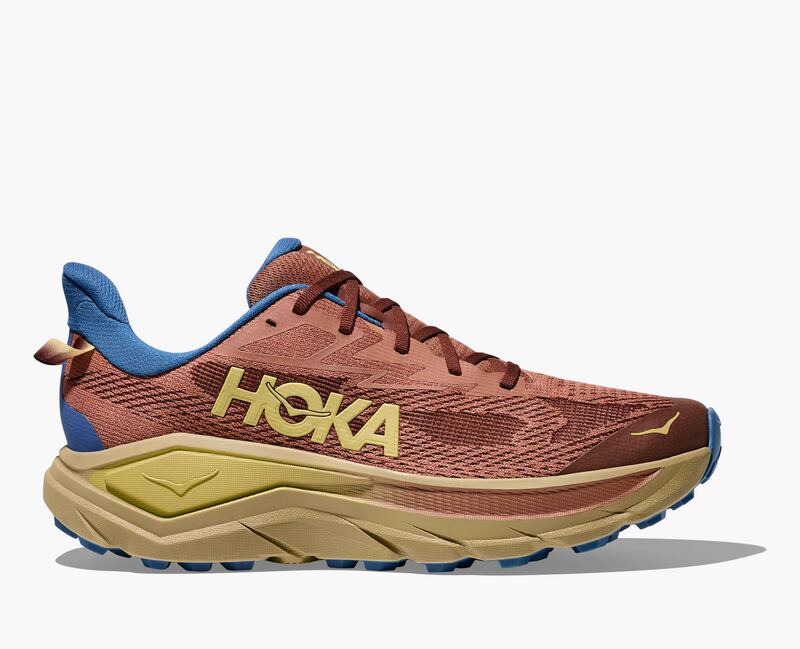
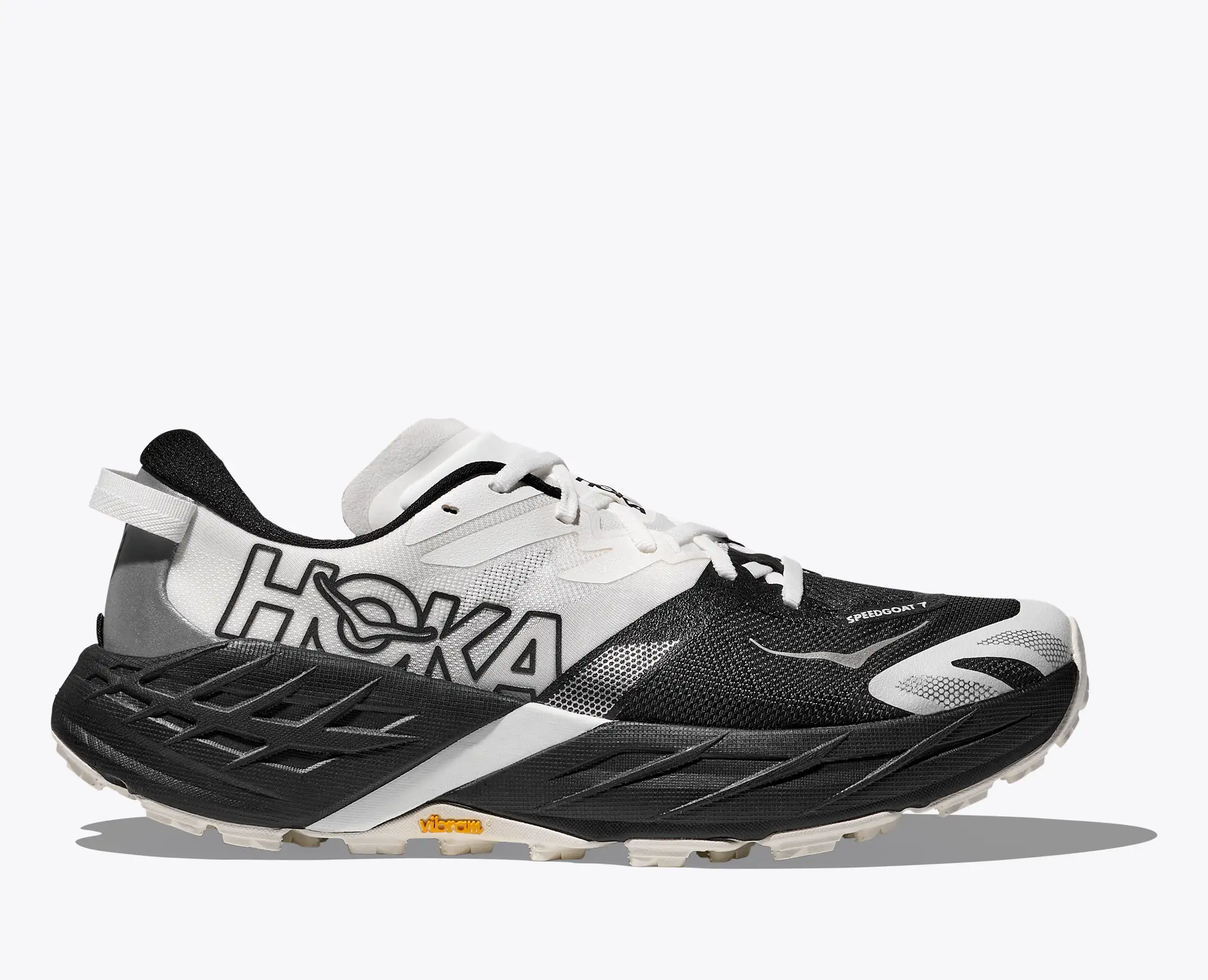
The Hoka Speedgoat 7 returns with a refreshed midsole using Supercritical EVA for improved responsiveness and a more modern feel. Reviews highlight the enhanced upper design with flexible forefoot vamp and gaiter attachments, while the Vibram Megagrip outsole provides reliable traction across varied terrain. The shoe maintains its reputation for high-stack protection and stability, though some runners still find it needs a sizing adjustment. It's best suited for all-terrain trail running and long-distance runners seeking a balance of cushioning and control.
Full review
Midsole transformation with supercritical EVA
The Hoka Speedgoat 7 introduces a significant midsole upgrade with supercritical EVA foam, replacing the previous CMEVA formulation. This change delivers a noticeably more responsive ride while maintaining the shoe's signature high cushioning. The nitrogen-infused foam creates a lighter, airier platform that still absorbs substantial impact but returns more energy with each step. Reviewers noted this shift resulted in a more lively feel compared to earlier versions, though it took some adjustment time to acclimate to the different ride quality. The midsole stack measures 37 mm in the heel and 32 mm in the forefoot, providing substantial protection while maintaining a stable platform for technical trail running.
Traction improvements with Vibram Megagrip
The Speedgoat 7 features an upgraded Vibram Megagrip outsole with 5mm traction lugs that significantly enhance grip across various trail conditions. The outsole pattern includes unique lateral forefoot lugs pointing approximately 20 degrees outward, which aid in quick turns and stability during slippery conditions. Testing revealed superior traction on loose scree, mud, and even icy winter trails, with performance that outperformed competitors like the Nike Pegasus 5 on snow-covered terrain. The chevron-shaped lugs provide excellent bite on gravel and dry surfaces, while the spacing helps shed mud effectively. The flared heel design adds extra grip during aggressive inclines and sidehill running, making this one of the most versatile traction systems in the current trail running lineup.
Upper construction and fit characteristics
The Speedgoat 7 employs a woven RPET textile upper that provides improved durability and lockdown compared to previous iterations. The upper features a semi-gusseted tongue that feels almost fully gusseted, creating a snug, sock-like fit that holds the foot securely in place. The updated heel collar and gaiter integration system offer enhanced protection from debris. However, the fit remains notably narrow, with reviewers noting that the midfoot and toe box remain quite tight even in wide sizing. Some runners experienced initial tightness that required a break-in period, with the shoe conforming to foot shape over time. The insole provides comfortable cushioning, but the overall volume is low, making it unsuitable for runners with high arches or wide feet.
Performance on technical terrain
On technical trails, the Speedgoat 7 demonstrates solid stability despite its high stack height. The firm midsole prevents wobbling or loss of control during rocky and technical terrain, though some runners noted a lack of ground feel compared to lower-stack shoes. The MetaRocker design provides smooth heel-to-toe transitions, particularly beneficial for heel strikers seeking maximum efficiency. The shoe's stability was rated highly in testing, with reviewers noting confidence-inspiring performance on challenging inclines. However, the substantial cushioning can make the shoe feel somewhat clunky when attempting to pick up pace, making it better suited for long runs and steady mileage rather than speedwork. The platform remains stable across a wide range of trail conditions, from gravel to steep descents.
Shock absorption and energy return metrics
Laboratory testing revealed the Speedgoat 7's shock absorption capabilities with 131 SA in the heel and 116 SA in the forefoot, figures that surpass previous versions and exceed the current lab average. The energy return measurements show 54.4% in the heel and 60.4% in the forefoot, representing significant improvements over earlier iterations. These metrics align with the shoe's price point and demonstrate the effectiveness of the supercritical EVA foam. The shoe's ability to absorb impact while maintaining energy return makes it particularly suitable for long-distance running and hiking. However, reviewers noted that the energy return could still benefit from further enhancement to reach the 65% range that would place it among the top performers in its category.
Fit considerations and sizing
Fit remains a critical consideration for the Speedgoat 7, with the shoe running slightly short and maintaining a narrow profile throughout. Reviewers consistently noted that the midfoot and toe box remain compressive even in wide sizing options, making it unsuitable for runners with high arches or wide feet. The shoe requires a break-in period to conform to foot shape, with some users experiencing initial tightness that resolves after several miles. The updated heel counter and gusseted tongue provide secure lockdown, but the overall fit philosophy remains true to Hoka's trademark narrow-foot-friendly approach. Runners are advised to stick to their normal size and allow time for the shoe to break in rather than sizing up or down.
Weight and overall performance balance
The Speedgoat 7 weighs 9.7 ounces for men's sizes and 8.3 ounces for women's, with the substantial cushioning contributing to its overall weight. Despite the high stack height, the supercritical EVA foam provides a lighter platform than previous versions, though the shoe still feels substantial underfoot. The balance between cushioning and responsiveness makes it ideal for long-distance running and hiking rather than fast-paced trail running. The shoe's performance characteristics favor stability and comfort over agility, making it particularly valuable for runners seeking protection and shock absorption on challenging terrain. The platform remains grounded and stable while providing the necessary cushioning for joint protection during extended use.
Strengths
- +Improved midsole responsiveness with Supercritical EVA replacing CMEVA
- +Enhanced upper design with woven textile and flexible forefoot vamp for better comfort during long runs
- +Vibram Megagrip outsole with deep 5-mil lugs for reliable traction on mixed surfaces
- +Better fit with gaiter attachments and extra heel padding for long mileage comfort
Watch-outs
- −Still requires a sizing adjustment for some runners
- −Not the most cushioned experience compared to competitors
How it compares
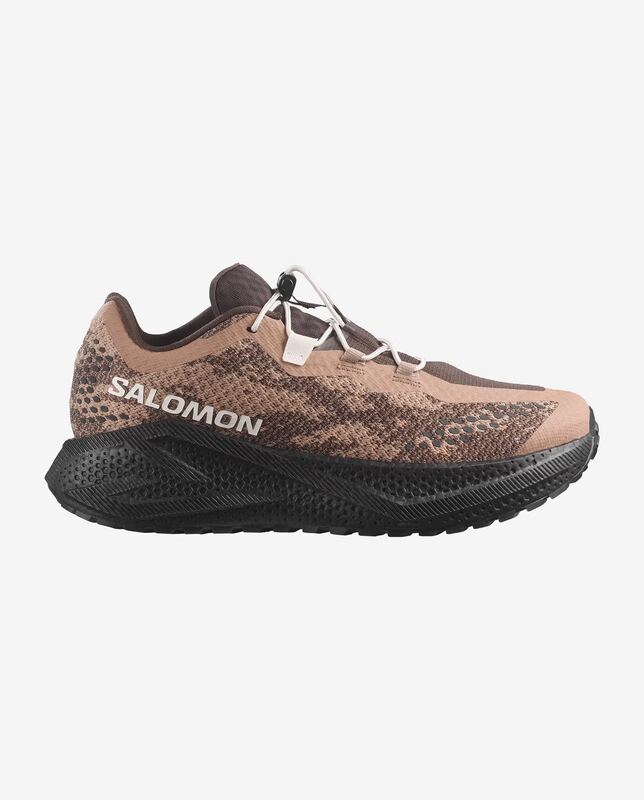
The Hoka Speedgoat 7 stands out with its Supercritical EVA midsole that offers improved responsiveness compared to the Challenger 8's outdated CMEVA foam, though it lacks the max-stack cushioning of the Challenger 8. Unlike the Altra Experience Wild 3+, it doesn't feature a zero-drop design, and while it provides good traction with Vibram Megagrip, it's not as cushioned as the Salomon Ultra Glide 4. The Speedgoat 7 is best for runners seeking a balance of cushioning and control on varied terrain.
Rating sources
Our 4.6 score is the average of the 4 scored reviews above; 7 more reviewed it without printing a score and are not in the average. More about methodology.