Verdict
Head-to-head · Best Trail Running Shoes

Hoka Speedgoat 7 vs Saucony Peregrine 16

Which is the better buy? Side-by-side on rating, price, strengths, and watch-outs — with the published ratings we averaged to get there.

Verdict is reader-supported. As an Amazon Associate we earn from qualifying purchases. Some links on this page are affiliate links — if you click through and buy, we may earn a small commission at no extra cost to you. Our ratings are sourced from independent publications, not sponsors.
The short answer

Hoka Speedgoat 7 and Saucony Peregrine 16 score essentially the same (4.3 vs 4.3). Pick the one whose trade-offs match your priorities — the strengths and watch-outs below are where they actually differ.

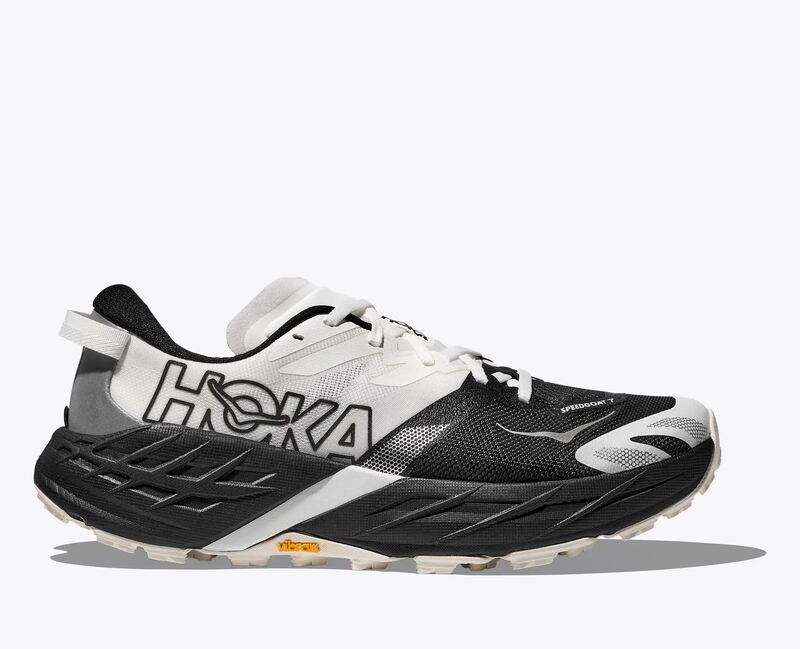
Hoka Speedgoat 7
Ranked #4 in Best Trail Running Shoes
Hoka Speedgoat 7
4 sources$184.9as of Oct 14

The Hoka Speedgoat 7 returns with a refreshed midsole using Supercritical EVA for improved responsiveness and a more modern feel. Reviews highlight the enhanced upper design with flexible forefoot vamp and gaiter attachments, while the Vibram Megagrip outsole provides reliable traction across varied terrain. The shoe maintains its reputation for high-stack protection and stability, though some runners still find it needs a sizing adjustment. It's best suited for all-terrain trail running and long-distance runners seeking a balance of cushioning and control.

Strengths
  • — Improved midsole responsiveness with Supercritical EVA replacing CMEVA
  • — Enhanced upper design with woven textile and flexible forefoot vamp for better comfort during long runs
  • — Vibram Megagrip outsole with deep 5-mil lugs for reliable traction on mixed surfaces
Watch-outs
  • — Still requires a sizing adjustment for some runners
  • — Not the most cushioned experience compared to competitors
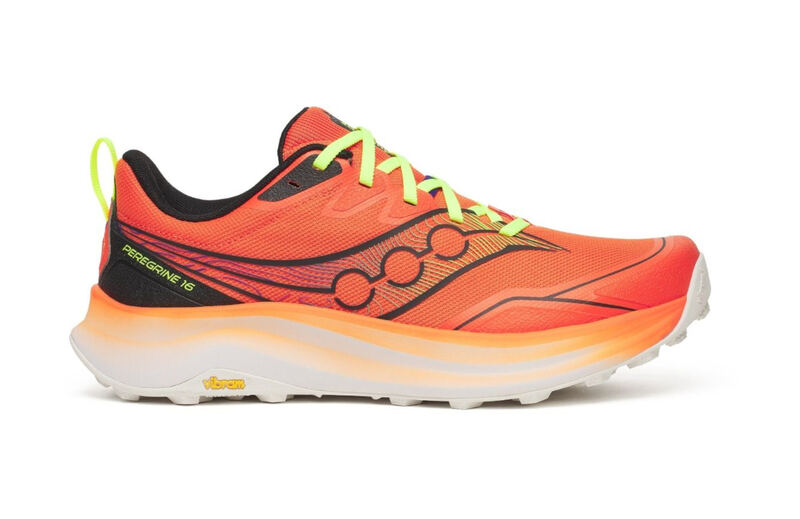
Saucony Peregrine 16
Ranked #3 in Best Trail Running Shoes
Saucony Peregrine 16
6 sources$199.99as of Oct 14

The Saucony Peregrine 16 delivers an updated iteration with the highly anticipated Vibram Megagrip outsole, significantly boosting traction and durability. Reviewers noted its stable, trustworthy performance across varied trail conditions, particularly on gravel roads and easier trails. While it maintains a low-drop design and secure fit, some reviewers observed a slight increase in weight and a tapered toebox that may not appeal to all users. The shoe remains a solid choice for longtime Peregrine fans and versatile trail runners seeking reliability and stability.

Strengths
  • — Vibram Megagrip outsole provides improved traction and durability
  • — Stable ride with secure, confidence-inspiring fit
  • — Premium PWRRUN+ insole offers comfortable foam padding
Watch-outs
  • — Slight weight gain compared to previous version
  • — Midfoot lockdown is inadequate, per Mountaineer Journey

How they stack up

Hoka Speedgoat 7

The Hoka Speedgoat 7 uses a Supercritical EVA midsole with a 37 mm stack and a Vibram Megagrip outsole with 5 mm lugs, deeper than the 4 mm lugs on the Saucony Peregrine 16, which uses the same outsole compound. The Salomon Ultra Glide 4 has a slightly taller 38.6 mm stack but low energy return from its outdated Energy Foam midsole.

Saucony Peregrine 16

It's a reliable choice for trail runners seeking a stable, secure fit but isn't as dynamic as the Hoka Speedgoat 7.

Specs side-by-side

SpecHoka Speedgoat 7Saucony Peregrine 16
Weight9.7 oz (275 g) for US M10 / 8.3 oz (235 g) for US W89.6 oz / 271g
OutsoleVibram Megagrip with 5-mil lugsVibram Megagrip
Upper MaterialRPET woven textileHigh-strength mesh
MidsoleSupercritical EVAPWRRUN+
Stack Height37 mm32.0 mm heel, 28.0 mm forefoot
Drop5 mm4.0 mm
Lug Depth5mm4 mm
← See the full ranking of best trail running shoes