The Google Nest Audio delivers room-filling sound with powerful bass and clear highs from its 75mm woofer and 19mm tweeter, though PCMag found the bass response particularly robust while Smarthomeassistant noted that audiophiles will notice compression on complex orchestral or jazz recordings. Its sleek design uses fabric made from recycled plastic bottles, but SoundGuys found the touch controls to be highly sensitive, leading to accidental triggers when adjusting the speaker's position. The device includes a physical microphone mute switch for privacy and built-in Chromecast Audio for reliable multi-room playback without an extra hub. Because it lacks a battery or auxiliary input, placement is restricted to surfaces near power outlets, making it best for fixed home use rather than portable setups.
Full review
Audio performance from dual-driver configuration
The Google Nest Audio utilizes a dedicated full-range audio system featuring a 75mm woofer and a 19mm tweeter, each driven by separate amplifier channels to manage distinct frequency bands. This hardware arrangement allows the speaker to deliver room-filling sound with punchy bass that remains tight rather than boomy, while treble stays clear without becoming harsh at moderate volumes. The physical separation of drivers ensures that complex audio layers do not muddy together as quickly as they might in single-driver units, creating a surprisingly wide soundstage for a device of this size.
PCMag found the bass response particularly robust, noting that the speaker can handle dynamic tracks with authority while maintaining clarity in the upper registers. This balance makes the Nest Audio suitable for casual music listening and podcast playback where vocal intelligibility is paramount. The hardware design prioritizes a full-range experience over extreme frequency extension, resulting in a sound profile that feels natural and uncolored to most listeners rather than artificially boosted.
Smarthomeassistant noted that while the audio performance is strong for its price bracket, audiophiles will notice compression on complex orchestral or jazz recordings. The dual-driver setup handles well-produced pop and rock tracks effectively, but intricate classical arrangements can lose some definition as volume increases. This limitation does not detract from its utility as a background music source but clearly defines the ceiling of its fidelity for critical listening scenarios.
Touch controls sensitivity and physical feedback
The top surface of the Google Nest Audio is divided into three invisible touch-sensitive panels that control volume on the outer segments and media playback in the center. SoundGuys found these controls to be highly sensitive, which can lead to accidental triggers when users attempt to wipe dust from the fabric or adjust the speaker's position on a shelf. The lack of tactile feedback means there is no physical confirmation of input beyond the resulting audio change, requiring users to rely entirely on auditory cues.
The sensitivity issue is compounded by the smooth, seamless design that offers no raised edges to guide finger placement. A light brush against the top edge can register as a volume increase or decrease, frustrating users who prefer precise manual adjustments. This design choice prioritizes aesthetic minimalism over functional reliability, forcing owners to develop careful handling habits to avoid unintended playback pauses or skips.
Despite the sensitivity complaints, the touch interface remains responsive to deliberate inputs when used correctly. The integration with Google Assistant allows for voice overrides of any accidental touches, providing a fallback if manual controls fail. However, the absence of physical buttons means that users who frequently adjust volume during use may find the capacitive surface less convenient than traditional knob-based interfaces found on competing smart speakers.
Multi-room audio via built-in Chromecast Audio
The Google Nest Audio includes built-in Chromecast Audio, enabling reliable multi-room playback without the need for an external hub or additional streaming devices. This integration allows users to group multiple Nest Audios with other Chromecast-enabled speakers to play synchronized audio across different rooms in a home. The system maintains tight synchronization between units, ensuring that music does not drift out of phase as it moves from one speaker to another.
Smarthomeassistant highlighted the reliability of this built-in implementation, noting that it simplifies setup for users who already own various Google Cast devices. The ability to broadcast audio from a phone or tablet directly to any grouped speaker provides flexibility in how music is distributed throughout a living space. This feature effectively turns the Nest Audio into a scalable component of a larger whole-home audio system.
Pairing two Nest Audios as a stereo pair significantly improves stereo separation and low-end response, creating a wider sound image that mimics traditional hi-fi setups. However, this configuration requires occupying two separate power sockets, which limits placement options in rooms with sparse outlets. The reliance on Wi-Fi for multi-room synchronization means performance can vary depending on network congestion, though the built-in Chromecast generally handles bandwidth demands efficiently.
Design materials and physical footprint
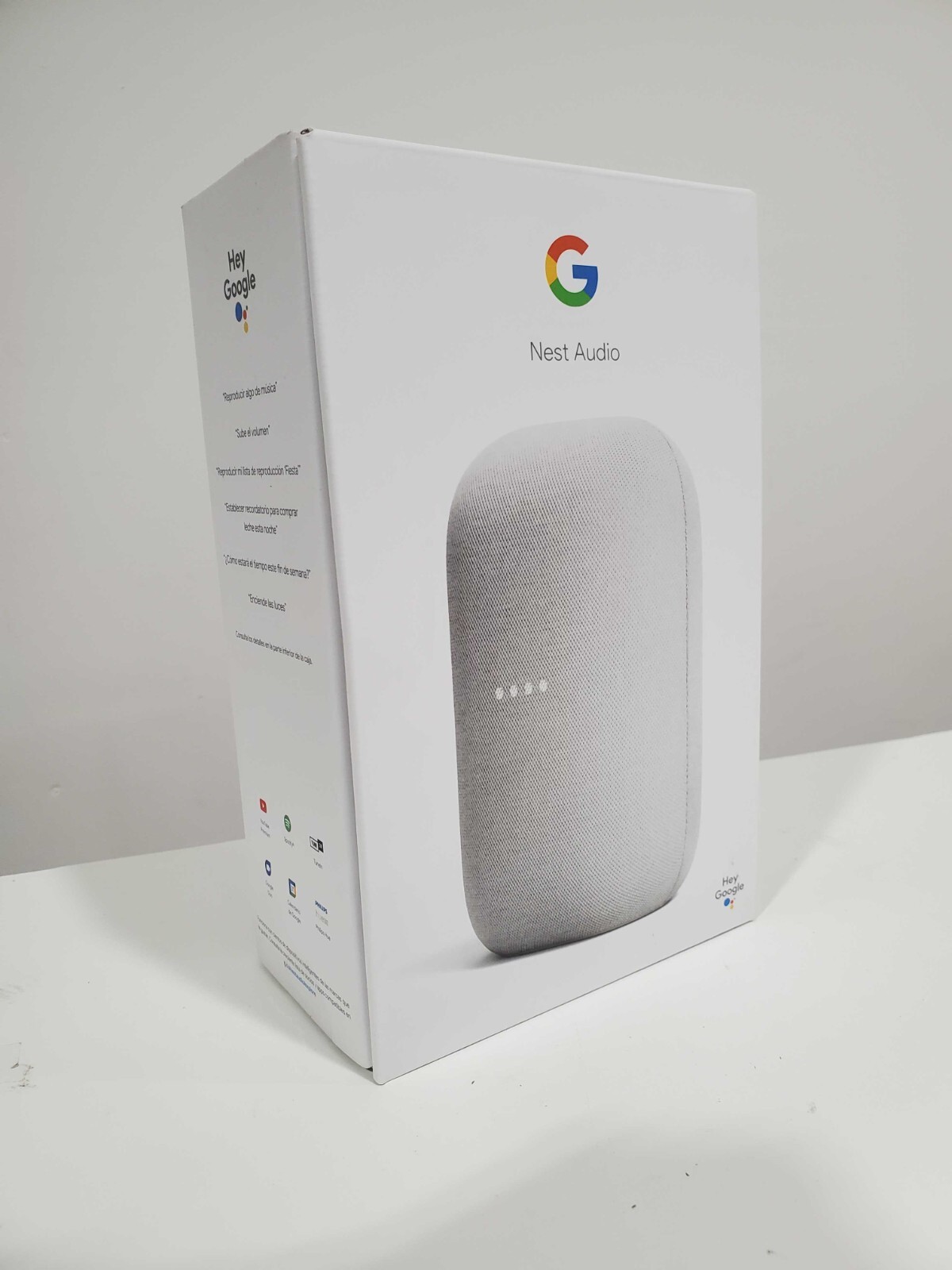
The Google Nest Audio features a sleek, fabric-wrapped design made from 100 percent recycled plastic bottles, blending into domestic decor more naturally than the glossy plastic finishes of earlier smart speakers. Radiotimes noted that the slender profile ensures it does not dominate a room visually.
SoundGuys described the soft silhouette as approachable and comforting, drawing inspiration from everyday items like pillows rather than traditional audio equipment. The fabric surround is smooth to the touch and resistant to picking up pet hair or dust, making maintenance straightforward for households with animals. This material choice also contributes to a warmer aesthetic that fits well in modern living spaces without appearing overly technical.
The device lacks any physical branding or aggressive angles, presenting a unified front that prioritizes subtlety over statement-making design. The power cable extends 1.5 meters from the base, offering some flexibility in placement but still requiring proximity to a wall outlet. This mains-only configuration means there is no battery option, restricting the Nest Audio to fixed locations where power is readily available.
Privacy controls and microphone management
A physical microphone mute switch on the rear of the Google Nest Audio cuts power to the mics entirely when toggled, providing a tangible privacy guarantee that software-only solutions cannot match. SoundGuys emphasized this feature as a welcome addition for users concerned about always-listening devices in their homes. When activated, four centered LEDs remain amber until overridden by another function, clearly indicating the device's muted status.
This hardware-level cutoff ensures that no audio is captured or transmitted to Google servers when privacy mode is engaged, addressing common concerns about smart speaker surveillance. The physical switch offers immediate reassurance without requiring users to navigate complex app settings or voice commands to disable listening capabilities. This direct control mechanism builds trust by giving owners complete authority over the device's auditory input.
The mute function integrates seamlessly with the rest of the Google Home ecosystem, allowing users to toggle privacy on and off as needed without disrupting other smart home routines. When re-enabled, Google Assistant provides a voice prompt confirming that listening has resumed, ensuring users are aware of the change in state. This combination of physical hardware controls and clear software feedback creates a robust privacy framework.
Smart home integration and ecosystem compatibility
The Google Nest Audio runs Google Assistant, which responds quickly to wake-word commands for controlling lights, thermostats, and other smart home accessories. It integrates directly with the Google Home app, allowing users to manage hundreds of compatible devices using voice commands or predefined routines. Smarthomeassistant noted that the speaker handles UK-specific requests reliably, including weather updates, timers, and shopping list management.
Voice Match technology enables personalized responses for different household members, allowing individuals to set separate alarms, check personal calendars, and access private information without sharing data with others in the same home. This feature enhances privacy by ensuring that sensitive queries are only answered when addressed directly to the recognized user profile. The system supports a broad range of third-party services including Spotify, YouTube Music, TuneIn, and Deezer.
The absence of a screen means there is no visual feedback for camera feeds or recipe steps, limiting its utility compared to smart displays like the Nest Hub. Users requiring visual confirmation must rely on companion devices or mobile phones for complete information delivery. Despite this limitation, the audio-centric design excels at providing hands-free control and ambient updates without demanding visual attention from users.
Connectivity limitations and input restrictions
The Google Nest Audio lacks a 3.5mm auxiliary input, preventing direct wired connection to non-Wi-Fi audio sources such as turntables or older MP3 players. This omission restricts the speaker's versatility for users who prefer analog connections or wish to integrate legacy equipment into their smart home setup. The reliance on Wi-Fi and Bluetooth for connectivity means that all audio must be streamed digitally, which may introduce latency in certain gaming or video playback scenarios.
Bluetooth pairing allows for wireless connection to mobile devices as a fallback when Wi-Fi is unavailable, but this mode disables Google Assistant functionality while connected. Users who switch between smart home control and direct Bluetooth streaming must manage these modes carefully to avoid confusion. The lack of an aux input also means that the Nest Audio cannot serve as a passive amplifier for external DACs or preamps, limiting its appeal to audio enthusiasts.
The 1.5-meter power cable provides some flexibility in placement but still requires proximity to a wall outlet, reinforcing the device's fixed-location nature. This constraint is compounded by the absence of battery operation, making it unsuitable for outdoor use or temporary setups where power access is limited. Users must plan their speaker placement around available electrical infrastructure rather than acoustic preferences alone.
Strengths
- +Delivers room-filling sound with powerful bass and clear highs from its dual-driver setup
- +Features a sleek, fabric-wrapped design made partially from recycled materials that blends into home decor
- +Includes a physical microphone mute switch on the rear to cut power to the mics entirely for privacy
- +Supports built-in Chromecast Audio for reliable multi-room playback and stereo pairing without an extra hub
Watch-outs
- −Lacks a 3.5mm auxiliary input or battery option, restricting placement to surfaces near a power outlet
- −Highly sensitive touch controls on the top surface can be accidentally triggered during use
- −Audio compression becomes noticeable with complex orchestral or jazz recordings
How it compares
The Google Nest Audio delivers room-filling sound with powerful bass and clear highs from its dual-driver setup.
Rating sources
Counts as 4.16/5 in our score — this publisher's 181 scores on the site average 4.00, so its scores are adjusted up to compare fairly with other publishers.
Counts as 4.45/5 in our score — this publisher's 51 scores on the site average 3.79, so its scores are adjusted up to compare fairly with other publishers.
Our 4.2 score is the average of the 3 scored reviews above, each adjusted for how strictly its publisher scores; 1 more reviewed it without printing a score and is not in the average. More about methodology.