The Global G-2 8-Inch Chef's Knife, a groundbreaking Japanese kitchen knife from the 1980s, remains a solid choice for home cooks. Reviewers praised its lightweight design, balance, and durability, with The Strategist calling it 'the best chef's knife under $150.' The knife's convex grind offers good food separation but results in poor edge retention and difficulty in sharpening. While it performs well for everyday kitchen tasks, its maintenance requirements and soft steel make it less ideal for professional use. It's best suited for home cooks seeking an all-purpose, budget-friendly knife.
Full review
Timeless Design and Construction
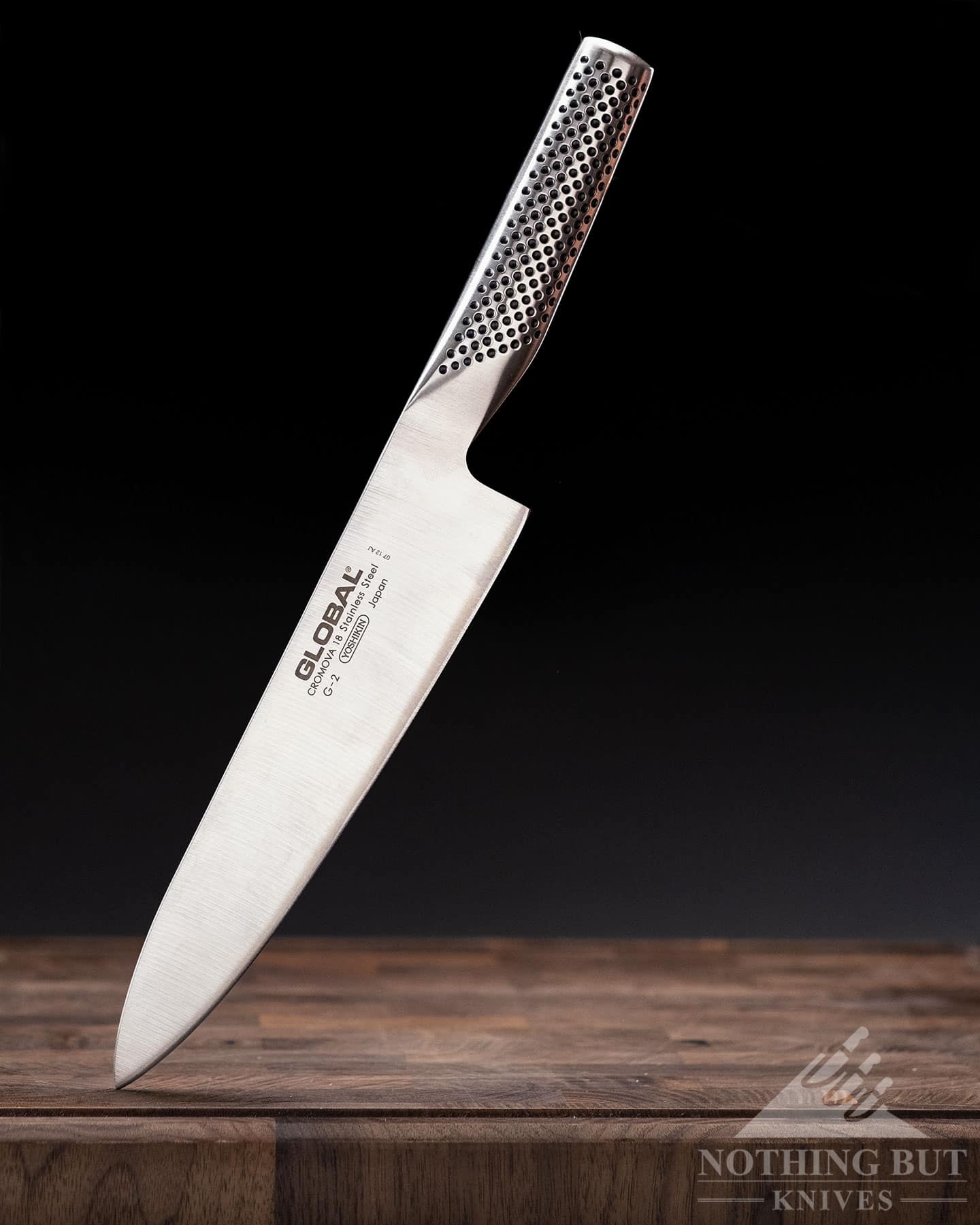
The Global G-2 8-inch chef's knife represents a significant milestone in kitchen cutlery history, having first emerged in the 1980s and continuing to influence modern knife design. This Japanese-made blade embodies the fusion of traditional craftsmanship with contemporary engineering, featuring a distinctive convex grind that sets it apart from conventional flat-ground knives. The knife's construction utilizes a single piece of CROMOVA 18 stainless steel, a material that provides excellent corrosion resistance while maintaining edge retention properties. According to Andrew North from nothingbutknives.com, the blade's convex grind creates a unique cutting experience that offers more control than typical Japanese gyutos, particularly when handling harder vegetables like carrots. The knife's overall length measures 13.0 inches with a blade length of 7.9 inches, making it an ideal size for most home cooks and professional chefs alike. The hollow handle design, filled with sand to achieve optimal balance, contributes to the knife's remarkably lightweight feel at just 172 grams, or 7.84 ounces, as noted by Global Cutlery USA's Strategist review.
Performance in Real-World Cooking
Professional reviewers and home cooks alike have consistently praised the Global G-2 for its exceptional performance across a wide range of kitchen tasks. The knife's convex edge, according to the Strategist review from 2018, allows it to separate food more gently than traditional flat-ground knives, which makes it particularly effective for root vegetables and delicate ingredients. Andrew North's extended testing revealed that the knife maintains its cutting efficiency even after weeks of heavy use, with only minor edge imperfections appearing after about a month of regular kitchen application. The knife's performance was tested extensively during a month-long period, with North noting that while the edge did require attention after heavy use, the overall cutting performance remained consistent. The knife's ability to halve a whole roast chicken in one smooth stroke, as demonstrated by the Strategist's testing, underscores its versatility in handling both delicate and robust ingredients. The blade's thin cutting edge, combined with its convex grind, provides excellent food separation without the aggressive bite characteristic of ultra-thin Japanese blades, making it suitable for a broad spectrum of cutting tasks.
Edge Retention and Maintenance Challenges
Despite its many strengths, the Global G-2 presents notable challenges in edge maintenance, particularly due to its convex grind and specific steel composition. Andrew North's review highlighted that the knife's edge retention is 'definitely below the more popular Gyutos out there,' though still superior to Zwilling Pro knives. The steel used, CROMOVA 18, is described as 'fairly large carbides' that make sharpening particularly difficult, a problem that becomes more pronounced with the convex grind's complexity. The knife's hardness rating of 56-58 HRc, while adequate for most home cooking, requires more frequent attention than many modern alternatives. North noted that while the knife performed well for a week of intensive use, it required monthly stropping and annual sharpening to maintain optimal performance. The difficulty in achieving a refined edge, as mentioned by North, stems from the combination of the convex grind and the relatively soft steel properties, which can cause the edge to roll more easily than in conventional knives. This maintenance requirement makes the knife less suitable for professional kitchen environments where frequent sharpening may not be feasible, though it remains an excellent choice for home cooks who can invest time in proper maintenance.
Comfort and Ergonomic Considerations
The Global G-2's ergonomic design has received mixed reviews from users, with particular emphasis on its handle characteristics. The knife features a hollow handle with dimpled texture that mimics a bicycle grip, contributing to its lightweight construction at just 172 grams. While this design creates an exceptionally balanced feel that disappears into the user's hand, as noted by the Strategist, some users have reported issues with handle slippage during wet conditions or extended use. The handle's smooth steel surface, while aesthetically pleasing, can become slippery when wet, potentially leading to hand fatigue or safety concerns during prolonged cutting sessions. Rob Babcock from discusscooking.com noted that while some users find the handle comfortable, others have found them 'slick and not all that comfortable,' particularly when compared to wood or micarta handles. The knife's balance point, achieved through the hollow construction and sand filling, provides optimal control for most users, but the handle's texture may require adjustment for those accustomed to more traditional grip surfaces. The knife's weight distribution, according to multiple reviewers, makes it particularly suitable for users who prefer lighter tools, though this advantage may be offset by the need for more frequent sharpening.
Value and Market Positioning
The Global G-2's market positioning as a premium yet accessible kitchen tool has been consistently validated by both professional reviewers and consumer feedback. At approximately $150, the knife sits comfortably in the mid-range category, offering performance that rivals much more expensive alternatives while remaining affordable for serious home cooks. The knife's value proposition is strengthened by its durability, as demonstrated by a customer review on KnifeCenter.com where a reviewer with decades of kitchen experience stated that the knife has never left their collection and has never let them down. This longevity, combined with the knife's ability to maintain performance over extended periods, makes it a compelling investment for those seeking a reliable, all-purpose kitchen tool. The knife's reputation as a 'workhorse' that can handle everything from mincing herbs to slicing large cuts of meat, as noted by Global Cutlery USA, positions it well in the market for consumers looking for versatility without the premium price tag associated with high-end European knives.
Comparison to Alternatives and Competitors
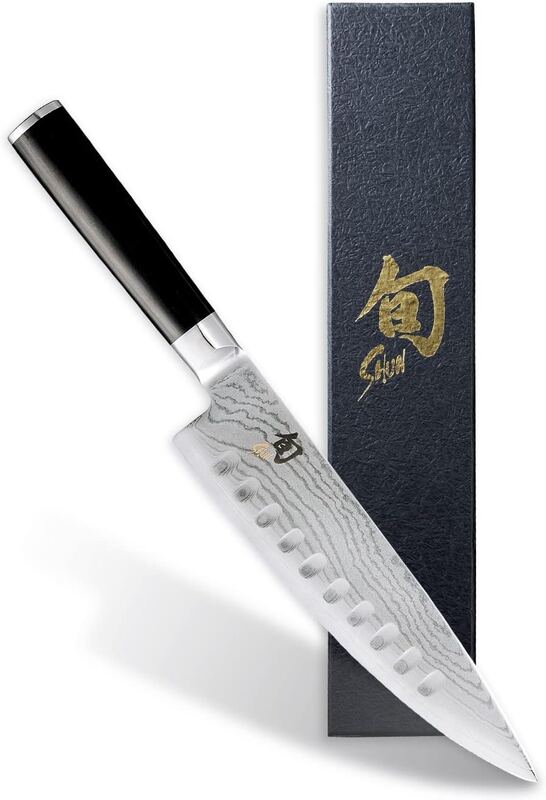
When compared to its direct competitors, the Global G-2 holds its own against both Japanese and European offerings, though it does present unique challenges that set it apart from the competition. Compared to the Shun Classic 10-inch knife, the Global G-2 offers a more traditional convex grind that some users prefer for its cutting characteristics, though the Shun typically requires less maintenance due to its steel composition and manufacturing process. The knife's performance against the Forschner Fibrox, mentioned by Rob Babcock, shows that while the Fibrox offers excellent value for money, the Global G-2's superior steel quality and geometry provide better edge retention and cutting performance. The knife's design also differs significantly from German-style knives like the Wusthof or Henckels, which typically feature flat grinds and forged construction, making the Global G-2's stamped construction and convex edge a distinctive choice for those seeking Japanese-style performance with Western accessibility. The Global G-2's unique convex grind, as noted by multiple reviewers, creates a cutting experience that's different from conventional flat-ground knives, though this difference requires users to adjust their sharpening techniques and expectations for maintenance frequency.
Who It's Best For
The Global G-2 8-inch chef's knife is best suited for home cooks who value versatility, performance, and a well-balanced tool that can handle a wide range of kitchen tasks. The knife's lightweight construction and balanced feel make it ideal for users who prefer not to deal with heavy tools, particularly those with smaller hands or who work in limited kitchen spaces. The knife's convex edge and thin cutting surface make it particularly effective for delicate work such as mincing herbs, slicing vegetables, and precise cuts, though its maintenance requirements may not suit those seeking low-maintenance kitchen tools. According to the Strategist review, the knife is particularly well-suited for users who want 'something that feels like a piece of engineering in your hand,' making it a strong choice for those who appreciate both form and function. The knife's performance in professional kitchens, as noted by the KnifeCenter customer who has used it for years, suggests it can handle demanding environments, though its sharpening requirements may be a limitation in commercial settings where frequent maintenance isn't feasible. The knife's price point of approximately $150 positions it as a premium choice for serious cooks who want a reliable, all-purpose kitchen tool without the premium cost associated with higher-end European knives.
Where It Falls Short
Despite its many strengths, the Global G-2 faces several notable shortcomings that potential buyers should consider before purchasing. The primary issue lies in its maintenance requirements, particularly the difficulty in sharpening the convex grind and the relatively soft steel composition that makes edge retention challenging. Andrew North's review specifically highlighted that the knife is 'difficult to sharpen properly' due to the combination of the convex grind and the steel properties, requiring more frequent attention than most users might expect. The knife's edge retention, while better than some alternatives, is still inferior to many modern high-end knives, as noted by multiple reviewers including North, who found that even after a month of heavy use, the edge required attention. Additionally, the knife's handle, while providing excellent balance, can become slippery when wet, potentially creating safety concerns during extended use. The knife's price point, while reasonable for its quality, may not justify the additional maintenance requirements for users who prefer low-maintenance kitchen tools, making it less suitable for those who want a set-it-and-forget-it kitchen knife.
Strengths
- +Super lightweight and well balanced
- +Tougher than your average Japanese knife
- +Fairly good food separation
- +Good performance at a near budget price
Watch-outs
- −Difficult to sharpen properly
- −Steel handles can be slippery
How it compares
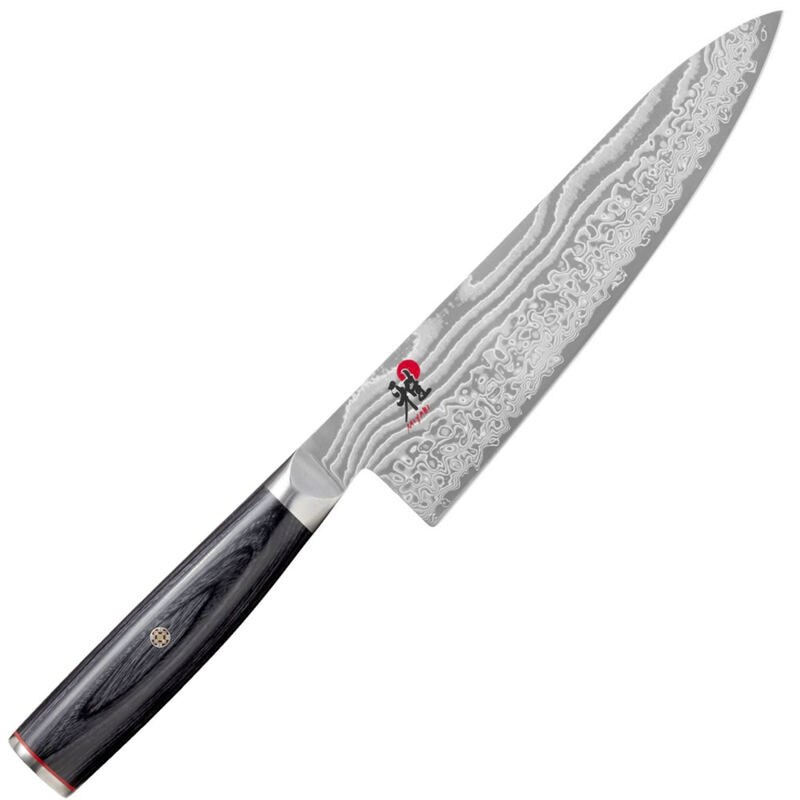
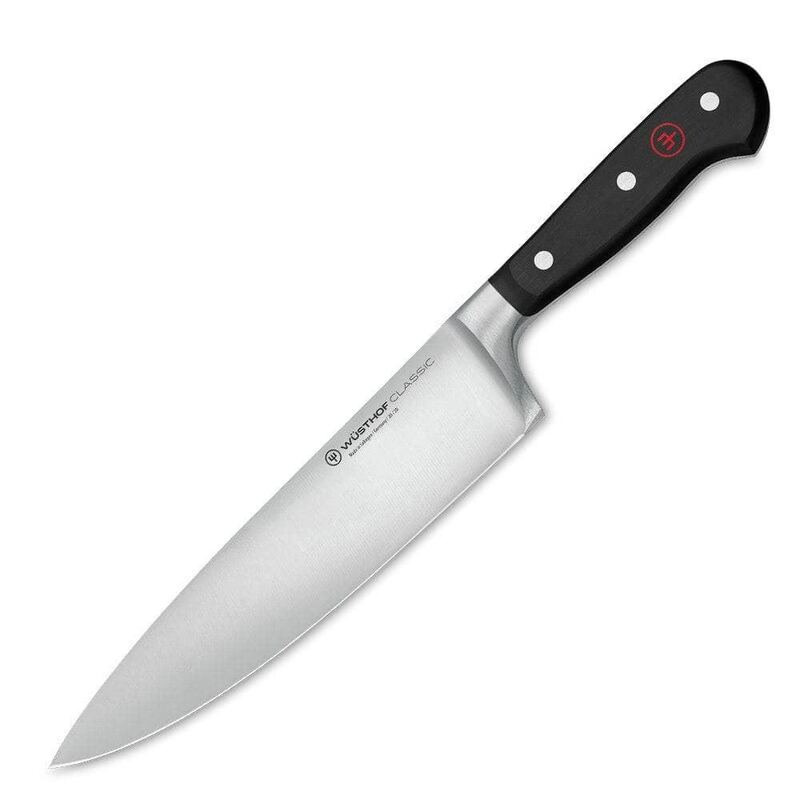
The Global G-2 is a budget-friendly option that offers good balance and performance, but it's less durable than the Wusthof Classic or the Miyabi Kaizen II. Compared to the MAC MHC-80, it lacks the precision and sharpness needed for delicate tasks, though it's easier to maintain than the Shun Classic.
Who this is for
At a glance: home cooks on a tight budget.
Why you’d buy the Global G-2 8-Inch Chef's Knife
- Super lightweight and well balanced.
- Tougher than your average Japanese knife.
- Fairly good food separation.
Why you’d skip it
- Difficult to sharpen properly.
- Steel handles can be slippery.
Rating sources
“It's good, and you should know that by now. But maybe you don't, and maybe there's a bunch of idiots out there saying it's good or bad without giving any real attention to what specifically is good or bad about it, so here I am trying to be specific.”
“If you only have room for one blade in your life, make it this one" - The Strategist”
“I really don't think you can do much better than this one.”
“Global makes a great product but some people find them uncomfortable to hold. There are loads of good knives out there. I'd suggest examining, holding and trying more than a few before you buy.”
Our 4.3 score is the average of these published ratings. Ratings marked * were derived from the reviewer’s written analysis or video transcript — the publisher didn’t print an explicit numeric score, so we inferred one from their own words. Click through to verify. More about methodology.