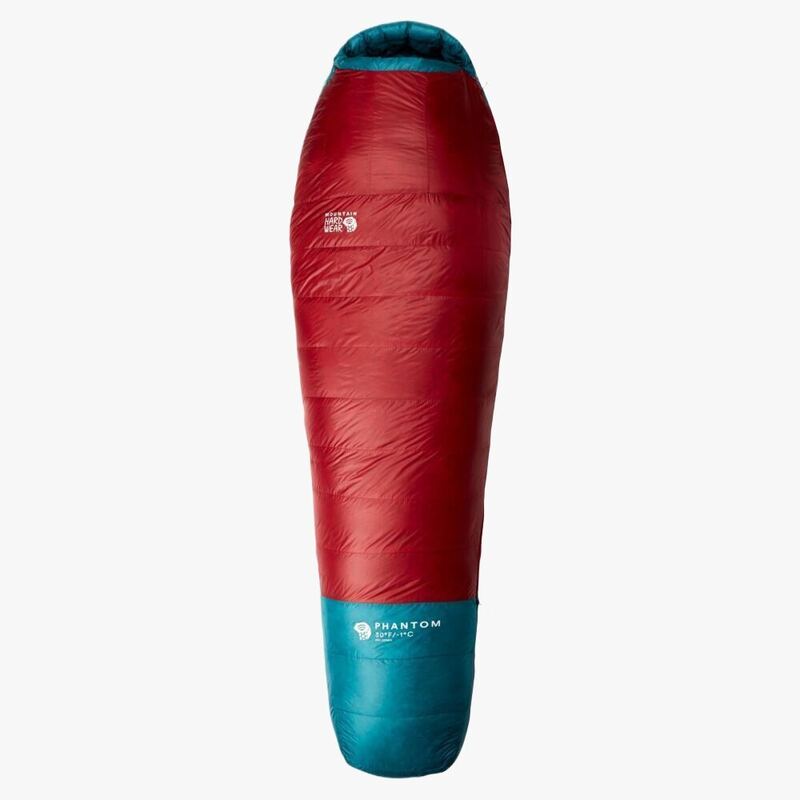
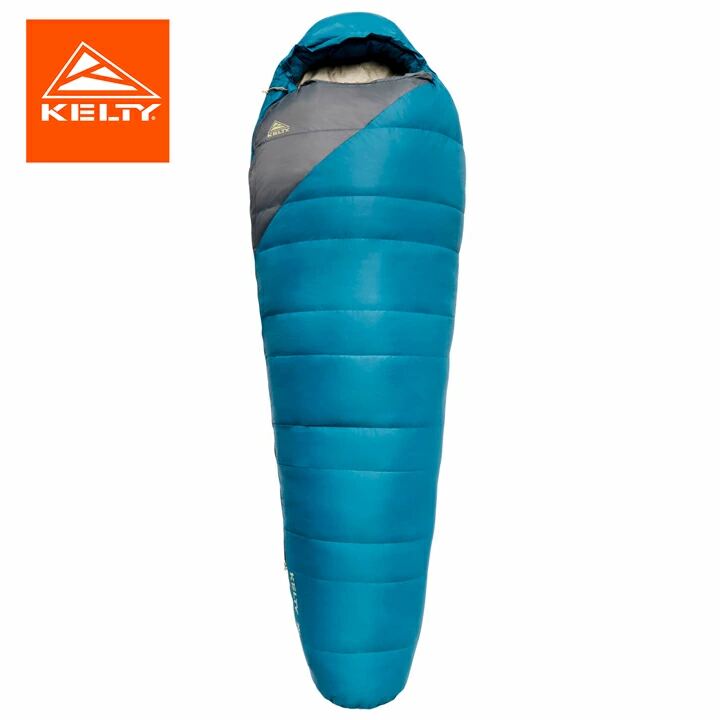
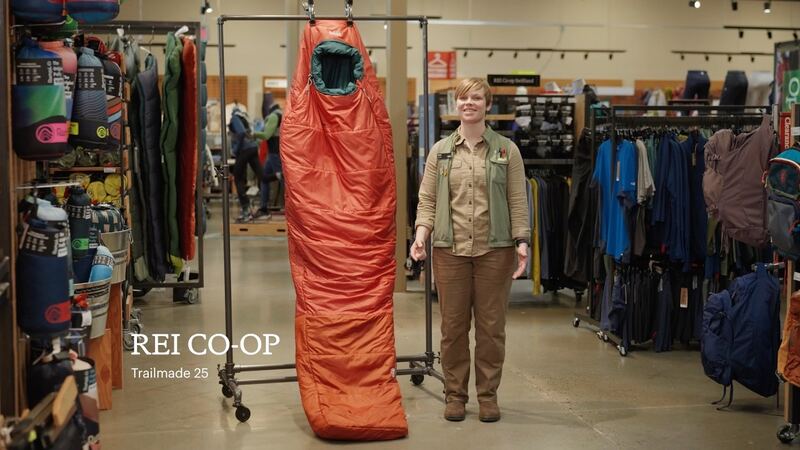
The Exped Terra 15 Sleeping Bag balances warmth, weight, and price for 3-season backpacking. REI's Emily Pennington singled out the 650-fill down insulation, the soft fabric, and practical touches like the draft collar and 3D footbox. It's cut for middle-of-the-road sleepers and comes in five sizes. Summer and early fall camping suit it best, and ultralight backpackers will notice the extra ounces. Weekend warriors who want comfort on a budget are the right buyer.
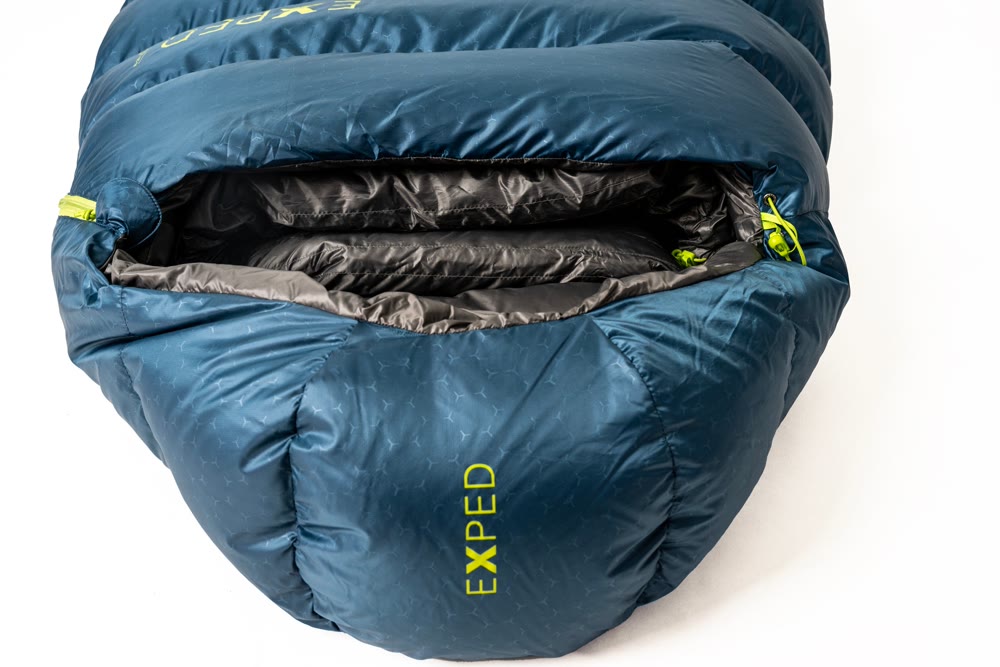
Full review
3D footbox uses 11 separate down chambers
The Exped Terra 15 sleeping bag demonstrates a thoughtful approach to balancing performance and affordability, with construction elements that reflect both durability and comfort priorities. The bag's shell and liner are crafted from recycled 20-denier ripstop polyester, which is OEKO-TEX STANDARD 100 certified, ensuring that the materials have passed safety tests for over 1,000 harmful substances including heavy metals and formaldehyde. According to Outdoor Gear Lab's Arthur McMahon, this construction provides a robust yet soft touch, with the polyester shell feeling fairly soft to the touch. The Terra 15 also features a 650+ cuin/oz European Grey Duck Down, RDS certified, which contributes to its warmth and compressibility. The bag's design includes a 3D footbox with 11 individually filled down chambers, a feature that enhances comfort and warmth for feet. The draft collar and hood are designed with practicality in mind, featuring snap buttons and elastic cords to help retain heat. These features, combined with a glow-in-the-dark anti-snag zipper, make the Terra 15 a well-rounded option for a variety of outdoor conditions.
The Terra 15's mummy cut provides a balance between warmth and comfort, offering more room than traditional narrow alpine-style bags while remaining reasonably packable. This extra space is particularly beneficial for side sleepers, as noted by Outdoor Gear Lab's review. The bag's design also includes a zippered interior pocket for small items like phones or headlamps, and a draft tube that runs the full length of the zipper to prevent cold air from entering. The compression stuff sack is included and is described as sturdy, though it adds to the overall weight of the bag. The Terra 15's build quality is evident in its attention to detail, including the snap-in draft collar and protective zipper flap, which enhance warmth retention and user comfort.
Kept testers warm at 28 to 30 degrees
REI's Emily Pennington tested the bag during a weekend camping trip in Crestone, Colorado, where temperatures ranged from high 30s to low 40s Fahrenheit. She found that the bag kept her comfortable throughout the night, even with a windy 41°F temperature. The bag's 650-fill-power down insulation, combined with its draft collar and hood, proved effective in maintaining warmth. Outdoor Gear Lab's Arthur McMahon noted that the bag's 650-fill down, despite being a middling-quality fill, kept testers plenty warm on 28-30°F nights in the high desert. The draft collar and hood, along with a protective zipper flap, were particularly effective in retaining heat around the shoulders and head. The bag's thermal performance is further enhanced by horizontal baffles that distribute insulation evenly, minimizing cold spots.
However, performance under extreme conditions reveals some limitations. Outdoor Gear Lab's review points out that this rating may not reflect real-world conditions where the bag is used without a pad. The Terra 15 is better suited as a solid three-season bag, according to the same review, rather than a true four-season option. The bag's performance is also affected by its relatively heavy and bulky nature compared to premium down bags. The 650+ fill-power down, while effective, is not as efficient as higher-fill bags, requiring more volume to achieve similar warmth. Despite these tradeoffs, the Terra 15 remains a practical option for average backpackers who prioritize warmth and comfort over extreme packability.
Wide version adds 7 inches at the shoulder
Comfort in the Exped Terra 15 is enhanced by its generous fit and thoughtful design features. The bag's mummy cut provides more room than traditional narrow alpine-style bags, which is particularly beneficial for side sleepers. According to Outdoor Gear Lab's Arthur McMahon, the hood is well-shaped, and the footbox allows for decent movement, making the bag feel welcoming rather than overly restrictive. The 3D footbox with 11 individually filled down chambers provides additional comfort and warmth for feet, a feature that differentiates it from standard sleeping bags. The bag's interior fabric is described as incredibly soft to the touch by REI's Emily Pennington, contributing to overall comfort. The large amount of down inside the baffles feels thick like a warm blanket, providing a plush sleeping experience.
Despite its comfort features, the Terra 15 has some drawbacks related to its fit. The two separate drawcords for the hood and draft collar, while functional, can be cumbersome and may tickle the face at night if not managed properly. The bag's design also includes a zippered interior pocket, which is convenient for storing small items, but the positioning of the drawcords and tags can make it difficult to manage when fully zipped up. The wide versions (MW and LW) add an extra 7 inches of shoulder room, which is beneficial for larger individuals. The bag's overall fit is described as roomy enough to sleep naturally while still being efficient for warmth, striking a smart balance between comfort and performance.
Weight and Packed Size
The Exped Terra 15's weight and packed size are significant factors that influence its suitability for different types of outdoor activities. According to Exped's official specifications, the medium size weighs 2 pounds, 11.5 ounces, which is relatively heavy for a down bag. Outdoor Gear Lab's Arthur McMahon noted that this weight is on the heavier side compared to other premium down bags, with the included compression sack weighing 4.9 ounces. The 650+ fill-power European grey duck down is not a super-efficient insulator, which explains why Exped needed to pack so much of it to achieve the bag's warmth. The compression stuff sack is described as stout and included with the bag, but its bulk adds to the overall weight. Despite these limitations, the Terra 15's packed size is acceptable for most backpackers, especially those who value warmth and comfort over extreme packability.
The bag's packed dimensions are 9.8 x 7.5 x 7.5 inches for the small and medium sizes, and 10.2 x 7.5 x 7.5 inches for the wide versions. These dimensions are relatively compact, making the bag suitable for backpacking trips where space is limited. However, the overall weight and bulk of the bag make it less ideal for ultralight backpackers who are chasing every gram. The Terra 15's design compromises some packability for warmth and comfort, which is a tradeoff that many users find acceptable. The bag's ability to pack down well enough for typical weekend trips is a strength, but it won't disappear in a pack like the lightest 800+ fill sleeping bags. For those who prioritize warmth and comfort over extreme packability, the Terra 15 offers a practical solution.
No DWR coating, and the zipper still snags
Despite its many strengths, the Exped Terra 15 has several notable shortcomings that may deter certain users. One major limitation is its relatively heavy and bulky nature compared to other premium down bags. Outdoor Gear Lab's review points out that the bag is heavier and bulkier than other premium down bags, which is a tradeoff made to achieve its affordable price point. This inefficiency contributes to the bag's overall weight and packed size. Additionally, the compression stuff sack, while included, adds to the bag's weight and bulk, making it less ideal for ultralight backpackers. The bag's design also includes some features that can be cumbersome, such as the two separate drawcords for the hood and draft collar, which can be difficult to manage when fully zipped up.
Another drawback is the bag's lack of a DWR coating, which is common in many high-end sleeping bags. The absence of a DWR coating means that the bag may not perform as well in wet conditions, although this is not a major concern for most three-season use cases. The zipper pull, while glow-in-the-dark and anti-snag, can still snag easily according to some user reviews. The bag's temperature rating, while generous, may not reflect real-world conditions where the bag is used without a pad, as noted by Outdoor Gear Lab. The Terra 15's design compromises some packability for warmth and comfort, which may not suit users who prioritize extreme lightweight performance. Despite these limitations, the bag remains a solid choice for those who value warmth and comfort over extreme packability.
Five sizes, but not built for ounce-counters
The Exped Terra 15 is best suited for backpackers who primarily venture out in the summer and early fall and want a wallet-friendly option. REI's Emily Pennington recommends the bag for budget 3-season backpackers who value compressible down insulation and a soft liner. The bag's 650-fill-power down is plenty light and compressible for long-haul backpackers, making it ideal for those who don't mind a bit more weight for added comfort. The Terra 15 is also a good choice for car campers and multisport adventurers who need a versatile sleeping bag for various outdoor activities. According to Outdoor Gear Lab's Arthur McMahon, the bag is a practical option for average backpackers who prioritize warmth and comfort over extreme packability. The bag's features, such as the adjustable draft collar and hood, a zippered interior pocket, and a glow-in-the-dark anti-snag zipper, make it suitable for a wide range of users. The bag's unisex sizing might mean that those who run colder need to order a warmer bag, but this is a common consideration for many sleeping bags.
The Terra 15 is not ideal for ultralight obsessives chasing every gram or those who require the absolute lightest and most compact sleeping bag. The bag's relatively heavy and bulky nature makes it less suitable for those who prioritize extreme packability. Users who are looking for a bag that can be easily packed into a small space and weighed down to the minimum will find the Terra 15 lacking in this regard. However, for those who value warmth, comfort, and affordability, the Terra 15 offers a compelling combination of features. The bag's five size options—small, medium, medium wide, long, and long wide—provide flexibility for different body types and sleeping preferences. The bag's ability to handle three-season conditions makes it a solid choice for a wide range of outdoor enthusiasts.
260 dollars buys OEKO-TEX certified materials
At a list price of $259.95, the Exped Terra 15 offers excellent value for money, particularly when compared to other sleeping bags in its class. REI's Emily Pennington notes that the bag's $250 price point is impressive, especially considering its many features and quality materials. The bag includes high-quality down insulation, a zippered chest pocket, draft tube and collar, and an adjustable hood, all of which are typically found in more expensive options. Outdoor Gear Lab's review rates the bag 7.5/10 for warmth to weight, 8.2/10 for comfort, 8/10 for materials and durability, and 7/10 for feature set. These ratings reflect the bag's ability to deliver a high level of comfort and functionality at a competitive price point. The Terra 15's inclusion of features like a glow-in-the-dark anti-snag zipper, an easy access internal pocket, and an adjustable draft collar makes it a standout value for budget-conscious consumers.
The bag's value is further enhanced by its sustainability features, including the use of recycled materials and RDS-certified down. Exped's commitment to sustainability is evident in the bag's construction, which uses recycled 20-denier ripstop polyester and 650+ cuin/oz European Grey Duck Down. The bag is also OEKO-TEX STANDARD 100 certified, ensuring that the materials have passed safety tests for over 1,000 harmful substances. The inclusion of a compression stuff sack and mesh storage bag adds to the bag's value, as these items are often sold separately in other sleeping bags. The bag's ability to pack down well enough for typical weekend trips, despite its relatively heavy nature, makes it a practical choice for most backpackers. For those seeking a balance of warmth, comfort, and affordability, the Exped Terra 15 represents a strong value proposition.
Lighter than the Bishop Pass, heavier than the Sonic
The Exped Terra 15 stands out in the crowded backpacking sleeping bag market due to its combination of warmth, comfort, and affordability. Compared to other popular options like the Mountain Hardwears Bishop Pass 0-degree bag, which weighs 3 pounds, 2.1 ounces, the Terra 15 is notably lighter at 2 pounds, 11.5 ounces for the medium size. However, it is still heavier than some ultralight options, such as the Nemos Sonic 0-degree bag, which weighs 3 pounds, 4 ounces. The Terra 15's design and features, including the adjustable draft collar, hood, and anti-snag zipper, are comparable to those found in higher-end bags, but at a significantly lower price point. The bag's 650-fill down is less efficient than 800+ fill options, but it provides sufficient warmth for most three-season conditions.
In terms of features, the Terra 15 offers several advantages over budget alternatives. The inclusion of a zippered interior pocket, a glow-in-the-dark anti-snag zipper, and a draft collar with snap button and elastic cord closure are features that are often omitted from budget-friendly bags. The bag's 3D footbox, with 11 individually filled down chambers, provides additional comfort and warmth for feet, a feature that sets it apart from many competitors. The Terra 15's ability to pack down well enough for weekend trips, despite its relatively heavy nature, makes it a practical choice for most backpackers. While it may not be the lightest or smallest option on the market, the Terra 15's balance of warmth, comfort, and price makes it a strong contender in its class. Compared to other brands, Exped's Terra line offers a compelling value proposition for those seeking a versatile, high-quality sleeping bag without breaking the bank.
Strengths
- +Soft recycled 20-denier ripstop polyester shell and liner with OEKO-TEX STANDARD 100 certification
- +Adjustable draft collar and hood help retain warmth and prevent heat loss
- +3D footbox design allows better blood flow and keeps toes warm during sleep
Watch-outs
- −Stuff sack is described as bulky despite compression
- −Unisex sizing may not fit those who run cold well
How it compares
The Exped Terra 15 offers a good balance of affordability and comfort, outperforming the Kelty Cosmic Down 20 in warmth and fabric quality, though it's heavier than the Mountain Hardwear Phantom 30. Compared to the Western Mountaineering MegaLite, it's less expensive but lacks the ultralight design and spaciousness.
Rating sources
Our 4.3 score is the average of these published ratings. More about methodology.