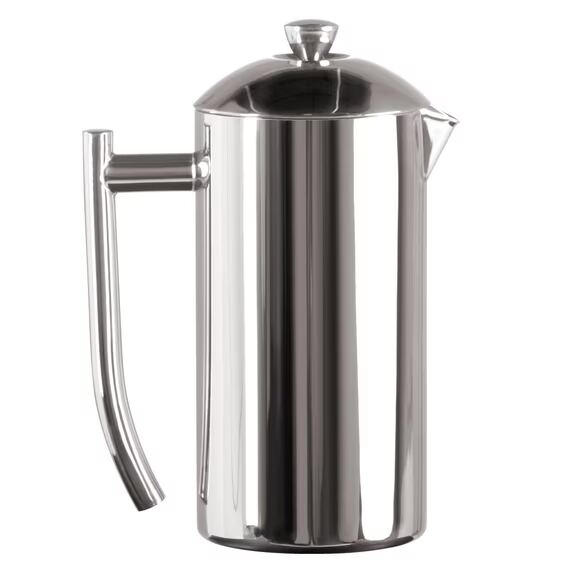
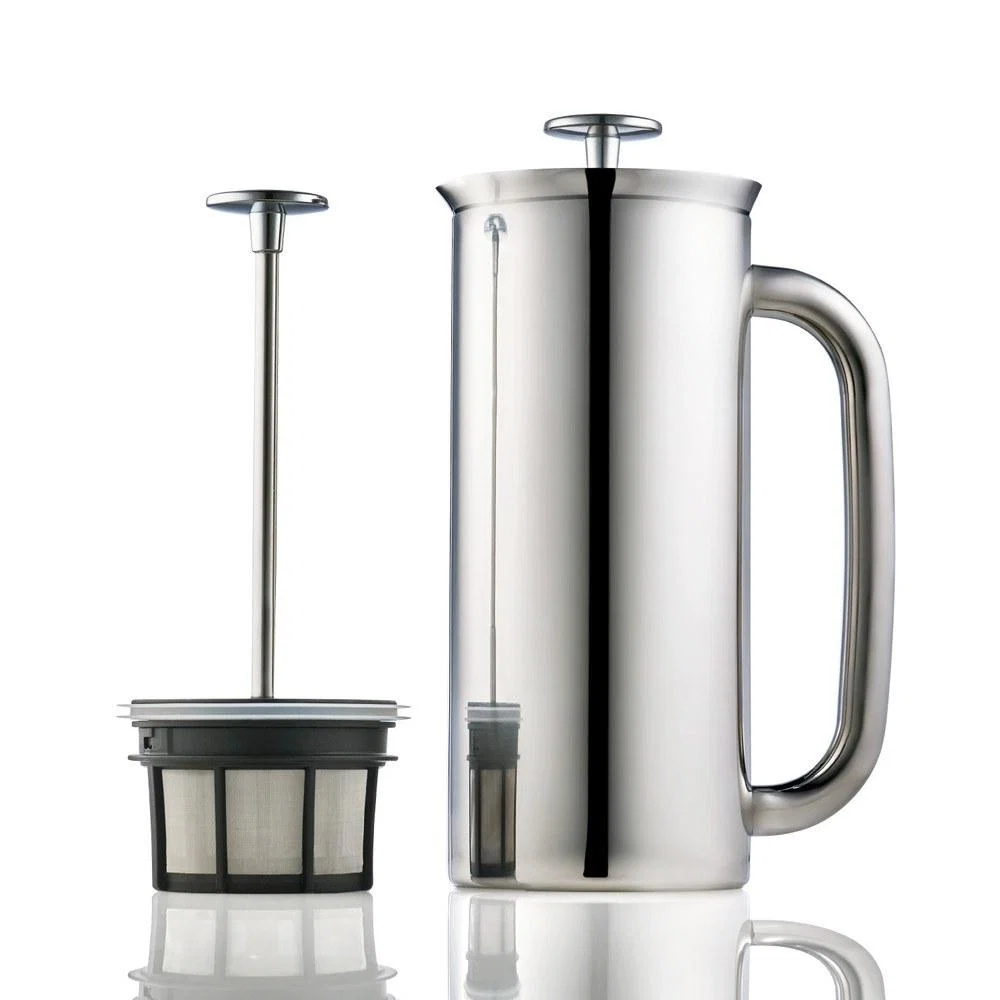
The ESPRO P7 features a unique double walled mesh filter system that delivers very clean coffee, though Tom's Guide found it not completely sediment-free. Its stainless steel construction with polished finish offers both durability and visual appeal. The insulated design helps maintain optimal brewing temperature, while included fill lines assist with precise water measurement. Reviewers noted that proper technique is required for best results. This French press is ideal for coffee enthusiasts seeking a high-quality, low-sediment cup.
Full review
Double filtration system performance
The Espro P7 features a dual-filter design that significantly reduces sediment in brewed coffee. Users report that the outer filter with 100-micron mesh captures medium particles while the inner 70-micron mesh stops microscopic fines that cause bitterness. This system reportedly eliminates 20-30% more fines than standard single-mesh presses, according to First French Press. According to Tom's Guide, the dual filtration creates an AirLock seal that cuts off extraction instantly upon plunging, preventing continued brewing of particles that would otherwise settle into the final cup. First French Press noted that coffee from the P7 settles completely clear within 90 seconds, compared to traditional presses that still show swirling fines after five minutes. The filtration system effectively prevents gritty texture and astringency, with one reviewer stating that the coffee tastes 'smoother' and 'more balanced' even when using the same coarse grind as conventional presses.
Temperature retention and brewing consistency
The double-walled stainless steel construction provides superior thermal stability, maintaining brew temperatures above 145°F for over 60 minutes. This contrasts sharply with glass carafes that lose heat in 25-30 minutes. The insulated design prevents thermal shock risks associated with glass presses and ensures consistent extraction throughout the brewing process. Users noted that the P7 maintains stable temperatures even during extended steeping times, which is critical for preventing uneven flavor development. The consistent heat also allows for more precise brewing timesand Ryan Tate found that the P7 requires about 25% less time to extract equivalent flavors compared to conventional glass presses. This efficiency is attributed to the insulated stainless steel walls keeping water hotter during the brew process, which can lead to more balanced extraction when paired with appropriate grind settings.
Brewing process and user technique
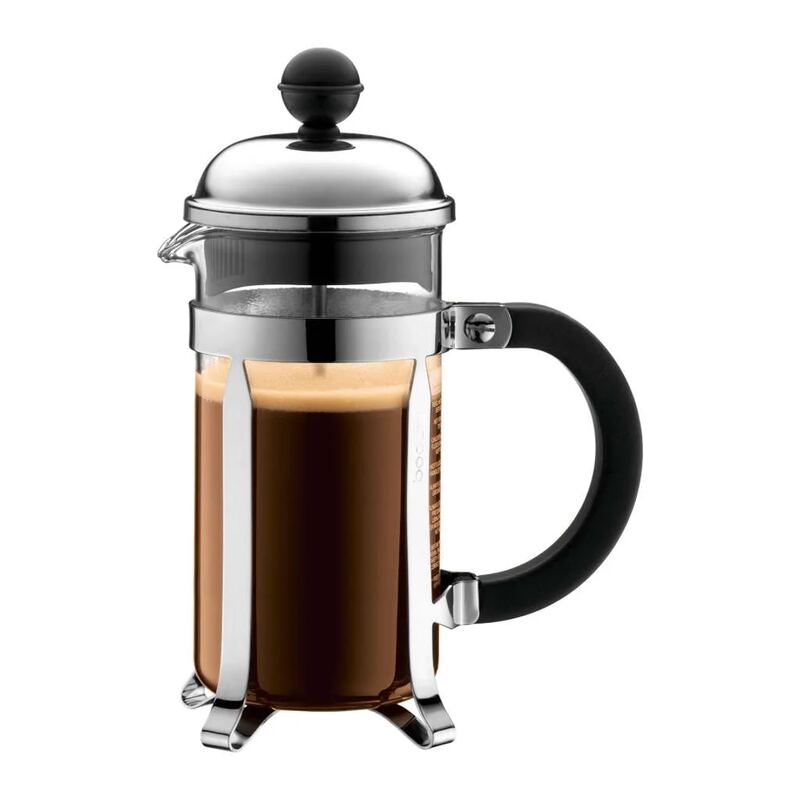
The P7 requires specific brewing technique adjustments compared to traditional French presses. Users must first remove the plunger mechanism from the lid before brewing to accommodate the double filter design, which protrudes 5cm+ when fully extended. This prevents the lid from sealing properly when the press is filled to maximum capacity. The filter system is designed to be assembled with the plunger stem removed, then the lid is placed on without the filter, followed by reattaching the plunger and filter before brewing. Reviewers noted that the press mechanism requires 30% less force than the Bodum Chambord while maintaining consistent pressure. The process involves placing coffee directly in the pot rather than in the filter basket, which is a common mistake among new users. The design also features a one-handed operation with a secure lid that clicks shut with thumb pressure and an angled spout that prevents dribbles during pouring.
Capacity and efficiency considerations
The P7 has a 32 oz capacity with fill lines indicating minimum and maximum water levels. When brewing 1100ml of water with 61g of coffee beans, the system yields approximately 850ml of coffee, which represents about 15% less efficiency than conventional glass presses. However, users report that this slight waste is acceptable for the superior taste quality achieved. The design is particularly efficient for making multiple cups at once, as the superior insulation keeps coffee hot for extended periods. Ryan Tate noted that the P7 is actually inefficient for making single cups, as it retains so much brew under the filter that it becomes impractical for small batches. The system is better suited for making all three cups at once, which can take an hour or two to dispense while maintaining excellent quality. For those who prefer small batches, Espro offers smaller models specifically designed for single-cup brewing.
Durability and practical design features
The stainless steel construction provides physical durability that surpasses traditional glass French presses, surviving drops and mishandling that would shatter glass carafes. Users report that the P7 can withstand backpack drops and office accidents without damage. The design includes dishwasher-safe components (top rack only) without compromising seal integrity, and the dual-filter basket pops apart with a simple twist for cleaning. The press mechanism requires minimal force while maintaining consistent pressure, making it easier to use for those with limited hand strength. The pot features a clear fill line system and an angled spout that prevents spilling during pouring. Reviewers noted that the exterior remains cool to the touch while maintaining internal heat, and the secure lid mechanism allows one-handed operation. The overall build quality is described as high-end and polished, with a brand name clearly visible on the unit.
Grind adjustment and flavor optimization
Users report that the P7's superior filtration system allows for experimentation with finer grinds compared to traditional French presses. The dual-filter design can handle finer particles that would typically pass through standard single-mesh filters, potentially extracting more desirable flavors. However, the higher, more even brew temperature of the insulated P7 also encourages some users to adjust their grind settings, with some finding that they need to go slightly coarser to avoid over-extraction and bitterness. Reviewers noted that the P7's consistent heat profile can extract more flavor from beans, which may require adjustments to grind coarseness for optimal results. One reviewer mentioned switching from a Baratza Encore setting of 15 (drip) to 21 (Chemex) when transitioning from a Bodum press, though the manufacturer's recommended setting for French press is 30-32. The system's performance is particularly effective with coarser grinds, but users report that it can handle finer settings without compromising the clean taste profile.
Strengths
- +Stainless steel construction with polished finish for durability and aesthetic appeal
- +Includes fill lines for precise water measurement and consistent brewing
- +Insulated design prevents heat loss during brewing process
- +Available in 32 oz capacity for larger serving sizes
Watch-outs
- −Requires specific brewing technique to achieve optimal results
How it compares
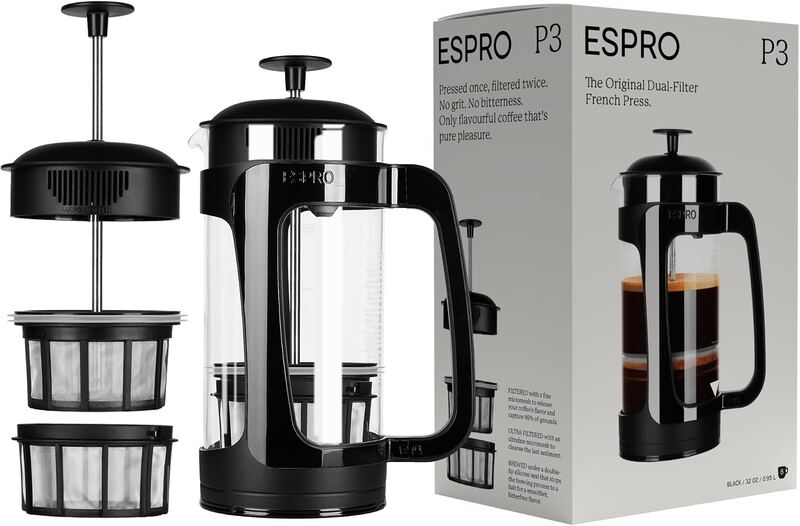
Unlike the Espro P3 which uses glass and a plastic frame, the ESPRO P7 features a full stainless steel construction that's more durable and premium in feel. While both use double-filter systems, the P7's insulated design gives it an edge over the P3's more basic approach. The P7 also offers a larger 32 oz capacity compared to the P3's smaller size, making it better for those who want a bigger batch without sacrificing filtration quality.
Rating sources
Counts as 4.02/5 in our score — this publisher's 156 scores on the site average 4.15, so its scores are adjusted up to compare fairly with other publishers.
“It's a big improvement over conventional french presses -- producing a cleaner cup and keeping coffee hot and insulated”
Not in the average — we derived this score from the review's words, and a publisher printed a score for this product, so the printed number counts instead.
“The espro french press sediment test reveals something profound: typical presses allow 20 to 30% more fines in your cup compared to the P7's dual-filter system.”
Not in the average — we derived this score from the review's words, and a publisher printed a score for this product, so the printed number counts instead.
“I got my coffee or I got my hot water AB boiled um between 190 and 210 is where you want it and then we're going to going to fill it up to this line but once you buy this machine make sure that you do not put too much grinds um otherwise it's not going to um to connect it's not going to latch”
Our 4.0 score is the average of 1 of the scored reviews above, each adjusted for how strictly its publisher scores; 1 more reviewed it without printing a score and is not in the average. 2 derived scores above are not in the average because a publisher printed a score for this product. Ratings marked * were derived from the reviewer’s written analysis or video transcript — the publisher didn’t print an explicit numeric score, so we inferred one from their own words. Click through to verify. More about methodology.