The Bodum Chambord French Press remains a design icon and widely recognized brewing method, particularly praised for its simplicity and bold coffee output. Woman & Home notes that the single-walled glass beaker won't keep coffee warm as long as double-walled models. Home Barista Basics highlights its approachability for beginners, while Blue Bottle Reviews emphasizes its reliability and lack of need for additional filters. The product appeals to those valuing tradition and ease over optimal brewing performance.
Full review
Design legacy and enduring appeal
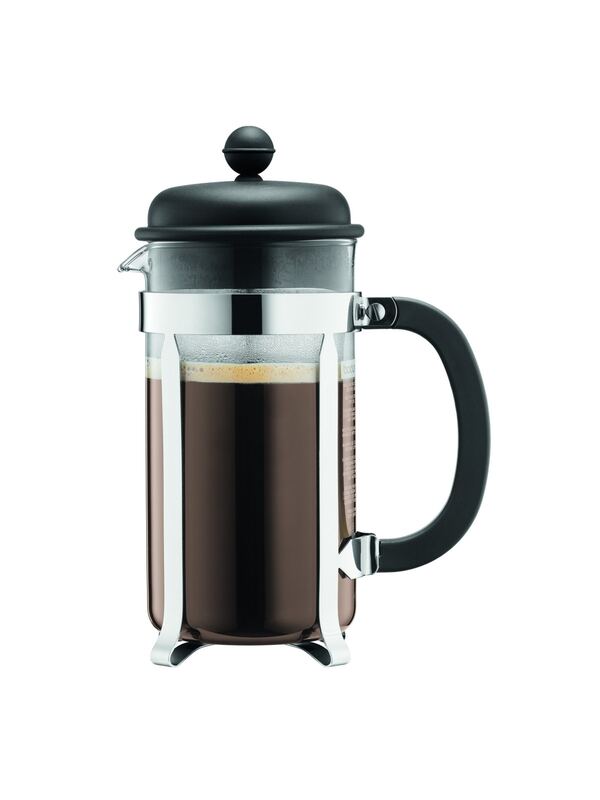
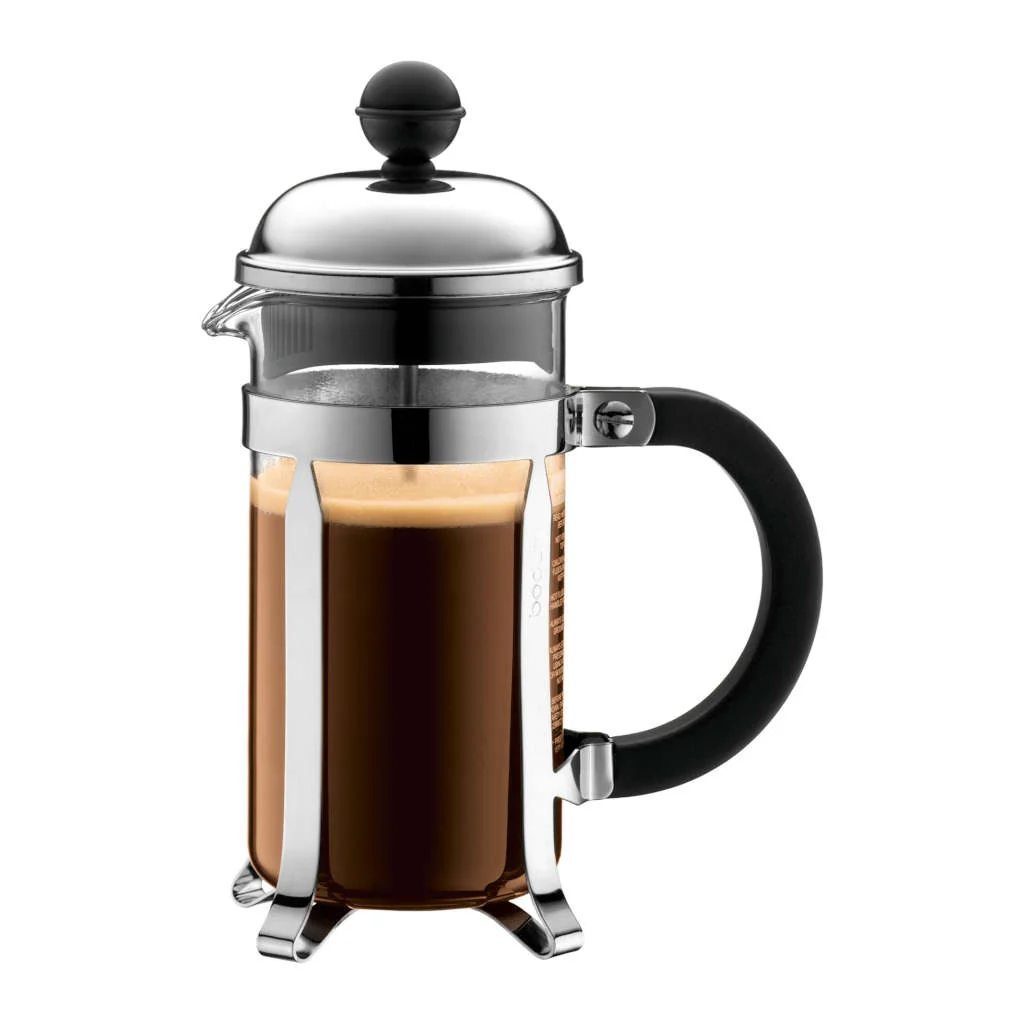
The Bodum Chambord French Press stands as a design icon that has graced kitchen countertops for decades, embodying a classic aesthetic that many associate with the essence of coffee itself. Its distinctive chrome frame, bakelite handle, and fragile glass beaker have become synonymous with the French press brewing method. The design, originally patented in 1958 by Swiss company Melior, has remained largely unchanged for over 70 years, reflecting both its timeless appeal and its resistance to modern innovation. This continuity in form has made it a wedding registry staple and the likely first coffee brewer for many consumers. The visual impact of the Chambord is undeniable, catching morning light and offering a nostalgic charm that transcends its functional limitations.
Glass construction and thermal performance
The Chambord's borosilicate glass beaker is heat-resistant but single-walled, so it does not insulate. Woman & Home found that a single cup "cooled really quite quickly", and Home Barista Basics rates its heat retention as average for a glass model, keeping coffee warm for around 20–30 minutes. The glass construction, though thicker than typical cheap alternatives, remains vulnerable to cracking when exposed to sudden temperature changes, such as pouring boiling water into a cold beaker. The thin glass wall, while allowing users to observe the brewing process, also makes it prone to shattering if dropped or mishandled, a concern that has led some to seek alternatives with double-walled insulation for better heat retention.
Build quality and user experience
Despite its glass vulnerability, the Chambord's build quality is solid, with a well-constructed stainless steel frame that feels substantial without being overly heavy. Home Barista Basics found the handle comfortable and well-positioned, allowing for easy pouring without burning hands. The three-part stainless steel plunger filter fits snugly and operates smoothly without wobbling or leaking, per Home Barista Basics. The plunger's design ensures a consistent seal, which is crucial for proper extraction. The beaker's thickness provides a sense of durability compared to cheaper models, though it still requires careful handling. The overall user experience is straightforward and beginner-friendly, with no complex settings or assembly required. The simplicity of the process—warm beaker, add grounds, pour water, wait, plunge, pour—makes it ideal for those new to French press brewing.
Brewing performance and sediment control
The Chambord delivers full-bodied, rich coffee when used correctly, with a coarse grind and four-minute steep time producing excellent results. The three-part stainless steel filter effectively captures most coffee grounds, though some fine sediment inevitably remains at the bottom of the cup, which is characteristic of the French press method. This sediment is not a defect of the Chambord but a feature of the brewing technique itself. The filter's fine mesh provides near-pour-over clarity, though, per Woman and Home, not as thorough as more expensive models with double micro-filters. For those sensitive to sediment, the Chambord's performance is acceptable, but it may not satisfy users seeking a cleaner cup. The coffee's body and flavor profile are generally well-balanced, with the method's inherent richness being a strength for those who prefer bold, full-flavored coffee.
Durability and maintenance considerations
While the Chambord's glass beaker is prone to breaking, the stainless steel frame and plunger are designed to last. Replacement parts are readily available and inexpensive, making the overall system repairable rather than disposable. The plastic components, though functional, can trap oils and require careful cleaning. The beaker rinses quickly under running water, and the plunger disassembles easily for thorough cleaning. Most components are dishwasher safe, though handwashing is recommended for the glass beaker to prevent potential damage. The ease of cleaning and maintenance is one of the Chambord's strengths, particularly for daily use. However, the need to avoid leaving old grounds in the press for extended periods is essential to prevent rancidity and off-flavors, a common concern among users.
Size options and practical applications
The Chambord is available in four sizes—3-cup, 4-cup, 8-cup, and 12-cup—catering to different household needs. The 8-cup size (34oz) is most popular among beginners, providing enough coffee for two generous mugs while remaining manageable for single-person daily brewing. The 3-cup version suits minimal counter space or single servings, while the 12-cup model is better for larger households or entertaining. The sizing guide suggests that the 8-cup version is ideal for one or two people brewing daily, while the 12-cup is better for groups. The compact design makes it easy to store, fitting well in most kitchen drawers or cabinets. The practicality of the design is enhanced by its ability to be stored without taking up too much space, making it suitable for small kitchens or those with limited storage.
Market positioning and value proposition
Positioned as a mid-tier French press, the Chambord offers a balance of affordability and quality that appeals to casual coffee drinkers and beginners. It is one of the easiest recommendations for newcomers to French press brewing, requiring no learning curve or complicated setup. The price point is reasonable, making it accessible to a broad audience. However, its value proposition is challenged by modern alternatives that offer better heat retention, durability, and sediment control. The Chambord's main strengths lie in its aesthetic appeal and simplicity, which make it a solid choice for those who prioritize appearance and ease of use over advanced brewing features. For users who value the classic look and are willing to accept its limitations, the Chambord remains a viable option, though it may not be the best choice for those seeking maximum performance or longevity.
Strengths
- +Iconic design with enduring aesthetic appeal
- +Simple and approachable brewing method suitable for beginners
- +Durable construction with long-standing brand reputation
- +Creates bold, full-bodied coffee profile
Watch-outs
- −Plastic frame may trap oils and is harder to clean thoroughly
How it compares
The Bodum Chambord is more affordable and traditional compared to the Fellow Clara, which offers a modern design and better pour mechanism. While the Chambord is simple and approachable for beginners, the Clara provides a more refined user experience, making it better for those who value aesthetics and ease of use over basic functionality.
Rating sources
Counts as 4.40/5 in our score — this publisher's 7 scores on the site average 4.34, so its scores are adjusted down to compare fairly with other publishers.
“The Chambord is a classic cafetièrie for a reason: it's inexpensive, makes delicious coffee, and it looks chic too.”
“Bodum Chambord A reliable, well-built French press that makes genuinely good coffee. Still one of the easiest beginner recommendations at this price.”
Not in the average — we derived this score from the review's words, and a publisher printed a score for this product, so the printed number counts instead.
“The Bodum Brazil French Press is the most budget-friendly option in the Bodum lineup, making it an excellent choice for beginners. It features a BPA-free plastic frame and a borosilicate glass carafe, which preserves the flavor of your coffee without adding any chemicals or unwanted tastes.”
Counts as 4.41/5 in our score — this publisher's 25 scores on the site average 4.28, so its scores are adjusted down to compare fairly with other publishers.
Our 4.4 score is the average of 2 of the scored reviews above, each adjusted for how strictly its publisher scores; 4 more reviewed it without printing a score and are not in the average. 1 derived score above is not in the average because a publisher printed a score for this product. Ratings marked * were derived from the reviewer’s written analysis or video transcript — the publisher didn’t print an explicit numeric score, so we inferred one from their own words. Click through to verify. More about methodology.