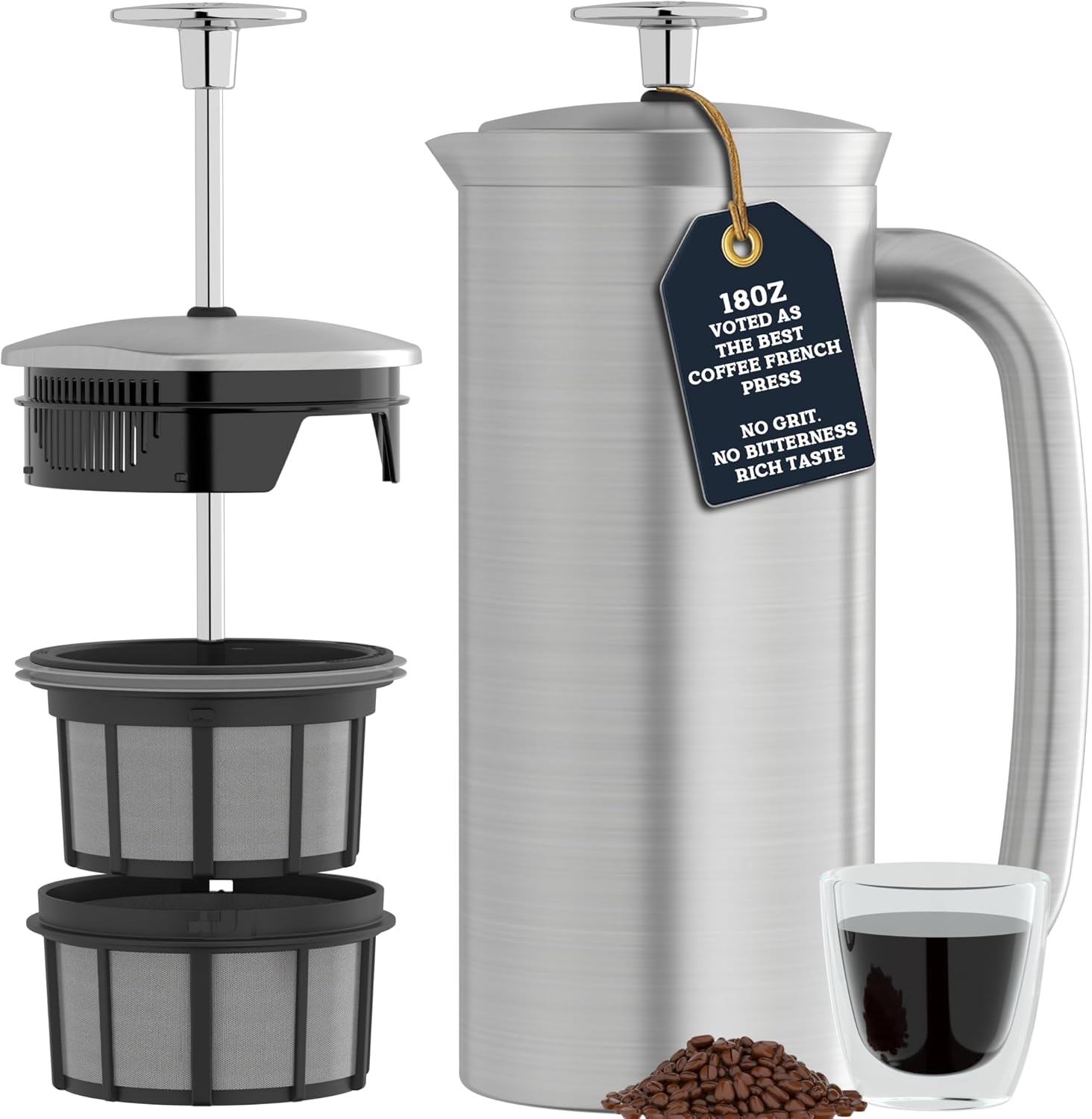
The Espro P7 is the press that converts French press skeptics. Its dual micro-filter genuinely removes the silt that makes a Bodum cup gritty by the last sip, the double-walled stainless body keeps coffee drinkable for over an hour, and America's Test Kitchen called the result simply 'superclean.' At $150 it is the most expensive press in this lineup, but it is also the only one that pulls clarity close to a paper-filtered brew without giving up French press body.
Full review
Real-World Performance
The P7 is the press most cited when professional reviewers want to prove that French press can produce a clean cup. Honest Coffee Reviews measured the brewed coffee still sitting at 160 degrees F a full hour after plunging, and at 136 degrees F at the two-hour mark, which is closer to a vacuum mug than a coffee carafe. America's Test Kitchen named it their pick for 'cleaner cup' and described the result as 'superclean and smooth,' a phrase you do not often see attached to a French press because the brewing method is defined by oils and fines making it through a single mesh.
Tom's Guide opened their review by admitting 'And to think I used to be a French press hater,' and credited the dual micro-filter for the conversion. In practice, the P7 produces something between a Chemex and a Bodum: more body and oil retention than a paper-filtered pour-over, but without the silty last centimeter of cup that drives a lot of drinkers away from the method entirely. The temperature curve also means you can pour a second cup twenty minutes later without the over-extracted bitterness that ruins coffee left in a glass press.
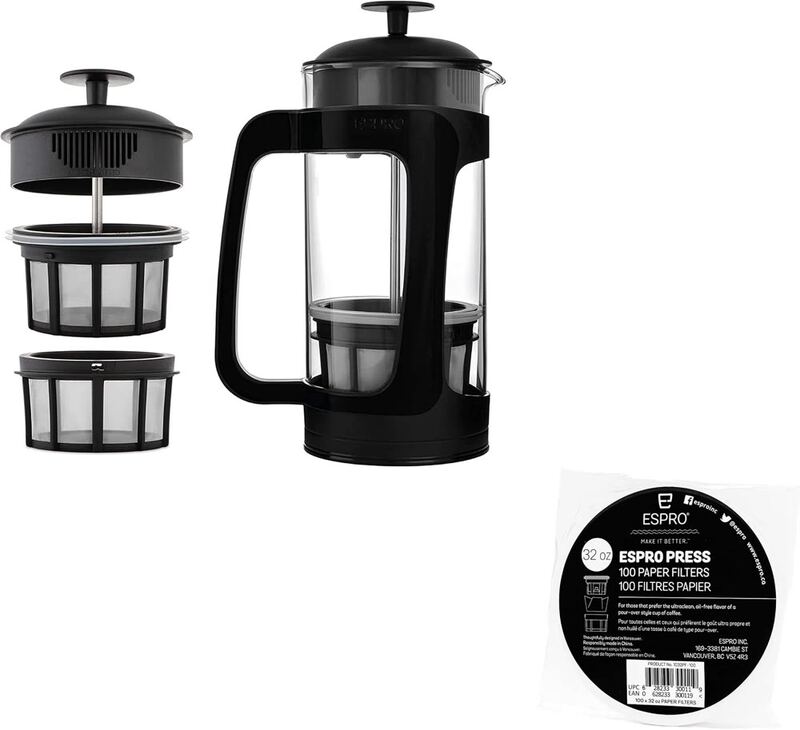
The AirLock system is what makes the no-bitter-second-cup behavior actually work. Most French press cups go bitter not because the coffee was bad but because the grinds keep extracting in the carafe after the initial plunge. Espro's silicone seal physically isolates the brewed coffee from the spent grinds once you press, so a P7 carafe sitting on the counter at the 20-minute mark still tastes like coffee, not like over-steeped tannin. The combined effect of dual filtration, double-wall stainless, and the AirLock is a press that genuinely changes the French press experience rather than incrementally improving it.
Build Quality and Design
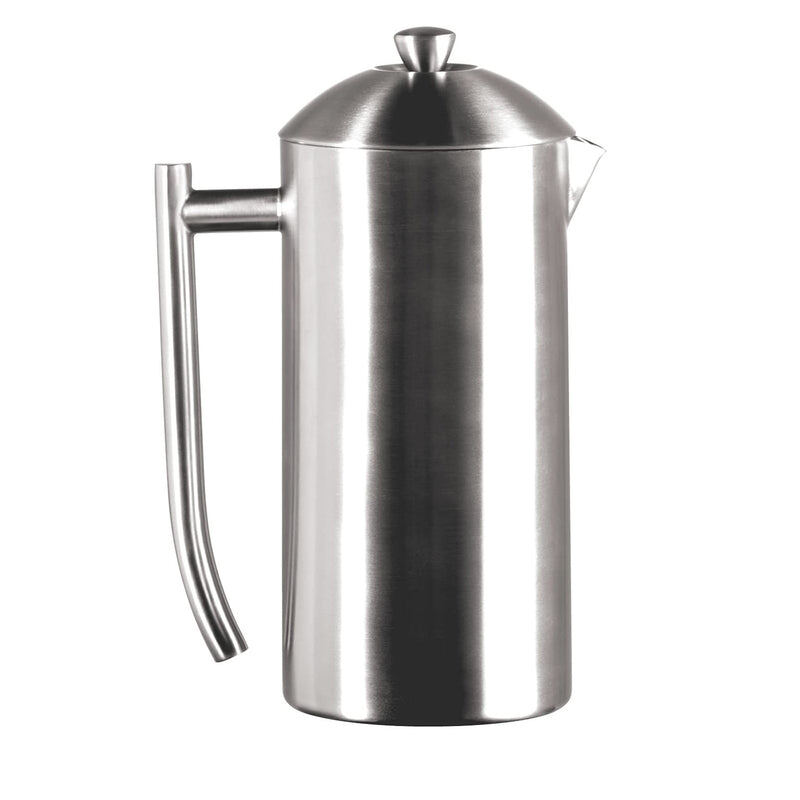
The body is 304 stainless steel with a polypropylene lid and handle, and Espro sells it in brushed, polished, matte black, matte white, and Aegean blue finishes. The dual-wall construction is what does the insulation work, and at 2.6 pounds for the 32 oz size the press feels substantial in hand without being heavy enough to fatigue a single-handed pour. The plunger rod is solid stainless, and the filter basket has two stacked micro-filters separated by a silicone AirLock gasket that seals against the wall once you press down. Espro states the parts are BPA, BPS, and phthalate free.
The trade-off for the durable opaque body is that you lose the ability to watch the bloom and judge the slurry. For some brewers this is a feature — there is no temptation to plunge too early — but for anyone who likes the ritual of watching a Bodum bloom, the P7 will feel a little like brewing in the dark.
What Reviewers Loved
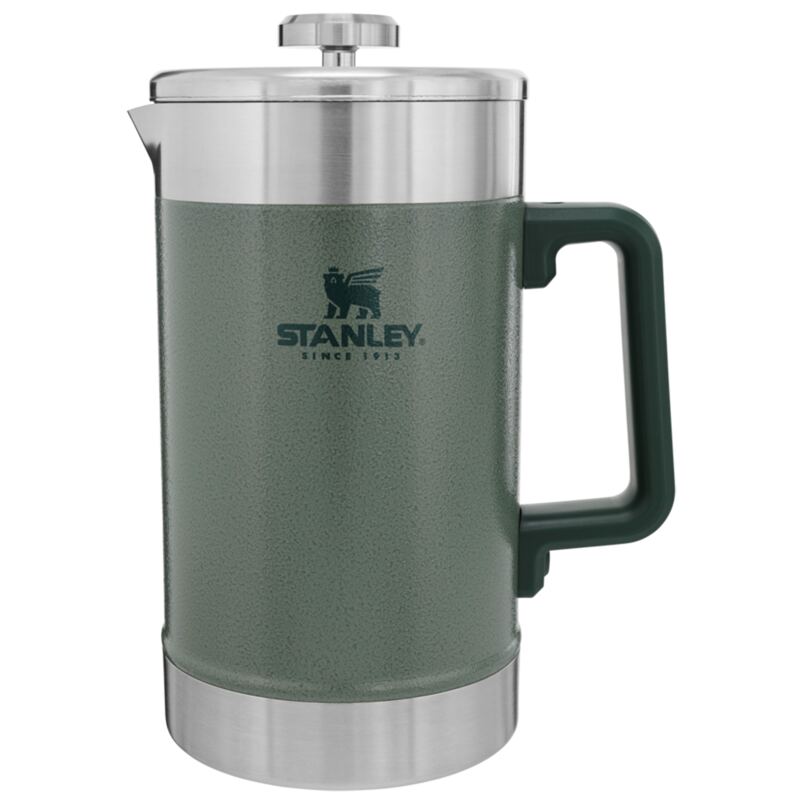
The recurring praise across America's Test Kitchen, Tom's Guide, and Honest Coffee Reviews is the same: the dual filter actually works, and it works dramatically. Honest Coffee Reviews framed it as the press that achieves 'near-pourover clarity without sacrificing body,' a claim that sounds like marketing copy until you try the cup against a Chambord side by side. Reviewers also consistently call out the heat retention as best in class for a non-vacuum press; the closest competitor is the Stanley Classic Stay Hot, which uses true vacuum insulation but does not match the P7 on cup clarity.
Where It Falls Short
The most common complaint is price. At $149.95 for the 32 oz, this is roughly four times what a glass Chambord costs and nearly the same as the Frieling 36 oz. Tom's Guide noted the cost is the main reason to think twice. The two-filter basket is also more components to wash than a single-screen press, and reviewers report that the silicone AirLock gasket needs an occasional deep clean to keep the seal tight.
Some users also find the 24 oz minimum brew awkward — the filter basket needs that volume to seal correctly, so brewing a single 8 oz cup is not really what this press is for. If your morning routine is one mug, the 18 oz P7 (about $120) is the right SKU; if you brew for two or for refills, the 32 oz reviewed here is the better buy.
Who It's Best For
The P7 is for the French press drinker who has tried the method, loves the body and the ritual, and is permanently put off by the sediment in the last few ounces of every Bodum cup. It is also the right press for anyone who refills a second mug an hour later, because the heat retention removes the usual French press tradeoff of 'great first cup, cold second cup.' Travel-oriented buyers benefit from the stainless body — it survives drops that would kill a glass press — though for true thermos-grade heat retention over four hours the Stanley Classic Stay Hot is the better pick.
How It Compares to Alternatives
Inside the Espro line, the P3 (also reviewed here at #3) uses the same dual-filter geometry in a glass carafe at a third of the price. The P3 cup tastes nearly identical to the P7 cup on a fresh brew; the difference is the P7 keeps that cup drinkable for an extra hour. Against the Frieling 36 oz Insulated, the P7 wins on filter clarity and loses slightly on heat retention (the Frieling held 200 degree F water above 120 degrees F for nearly four hours in Home Grounds' testing).
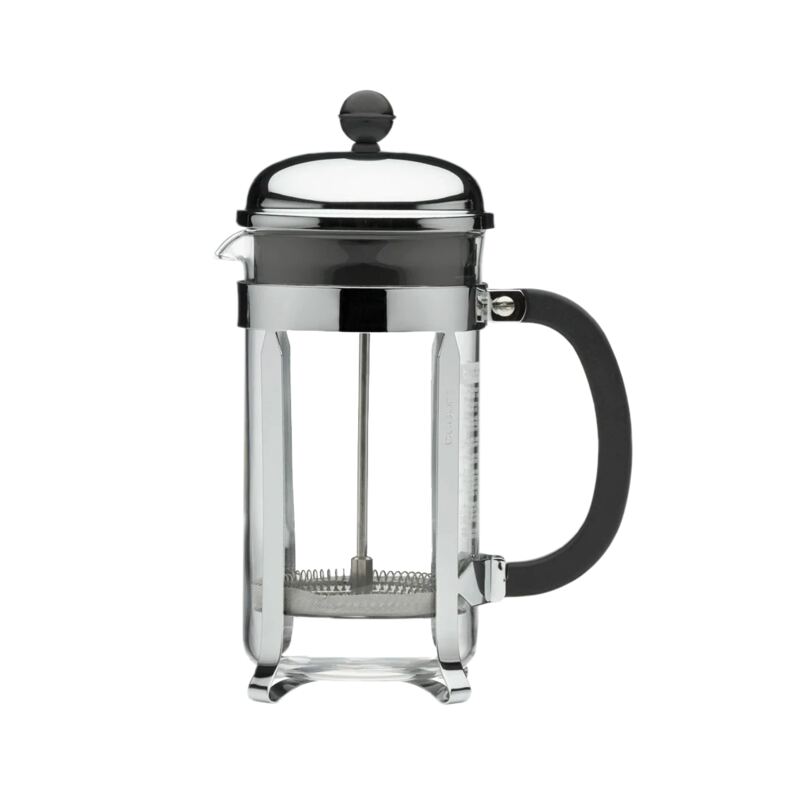
Against the Bodum Chambord 8-Cup, the comparison is not really fair: the Chambord is a $40 classic that brews great coffee but gives you a noticeably grittier cup and goes cold in 30 minutes. The Chambord wins on price and aesthetics; the P7 wins on every measurable performance category.
Value at This Price
At $149.95, the P7 is the most expensive press on this list and roughly the same price as a high-end pour-over kit. The case for it is durability — a stainless press will outlive five Bodum carafes — plus the genuinely better cup clarity for buyers sensitive to French press sediment. If those two things do not matter to you, the Espro P3 at $40 gives you 85 percent of the cup quality without the heat retention or drop resistance. If you brew daily and want one press that will still be in your kitchen in a decade, the P7 amortizes; if you just want better-than-Chambord coffee, the P3 is the smarter buy.
Long-Term Durability
The all-stainless body is the longevity story. Glass French press carafes inevitably die in 2-4 years from countertop knocks or thermal shock; the P7 cannot break that way. The wear items are the silicone AirLock gasket (replaceable, sold direct by Espro for around $8) and the dual filter screens (also replaceable, sold for around $12 a set). Espro maintains a parts catalog on their site that goes back to the original P7 generations, so a press bought today should be fully serviceable a decade from now.
The polypropylene lid and handle components are the one non-stainless wear path. Heavy daily use can over time loosen the handle attachment, and the lid's pour-control mechanism can stiffen with mineral buildup if you brew with hard water. Both issues are addressed by Espro's replacement parts program; neither will end the press's service life. Buyers in soft-water regions report no detectable degradation across years of daily use.
Strengths
- +Patented dual micro-filter eliminates almost all sediment for a near-pourover clarity
- +Double-walled 304 stainless steel held brewed coffee above 160 degrees F for an hour in independent testing
- +AirLock seal stops extraction the moment you plunge, preventing the over-steeped bitterness common to French press
- +Drop-resistant stainless construction survives the kind of countertop tumbles that destroy glass carafes
- +All components disassemble for dishwasher cleaning, and Espro sells direct replacement filters
Watch-outs
- −At $149.95 it is roughly four times the price of a classic glass Bodum
- −Two-stage filter basket has more parts to scrub than a single-screen press
- −Opaque stainless body means you cannot watch the bloom or judge the plunge depth visually
- −Filter requires the full 24 oz minimum brew to seat correctly, awkward for single-cup mornings
How it compares
Cleanest cup in this lineup; the Bodum Chambord 8-Cup leaves visibly more sediment, and the Espro P3 Glass uses the same filter idea in a lower-cost glass body. The Frieling 36 oz Insulated matches it on heat retention but lets through more silt.
Who this is for
At a glance: French press drinkers who hate grit and want a press that brews a clean, near-pourover cup with full body.
Why you’d buy the Espro P7 Double-Walled Stainless Steel French Press (32 oz)
- Patented dual micro-filter eliminates almost all sediment for a near-pourover clarity.
- Double-walled 304 stainless steel held brewed coffee above 160 degrees F for an hour in independent testing.
- AirLock seal stops extraction the moment you plunge, preventing the over-steeped bitterness common to French press.
Why you’d skip it
- At $149.95 it is roughly four times the price of a classic glass Bodum.
- Two-stage filter basket has more parts to scrub than a single-screen press.
- Opaque stainless body means you cannot watch the bloom or judge the plunge depth visually.
Rating sources
“Best for 'Cleaner' Cup; superclean and smooth”
“And to think I used to be a French press hater”
“Double-walled perfection; near-pourover clarity without sacrificing body”
Our 4.7 score is the average of these published ratings. Ratings marked * were derived from the reviewer’s written analysis or video transcript — the publisher didn’t print an explicit numeric score, so we inferred one from their own words. Click through to verify. More about methodology.