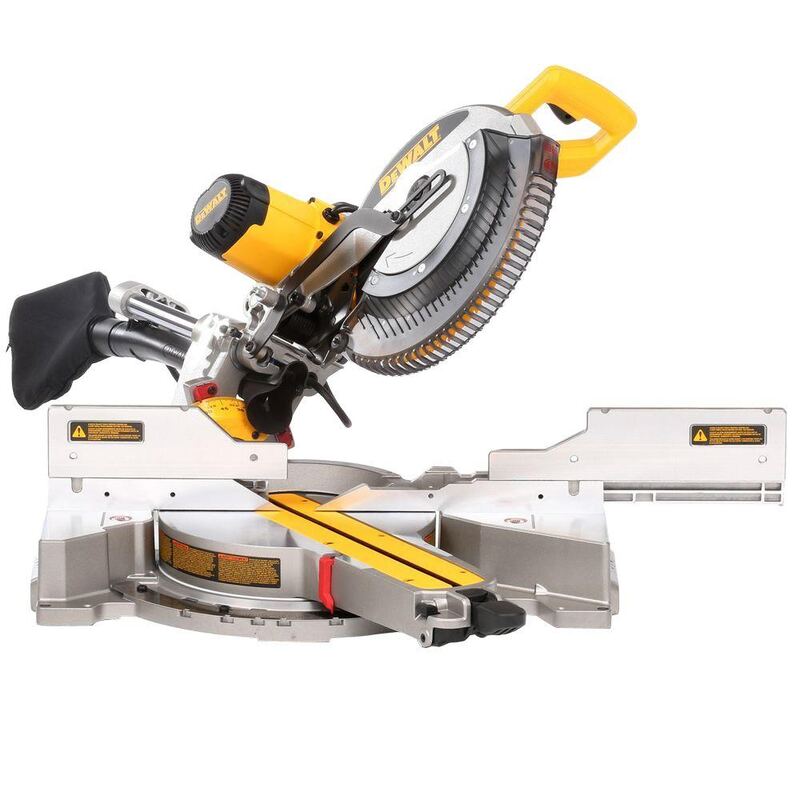
TechGearLab found the DeWalt DWS715 achieved a perfect 10.0 score for Precision and Accuracy, attributing this stability to its non-sliding design which eliminates rail wobble during dense material cuts. Handymansworld highlighted the powerful 15-amp motor that delivers up to 4,000 RPM no-load speed, enabling fast slicing through hardwoods without bogging down under load. However, the tool's fixed blade path limits cross-cut capacity to an 8.1-inch maximum at 90 degrees, preventing single-pass cuts on wider boards like 2x10s or 4x4 posts. Weighing only 36 lbs with a built-in carry handle, it offers high portability for contractors but may require external vacuum support due to modest onboard dust collection.
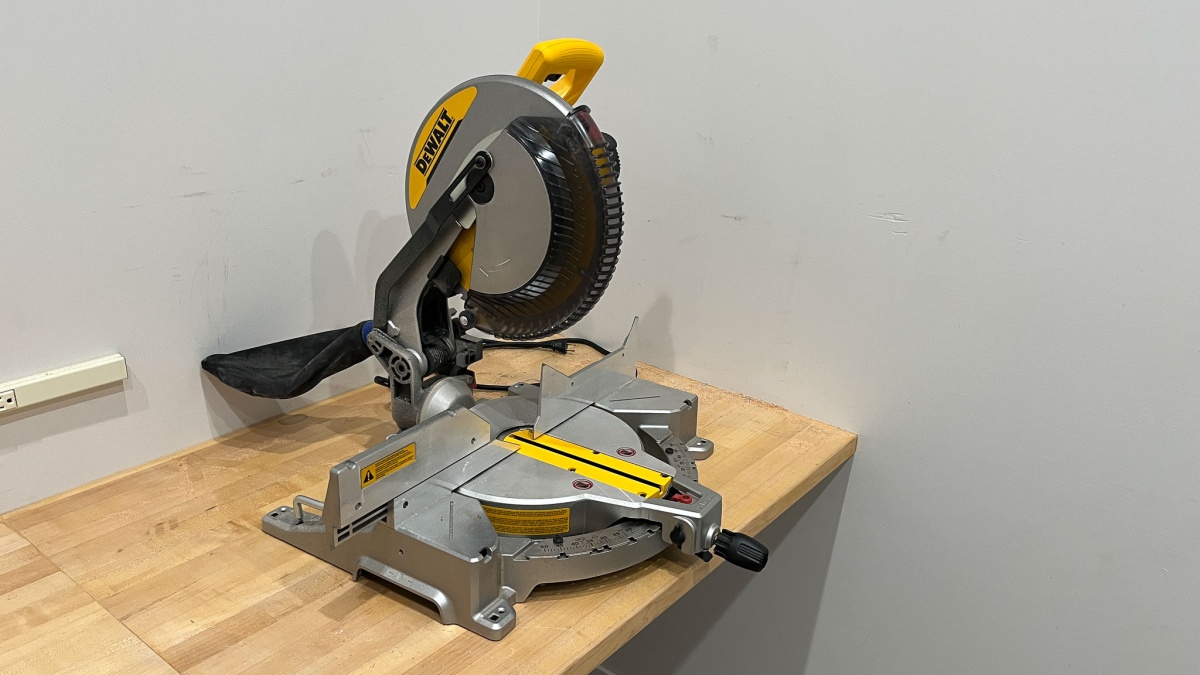
Full review
Precision and Accuracy in Cutting
TechGearLab awarded the DeWalt DWS715 a perfect 10.0 score for Precision and Accuracy, ranking it as its top performer in that specific category among all miter saws evaluated. The non-sliding design contributes to this stability by eliminating the potential wobble associated with sliding rails, allowing the blade to track consistently through dense materials. This high level of accuracy is supported by an adjustable stainless steel miter detent plate that provides 14 positive stops for common cutting angles, ensuring repeatable results without constant manual measurement.
While this asymmetry requires the user to reposition wider workpieces for cuts on the opposite side, it does not detract from the precision of the cuts themselves when properly aligned. The cam-lock miter handle secures these settings firmly in place, preventing any slippage during the cutting process and maintaining the exact angle selected by the operator.
Powerful 15-Amp Motor Performance
Handymansworld highlights that the DeWalt DWS715 features a robust 15-amp motor capable of reaching an impressive 4,000 RPM no-load speed. This combination is notable because larger 12-inch blades typically operate at lower speeds around 3,800 RPM to manage torque and heat, whereas smaller 10-inch blades often spin faster but lack the cutting power for thick lumber. The DWS715 successfully merges the large blade diameter with high rotational speed, enabling it to slice through hardwoods and dimensional lumber with minimal resistance.
Mywoodgear notes that while the motor handles standard tasks effortlessly, users may experience a slight increase in resistance when pushing the blade through exceptionally thick workpieces. Despite this added physical demand on the operator's arm during heavy cuts, the saw maintains its cutting speed without bogging down or stalling. This consistent performance under load makes it a reliable choice for professional carpenters who need to maintain productivity across long days of framing and trim work.
Non-Sliding Design Limits Cut Capacity
TechGearLab measured the maximum cut capacity at 90 degrees as just 8.1 inches, a direct consequence of the DWS715's non-sliding architecture. This limitation means the saw can cleanly cross-cut standard 2x8 dimensional lumber but cannot handle wider boards like 2x10s or 4x4 posts without multiple passes or alternative strategies. For users who frequently work with wide decking materials or large structural beams, this restricted capacity is a significant operational constraint that requires careful planning of the cut sequence.
The fixed blade path also dictates the vertical cutting dimensions for moldings and trim. While these dimensions cover most standard residential trim profiles, the lack of a sliding mechanism prevents the saw from accommodating wider stock in a single pass, distinguishing it fundamentally from sliding compound miter saws that offer greater flexibility for oversized materials.
Lightweight Portability and Build
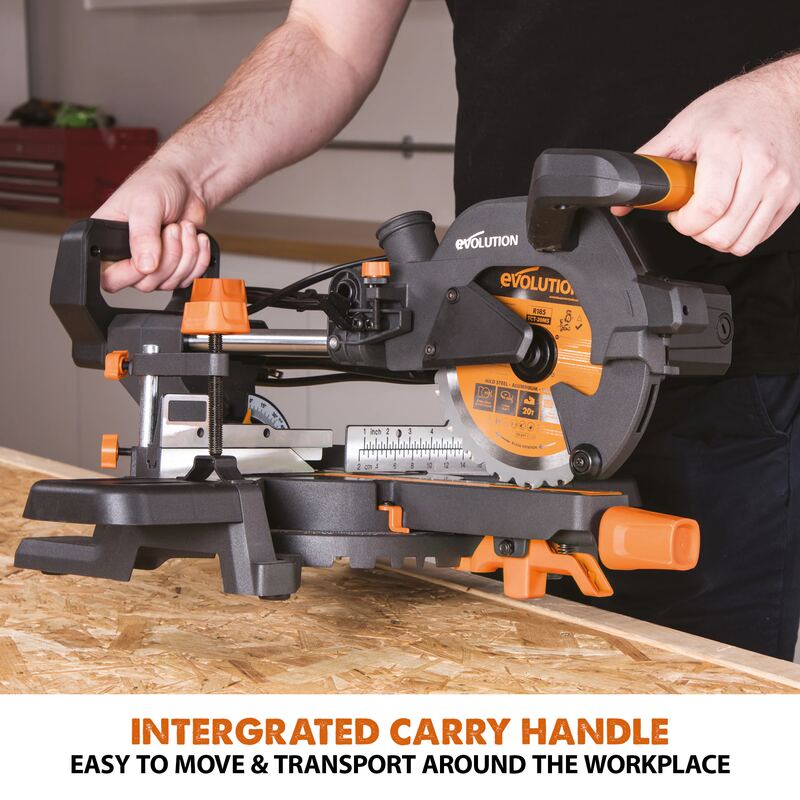
Weighing only 36 pounds, the DeWalt DWS715 is significantly lighter than typical 12-inch miter saws that often exceed 60 pounds. Handymansworld emphasizes this weight advantage as a major selling point for contractors and DIY enthusiasts who need to transport their tools frequently between job sites or around large workspaces. The inclusion of side handles at the base and a built-in carry handle further enhances its portability, allowing users to maneuver the saw with ease without sacrificing the stability needed for accurate cuts when set up on a stand.
The reduced weight is achieved through thoughtful material selection and design rather than compromising structural integrity. The miter detent plate is constructed from stainless steel to withstand wear and tear, while the fence support is machined for both precision and durability. This balance of lightness and toughness ensures that the saw can endure the rigors of daily use on construction sites without becoming unwieldy or fragile during transport.
Dust Collection System Effectiveness
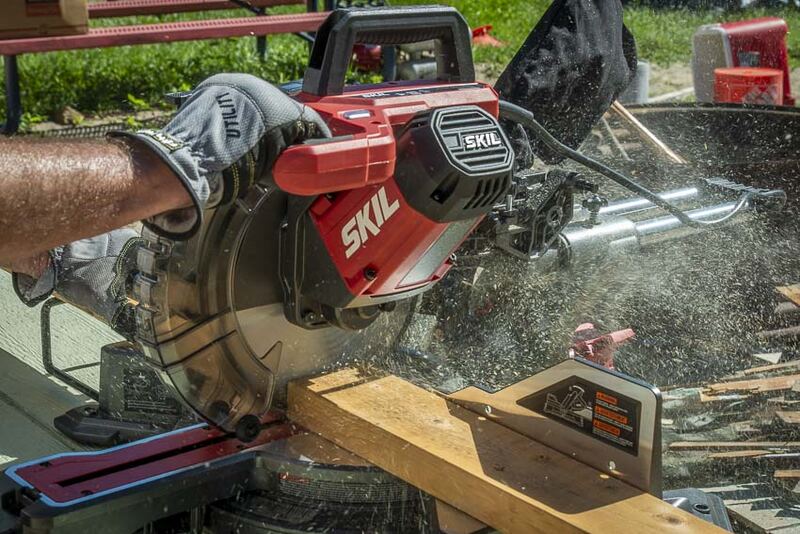
TechGearLab measured the dust collection performance after 100 cuts, recording an output of just 1.17 ounces into the included bag. This low yield indicates that while the saw features a dust port and collection bag, it is not highly effective at capturing the majority of sawdust generated during operation. Most debris will likely scatter around the work area unless users supplement the built-in system with external shop vacuums or dust shrouds designed to interface more efficiently with the saw's exhaust ports.
The limited capacity of the onboard dust bag also means it will fill up quickly, requiring frequent emptying during extended cutting sessions. For woodworkers who prioritize a clean workspace and respiratory protection, relying solely on the stock dust collection system may be insufficient. This shortcoming is common among non-sliding miter saws in this class but remains an important consideration for users who value cleanliness and minimal cleanup time after completing projects.
Safety Features and Blade Control
Mywoodgear points out that the automatic electric brake takes up to five seconds to bring the spinning blade to a complete stop after the trigger is released. While this feature prevents accidental contact with the rotating blade, the relatively long deceleration time means users must wait longer before clearing away cut pieces or adjusting their workpiece position compared to saws with faster braking mechanisms. This delay can impact workflow efficiency in fast-paced environments where quick cycle times are essential.
The saw also lacks a thumb-activated safety switch on the trigger, relying instead on an interlocking trigger mechanism that requires deliberate pressure to activate. Some users may find this acceptable for experienced operators who prioritize speed and simplicity, but it represents a potential vulnerability for novices or those working in chaotic environments where accidental bumps could occur. The blade guard functions effectively during operation, but the absence of additional safety layers like a thumb switch is a notable omission for some buyers.
Strengths
- +Rated #4 of 12 miter saws by TechGearLab with a perfect 10.0 score for Precision and Accuracy.
- +Features a powerful 15-amp motor that delivers up to 4,000 RPM no-load speed for fast cutting.
- +Includes an adjustable stainless steel miter detent plate with 14 positive stops for flexible angle selection.
- +Weighs only 36 lbs and includes a built-in carry handle, making it highly portable compared to heavier competitors.
Watch-outs
- −Non-sliding design limits cross-cut capacity to an 8.1-inch maximum at 90 degrees.
How it compares
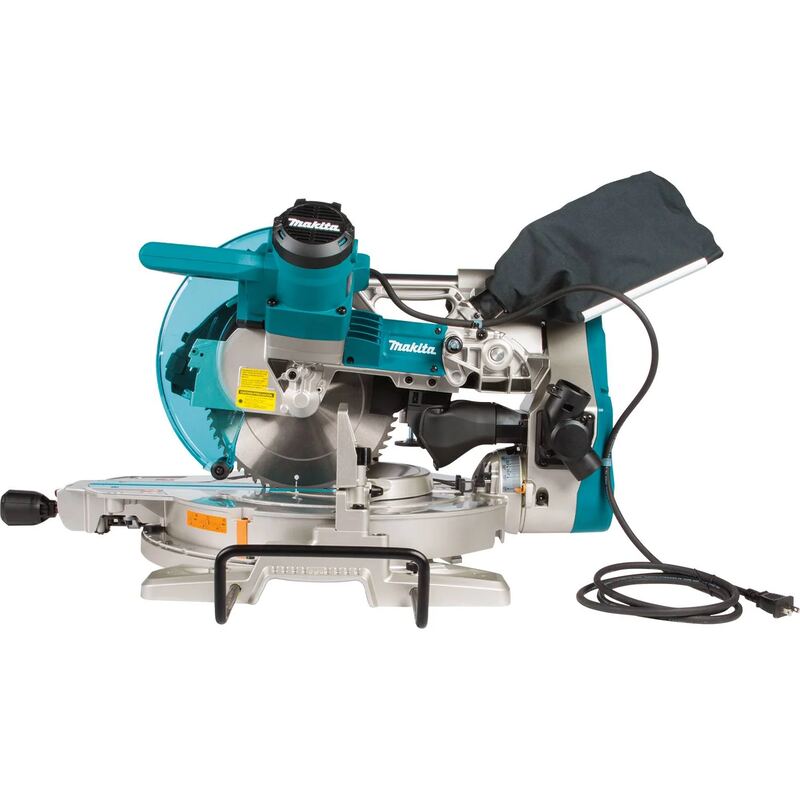
The DeWalt DWS715 achieves perfect precision scores due to its non-sliding design, which eliminates rail wobble compared to sliding models like the Makita LS1019L and DEWALT DCS361B. It offers a faster 4,000 RPM motor than the slower Makita LS1019L but sacrifices cross-cut capacity, limiting it to an 8.1-inch maximum unlike the wider cutting abilities of the DeWalt DWS780.
Rating sources
Counts as 4.39/5 in our score — this publisher's 138 scores on the site average 3.66, so its scores are adjusted up to compare fairly with other publishers.
Our 4.4 score is the average of the 1 scored review above, each adjusted for how strictly its publisher scores; 4 more reviewed it without printing a score and are not in the average. More about methodology.