The 200-800mm is Canon's wildlife and aviation reach specialist. 800mm of native reach handles birds in flight and distant subjects that the RF 100-500mm L can't quite touch — and at $1,900 it's $1,000 cheaper. The catch is the slow f/6.3-9 aperture, which means you'll either shoot in good light or push ISO meaningfully. For dedicated birders and aviation shooters who don't need an L-series build, this is the better-value reach tool.
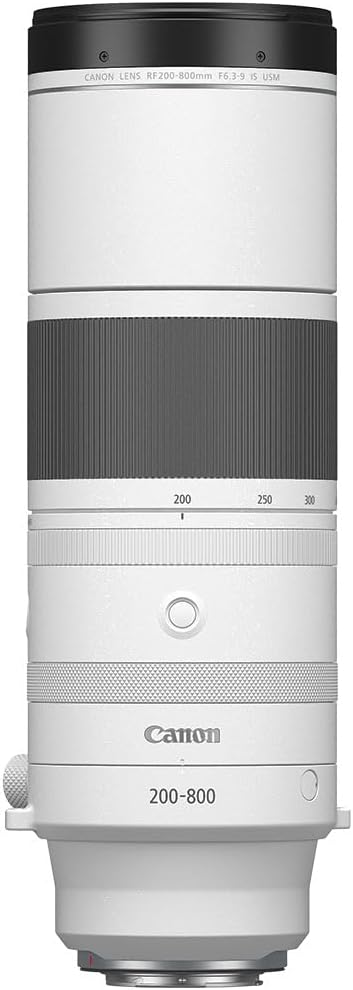
Strengths
- +200-800mm range — longest native zoom reach in Canon RF lineup
- +Combined with Extender RF 2x reaches an effective 1600mm
- +Lightweight enough to handhold (4.5 lb) — easier than expected for this reach
- +Image stabilization up to 5.5 stops with IBIS-equipped EOS R bodies
- +Built-in lens hood and tripod foot included
Watch-outs
- −Variable aperture f/6.3-9 is slow — needs strong light or high ISO
- −200mm short end means you'll swap to a wider lens for environmental shots
- −AF speed drops at the 800mm end vs the RF 100-500mm
- −Not as sharp as the RF 100-500mm L wide open across the range
How it compares
Longest native zoom reach in Canon's RF lineup. Cheaper than the RF 100-500mm L but slower aperture and not L-series build. Replaces the need for the fixed RF 600mm/800mm f/11 lenses for users who want zoom flexibility.
Who this is for
At a glance: birders, aviation, and distant wildlife shooters who need 800mm reach and don't need an L-series build.
Why you’d buy the Canon RF 200-800mm F6.3-9 IS USM
- 200-800mm range — longest native zoom reach in Canon RF lineup.
- Combined with Extender RF 2x reaches an effective 1600mm.
- Lightweight enough to handhold (4.5 lb) — easier than expected for this reach.
Why you’d skip it
- Variable aperture f/6.3-9 is slow — needs strong light or high ISO.
- 200mm short end means you'll swap to a wider lens for environmental shots.
- AF speed drops at the 800mm end vs the RF 100-500mm.
Rating sources
Our 4.7 score is the average of these published ratings. More about methodology.