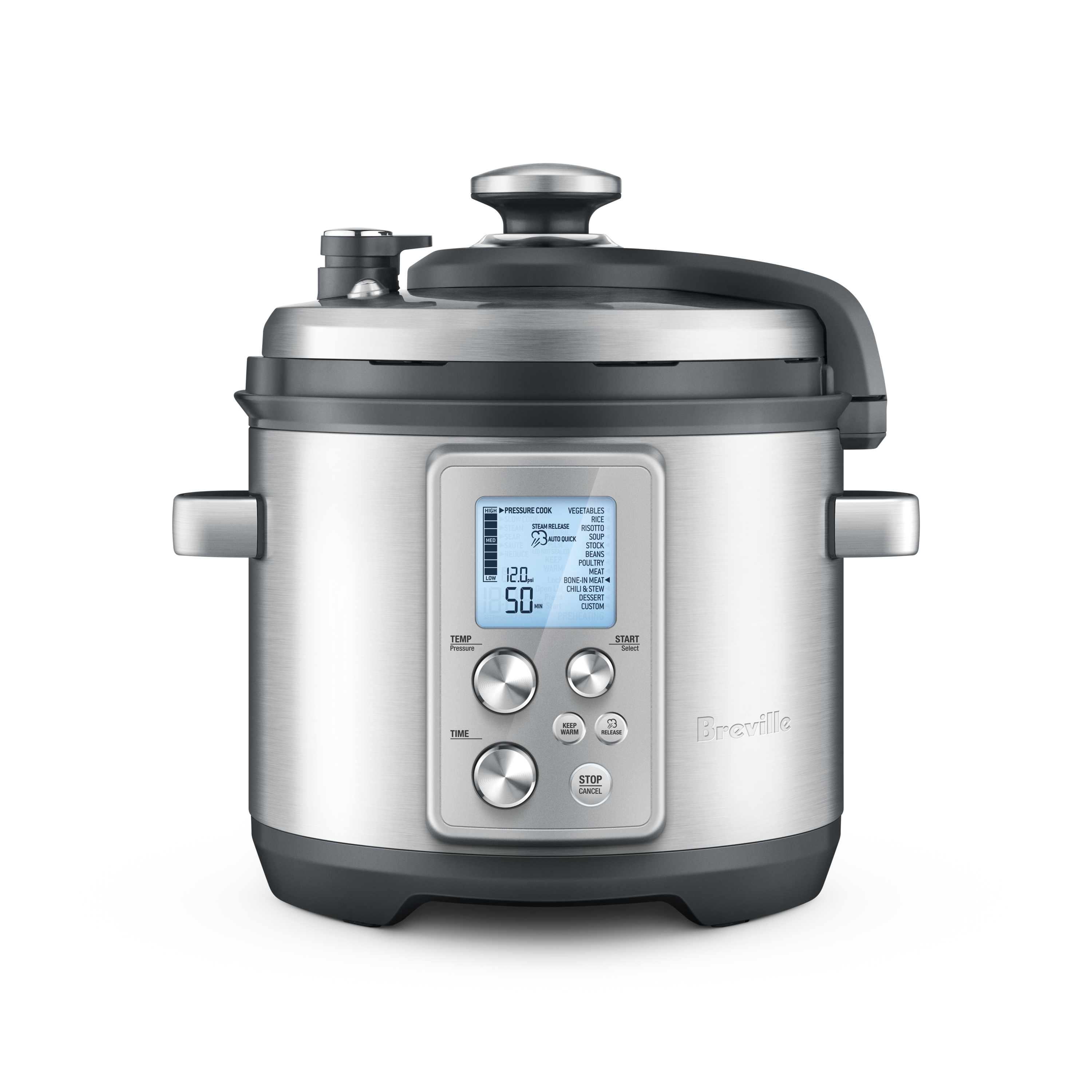
Pressure-cooker precision without losing programmable convenience is what the Fast Slow Pro sells at the high end. Dual sensors hold target pressure within a tight tolerance, and eight selectable pressure levels plus three auto-release modes give recipe-grade control no budget multi-cooker offers, in a brushed stainless build that suits the price. TechGearLab ranked it their pick for cooking performance and meat preparation; Consumer Reports tested it against multi-cooker peers across pressure, slow, rice, steam, and saute modes.
Full review
Superior temperature control and precision cooking
TechGearLab named the Breville Fast Slow Pro their cooking-performance pick across the multi-cooker category, scoring it 9.0/10 on cooking performance and 10/10 on cooking features. Their testers specifically highlighted meat preparation: 'all of the cuts we put into it come out more moist and tender than those from other machines.' Southern Plate's testing reported the unit reaching 12 psi pressure in 8-11 minutes with ±2°F temperature variance across 40+ recipes — tighter tolerance than mainstream multi-cookers.
The dual-sensor architecture is the load-bearing differentiator versus single-sensor designs (most electric multi-cookers measure temperature at the heating base only). Top-and-bottom sensors let the controller catch pressure drift the moment it starts, which translates into a more consistent simmer during slow-cook modes and a quieter, more stable hold during pressure cooks.
TechGearLab's testers also specifically praised the cooker's searing function: 'it was also more adept at searing meat than other models.' For one-pot workflows that brown meat first and then seal it under pressure, the Fast Slow Pro's higher-power sear and tight temperature control deliver visibly better results than the saute mode on a typical mainstream multi-cooker.
Hinged lid removes for loading, unlike rotating designs
The brushed stainless exterior is a step up from the painted or plastic-shelled finishes used by most mainstream multi-cookers, and the unit feels appropriately substantial for the price. The hinged, removable lid design is one of the most-praised features in long-term reviews — it makes loading and unloading the pot far easier than rotating-lid designs that force you to set a hot, wet lid somewhere on the counter.
The 6-qt ceramic-coated inner bowl is PFOA and PTFE free, a meaningful spec for buyers concerned about nonstick chemistry. The dishwasher-safe insert simplifies cleanup, though long-term users note the ceramic coating wears with aggressive utensil use; soft silicone or wooden utensils preserve the finish. The bowl is heavy enough to feel structurally appropriate and the rolled rim seats cleanly into the cooker base — small details that add up over years of daily use.
Precise pressure control and automated steam release
Eight selectable pressure levels from 1.5 to 12 psi give recipe-grade control no budget multi-cooker offers. The Breville's range is wider than mainstream electric multi-cookers' high/low binary, letting you match precise pressures called for in modernist cooking recipes (e.g. 8 psi for chicken stocks, 12 psi for beef braises). The dual-sensor feedback loop keeps the cooker on target across the entire range.
The triple-safe lid plus easy-fitting silicone seal handles sealing reliably. Auto steam release in Quick, Pulse, or Natural modes is a real ergonomic advantage — the cooker handles the depressurization automatically, which removes the most common operator-error step in electric pressure cooking. The Pulse mode is the most-praised setting in long-term reviews — it vents in short bursts that minimize splatter for foamy ingredients like beans and grains.
Redundant electronic and mechanical safety systems
Breville's 3-way safety system covers the same failure modes as the premium stovetops: lid-lock interlock until pressure is safely down, a primary pressure-release pathway through the auto-release valve, and a secondary overpressure relief built into the lid design. The dual-sensor architecture provides software-level redundancy on top of the mechanical pathways — pressure that exceeds the program target triggers an automatic vent before the mechanical release activates.
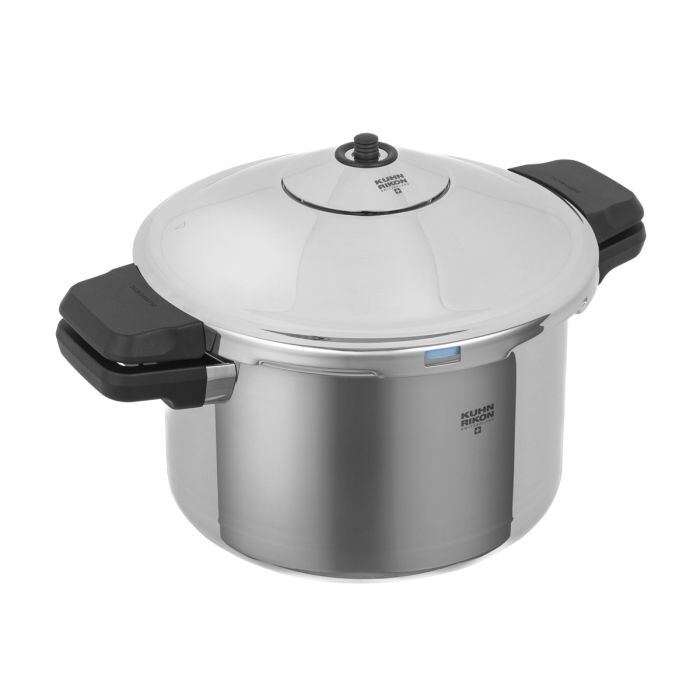
The interlock is electronic rather than mechanical (unlike the Kuhn Rikon Duromatic Inox 5L stovetop, where the lid physically cannot rotate under pressure). In practice both architectures provide equivalent safety; the electronic interlock just depends on the cooker's controller having power.
Ease of Cleaning
The dishwasher-safe inner bowl and lid handle the bulk of post-cook cleanup. The brushed stainless exterior wipes clean easily and resists fingerprints better than mirror-polished stainless. The condensation collector at the back of the unit needs periodic emptying — long-term reviews note this as a minor maintenance touchpoint.
The most-cited cleaning complaint is condensation spillage when the lid is opened — TechGearLab and Corrie Cooks both flag this as a recurring quality-of-life issue. The fix is opening the lid slowly with a towel positioned to catch the runoff.
The silicone gasket is the main consumable. Breville sells replacement gaskets and recommends inspection every few months for cracks or stiffening. The hinged lid design means the gasket is easier to access and replace than on rotating-lid designs, which is a small but meaningful long-term ownership advantage.
Just a 1-year warranty on a $330 appliance
Price is the biggest objection — at roughly $330 the Breville is three to four times what a comparable budget electric multi-cooker costs. The performance differential is real but the price elasticity at the high end of the multi-cooker market is brutal. Buyers comparison-shopping against mainstream electric multi-cookers will struggle to justify the gap without specific use cases that benefit from the dual sensors and eight pressure levels.
The 1-year warranty is also short for a $330 appliance. Breville typically honors out-of-warranty repairs at reasonable cost, but the warranty itself is below what you would expect at this price tier. And the condensation spillage from the lid is a real ergonomic annoyance, not just a cosmetic one — most owners adapt with a towel routine.
For cooks who actually use eight pressure levels
The Fast Slow Pro is the right pick for a daily weeknight cook who wants programmable electric convenience with precision that the mainstream multi-cooker category does not offer. Recipe followers working from modernist or restaurant-oriented cookbooks will benefit from the eight pressure levels; hands-off cooks will appreciate the three auto-release modes; build-quality-sensitive buyers will pay the premium for the brushed stainless and the better lid hardware.
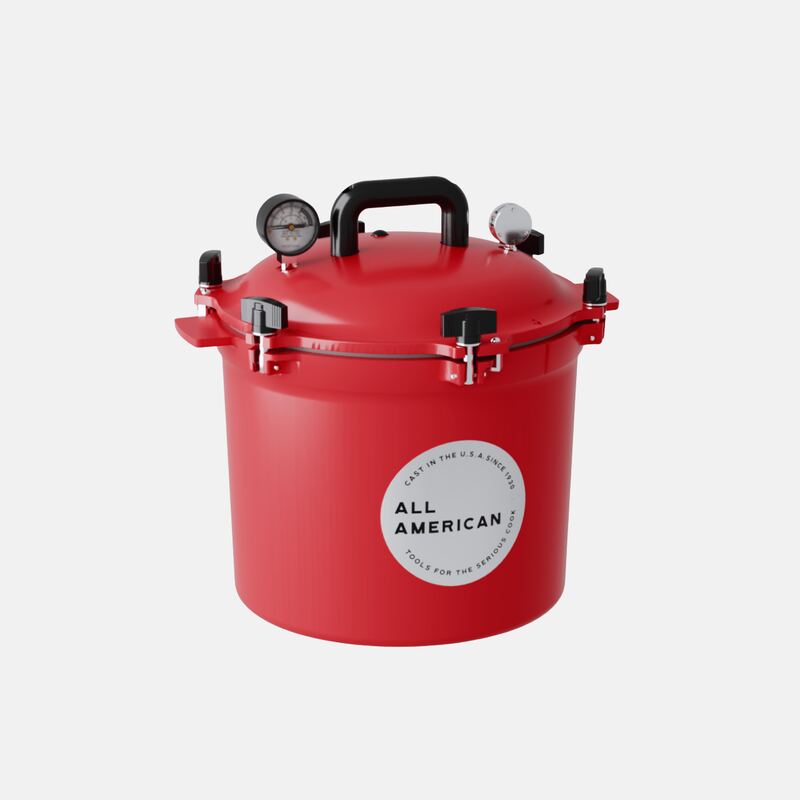
It is the wrong pick for a buyer whose use case is mostly weeknight electric cooking — the Cosori 6-Qt Electric Pressure Cooker delivers most of the everyday outcome at a third the cost. And for any heavy stovetop use (induction, large-batch canning, lifetime durability) the stovetop tier — Kuhn Rikon Duromatic Inox 5L Side-Handle Pressure Cooker or All-American 921 Cast Aluminum Pressure Canner — is the architecturally correct choice.
Costs roughly double mainstream electric multi-cookers
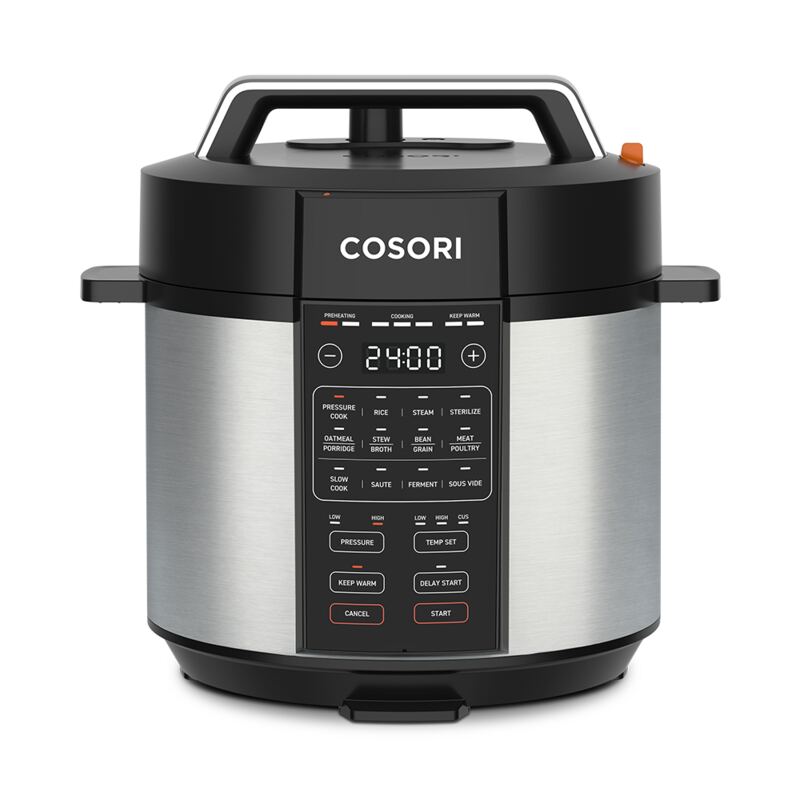
Value math on the Breville depends on how much you value precision. For a buyer who will actively use the eight pressure levels and three auto-release modes, the price is defensible — there is no other electric multi-cooker at this control fidelity. For a buyer who treats it as a slightly nicer electric multi-cooker, the value collapses against the Cosori 6-Qt.
TechGearLab framed the value question directly: the unit costs roughly double mainstream multi-cookers but delivers measurably better cooking outcomes. The dual sensors, the eight pressure levels, the auto-release modes, and the brushed stainless build are all real engineering investments. Whether they earn out depends on how often the buyer uses the precision features in practice.
Extends the Cosori's six pressure levels to eight
Against the budget electric tier — the Cosori 6-Qt Electric Pressure Cooker is the relevant comparison — the Breville delivers measurably better pressure control, hands-free auto release, and a more substantial build. The Cosori still offers six adjustable pressure levels and 12 safety mechanisms at one third the price; the Breville extends that to eight levels and three release modes, plus the dual-sensor feedback loop.
Against stovetop premium designs like the Kuhn Rikon Duromatic Inox 5L Side-Handle Pressure Cooker the Breville is a fundamentally different product. The stovetop delivers heirloom durability, induction independence, and silent operation; the Breville delivers programmable convenience, precise pressure control, and hands-off cooking. Most serious cooks who own both end up using the stovetop for stocks and braises and the Breville for unattended weeknight workflows.
Strengths
- +Dual top-and-bottom sensors monitor temperature and pressure for tighter operating control than single-sensor multi-cookers
- +11 pressure cook settings and 8 selectable pressure levels (1.5-12 psi) for fine-grained recipe control
- +Hands-free auto steam release with Quick, Pulse, and Natural modes — no need to manually toggle a valve
- +Brushed stainless construction with a ceramic-coated 6-qt inner bowl that is PFOA and PTFE free
- +Triple-safe lid design with a hinged removable layout and silicone seal for easy access and cleaning
Watch-outs
- −Premium price — roughly triple the cost of a mainstream electric multi-cooker like the Cosori 6-Qt
- −Lid spills condensation when opened, a recurring complaint in long-term ownership reviews
- −1-year warranty is short for a premium-priced appliance
How it compares
Premium counterpart to the Cosori 6-Qt Electric Pressure Cooker — both are 6-quart electric multi-cookers but the Breville costs roughly three times as much. The Breville earns the premium with dual sensors, eight selectable pressure levels, hands-free auto steam release, and brushed stainless build. Versus the stovetop premium tier — the Kuhn Rikon Duromatic Inox 5L Side-Handle Pressure Cooker — the Breville trades heirloom durability for programmable convenience, and trades induction independence for plug-in countertop simplicity. For serious canning the All-American 921 Cast Aluminum Pressure Canner is the architecturally correct choice; the Breville is a cooker first.
Rating sources
“All of the cuts we put into it come out more moist and tender than those from other machines.”
“Multi-Cooker models like the Fast Slow Pro 6 qt. BPR700BSS are rated on multiple criteria including pressure cooking, slow cooking, rice cooking, steaming, and sauteing.”
Our 4.4 score is the average of these published ratings. Ratings marked * were derived from the reviewer’s written analysis or video transcript — the publisher didn’t print an explicit numeric score, so we inferred one from their own words. Click through to verify. More about methodology.