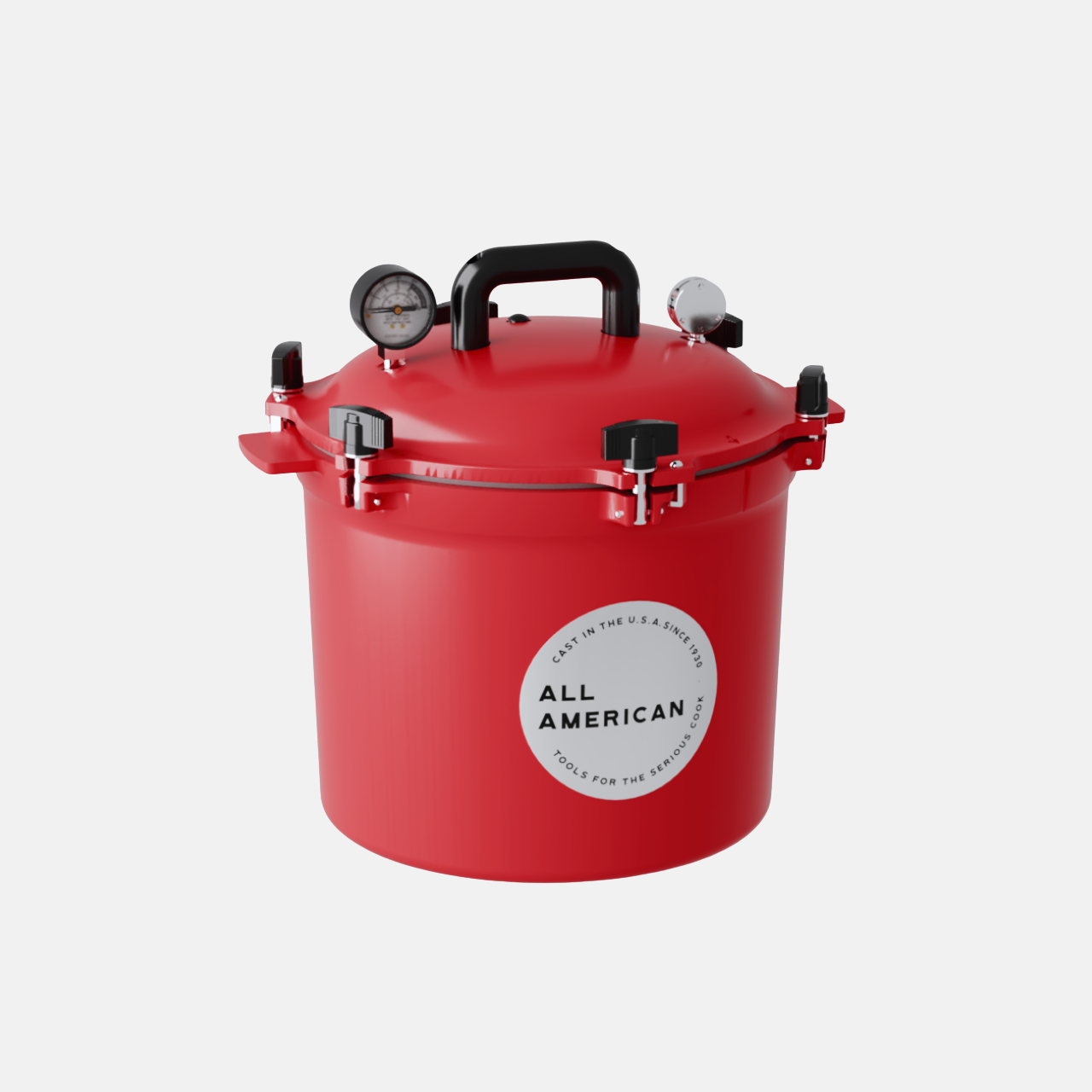
American homesteaders treat the 921 as a generational tool. Its patented metal-to-metal seal removes the single most common failure point on pressure canners, the rubber gasket, and the heavy cast aluminum body with triple bayonet clamps holds pressure with virtually no siphoning through long quart-jar processing. At 21.5 quarts it lands at the practical sweet spot for batch canning (19 pints or 7 quarts). All-American's lifetime warranty and 30+ year owner reports back up the heirloom-purchase framing.
Full review
Canning Capability
Pressure canning is the 921's home turf. The 21.5-quart vessel accepts 19 pint jars or 7 quart jars in a single load — the volume USDA Extension publications use as the reference batch size for tested canning recipes. The dial gauge plus selectable weights (5, 10, 15 psi) lets you match the exact pressure schedule called for by tested recipes for low-acid foods like meat, poultry, beans, and vegetables, which is non-negotiable for safe pressure canning of those foods.
Reviewers consistently flag a less obvious advantage: the heavy cast aluminum body and triple bayonet clamps maintain a very stable pressure across long process times. The Canning Diva and Simply Canning both note that the 921 produces far less siphoning (liquid loss from jars) than gasket-sealed canners, which preserves jar headspace and improves seal-rate consistency.
The 921 is also rated for boiling-water bath canning at high acid foods (jams, pickles, fruit) when used without the lid sealed. This gives the canner double duty across a full canning season — pressure processing for low-acid meats and vegetables, water-bath processing for jams and pickles — without needing a separate vessel for high-acid foods.
Metal-to-metal seal eliminates the gasket entirely
All-American has been building the 921 in Hillsville, Wisconsin since 1930. The cast aluminum body is thick enough that owners commonly report 30+ year service lives — Simply Canning's reviewer noted this directly, framing it as a lifetime purchase. The patented metal-to-metal sealing system replaces the rubber gasket used on every consumer-grade gasket-sealed canner, eliminating the single most common failure point on a pressure canner.
Triple bayonet clamps around the rim are tightened opposite-pair by hand to produce an even, positive seal. This is more setup work per cycle than a gasket-and-latch design, but the trade-off is no consumable parts to inventory and a seal that does not degrade over time. Owners frequently mention this as the feature that justifies the purchase decision after several years of ownership — gasket replacement is the most common pain point on every competing canner, and the 921 eliminates it entirely.
Steady pressure and reliable safety features
The 921 holds pressure remarkably steady once the weighted regulator is rocking at the chosen setting. LeelaLicious and the Canning Diva both highlight low siphoning rates — the cooker's mass and clamp uniformity mean small thermal swings on the burner do not translate into pressure oscillations large enough to push liquid out of jars.
The dial gauge gives you continuous visual confirmation of operating pressure, and the weighted regulator provides the redundant mechanical assurance that the cooker is at the right setting. The overpressure plug is the final safety pathway — an intentional weak point that releases before the lid or body could fail under fault conditions.
Reliable mechanical safety design
Safety on the 921 is conservative by design. The triple bayonet clamps must be fully engaged before pressure can build; the weighted regulator rocks at the selected pressure; the dial gauge gives continuous pressure feedback; and the overpressure plug vents if the primary pathway fails. There is no electronic interlock — the entire system is mechanical, which is what makes it the canner of choice for people who want a tool they can trust on a remote homestead with no service infrastructure.
USDA Cooperative Extension offices specifically recommend dial-gauge pressure canners be tested annually for accuracy; All-American's dial assembly is removable and can be sent in or tested by your county Extension office for free. Pairing the dial with the weighted regulator gives you two independent confirmations of operating pressure — if the gauge drifts between annual tests, the rocking weight tells you the cooker is still at the right setting and the gauge is the part that needs service, not the cooker.
Loaded weight exceeds 40 pounds with jars and water
Weight is the biggest day-to-day downside. Empty, the 921 is nearly 18 pounds; loaded with water and 7 quart jars it exceeds 40 pounds. Older cooks and anyone with wrist or back issues should plan for two-handed lifts and a sturdy stovetop or canning station.
Cost is the other obvious objection. At roughly $500 the 921 is well above gasket-sealed canners that deliver comparable capacity at lower cost. For an occasional canner — a few dozen jars per season — that lower-cost gasketed approach is the rational pick. And owners frequently note the lid can stick after long processes; the common fix is to lubricate the sealing surface periodically with a thin film of cooking oil.
Built for homesteaders processing a full harvest
The 921 is the right pick for a serious home canner processing meaningful quantities each year — homesteaders, hunters processing game, gardeners canning a full harvest. It is also the right pick for buyers who specifically want a no-gasket, lifetime-purchase canner that will survive being handed down. The metal-to-metal seal removes the consumable-parts inventory that every other pressure canner requires.
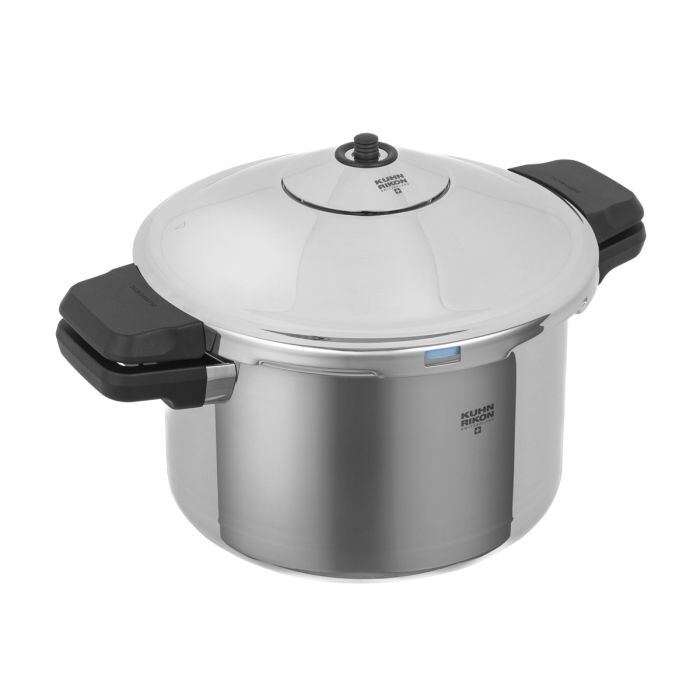
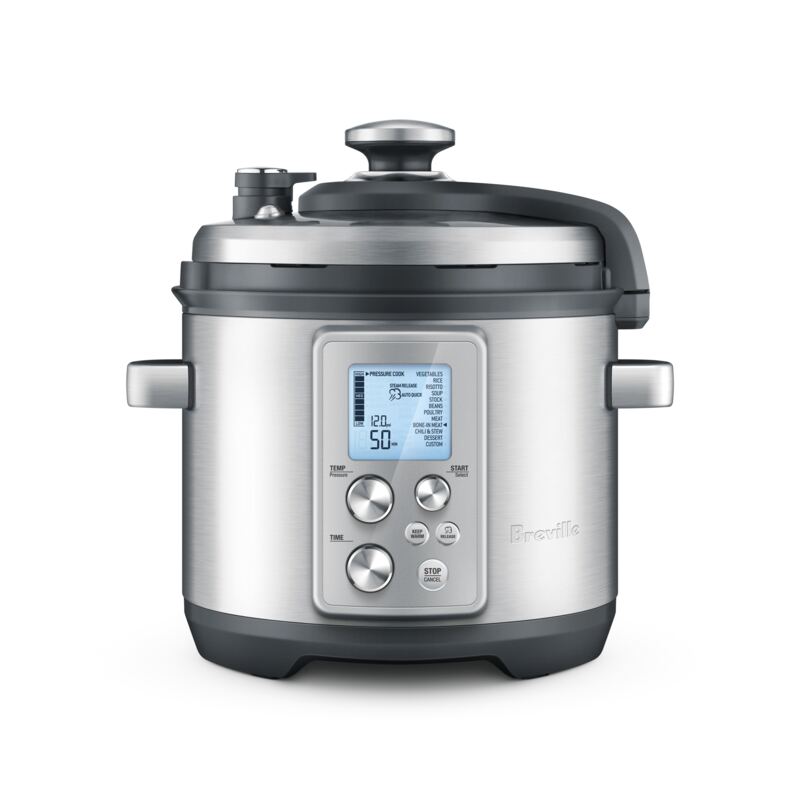
It is not the right pick for occasional canners or for general-purpose weeknight cooking. For everyday cooking, pair it with a Kuhn Rikon Duromatic Inox 5L Side-Handle Pressure Cooker or a Breville Fast Slow Pro BPR700BSS — different tools for different jobs.
Owners report 30-plus year service lives
Reviewer testimony on the 921's durability is unusually consistent: 30+ year service lives are common, owner-shop maintenance is essentially limited to the dial gauge and the overpressure plug, and the cast aluminum body is thick enough that the structure itself effectively does not wear. Simply Canning's review frames the purchase as 'buy once, cry once.'
Replacement parts (dial gauges, overpressure plugs, weight regulators) are stocked by All-American and shipped from Wisconsin. There is no rubber gasket to replace, which removes the most common failure mode on every other canner. Combined with the lifetime warranty, this is the canner most likely in this lineup to be used by a grandchild of the original buyer. The brand's century-plus continuous Wisconsin production history is itself a meaningful signal of durability — All-American has shipped this same fundamental design since 1930.
Cheapest per-cycle cost only above 200 jars a year
The price is high but the value math rewards heavy use. For a canner processing 200+ jars a year over 20+ years, the 921's per-cycle cost lands below any gasket-sealed canner even after accounting for the cheaper unit's gasket replacements. For a household canning a few dozen jars a year, the cheaper option wins on absolute cost — the 921's lifetime warranty cannot earn out within a casual usage profile.
Where the 921 always wins on value is reliability under pressure: USDA Extension offices and serious canning instructors point to it as the reference canner because the metal-to-metal seal removes the variable that most often causes home canning failures.
Two to three times pricier than gasket-sealed canners
Against gasket-sealed pressure canners in the same capacity class, the 921 is the premium option — roughly two to three times the price but with no gasket to maintain and a lifetime warranty rather than a 10-12 year service horizon. Buyers who already know they will process hundreds of jars annually for decades land on the 921; buyers who process modestly typically pick a cheaper gasket-sealed canner and replace gaskets every few seasons.
Against general-purpose pressure cookers like the Kuhn Rikon Duromatic Inox 5L Side-Handle Pressure Cooker or the Breville Fast Slow Pro BPR700BSS the comparison is not really apples-to-apples. The 921 is a canning vessel with cooking as a secondary capability; those cookers are general-purpose tools that cannot match the 921's batch processing capacity. The right kitchen owns both — a small everyday cooker for weeknight meals and a large canner for seasonal processing.
Strengths
- +Patented metal-to-metal sealing system — no rubber gasket to dry out, replace, or fail in service
- +Built in Wisconsin from heavy cast aluminum with a lifetime warranty and 30+ year owner reports
- +21.5-quart capacity processes 19 pint jars or 7 quart jars in a single load — the canning standard
- +Three selectable pressure weights (5, 10, 15 psi) with a dial gauge for visual monitoring
- +Triple bayonet clamps provide a positive, even seal that minimizes siphoning during long processing
Watch-outs
- −Heavy — 17.75 lb empty, well over 40 lb fully loaded with jars and water
- −Premium price puts it well above gasket-sealed canners in the same capacity class
- −Lid can be hard to remove after a long process without occasional oiling of the sealing surface
How it compares
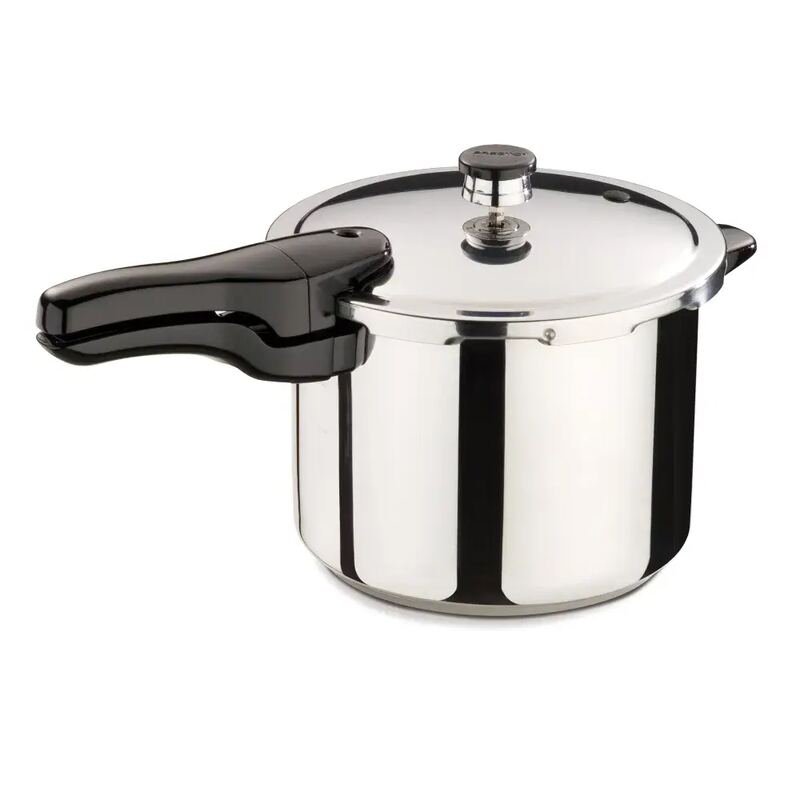
The 921 is the heirloom large-batch workhorse — the right pick when canning capacity and gasket-free reliability matter more than the lower cost of a gasket-sealed alternative. Compared to the Presto 01362 6-Quart Stainless Steel Pressure Cooker, the 921 is built for a fundamentally different job — that Presto is a 6-quart everyday stovetop cooker, the All-American is a 21.5-quart batch canner. It is also the wrong tool for general weeknight cooking compared to the Kuhn Rikon Duromatic Inox 5L Side-Handle Pressure Cooker, the Fissler Vitavit Premium 8.5 Quart Pressure Cooker, or any electric multi-cooker like the Breville Fast Slow Pro BPR700BSS — those are cookers built for everyday meals; this is a canner first.
Rating sources
“I would definitely buy it again. It is expensive but I would rather buy something once than get a cheaper or poor performing canner.”
“The most popular size for pressure canners tends to be the All American 921, which has a capacity of 21.5 quarts.”
Our 4.7 score is the average of these published ratings. Ratings marked * were derived from the reviewer’s written analysis or video transcript — the publisher didn’t print an explicit numeric score, so we inferred one from their own words. Click through to verify. More about methodology.