The Big Agnes Copper Spur UL2 is the best all-around two-person backpacking tent because it nails the hardest balance in the category: it is genuinely light at around 3 pounds yet livable enough for two people to sleep comfortably with twin doors and vestibules. Reviewers across CleverHiker, OutdoorGearLab, and Switchback Travel rank it at or near the top of the field. The price is steep and the thin fabrics need care, but nothing else combines weight, space, and ease of use this well.
Full review
Weight and Livability
The Copper Spur UL2's defining trait is that it refuses to make you choose between a light pack and a comfortable night. At roughly 3 pounds packed, and trimmable to around 2.5 pounds if you leave the stuff sack and stakes behind, it sits in true ultralight territory, yet it offers the steep walls, twin doors, and twin vestibules that make a two-person tent actually pleasant for two people. OutdoorGearLab, which scores it 80 out of 100, noted that to keep their pack as light as possible they left the stuff sack and stakes at home to get the UL2 down to around 2.5 pounds.
That weight-to-space ratio is the single biggest reason it tops nearly every expert list. CleverHiker, which calls it one of their all-time favorites, says it earns some of the highest marks for comfort and livability of any backpacking tent they tested. Switchback Travel agrees, praising the high-quality build, competitive weight, two-door-and-vestibule layout, and open interior as making it one of the most complete backpacking tents on the market. Few tents this light feel this roomy.
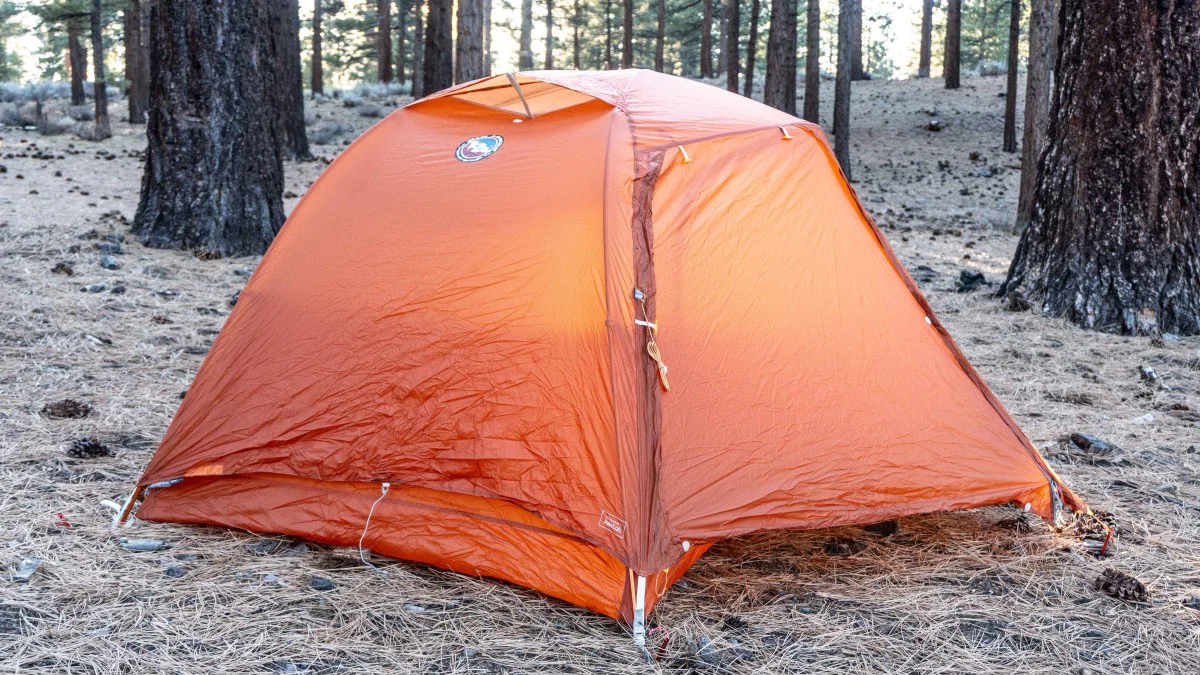
The high-volume architecture is what makes the difference inside. Steeply angled walls push the usable space outward toward the edges of the floor, so the 29 square feet feels larger than the number implies, you can sit up near the walls instead of only in a narrow central ridge. Combined with two doors so neither person has to crawl over the other, it delivers the kind of two-person livability that usually requires a heavier tent, which is exactly the balance backpackers have prized for years.
Build Quality and Design
Big Agnes builds the Copper Spur around a hubbed DAC pole system that snaps into place quickly and creates the steep, near-vertical walls that define the tent's interior feel. The proprietary ripstop nylon canopy mixes mesh and solid panels for a balance of ventilation and warmth, and the interior is thoughtfully organized with pockets, a ceiling media pocket, and gear-loft compatibility for stashing small items off the floor.
Setup is genuinely fast and intuitive, a recurring theme across reviews, and the freestanding design means you can pitch it on rock, sand, or a tent platform without relying on stakes for structure. The latest version refines the fabric and color but keeps the formula that made the tent famous: lots of usable space inside a remarkably small, light package.
It is worth noting the naming history, because it can confuse shoppers. Big Agnes has gradually dropped the HV designation that the tent carried for years, so the current model is sold simply as the Copper Spur UL2 with updated fabric, even though many of the long-running reviews still refer to it as the Copper Spur HV UL2. They describe the same fundamental tent and the same reputation, the high-volume, vertical-wall architecture that gives the Copper Spur its livable feel.
Weather Protection
For a tent built to shave grams, the Copper Spur holds up well in weather. The full-coverage fly with a 1200mm polyurethane coating sheds rain, the taped seams keep seepage out, and the steep walls help shed wind rather than catching it. Reviewers who have taken it through storms generally come away confident in its protection, provided it is pitched taut and staked properly.
It is not a four-season mountaineering shelter, and it should not be asked to handle heavy snow load, but for three-season backpacking it offers reassuring protection. The two vestibules also matter here: they give you covered space to stash wet gear and boots, keeping the moisture out of the sleeping area during a downpour.
Ventilation is handled by adjustable fly vents and the large mesh panels in the canopy, which together help manage condensation on cool, damp nights. In humid conditions you will still see some interior moisture, as you would in any double-wall tent, but the Copper Spur's airflow is well-judged for a tent that also has to seal up tight against wind-driven rain. The balance between breathability and weather sealing is one of the quieter reasons it has stayed a category favorite for so many years.
Where It Falls Short
The two real drawbacks are price and durability, and they are related. To hit its weight, Big Agnes uses thin, lightweight fabrics that demand care: you have to be vigilant about the ground you pitch on, and a footprint is a wise addition. OutdoorGearLab and others rate its durability as merely mediocre, meaning this is a tent to baby rather than abuse. Sharp sticks, rough granite, and careless handling are its enemies, and the floor in particular benefits from a groundsheet on anything but soft duff.
At around $600 it is also one of the most expensive tents in the category, and the slightly tapered floor, narrower at the foot than the head, can feel tight if both occupants use wide rectangular pads. As GearJunkie wryly put it, when Big Agnes says two people it really means two people who are emotionally close enough to be proximately on top of each other. It is comfortable for two, but it is still a backpacking tent, not a car-camping palace.
How It Compares to Alternatives
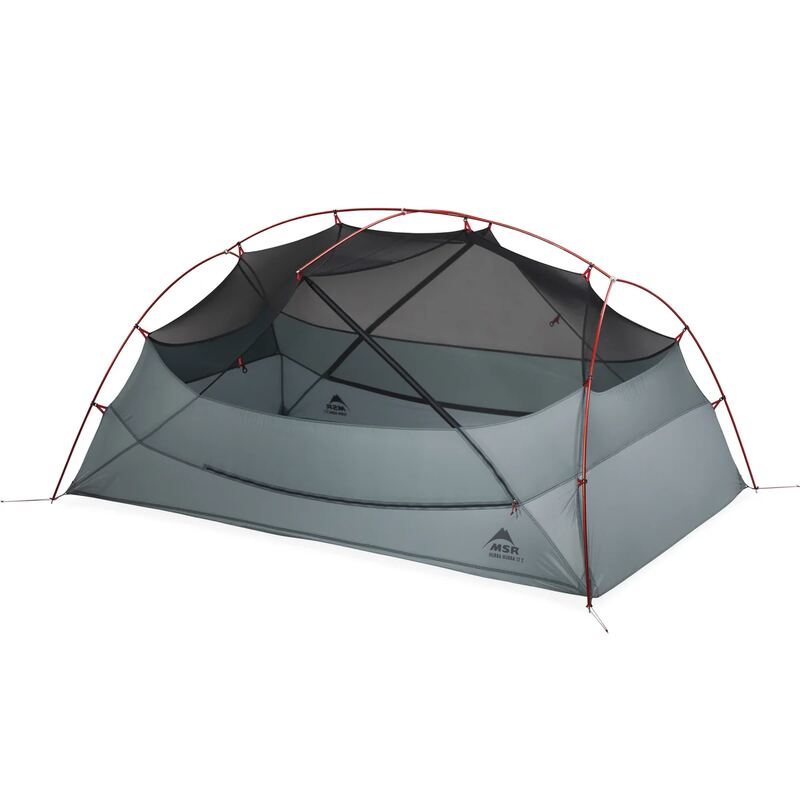
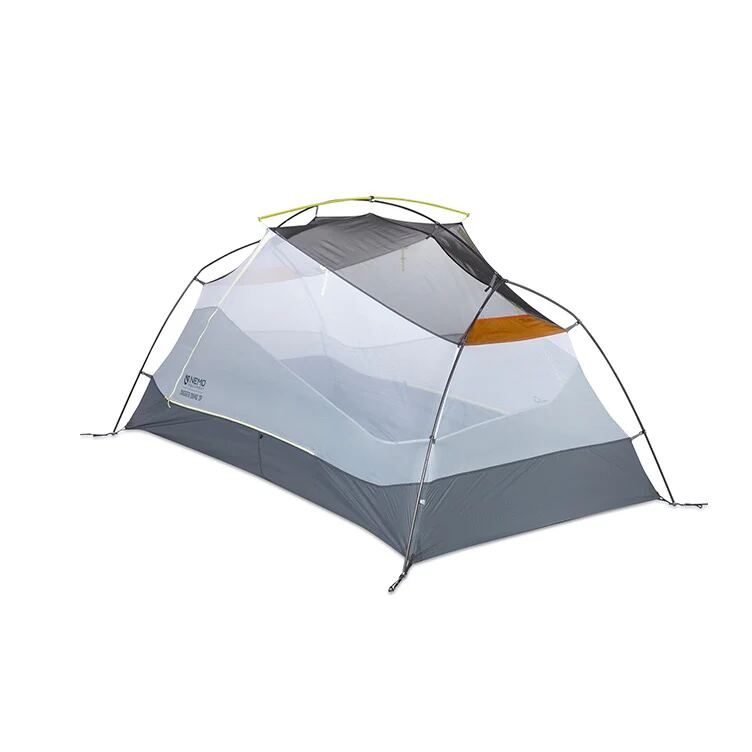
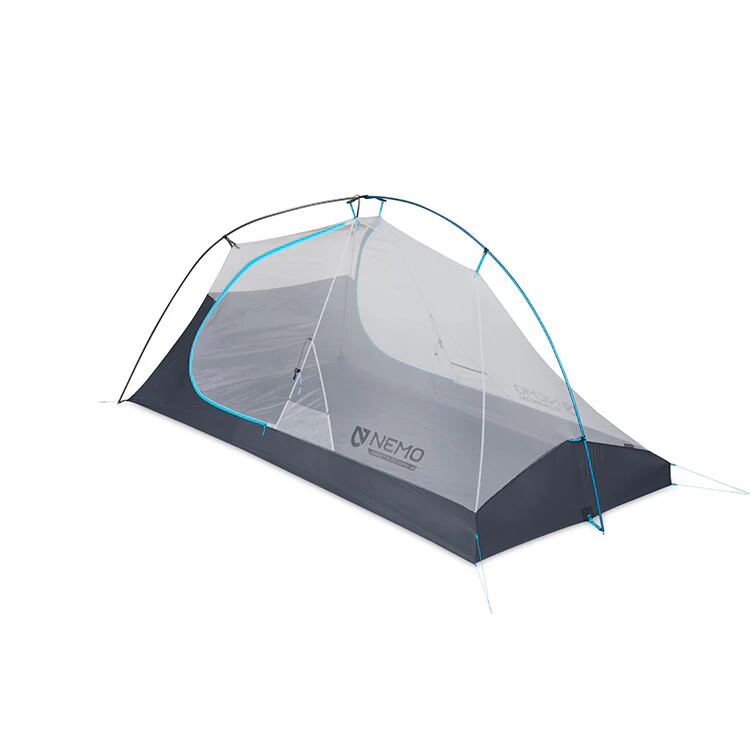
Against the MSR Hubba Hubba LT 2, the Copper Spur is a touch lighter and more livable, though the MSR counters with better durability. Against the NEMO Dagger OSMO 2, the Copper Spur is significantly lighter, while the Dagger offers a roomier, more vertical-walled interior for those willing to carry the extra weight. Against the ultralight NEMO Hornet Elite OSMO 2, the Copper Spur is heavier but far more comfortable for two.
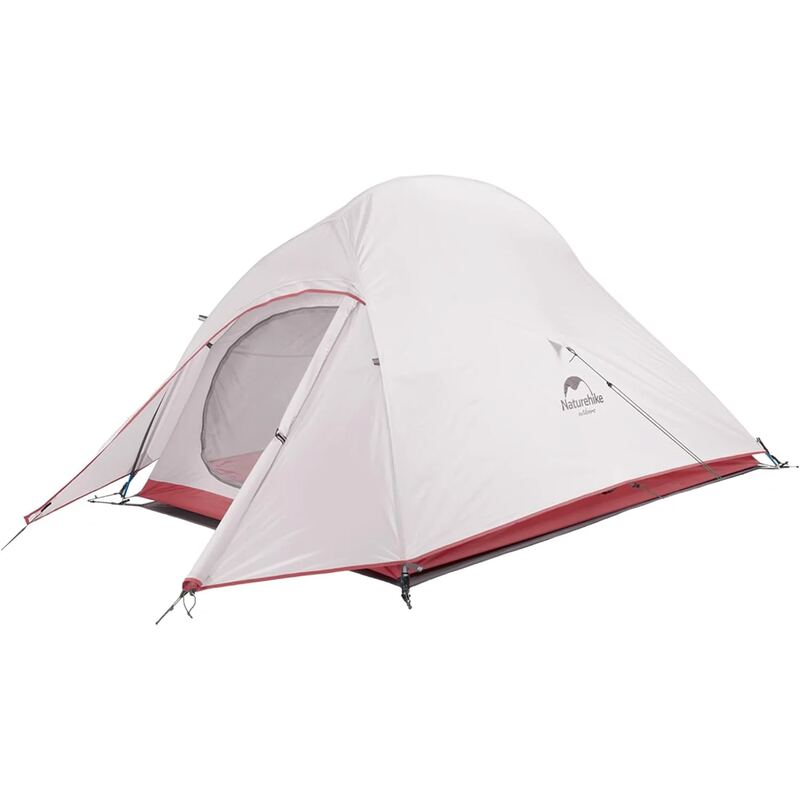
And against the budget Naturehike Cloud Up 2, the comparison is about money: the Naturehike costs a fraction as much but cannot match the Copper Spur's weight, interior space, two-door layout, or build quality. The Copper Spur is the tent you buy when you want the best overall package and are willing to pay for it.
What keeps it at the top of this ranking is that it does not force a single hard compromise. The Hubba Hubba is tougher, the Dagger is roomier, and the Hornet is lighter, but each of those tents pays a clear price elsewhere. The Copper Spur is the rare tent that is near the best at everything at once, which is precisely why it has been the default expert recommendation for years and remains so today.
Who It's Best For
Choose the Copper Spur UL2 if you want the most complete two-person backpacking tent available and can absorb the premium price. It suits everyone from weekend warriors to thru-hikers, anyone who values the combination of low weight and real livability and is willing to handle the lightweight fabrics with care.
Look elsewhere if durability under rough use is your top priority (the MSR Hubba Hubba LT 2), if you want maximum interior room and do not mind extra weight (the NEMO Dagger OSMO 2), if you are chasing the absolute lowest weight for solo or fast-and-light use (the NEMO Hornet Elite OSMO 2), or if budget is the deciding factor (the Naturehike Cloud Up 2).
For the broad middle of backpackers, though, who do a mix of weekend trips and the occasional longer route, who want a tent that is light enough to carry happily and roomy enough to enjoy, and who do not want to overthink the purchase, the Copper Spur UL2 is the safe, proven answer. It is the tent we would hand a friend who asked for one recommendation and did not want to read five reviews to make the decision.
Strengths
- +Class-leading balance of low weight and livability at roughly 3 lb packed
- +Two doors and two vestibules with steep, near-vertical walls for genuine two-person comfort
- +Fast, intuitive freestanding setup with hubbed DAC pole architecture
- +Excellent interior organization with pockets, gear loft compatibility, and ample headroom
- +Reliable weather protection and a well-sealed fly for a tent this light
Watch-outs
- −Premium price near $600 puts it at the top of the category
- −Lightweight fabrics demand care; durability is only mediocre under rough use
- −Slightly tapered floor can get tight with two wide rectangular pads
How it compares
The benchmark the rest of this list is measured against. It is lighter and more livable than the MSR Hubba Hubba LT 2 and the heavier NEMO Dagger OSMO 2, while being far roomier and easier to live in than the ultralight NEMO Hornet Elite OSMO 2. The budget Naturehike Cloud Up 2 undercuts it dramatically on price but cannot match its weight, space, or build.
Who this is for
At a glance: Backpackers who want the best overall blend of low weight and two-person livability for everything from weekend trips to thru-hikes, and who can justify a premium price.
Why you’d buy the Big Agnes Copper Spur UL2
- Class-leading balance of low weight and livability at roughly 3 lb packed.
- Two doors and two vestibules with steep, near-vertical walls for genuine two-person comfort.
- Fast, intuitive freestanding setup with hubbed DAC pole architecture.
Why you’d skip it
- Premium price near $600 puts it at the top of the category.
- Lightweight fabrics demand care; durability is only mediocre under rough use.
- Slightly tapered floor can get tight with two wide rectangular pads.
Rating sources
“When I needed to keep my pack as light as possible, I left the stuff sack and stakes at home to get the UL2 down to around 2.5 pounds”
“earns some of the highest marks for comfort and livability of any backpacking tent we tested”
“the high-quality build, competitive weight, two-door-and-vestibule layout, and open interior make it one of the most complete backpacking tents on the market”
Our 4.7 score is the average of these published ratings. Ratings marked * were derived from the reviewer’s written analysis or video transcript — the publisher didn’t print an explicit numeric score, so we inferred one from their own words. Click through to verify. More about methodology.