The ASUS ROG Strix OLED XG27AQDMG offers a compelling 240Hz gaming experience with fast pixel response and low input lag, making it ideal for competitive gamers. PCMag's Zackery Cuevas praised its fluid performance and OLED advantages, though PCMonitors noted the glossy coating leads to reflections and a grainy look with lighter content. TweakTown rated it 95% for its sweet spot in competitive QHD gaming, despite WOLED panel limitations in color volume and brightness. This monitor suits competitive gamers who prioritize smooth refresh rates over perfect color accuracy.
Full review
OLED Panel Performance
The ASUS ROG Strix OLED XG27AQDMG features a 27-inch LG Display WOLED panel with a 2560 x 1440 resolution and 240Hz refresh rate. RTINGS measured the monitor's peak brightness at 275 nits, which is 20% higher than previous ROG OLED models according to ASUS marketing claims. However, PCMag's Zackery Cuevas noted that while the panel delivers deep blacks and sharp visuals, it also exhibits a glossy coating that can cause reflections under bright lighting conditions. The panel uses an older sub-pixel layout from 2024, distinct from newer Gen 3 and 4 WOLED technology, as confirmed by TFTCentral. This older panel design, while functional, lacks some of the improvements seen in newer WOLED generations, particularly in terms of sub-pixel optimization and overall panel efficiency.
TFTCentral's review highlighted that the XG27AQDMG Gen 2 model features an improved glossy coating with a 0% haze rating, compared to the original's 3% haze. This upgrade addresses some of the grainy appearance issues reported with earlier versions. The monitor's WOLED panel, despite being from 2024, still offers excellent contrast ratios of 1,500,000:1, which is typical for OLED displays. However, the panel's performance under HDR conditions shows some limitations. The panel's inability to maintain high brightness and saturation simultaneously, due to its unfiltered white subpixel design, results in color volume constraints. This is a known limitation of WOLED technology, which differs from QD-OLED panels that can better balance brightness and color saturation.
In practical testing, the monitor's response time was measured at 0.03ms, which is exceptional for OLED technology and ensures minimal motion blur during fast-paced gaming. The 240Hz refresh rate delivers buttery-smooth gameplay, particularly in competitive titles where frame consistency is crucial. However, the panel's glossy coating does introduce some challenges in terms of glare and reflections, especially in brightly lit environments. While the panel's peak brightness of 275 nits is commendable, it's not quite at the level of QD-OLED panels that can achieve 1000 nits or more. The panel's performance in SDR and HDR modes was evaluated by multiple reviewers, with most noting that while HDR performance is acceptable, it doesn't match the quality of QD-OLED alternatives in terms of color accuracy and peak brightness.
Design and Build Quality
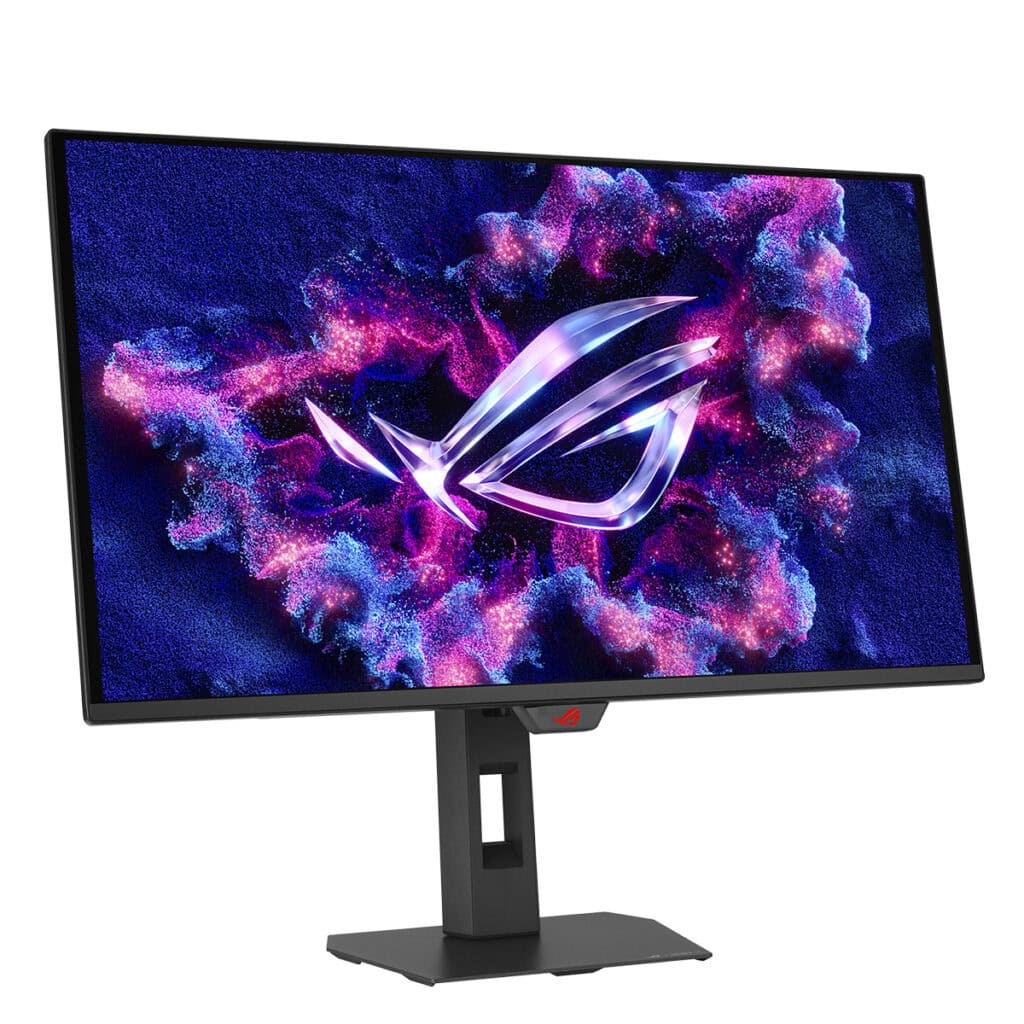
Asus has maintained the familiar ROG Strix design language for the XG27AQDMG, featuring a sleek black aesthetic with minimal bezels and a cyberpunk-inspired RGB lighting system. The monitor's build quality is solid, with a premium feel that matches its price point. According to TweakTown's Jak Connor, the monitor measures 20 by 23.8 by 8.6 inches (HWD) and weighs approximately 20.9 pounds, making it slightly heavier than some competitors but still manageable for most gaming setups. The stand design has been updated to a compact single-foot-square configuration, which addresses previous complaints about three-pronged stands protruding beyond the display's length. This design choice makes the monitor more suitable for gamers with limited desk space or those who prefer low sensitivity settings for competitive gaming.
The monitor's back panel features a custom heatsink designed to reduce heat generated from the OLED panel, which helps prevent burn-in. This is a significant improvement over previous models, as OLED burn-in has been a major concern for many users. The heatsink design is similar to that found on MSI and Alienware monitors, indicating a shared approach to heat management in high-performance OLED displays. Additionally, the XG27AQDMG incorporates a Neo Proximity Sensor and an updated OLED Care Pro feature set, which help protect the screen from potential damage. The inclusion of an AI Assistant gaming setting is another notable feature, though its practical benefits remain somewhat limited compared to more advanced AI implementations in other monitor lines.
The monitor's glossy coating, while providing vibrant visuals, also introduces some design trade-offs. The TrueBlack glossy finish, as highlighted by TFTCentral, offers a super clean and clear image but can be prone to reflections in bright environments. The back of the monitor features a matte black plastic casing with an RGB lighting logo that can be controlled or turned off through the OSD menu. The stand includes a cable management hole and a central indent designed to hold smartphones or tablets, adding to the monitor's functionality. The overall design is consistent with ASUS's ROG line, featuring a premium look and feel that appeals to competitive gamers and enthusiasts.
Performance and Gaming Capabilities
The ASUS ROG Strix OLED XG27AQDMG excels in gaming performance, particularly with its 240Hz refresh rate and 0.03ms response time. TweakTown's review emphasized that the monitor's high refresh rate converts competitive games into a buttery-smooth experience, making it ideal for esports and fast-paced gaming. The monitor's OLED panel provides visually instantaneous pixel responses, which is crucial for competitive gaming where reaction times matter. RTINGS noted that the monitor's input lag was minimal, making it suitable for competitive gaming scenarios where every millisecond counts. The monitor's support for AMD FreeSync Premium ensures smooth gameplay without screen tearing or stuttering.
The monitor's performance in various gaming scenarios was evaluated by multiple reviewers, with most noting its strong performance in competitive titles. The 2560 x 1440 resolution provides a good balance between visual quality and performance, making it suitable for both competitive and casual gaming. The monitor's support for GamePlus hotkeys adds overlays like markers to games, which can be useful for competitive players. However, the lack of HDMI 2.1 ports limits the maximum resolution and refresh rate to 144Hz over HDMI connections, which is a limitation for users seeking the highest possible performance. The monitor's performance in 4K gaming was not tested, as it is designed for QHD resolution, but its 240Hz refresh rate ensures smooth gameplay at this resolution.
In terms of motion clarity and response times, the monitor's OLED panel delivers exceptional performance. The 0.03ms response time ensures that fast-moving objects appear sharp and clear, with minimal motion blur. The Extreme Low Motion Blur (ELMB) mode and BFI mode further enhance motion clarity, making it suitable for fast-paced games where motion blur can be distracting. The monitor's variable refresh rate support through FreeSync Premium ensures that the display adapts to the frame rate of the game, providing a seamless gaming experience. The monitor's performance in console gaming was also noted, with most reviewers confirming that it handles console games well, particularly with its high refresh rate and low input lag.
Color Accuracy and Calibration
Color accuracy and calibration were areas of concern for several reviewers, particularly in SDR and HDR modes. RTINGS found that while the monitor's native gamut is impressive, there were issues with gamma settings for darker shades, which masked some dark detail. This problem was particularly pronounced when using the default settings, though adjusting gamma to 2.0 provided some improvement. The monitor's sRGB setting allows full adjustment including brightness, gamma settings, and color channels, which is a commendable feature according to PCM2's review. However, the inability to fully correct gamma issues without significantly affecting the image quality was noted as a limitation.
TFTCentral's review highlighted that the monitor's color performance in SDR was generally good, but there were some issues with color accuracy in darker scenes. The panel's glossy coating, while enhancing brightness and contrast, also introduced some color shifts and reflections that affected the overall color accuracy. The monitor's ability to display accurate colors was further hampered by the WOLED panel's design, which uses an unfiltered white subpixel to provide brightness. This design choice limits the panel's ability to maintain high color saturation and brightness simultaneously, resulting in color volume constraints. The monitor's performance in HDR mode was acceptable but not exceptional, with some dark detail masking issues that were less pronounced than in SDR but still noticeable.
The monitor's color gamut was evaluated by multiple reviewers, with most noting that while it covers a wide range of colors, it falls short compared to other 27-inch OLED monitors in terms of color accuracy and gamut coverage. The panel's ability to reproduce colors accurately was affected by the glossy coating, which can cause some color shifts under bright lighting conditions. The monitor's performance in different lighting conditions was also noted, with the glossy coating causing reflections that affected color accuracy. Despite these issues, the monitor's color performance was still considered acceptable for most gaming and entertainment purposes, particularly when calibrated correctly. The inclusion of sRGB and DCI-P3 emulation modes allows users to adjust the color output to suit their specific needs, though the inherent limitations of the WOLED panel design remain.
Where It Falls Short
Despite its many strengths, the ASUS ROG Strix OLED XG27AQDMG has several notable drawbacks that potential buyers should consider. The most significant issue is the lack of HDMI 2.1 ports, which limits the maximum resolution and refresh rate to 144Hz over HDMI connections. This is a major limitation for users who want to take full advantage of 4K gaming or high refresh rate displays. As noted by TweakTown, this restriction means that the monitor cannot fully utilize the capabilities of modern gaming systems that support HDMI 2.1. Additionally, the monitor lacks a USB-C port, which is becoming increasingly important for modern gaming setups that rely on single-cable solutions for power and data transfer.
Another major concern is the glossy coating, which while providing enhanced brightness and contrast, also introduces issues with reflections and glare. PCM2's review highlighted that the glossy surface can cause reflections in brighter lighting conditions, which can be distracting during extended gaming sessions. The coating also introduces a slight grainy appearance when observing lighter content, which is a trade-off for the enhanced brightness and contrast. This graininess, while not severe, can be noticeable to users who are sensitive to such visual artifacts. The monitor's performance in different lighting conditions was also noted as a concern, with the glossy coating causing some color shifts and reflections that affect the overall visual experience.
The monitor's pricing is another area where it falls short compared to alternatives. While it is positioned as an affordable OLED monitor, its price point of $699.99 is still quite high for a QHD display with a 240Hz refresh rate. TweakTown noted that while the monitor offers good value for its features, it is still quite expensive when compared to other gaming monitors in the same category. The monitor's lack of certain features, such as USB-C connectivity and HDMI 2.1 support, further reduces its value proposition. Additionally, some users have reported issues with image retention, as noted in the ASUS Republic of Gamers Forum, where users experienced severe image retention problems. These issues, while not universal, are a concern for potential buyers who want a reliable long-term solution.
Who It's Best For
The ASUS ROG Strix OLED XG27AQDMG is best suited for competitive gamers who prioritize high refresh rates and low input lag over other features. Its 240Hz refresh rate and 0.03ms response time make it ideal for esports and fast-paced gaming, where smooth visuals and quick response times are crucial. The monitor's OLED panel provides excellent contrast and deep blacks, which enhances the gaming experience in dark scenes. For competitive players who use low sensitivity settings, the compact stand design is particularly beneficial, as it reduces desk space requirements and prevents the stand from protruding beyond the display's edges.
The monitor is also well-suited for users who value a premium gaming experience and are willing to pay a premium price for high-quality visuals. Its sleek design, RGB lighting, and AI assistant features make it appealing to users who want a visually impressive gaming setup. The monitor's support for AMD FreeSync Premium ensures smooth gameplay without screen tearing or stuttering, which is essential for competitive gaming. The inclusion of GamePlus hotkeys and various overlays can be useful for competitive players who want to enhance their gaming experience with visual aids.
However, the monitor is not ideal for users who prioritize HDR performance or require HDMI 2.1 connectivity. The lack of HDMI 2.1 ports limits the maximum resolution and refresh rate to 144Hz over HDMI connections, which is a significant drawback for users seeking the highest possible performance. Additionally, the glossy coating, while enhancing brightness and contrast, introduces issues with reflections and glare that can be problematic in brightly lit environments. Users who are sensitive to visual artifacts or require a matte finish for their displays should consider alternative options. The monitor's high price point may also be a barrier for budget-conscious buyers, especially when compared to other gaming monitors in the same category that offer similar features at lower prices.
How It Compares to Alternatives
When compared to other OLED gaming monitors, the ASUS ROG Strix XG27AQDMG holds its own in terms of performance and features, though it does have some limitations. Compared to the Alienware AW2725DF 360Hz QD-OLED, the XG27AQDMG offers a more affordable price point but lacks the 360Hz refresh rate and QD-OLED's superior HDR performance. The MSI MPG 272QRF X36, which is another 27-inch 1440p monitor, offers similar performance but at a higher price point and with different panel technology. The XG27AQDMG's WOLED panel provides a unique glossy coating that sets it apart from other monitors, but this comes with trade-offs in terms of reflections and glare.
In comparison to the ASUS ROG Swift OLED PG32UCDM, the XG27AQDMG offers a more compact 27-inch size with a 240Hz refresh rate, while the PG32UCDM is a 32-inch ultrawide monitor with a 1440p resolution. The PG32UCDM offers a larger screen size and a wider field of view, which is beneficial for certain gaming genres, but the XG27AQDMG provides a more focused gaming experience with its smaller screen size and higher refresh rate. The XG27AQDMG also offers a more affordable price point compared to the PG32UCDM, making it a better value proposition for users who don't require the larger screen size.
When compared to other 27-inch QHD monitors, the XG27AQDMG offers a unique combination of features, including a 240Hz refresh rate, OLED panel technology, and a glossy coating. While it may not offer the highest HDR performance or the most advanced features, it provides a good balance of performance and affordability. The monitor's design and build quality are on par with other high-end gaming monitors, and its inclusion of AI features and RGB lighting adds to its appeal. However, the lack of HDMI 2.1 support and USB-C connectivity puts it at a disadvantage compared to some competitors that offer these features.
Value at This Price
At $699.99, the ASUS ROG Strix OLED XG27AQDMG is positioned as a premium gaming monitor with a unique combination of features that justify its price point. The monitor's 240Hz refresh rate, 0.03ms response time, and OLED panel technology provide exceptional performance for competitive gaming. The inclusion of AI assistant features and RGB lighting adds to the monitor's value proposition, making it appealing to users who want a visually impressive gaming setup. The monitor's support for AMD FreeSync Premium ensures smooth gameplay without screen tearing or stuttering, which is essential for competitive gaming.
However, the monitor's value proposition is somewhat diminished by the lack of HDMI 2.1 ports and USB-C connectivity, which are becoming increasingly important for modern gaming setups. These limitations mean that users cannot fully utilize the capabilities of modern gaming systems that support HDMI 2.1 or USB-C connectivity. The monitor's glossy coating, while providing enhanced brightness and contrast, also introduces issues with reflections and glare that can be problematic in brightly lit environments. These trade-offs may not be acceptable for all users, especially those who prioritize HDR performance or require a matte finish for their displays.
Despite these drawbacks, the monitor's overall value is still strong for competitive gamers who prioritize high refresh rates and low input lag. The monitor's performance in competitive gaming scenarios, combined with its premium design and features, makes it a solid choice for users who want a high-quality gaming experience. The inclusion of features like GamePlus hotkeys and various overlays can be useful for competitive players who want to enhance their gaming experience with visual aids. The monitor's price point is still quite high compared to other gaming monitors in the same category, but the unique combination of features and performance justifies the cost for users who need the specific capabilities it offers.
Strengths
- +240Hz refresh rate delivers buttery smooth performance for competitive gaming
- +WOLED panel provides fast pixel response and visually instantaneous display
- +Low input lag makes it suitable for competitive gaming scenarios
- +sRGB setting allows full adjustment including brightness, gamma, and color channels
Watch-outs
- −Glossy screen surface causes reflections and grainy appearance with lighter content
- −Gamma issues with darker shades that are difficult to correct without image degradation
- −WOLED panel has limited color volume and brightness saturation simultaneously
How it compares
The Asus ROG Strix OLED XG27AQDMES offers a more balanced 240Hz refresh rate compared to the Swift OLED's 540Hz, but lacks the brightness and color saturation of the MSI MPG 321URX QD-OLED. Unlike the Gigabyte MO27Q28G, it doesn't offer 280Hz, though it does provide better color accuracy than the Dell Alienware AW2726DM and MSI MAG 272QP QD-OLED X50.
Who this is for
At a glance: Competitive gamers prioritizing smoothness over peak performance.
Why you’d buy the Asus ROG Strix OLED XG27AQDMES
- 240Hz refresh rate delivers buttery smooth performance for competitive gaming.
- WOLED panel provides fast pixel response and visually instantaneous display.
- Low input lag makes it suitable for competitive gaming scenarios.
Why you’d skip it
- Glossy screen surface causes reflections and grainy appearance with lighter content.
- Gamma issues with darker shades that are difficult to correct without image degradation.
- WOLED panel has limited color volume and brightness saturation simultaneously.
Rating sources
Our 4.1 score is the average of these published ratings. More about methodology.