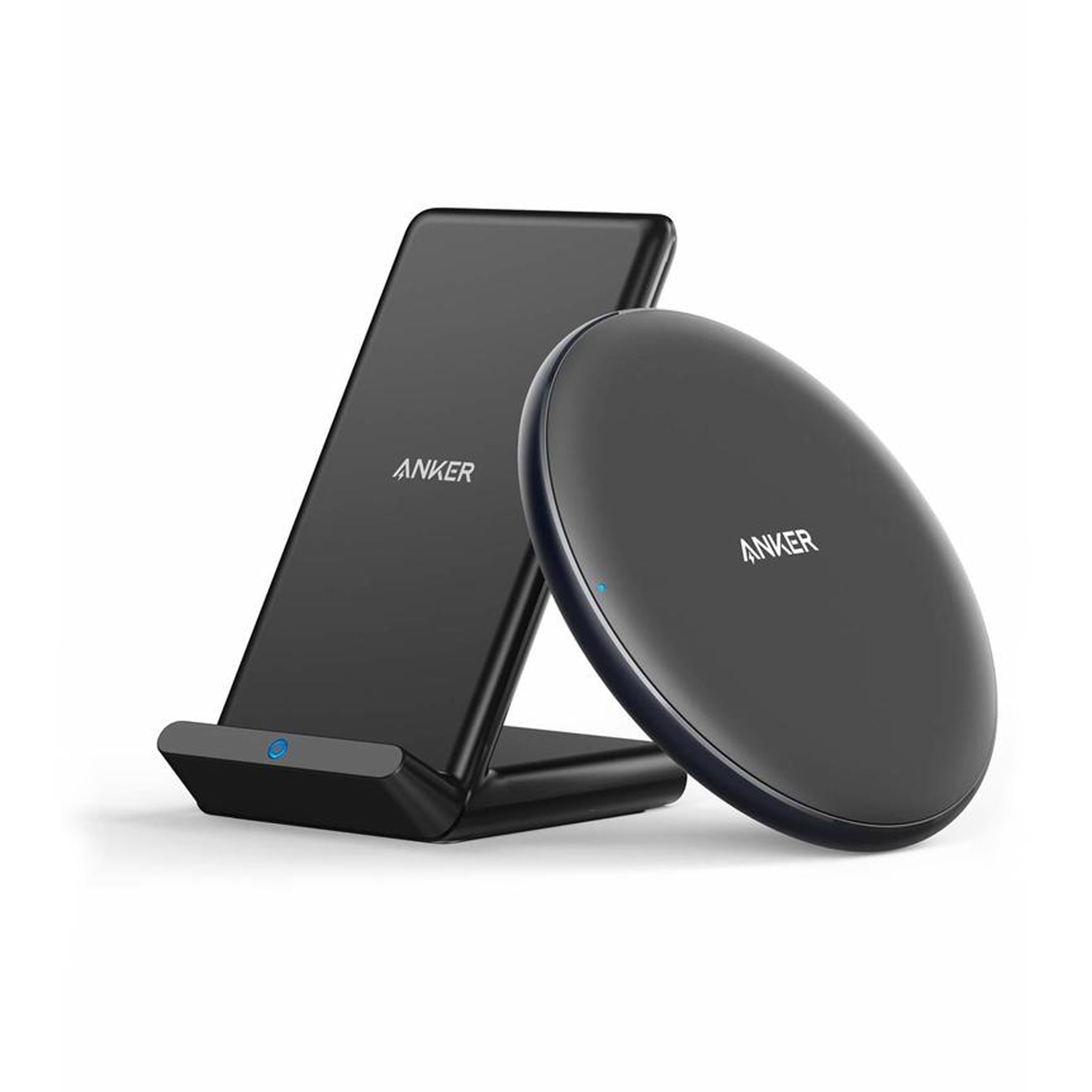
Anker's PowerWave Pad and Stand offers fast wireless charging with support for 10W Samsung and 7.5W iPhones. Reviewers noted its rectangular design improves phone alignment compared to round pads, and it includes a 4ft cable and QC 3.0 adapter. The stand's nonslip features and heat-dissipating vents are appreciated, though the included fan can be noisy in quiet settings. TechWire and The Strategist both praised its performance, with one reviewer noting it charged a Samsung Galaxy S9 in 146 minutes, faster than most competitors.
Full review
Charging speed and compatibility
The Anker PowerWave Pad and Stand delivers fast charging capabilities with specific wattage outputs for different device types. According to the Anker website specifications, the pad supports 10W charging for Samsung Galaxy devices and 7.5W for iPhones, with a 5W output for older smartphones. The device is designed to work with Quick Charge 2.0 or 3.0 wall chargers to achieve these speeds, and users who rely on standard chargers will experience slower charging times. The pad's compatibility extends to cases up to 5mm thick, which is a key feature for users who prefer to keep their phones protected with cases. Users have noted that the charging speed is sufficient for daily use, particularly for Samsung Galaxy users who can benefit from the 10W output. However, the charging speed is dependent on the wall adapter used, and users who do not invest in a compatible charger will not achieve the advertised fast-charging performance.
Design and physical build quality
The Anker PowerWave Pad and Stand features a rectangular design that differs from traditional round wireless chargers, aiming to improve alignment and reduce the need for precise placement. The pad includes heat dissipation vents and nonslip pads on both the top and bottom surfaces to prevent movement during charging. The build quality is described as solid and rugged, with a thick casing that suggests durability. The pad is designed to be stationary and is not intended for frequent repositioning. The LED indicator is a blue light that shows when the device is charging, and it also flashes to indicate issues such as metal obstruction or incorrect alignment. The design is described as aesthetically pleasing and adds a high-tech sophistication to any desk setup, though some users may find the black plastic finish less visually appealing than other options on the market.
User experience and practical functionality
Users report that the PowerWave Pad and Stand functions as expected with no major issues during typical use. The pad is designed to be easy to use, with a simple process of placing the device on the pad and removing it when charging is complete. The stand design allows users to see their phone's screen while charging, which is a significant improvement over flat charging pads that require the phone to lie flat. The pad supports charging through cases up to 5mm thick, which is beneficial for users who prefer to keep their phones protected. However, users have noted that the pad does not come with a power adapter, which is a drawback for those who do not already own a compatible one. The pad is also case-friendly, meaning that magnetic or metal attachments or cards will prevent charging, which is a common limitation with wireless charging pads.
Charging performance in real-world scenarios
In real-world testing, the PowerWave Pad and Stand delivers consistent charging performance, particularly for Samsung Galaxy users who can achieve the 10W charging speed. The pad's design allows for easy alignment, which reduces the chance of misplacement compared to round charging pads. Users have reported that the pad works well for everyday charging needs, whether at a desk or on a bedside table. The LED indicator provides clear feedback on charging status, and the pad's ability to charge through cases makes it convenient for users who prefer to keep their phones protected. However, the charging performance is dependent on the wall adapter used, and users who rely on standard chargers will experience slower charging times. The pad's ability to charge through cases up to 5mm thick is a significant advantage, particularly for users with thick or protective cases. The pad's design also includes heat dissipation features, which help maintain optimal charging temperatures during use.
Limitations and user concerns
One of the main drawbacks of the Anker PowerWave Pad and Stand is that it does not include a power adapter, which is necessary for achieving fast charging speeds. Users must purchase a compatible Quick Charge 2.0 or 3.0 wall charger separately, which can be an additional cost. The pad's design, while functional, is described as bulky compared to other wireless charging pads, and the black plastic finish may not appeal to all users. Additionally, users have noted that the pad does not support all types of cases, particularly those with metal attachments or magnetic components, which can interfere with the charging process. The pad's LED indicator may also flash in response to foreign objects or incorrect alignment, which can be confusing for users unfamiliar with wireless charging technology.
Strengths
- +Supports fast charging at 10W for Samsung Galaxy and 7.5W for iPhones
- +Designed with a rectangular shape for easier phone alignment compared to round pads
- +Features nonslip pads on top and bottom to keep the device and pad stable
Watch-outs
- −Does not include a power adapter in the box, requiring users to purchase one separately
- −The built-in fan for heat dissipation can be somewhat loud in quiet environments
How it compares
While the Anker PowerWave Pad and Stand offers fast 10W Samsung and 7.5W iPhone charging with a rectangular design, it lacks a power adapter and has a noisy built-in fan, unlike the Belkin UltraCharge which includes a charging brick and is quieter. Compared to the INIU Wireless Charger, it's less portable and doesn't offer sleep-friendly lighting or a three-year warranty.
Rating sources
“I’ll be honest in saying that I think the Dual Pad isn’t the prettiest wireless charging pad I’ve seen.”
Our 3.8 score is the average of these published ratings. Ratings marked * were derived from the reviewer’s written analysis or video transcript — the publisher didn’t print an explicit numeric score, so we inferred one from their own words. Click through to verify. More about methodology.