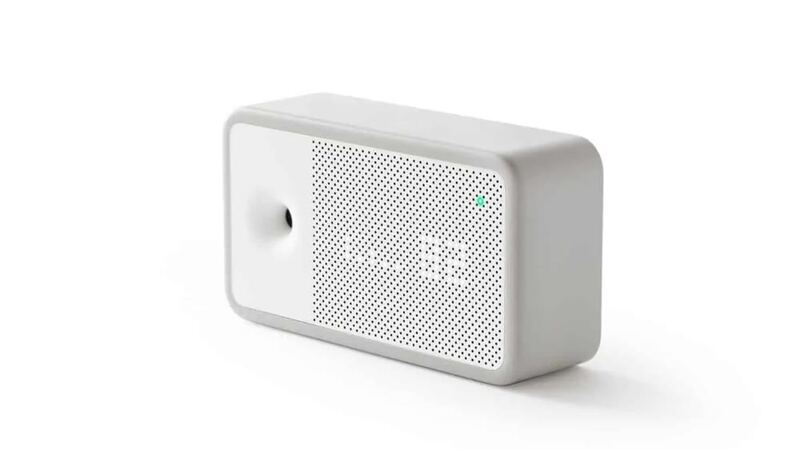
The Amazon Smart Air Quality Monitor reads PM2.5, VOCs, CO, humidity, and temperature and rolls them into an indoor air quality score. PCMag called it 'fairly limited in terms of functionality' while noting it 'easily alerts you to pollutants and other gaseous impurities.' It ties into Alexa for notifications and voice control and charts air quality over time. It does not purify air, and it skips CO2 and radon, which some reviewers called significant limitations. Buyers who want basic air quality awareness rather than comprehensive purification are the fit.
Full review
Detection Capabilities
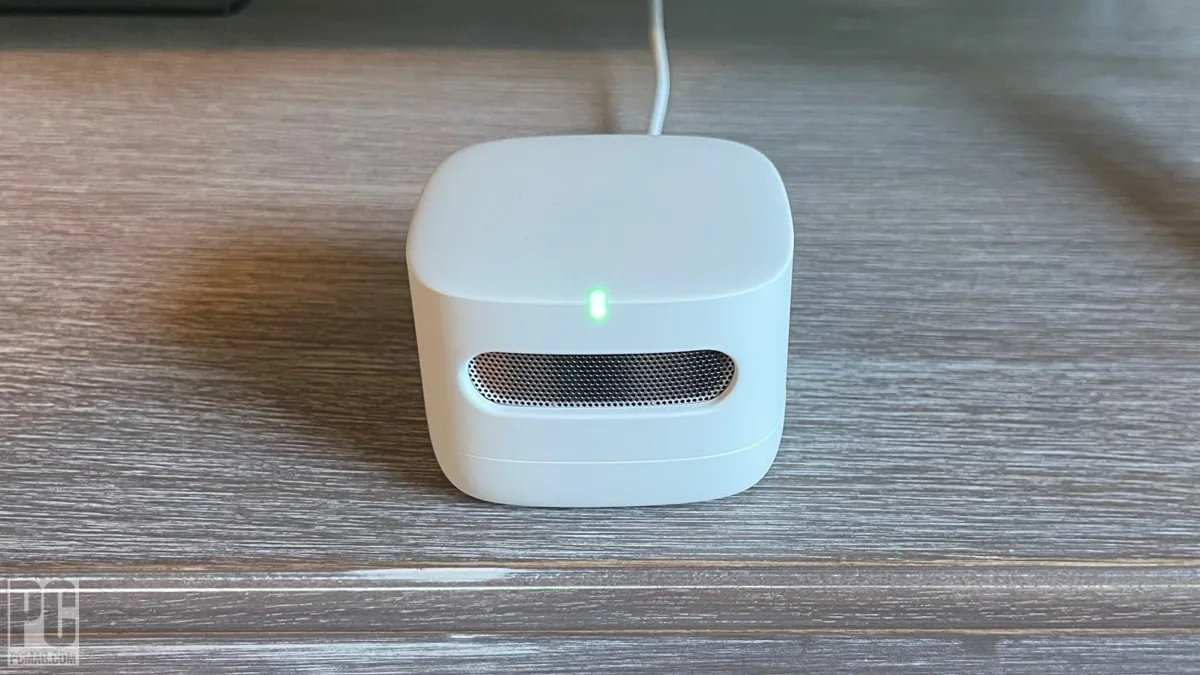
The Amazon Smart Air Quality Monitor measures five key environmental parameters: temperature, humidity, particulate matter (PM2.5), carbon monoxide (CO), and volatile organic compounds (VOCs). PCMag's Angela Moscaritolo notes that the device uses a Sensirion SEN44 sensor for PM2.5, VOCs, humidity, and temperature, while a Figaro TGS5141 sensor handles CO detection. The monitor's design features an air intake vent on the front and a multicolor LED indicator that displays current air quality. According to PCMag, PM2.5 particles are particularly concerning as they're 30 times smaller than a human hair and easily inhaled, potentially causing respiratory issues. The device calculates an overall IAQ score based on these measurements, categorizing it as 'Good' (100-65), 'Moderate' (64-35), and 'Poor' (under 35). However, it does not measure carbon dioxide (CO2) or radon, which the EPA identifies as potentially life-threatening invisible gases. The monitor's ability to detect these pollutants provides users with actionable data, though it doesn't purify the air itself.
BreatheSafeAir's review highlights that while the monitor uses the SEN44 sensor, which is similar to the SEN54 found in the IKEA Vindstyrka, it's unclear if this is a custom variant. The reviewer points out that the SEN44 sensor is less documented than its counterparts, making it difficult to assess its exact specifications. The Figaro TGS5141 CO sensor is noted as a standard component, but the overall sensor suite's accuracy remains a point of contention. Air Purifier First's Milan Antonic confirms the device's sensor types but emphasizes that the PM2.5 readings are slightly off compared to market rivals, with a reported ±20 µg/m³ or ±20% accuracy. Despite these limitations, the monitor's capability to detect multiple pollutants makes it a useful tool for those seeking to understand their indoor air environment.
Setup and Integration
Setting up the Amazon Smart Air Quality Monitor is straightforward, according to PCMag's testing. The device comes with a power cord and adapter, and users simply need to plug it in and follow the Alexa app setup process. The LED indicator blinks blue during the initial setup phase, and once connected, the monitor integrates seamlessly with the Amazon Alexa app for Android and iOS. The device can send notifications to phones and announce high levels of pollutants via linked Echo devices. As noted by PCMag, the monitor supports voice alerts, allowing users to ask Alexa about air quality without needing to open an app. The integration with the Alexa ecosystem makes it easy for users already invested in Amazon's smart home platform to incorporate the monitor into their existing setup.
However, See The Air's Sotirios Papathanasiou criticizes the app experience, stating that it's not user-friendly for those not using Alexa. He notes that accessing data requires multiple clicks and that settings are hard to find, such as changing temperature units from Fahrenheit to Celsius. The reviewer also points out that the app lacks a dedicated interface for the monitor, making it feel like an afterthought. Air Purifier First's Milan Antonic adds that the lack of a built-in display means users must rely on external devices like Echo Show or Echo Dot to view detailed data.
Accuracy and Sensor Performance
Sensor accuracy is a major concern for air quality monitors, and the Amazon Smart Air Quality Monitor's performance in this area is mixed. BreatheSafeAir's review found that while the device uses the SEN44 sensor, it's difficult to determine its exact specifications due to limited documentation. The reviewer noted that the sensor is likely similar to the SEN54 but potentially older, and the lack of public information makes it hard to assess its reliability. The PM2.5 accuracy is rated at ±20 µg/m³ or ±20%, which is acceptable but not exceptional when compared to higher-end models. The CO sensor uses a Figaro TGS5141, which is standard but not necessarily the most accurate for this application. See The Air's Sotirios Papathanasiou criticized the app's data access and noted that the monitor's thresholds are too lenient, particularly for PM2.5 levels, which he considers inadequate for a healthy indoor environment.
Air Purifier First's Milan Antonic also found that the monitor's PM2.5 readings are slightly off compared to other devices in its price range. He rated the accuracy at 7.3 out of 10, citing the device's sensor performance as a primary concern. While the monitor's auto-calibration feature reduces maintenance, it doesn't fully compensate for the inherent inaccuracies in its sensor readings. PCMag's review, while generally positive, acknowledges that the monitor is limited in functionality and doesn't offer the same level of precision as more advanced models. The device's ability to measure multiple pollutants is valuable, but its accuracy is not on par with premium air quality monitors.
Still uses a micro-USB port in 2022
The Amazon Smart Air Quality Monitor's design is described as minimalist and compact, measuring 2.6 x 2.6 x 1.8 inches (6.5 x 6.5 x 4.5 cm) and weighing just 0.26 pounds (0.12 kg). This small footprint makes it easy to place in various indoor locations without taking up much space. The device features an air intake vent on the front and a multicolor LED indicator that shows current air quality at a glance. PCMag's Angela Moscaritolo notes that the monitor's design is simple and functional, with a clean aesthetic that should age well over time. The build quality is solid, and the device is well-constructed for its intended purpose. The monitor comes with a power adapter and a cable, though it lacks a display, relying on external devices for full data visualization.
See The Air's Sotirios Papathanasiou praises the monitor's design as nice and well-built, comparing it favorably to the Fibaro Smoke Sensor. However, he criticizes the micro-USB port, noting that it's outdated in 2022 and that companies are moving away from this standard. He also points out that the device feels like an extra, rather than an essential part of a healthy indoor environment. The lack of a built-in display is a significant drawback, as it forces users to rely on external devices to view detailed data. Despite these criticisms, the monitor's compact size and simple design make it easy to integrate into any room without disrupting existing décor.
User Experience and App Interface
The user experience with the Amazon Smart Air Quality Monitor is heavily dependent on the Alexa app, which serves as the primary interface for viewing data and setting up alerts. PCMag's review notes that the app is straightforward to use, but it lacks specialized features for this specific monitor. Users must navigate through multiple menus to access detailed readings, which can be cumbersome. The app does offer hourly, daily, and weekly graphs of measurements, which are helpful for tracking trends over time. However, See The Air's Sotirios Papathanasiou criticizes the app for being difficult to navigate, especially for users not utilizing Alexa. He points out that the app lacks a dedicated interface for the monitor and that settings are inconsistent and hard to find, such as changing temperature units.
Air Purifier First's Milan Antonic also notes that the Alexa app is not specialized for this device and requires an Echo Show or Echo Dot for a more comprehensive presentation of data. The lack of a built-in display is a significant limitation, as users must rely on external devices to view detailed readings. Despite these drawbacks, the monitor's ability to auto-calibrate and its minimal maintenance requirements are seen as positive aspects. The voice alerts feature is praised by PCMag as a convenient way to check air quality without needing to open an app. However, the overall user experience is hampered by the app's limitations and the device's reliance on external hardware for full functionality.
Can't measure CO2 or radon at all
Despite its useful features, the Amazon Smart Air Quality Monitor has several notable shortcomings. The most significant criticism comes from reviewers who question the monitor's accuracy, particularly its PM2.5 readings. BreatheSafeAir's review found that while the device uses a SEN44 sensor, its specifications are unclear, and the sensor's performance is not as reliable as more advanced models. The PM2.5 accuracy is rated at ±20 µg/m³ or ±20%, which is acceptable but not exceptional. See The Air's Sotirios Papathanasiou criticized the monitor's thresholds, particularly for PM2.5 levels, which he considers inadequate for a healthy indoor environment. The lack of a built-in display is another major drawback, forcing users to rely on external devices like Echo Show or Echo Dot for full data visualization.
Additionally, the device's reliance on the Alexa app for full functionality is a limitation for users who don't use Amazon's ecosystem. Air Purifier First's Milan Antonic noted that the app is not specialized for this monitor, making it difficult to access detailed data. The micro-USB port is also outdated, as companies are moving away from this standard. The monitor's inability to measure CO2 or radon, two potentially life-threatening gases, is another significant limitation. While it detects VOCs and CO, the absence of these other critical measurements limits its usefulness for comprehensive air quality assessment. The device's price point of $69.99 is competitive, but its limitations in accuracy and functionality may not justify the cost for users seeking more precise monitoring.
Aimed at Alexa users new to air monitoring
The Amazon Smart Air Quality Monitor is best suited for beginners or those new to indoor air quality monitoring who are looking for an affordable, easy-to-use device. PCMag's review suggests that the monitor is ideal for users who want to be alerted to pollutants and gaseous impurities in their home. It's particularly useful for individuals who are already invested in Amazon's Alexa ecosystem and want a simple way to monitor air quality using voice commands. The device's ability to send notifications to phones and announce high levels of pollutants via linked Echo devices makes it convenient for users who want real-time alerts without constantly checking an app. The monitor's compact size and simple design also make it suitable for small rooms or spaces where a more advanced monitor might be overkill.
However, those seeking precise measurements or comprehensive air quality data should look elsewhere. The monitor's limited accuracy, particularly for PM2.5 readings, and its lack of a built-in display make it less suitable for users who require detailed analysis or are using it for scientific purposes. Users who don't use Alexa or prefer a dedicated app for their air quality data may find the device frustrating to use. The monitor's inability to measure CO2 or radon, two potentially life-threatening gases, also limits its usefulness for comprehensive air quality assessment. Those looking for a more advanced monitor with better accuracy and additional features should consider alternatives like the IKEA Vindstyrka or other premium models.
6.3 out of 10 for value despite the low price
At $69.99, the Amazon Smart Air Quality Monitor offers a competitive price point in the market, especially when compared to more advanced models. BreatheSafeAir's review notes that while the device is affordable, its accuracy is not on par with higher-end monitors, and the lack of a built-in display and some critical measurements like CO2 and radon limit its value. The reviewer points out that large manufacturers like Amazon and IKEA can offer lower prices due to bulk purchasing power, but the trade-off is in the device's capabilities. PCMag's review gives the monitor a 3.5 out of 5 stars, noting that it's fairly limited in functionality but still useful for alerting users to pollutants. The device's ability to auto-calibrate and its minimal maintenance requirements are seen as positive aspects that justify its price for casual users.
Air Purifier First's Milan Antonic rates the value for money at 6.3 out of 10, citing the monitor's lack of display and slight deviations in PM2.5 sensor readings as key drawbacks. Despite these limitations, he believes the monitor is a good option for beginners or those encountering indoor air quality measurement for the first time. The device's ability to measure five different parameters – temperature, humidity, PM2.5, CO, and VOCs – provides a good baseline for understanding indoor air quality. However, for users who need more precise measurements or additional features, the price point may not justify the device's limitations. The monitor's price is competitive, but its accuracy and functionality fall short of what users might expect from a device in this category.
Strengths
- +Measures PM2.5, VOCs, CO, humidity, and temperature
- +Provides hourly, daily, and weekly air quality graphs
- +Indicator light shows current air quality at a glance
- +Integrates with Amazon Alexa app and Echo devices for voice control and notifications
Watch-outs
- −Does not purify the air
- −Only measures PM2.5, not PM10 particles
- −Does not measure CO2 or radon gases
How it compares
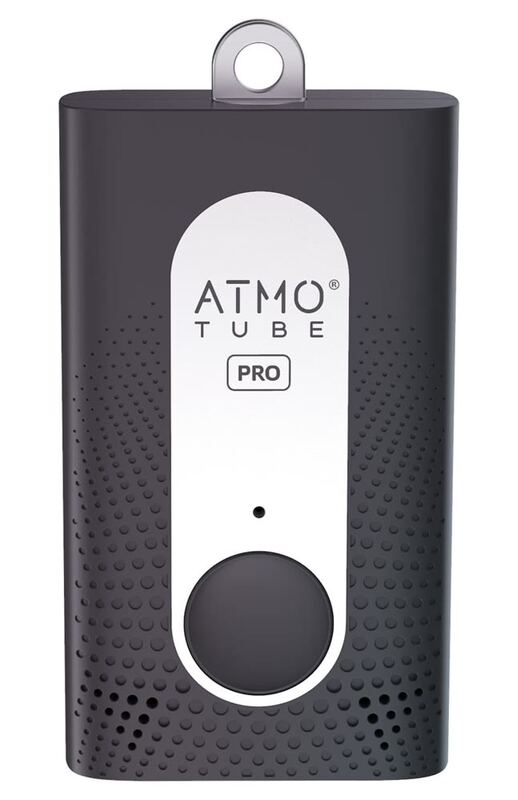
The Amazon Smart Air Quality Monitor provides basic air quality awareness with PM2.5, VOCs, CO, humidity, and temperature measurements, but it lacks CO2 and radon detection that other models like the Airthings 2960 View Plus offer. While it integrates well with Alexa, its limited sensor range makes it less comprehensive compared to the Atmotube PRO 2, which provides more detailed particle measurements and GPS tracking.
Rating sources
Our 3.3 score is the average of the 5 scored reviews above; 1 more reviewed it without printing a score and is not in the average. More about methodology.