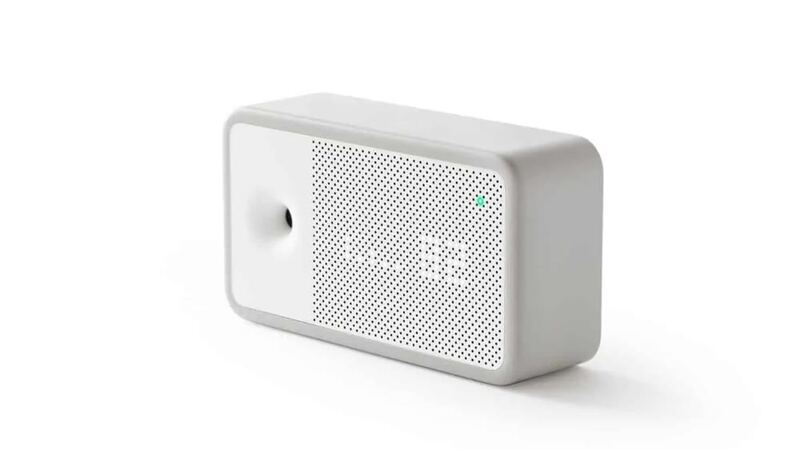
The AirGradient ONE is praised for its ease of setup, open-source design, and reliable sensor readings across CO₂, PM₂.₅, VOCs, and NOₓ levels. Reviewers highlight its seamless Home Assistant integration and affordability, with a fully assembled model priced at $230 and a kit version at $138. However, some users reported initial WiFi hotspot connection issues, and the device lacks a radon sensor compared to alternatives like the Airthings View Plus. Despite a negative Wired review focusing on display durability, many users, including those in educational settings, find it reliable and effective for monitoring indoor air quality.
Full review
Wired's Controversial Verdict
WIRED magazine's review of the AirGradient ONE delivered a scathing 'Not Recommended' verdict, citing display durability concerns as the primary issue. This review, which sparked significant backlash from the community, created a major rift in the product's reputation. The AirGradient blog responded directly to the review, noting that the device had been recognized in rigorous scientific evaluations, making the WIRED verdict particularly surprising. The company's forum posts revealed that many users, including experienced sensor developers, were deeply disappointed by the review's methodology and conclusions. WIRED's assessment was seen by many as lacking technical depth, with reviewers who had no prior experience with air quality monitoring dismissing the product's value. The controversy extended beyond the publication, with the AirGradient team launching a survey to better understand how the community evaluates tech reviews, highlighting the broader issue of declining trust in online product reviews.
Build Quality and Design
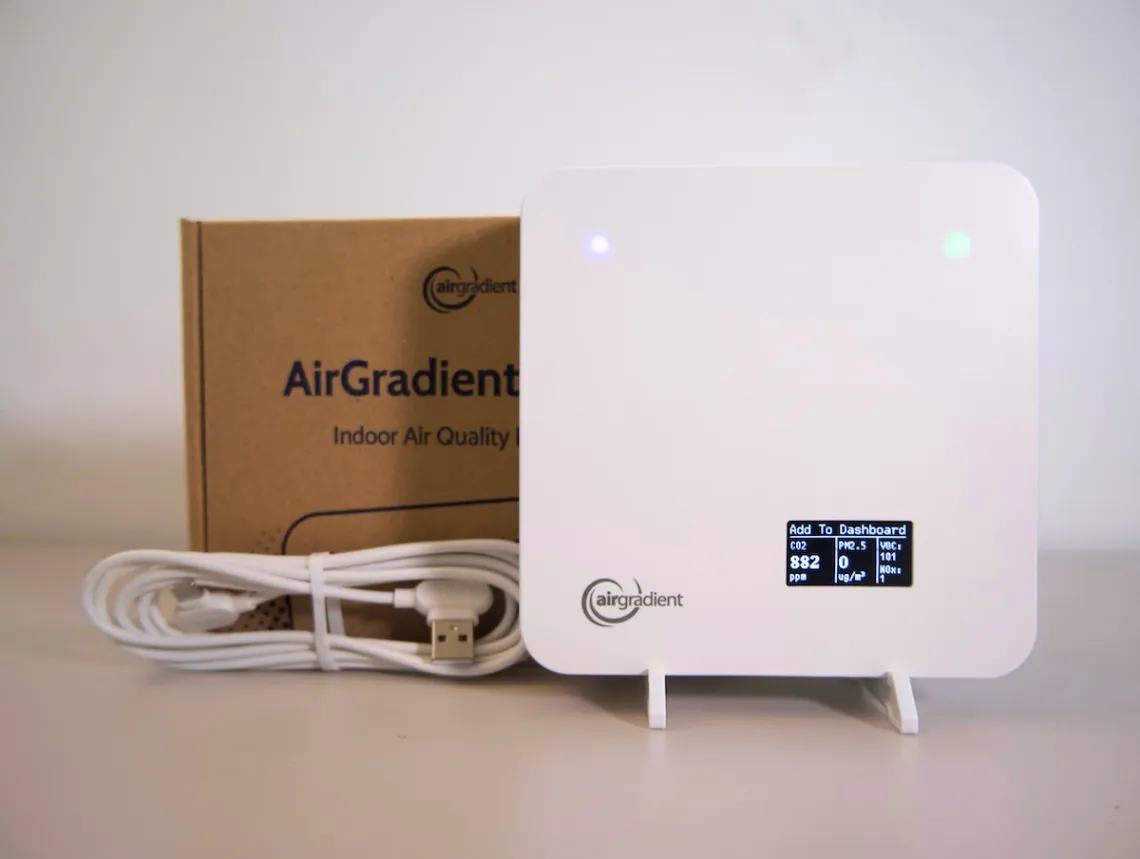
The AirGradient ONE's build quality demonstrates a thoughtful approach to both indoor and outdoor deployment. The device features an ASA plastic enclosure that's UV resistant and weatherproof, making it suitable for outdoor environments. The 130x130x35mm dimensions and 350-gram weight make it a substantial unit, with the case designed to accommodate air circulation and heat dissipation. The device uses a 90-degree angled USB-C power connector that hides neatly at the back, and includes plastic legs for upright mounting. The PCB design is notably spacious, with components well-separated, though some reviewers questioned whether this was intentional for airflow or a design oversight. The internal components include the Plantower PMS5003 particulate sensor, SenseAir S8 CO2 sensor, Sensirion SHT40 temperature/humidity sensor, and Sensirion SGP41 TVOC/NOx module. The device includes 11 RGB LEDs, a push button, reset button, and external hardware watchdog with TPL5010 Nano Timer. The case is held together by Torx T6 screws, which some reviewers found difficult to work with, though a screwdriver is included. The OLED display is 1.3 inches with 128x64px resolution, positioned for optimal viewing from any angle.
Sensor Performance and Accuracy
AirGradient's sensor suite includes the SenseAir S8 CO2 sensor, which is a high-quality NDIR sensor with a stated accuracy of ±30ppm ±3% of reading, considered among the most accurate in the industry. The Plantower PMS5003 particulate sensor measures particles from 0.3 to 10 micrometers with high accuracy, though reviewers noted it shouldn't be trusted for PM10 concentrations due to physical limitations of low-cost sensors. Temperature and humidity readings come from the Sensirion SHT40 sensor, with some concerns raised about the accuracy of internal temperature compensation. The Sensirion SGP41 TVOC/NOx module provides measurements within ±15% accuracy. Independent testing by forum users showed that the device performs well in real-world conditions, with temperature and humidity accuracy being acceptable for most applications. The device's ability to provide real-time data on CO2, PM2.5, VOCs, and NOx levels makes it a valuable tool for environmental monitoring. However, some users noted that the device's response time is faster than competitors like Airthings View Plus, which uses fewer samples for more stable readings.
Setup and Integration
The setup process for the AirGradient ONE involves connecting to a WiFi hotspot that appears as 192.168.4.1, allowing users to configure the device through a web browser. Some reviewers encountered initial connection issues, but these were typically resolved through device resets. The device supports USB power with a 2A/5V requirement, and comes with a 2-meter USB-C to USB-A cable. Integration with Home Assistant is straightforward, with the device exposing numerous configuration options and sensors. The device supports ESPHome integration, which allows for extensive customization and automation. Users can flash the device directly from a browser using the AirGradient website, and the firmware is open source. The dashboard provides tools for firmware upgrades, data download, notifications, and user/location management. The AirGradient Dashboard also supports embedding widgets on websites and mobile devices, providing real-time air quality information. The device's open-source approach and data transparency make it appealing to users who value control and privacy. The inclusion of a digital test report for assembled units shows that individual corrections are applied to bring readings in line with regulatory-grade monitors.
Community Reception and Value
The community response to the AirGradient ONE has been largely positive, with many users praising its affordability, reliability, and open-source approach. The device has been adopted in educational settings, where students can engage with real-time air quality data, making it valuable for raising environmental awareness. Users in the forum have reported that the device is easy to configure, deploy, and access data, with the open-source ecosystem making setup straightforward even for non-technical users. The company's commitment to open hardware and data privacy has been widely appreciated, with many users noting that the device's approach differs significantly from proprietary solutions. The device's price point of $230 for the fully assembled model and $138 for the kit model makes it competitive in the market. The kit model offers a large discount but lacks warranty or certifications, while the assembled model includes CE, FCC, and RoHS certifications. The device's ability to integrate with Home Assistant and ESPHome has made it popular among smart home enthusiasts. However, some users have reported issues with the Torx screws, which can be difficult to work with and have been known to strip.
Where It Falls Short
Despite its many strengths, the AirGradient ONE has several notable shortcomings that potential buyers should consider. The most significant issue stems from the Torx T6 screws, which are difficult to work with and can be prone to stripping, as noted by forum users who have experienced this problem firsthand. The device's internal temperature and humidity readings come from the ENS210 sensor, which some reviewers found problematic for accurate environmental data, especially when relative humidity exceeds 75%. The device's response time, while faster than some competitors, may not be ideal for users seeking stable readings. Additionally, the device's reliance on a WiFi hotspot for initial setup can sometimes cause connection issues, though these are typically resolved through device resets. The PM10 readings are not reliable due to the physical limitations of low-cost sensors, and users should interpret these with caution. The device's open-source approach, while appreciated, requires some technical knowledge for full customization, which may not be accessible to all users. The company's commitment to open data is commendable, but the potential shift to self-hosting after a 24-month period raises concerns about long-term data access.
Who It's Best For
The AirGradient ONE is best suited for users who value open-source hardware and data privacy, particularly those already using Home Assistant or ESPHome for smart home automation. It's ideal for educational institutions looking to teach students about environmental monitoring, and for environmentally conscious individuals who want real-time data on indoor air quality. The device's affordability makes it attractive for budget-conscious buyers, while its robust build quality and sensor accuracy make it suitable for both indoor and outdoor deployment. However, users who require highly stable readings or are not technically inclined may find the device challenging to work with. The device is not recommended for users who prioritize proprietary solutions or who are looking for a plug-and-play experience without any configuration requirements. Those seeking a device with a long-term data access plan should be aware of the potential shift to self-hosting after 24 months. The device's open-source approach and data transparency make it particularly appealing to users who want control over their data and are willing to invest time in customization.
Comparison to Alternatives
When compared to competitors like the Airthings View Plus, the AirGradient ONE offers more detailed particulate matter measurements and includes NOx measurements, but lacks a radon sensor. The Airthings device uses fewer data samples for more stable readings, while the AirGradient ONE provides faster response times. The AirGradient ONE's use of the SenseAir S8 CO2 sensor gives it an edge in accuracy over many competitors, though the device's PM10 readings are less reliable due to sensor limitations. Compared to the PurpleAir, the AirGradient ONE has a more robust build quality and better sensor integration, though it lacks the same level of community support and DIY customization options. The device's open-source approach and data transparency set it apart from proprietary solutions, though it requires more technical knowledge for full customization. The AirGradient ONE's price point of $230 for the assembled model and $138 for the kit model makes it competitive, though the kit model lacks warranty or certifications. The device's ability to integrate with Home Assistant and ESPHome makes it more versatile than many competitors, though the setup process can be challenging for non-technical users.
Strengths
- +Easy to assemble and configure with user-friendly instructions
- +Integrates seamlessly with Home Assistant for full control and automation
- +Provides accurate readings for CO₂, PM₂.₅, VOCs, and NOₓ sensors
- +Affordable pricing with a kit option available for 138 USD
Watch-outs
- −Initial WiFi hotspot setup can be problematic for some users
- −Lacks radon sensor compared to competitors like Airthings View Plus
How it compares
The AirGradient One excels in ease of setup and Home Assistant integration, making it more user-friendly than the Airthings models, which use lower-tier sensors and lack radon detection. While it doesn't match the Qingping Gen 2's sensor accuracy, it provides a more affordable option with good performance across CO₂, PM₂.₅, VOCs, and NOₓ sensors, making it a strong alternative to the more expensive Airthings devices.
Who this is for
At a glance: DIY enthusiasts.
Why you’d buy the AirGradient One
- Easy to assemble and configure with user-friendly instructions.
- Integrates seamlessly with Home Assistant for full control and automation.
- Provides accurate readings for CO₂, PM₂.₅, VOCs, and NOₓ sensors.
Why you’d skip it
- Initial WiFi hotspot setup can be problematic for some users.
- Lacks radon sensor compared to competitors like Airthings View Plus.
Rating sources
“Based on my 7 years experience in building and using low cost sensors, i can mention that AIRGRADIENT sensors are the best low cost sensors i have work with.”
“I have been running 2 of these AirGradient ONE with model number I-9PSL for the past 6 months, so its time to write a review.”
“Changed rating from 4.5 to 4 stars. Mostly due to some persistent issues that remain with the device.”
“This device presents a compelling alternative to existing solutions, particularly for those seeking transparency and robust performance.”
Our 4.0 score is the average of these published ratings. Ratings marked * were derived from the reviewer’s written analysis or video transcript — the publisher didn’t print an explicit numeric score, so we inferred one from their own words. Click through to verify. More about methodology.