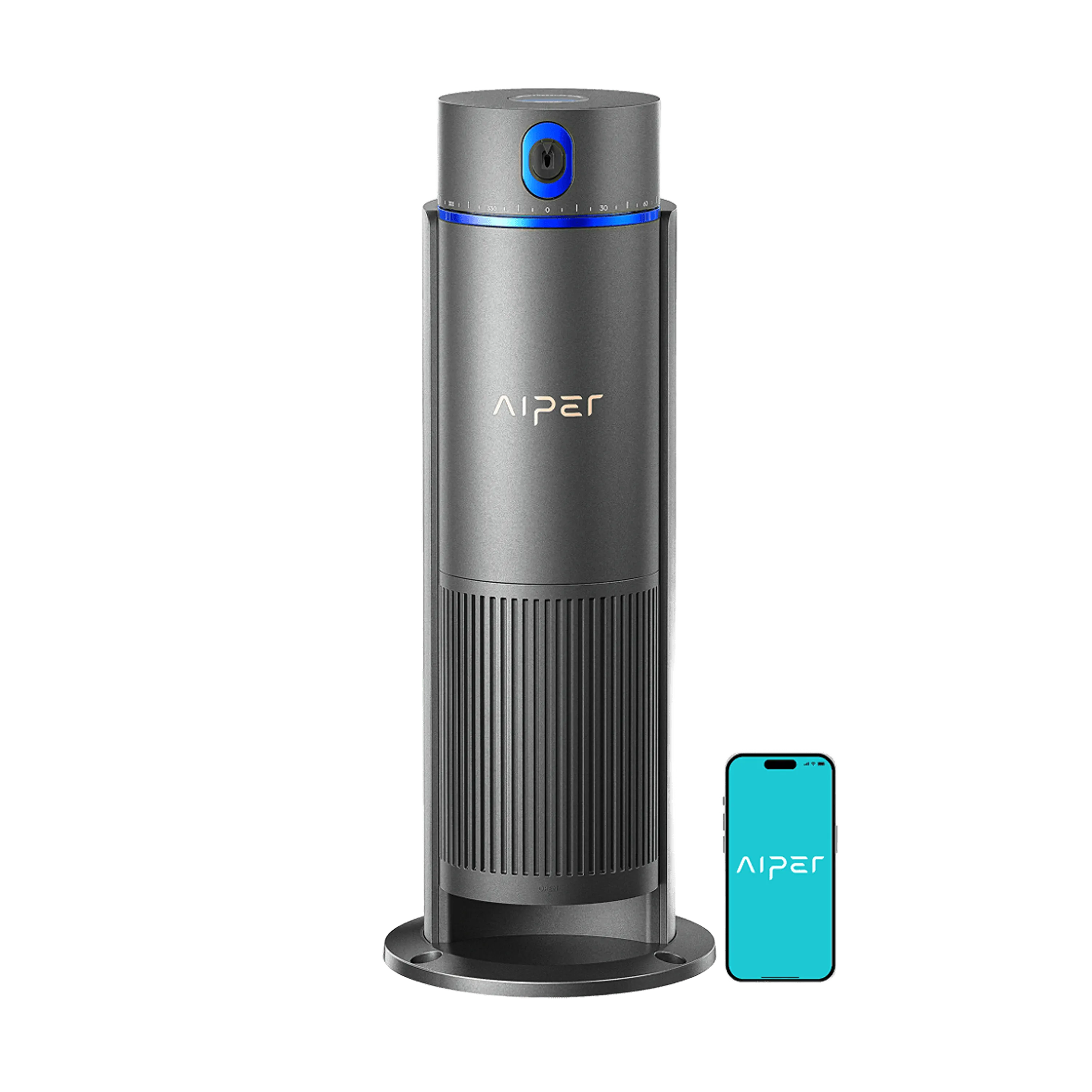
The Aiper IrriSense 2 combines a controller, rotor sprinkler, electric valve, and nutrient feeder into one compact device that supports up to 10 customizable irrigation zones. WIRED found the system’s weather-adaptive intelligence automatically skips watering cycles during rain or high wind, while Androidguys highlighted its EvenRain technology for consistent soil saturation. However, the hardware is surprisingly big—a fat cylinder measuring 2 feet tall and weighing over 11 pounds—and requires both a standard garden hose connection and an electrical outlet. The mapping process took a little experimentation at first, often demanding physical repositioning to achieve precise boundaries without overshooting onto sidewalks or neighboring properties. This product fits homeowners with fixed outdoor outlets who want automated zone management, but those needing flexible placement or simple setups should look elsewhere.
Full review
Physical footprint and installation requirements
The Aiper IrriSense 2 is a substantial piece of outdoor hardware that demands careful consideration regarding its physical presence in a garden. WIRED measured the unit as a fat cylinder standing 2 feet tall and weighing over 11 pounds, noting that the bulk makes it difficult to maneuver compared to traditional oscillating sprinklers. The device requires both a standard garden hose connection and access to an electrical outlet, which anchors the system to a specific location more rigidly than battery-powered or purely water-driven alternatives. Basic-tutorials.com described the monolithic column-shaped design as resembling a pedestal fan rather than a conventional watering tool, highlighting that its size is necessary to house the internal controller, rotor, electric valve, and nutrient feeder in one compact tower.
Installation involves securing the unit with ground stakes or a plastic locator device to ensure repeatable positioning. Bob Vila found the physical setup process impressively quick once the hardware was anchored, completing the initial connection within 15 minutes of placing the unit on its stand. However, Androidguys observed that while basic single-zone setups might hit that 15-minute mark, mapping multiple zones realistically extends the installation window to 30 or 45 minutes due to the time required for planning stake placement and running hoses. The system relies on a 33-foot waterproof power cord, meaning homeowners must have an outdoor outlet within range of their intended watering location, which can limit flexibility in large or irregularly shaped yards.
Zone mapping workflow and software interface
Defining the boundaries for irrigation zones is a manual process that relies heavily on physical interaction with the device rather than fully automated spatial scanning. WIRED detailed the Area mode workflow, where users must manually dial in water pressure to reach specific edges of their lawn before dropping digital pins in the companion app to mark corners. This process requires rotating the nozzle and repeating the spray-and-pin sequence until a full 360-degree circuit is established. The mapping interface allows for up to 10 independently configurable irrigation zones, enabling users to create separate schedules for lawns, flower beds, and raised planters. Bob Vila noted that while the controls felt intuitive after initial experimentation, the process demanded practice to achieve precise boundaries without overshooting onto sidewalks or neighboring properties.
The software provides clear guidance throughout the setup, but the physical limitations of the water jet can complicate the mapping phase. Basic-tutorials.com reported difficulties during their initial setup because the water jet failed to reach the full 12-meter range specified by the manufacturer, forcing a walk back to the house connection to increase the main water pressure before mapping could proceed successfully. The app displays the area map in real time as pins are dropped, but WIRED found that closing the final gap in the 360-degree circuit was frustrating, often leaving tiny slivers of unmarked yard space despite careful adjustment. Once mapped, users can define watering not by duration but by a water consumption limit measured in inches applied to the soil.
Spray performance and pressure dependencies
The actual coverage of the IrriSense 2 is heavily dependent on external water pressure, with significant deviations from advertised ranges occurring under suboptimal conditions. Mowingmagic tested the unit over 3 months and found that achieving the maximum 40-foot spray radius required optimal water pressure; when using a thinner 13-millimeter hose, the spray only reached 8 meters instead of the promised 12 meters. Even switching to a thicker 19-millimeter hose did not fully resolve the range deficit in their specific setup. The unit includes a built-in filter on the hose connector and a pressure gauge on top to help diagnose these issues before they disrupt watering schedules, but the reliance on high flow rates—specifically 26 liters per minute at 45 PSI—means that homes with low municipal pressure may struggle to utilize the full capacity of the device.
When water pressure is sufficient, the system delivers a spray pattern designed to mimic natural rainfall rather than blasting concentrated streams. Androidguys highlighted Aiper's EvenRain technology as a standout feature, noting that the distributed pattern results in more consistent soil saturation and less runoff compared to traditional sprinklers. The unit is TÜV-certified for water pressure stability, maintaining less than 5 percent deviation at pressures up to 45 PSI. However, WIRED observed that despite being described as a gentle mist, the spray acts more like a jet when reaching the far edges of the coverage area, particularly near the terminus of its range. This can lead to minor overwatering in specific spots if the pressure is not carefully dialed down during the mapping phase.
Weather intelligence and automated scheduling
The IrriSense 2 incorporates real-time weather detection that actively manages watering schedules to prevent waste during adverse conditions. Bob Vila reported that the system successfully handled both rain and wind, automatically skipping scheduled cycles after rainfall and pausing irrigation on windy days while sending a notification to allow for manual rescheduling later. WIRED confirmed this intelligence, noting that the app skips runs when it is wet or windy, which adds a layer of operational efficiency not found in basic timer-based sprinklers. This weather-aware functionality allows homeowners to set precise water consumption limits without worrying about overwatering during unexpected storms.
Beyond automatic skipping, the system offers multiple automated modes tailored to different garden layouts. WIRED outlined 3 primary options: Point mode for targeting single specimens like trees or bushes, Line mode for following linear paths such as hedges and flowerbeds, and Area mode for distributing water over two-dimensional sections of land. Androidguys found that creating separate watering schedules for shaded flower beds versus sunny lawn sections from a single dashboard provided significant dividends, eliminating the need to manually adjust timers throughout the week. The system can initiate runs on demand or follow strict schedules, with the app providing clear notifications when cycles finish.
Long-term usability and hardware durability
The physical construction of the IrriSense 2 is built to withstand outdoor conditions, though its size presents ongoing logistical challenges. Androidguys noted that the enclosure feels appropriately rugged for a product expected to live outdoors throughout the growing season, backed by a 2-year warranty. The housing features UV-resistant materials and corrosion-resistant copper fittings, with freeze-safe drainage systems designed to protect internal components during colder months. Mowingmagic praised the metal ground spike included in the box for keeping the sprinkler stable even at full power output, contrasting it favorably against plastic alternatives that might shift under pressure.
Despite its robust build, the hardware's bulk and fixed positioning requirements can limit long-term flexibility. Trusted Reviews described the device as expensive, large, and tricky to situate neatly within a garden layout due to the dual requirement for water and power connections. The system cannot be easily moved to cover different areas without repeating the mapping process, which contrasts with simpler sprinklers that can be relocated freely. For users who need to rotate their watering strategy frequently or have highly complex yard shapes requiring more than 10 zones, the fixed nature of the hardware combined with the manual mapping workflow may prove restrictive compared to fully subterranean in-ground systems.
Strengths
- +Combines irrigation controller, rotor sprinkler, electric valve, and nutrient feeder into a single unit
- +Supports up to 10 customizable irrigation zones with independent schedules
- +Weather-adaptive system automatically skips watering cycles during rain or high wind
- +TÜV-certified for water pressure stability maintaining less than five percent deviation at up to 45 PSI
Watch-outs
- −Large and bulky hardware measuring roughly 2 feet tall and weighing over 11 pounds
- −Requires a nearby electrical outlet in addition to a standard garden hose connection
- −Zone mapping requires initial practice and physical repositioning for optimal coverage
How it compares
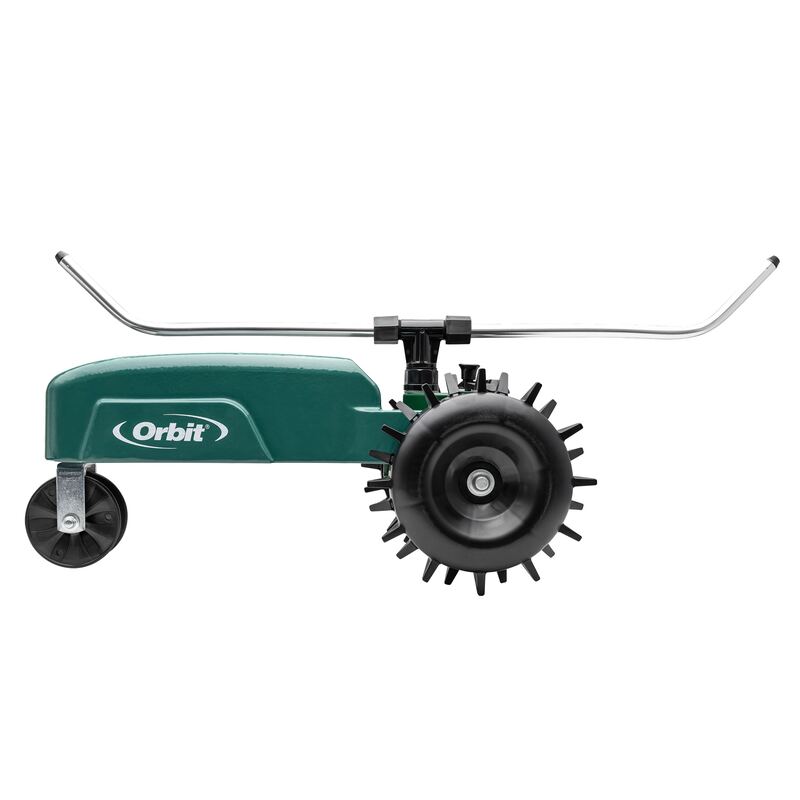
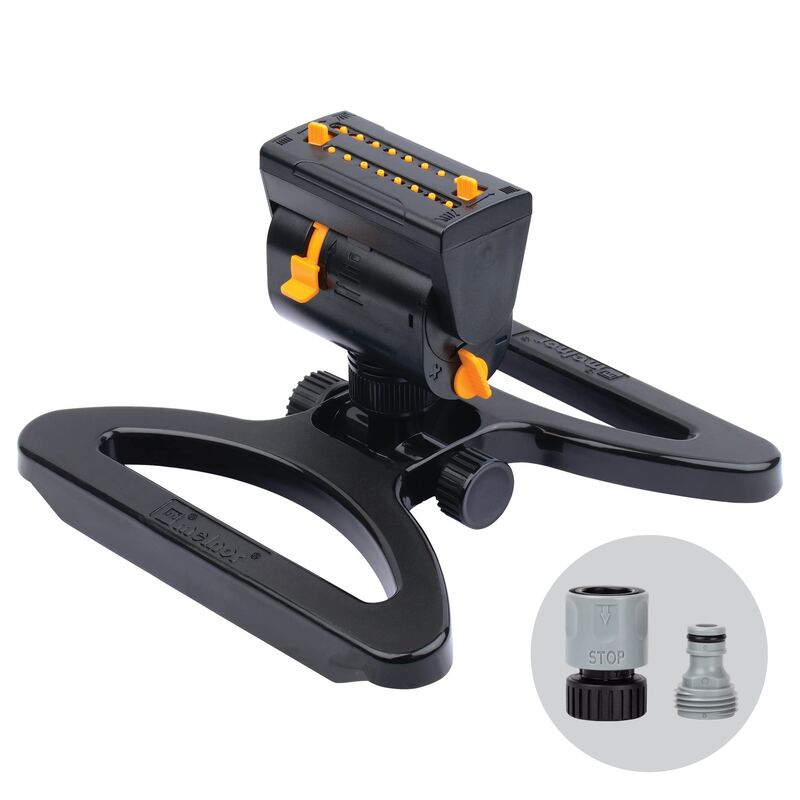
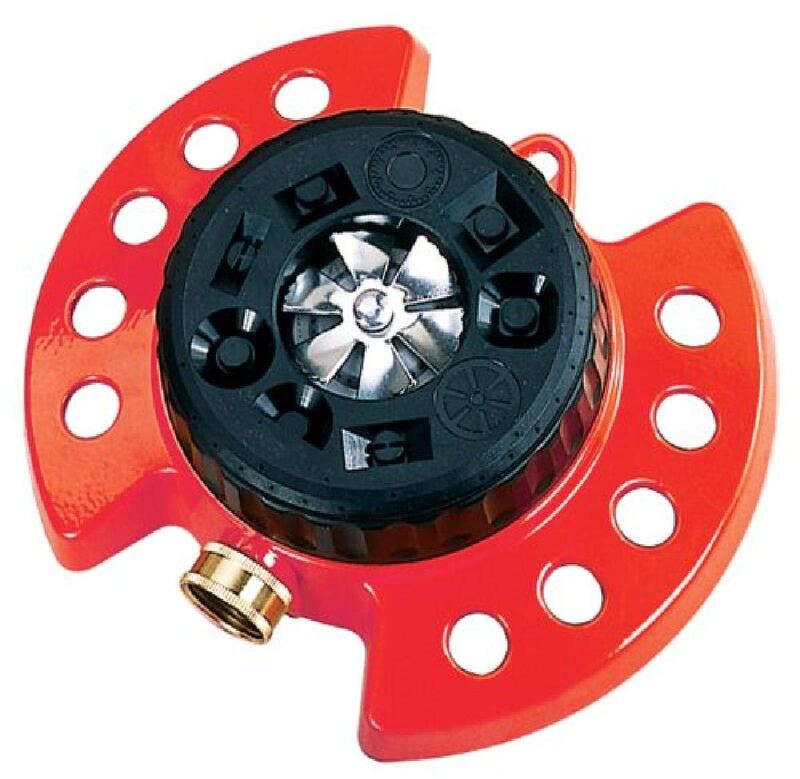
Unlike the manual Dramm and Melnor sprinklers, this system offers automated weather-adaptive scheduling that skips cycles during rain or high wind. It also provides up to 10 customizable zones with independent controls, a level of zone management that neither the single-pattern Orbit Traveling Tractor nor the multi-shape but non-automated Dramm unit can match.
Rating sources
Counts as 3.84/5 in our score — this publisher's 31 scores on the site average 3.77, so its scores are adjusted up to compare fairly with other publishers.
Counts as 4.58/5 in our score — this publisher's 42 scores on the site average 4.53, so its scores are adjusted down to compare fairly with other publishers.
Counts as 4.07/5 in our score — this publisher's 14 scores on the site average 4.07, so its scores are adjusted up to compare fairly with other publishers.
Counts as 3.95/5 in our score — this publisher's 43 scores on the site average 4.22, so its scores are adjusted down to compare fairly with other publishers.
Our 4.1 score is the average of the 4 scored reviews above, each adjusted for how strictly its publisher scores; 6 more reviewed it without printing a score and are not in the average. More about methodology.