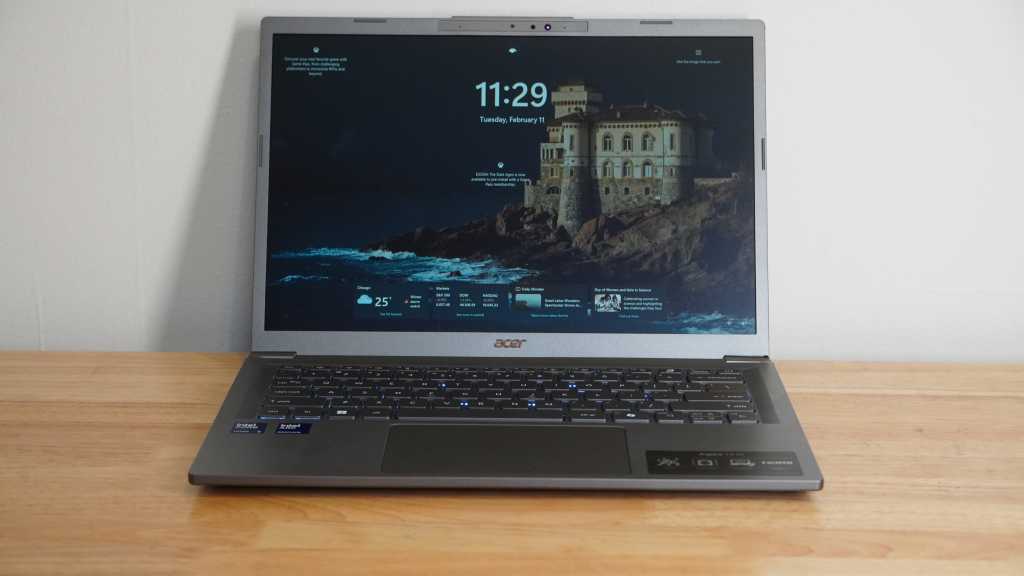
The Aspire 14 AI is Acer's lower-cost Copilot+ laptop, sold here with an Intel Core Ultra 5 226V, 16GB of memory and a 512GB SSD. PCMag and PCWorld each rated it 3.5 out of 5, and each recorded about 17 hours in its battery test. Both faulted the display, which PCWorld measured at 327.6 nits and 64 percent of the sRGB color space. PCWorld's verdict calls it "a capable, utilitarian laptop that shouldn't disappoint those who need a productivity machine." Both outlets tested a 1TB touchscreen configuration; the linked listing is the 512GB model, which Amazon lists without a touchscreen.
Full review
A cheaper way into Copilot+ hardware
PCMag's bottom line: "The Acer Aspire 14 AI delivers Copilot+ smarts and surprising stamina, but its screen and keyboard remind you that it's a budget-conscious laptop." The outlet called it one of the most affordable Microsoft Copilot+ PCs it had seen and identified the most basic model as the Core Ultra 5 226V with Arc 130V graphics, 16GB of RAM and a 512GB SSD, which is the configuration linked here.
PCWorld reviewed the same processor with a 1TB drive and wrote: "You can get much better laptops than the Acer Aspire 14 AI, but it brings a lot to the table at $699." It rated overall performance decent, noting the laptop kept close to but behind the Dell Inspiron 14 Plus and Acer Swift Go 14 in PCMark 10.
About 17 hours on a charge
PCMag's tested battery life was 17 hours 14 minutes, which it called excellent. PCWorld got just over 17 hours in its 4K video playback test, run in airplane mode with the display set between 250 and 260 nits.
PCWorld tempered that result: "It's satisfying battery life, but having seen more and more laptops break 20 hours (and one even break 24 hours), it's not impressive."
The display is the weak point
Both reviews single out the screen. PCMag wrote that "the color quality was disappointing in testing" and called the 45% Adobe RGB and DCI-P3 coverage "a real bummer for anyone who wants vibrant color."
PCWorld measured a modest 327.6 nits and a color gamut "about as low as you can get from a modern display, hitting just 64 percent of the sRGB color space." It gave the panel credit for a strong anti-glare finish that makes it easy to see in most conditions.
Ports and build
PCMag found two Thunderbolt 4 ports, a full-size HDMI output and a USB-A port on the left side, with another USB-A port, a Kensington lock slot and a 3.5mm headset jack on the right, and wrote that "it's refreshing to see connections this robust."
The design drew less praise. PCWorld listed "Basic looks and feel" as a con, and PCMag's cons include "Backlit keyboard is hard to read" and "AI indicator isn't helpful."
Strengths
- +17 hours 14 minutes in PCMag's battery test and just over 17 hours in PCWorld's 4K video test
- +Two Thunderbolt 4 ports, two USB-A ports, HDMI and a headset jack
- +16GB of memory with an Intel Core Ultra 5 226V processor
- +Anti-glare screen finish that PCWorld says dramatically cuts down on reflections
- +Weighs 3.07 pounds on PCWorld's spec list
Watch-outs
- −Display covers just 64 percent of sRGB (PCWorld) and 45% of Adobe RGB and DCI-P3 (PCMag)
- −Backlit keyboard is hard to read, per PCMag
- −Basic looks and feel, per PCWorld
- −PCWorld found it trailing the Dell Inspiron 14 Plus and Acer Swift Go 14 in PCMark 10
How it compares
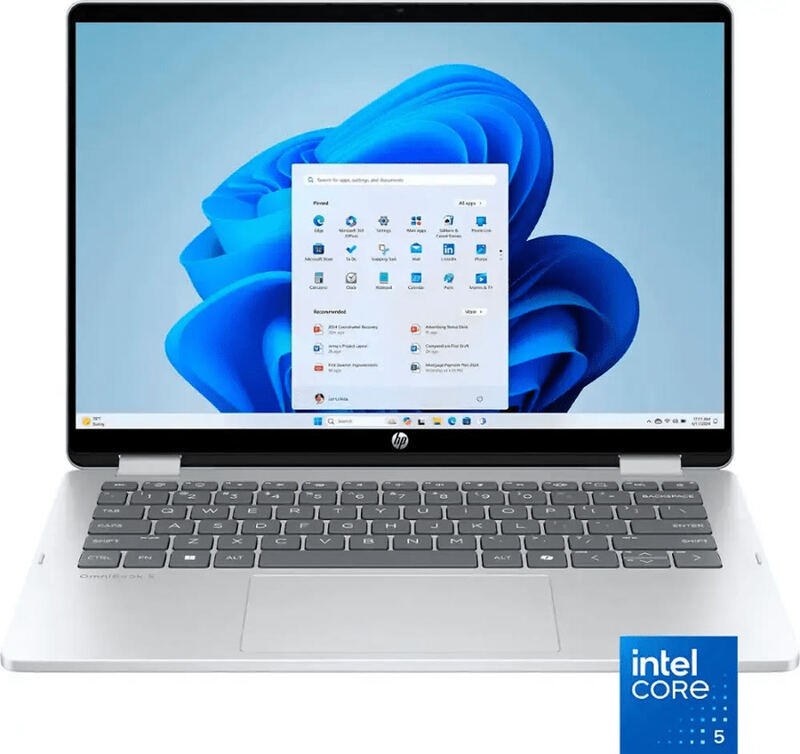
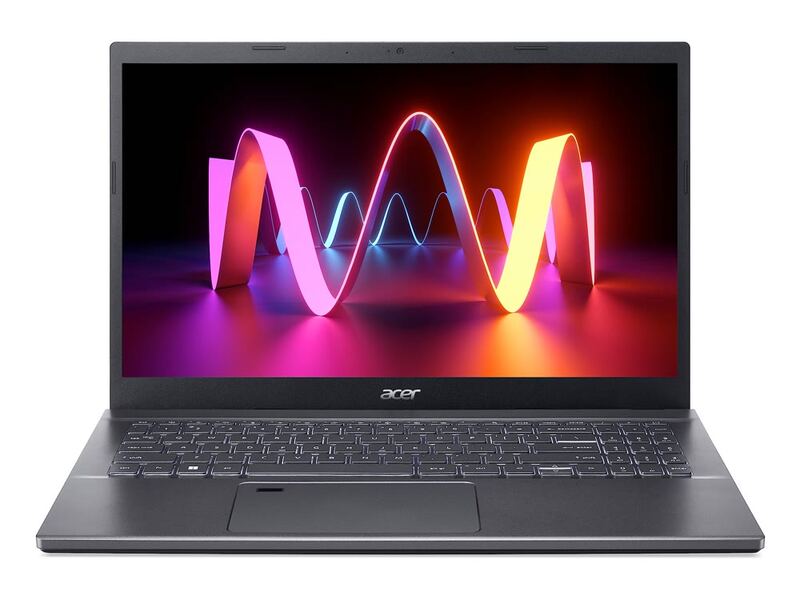
PCMag's and PCWorld's 17-hour battery results put it ahead of the roughly 13 hours PCWorld measured on the Apple MacBook Neo, and behind the 25-plus hours PCWorld measured on the HP OmniBook 5 14. Its IPS panel covered 64 percent of sRGB in PCWorld's testing, against an OLED panel on the OmniBook 5 14. It carries 16GB of memory, double the 8GB in the MacBook Neo and the Acer Aspire 5.
Rating sources
Counts as 3.66/5 in our score — this publisher's 181 scores on the site average 4.00, so its scores are adjusted up to compare fairly with other publishers.
Counts as 3.64/5 in our score — this publisher's 60 scores on the site average 4.02, so its scores are adjusted up to compare fairly with other publishers.
Our 3.7 score is the average of these published ratings, each adjusted for how strictly its publisher scores. More about methodology.