Verdict
Head-to-head · Best AI Workstations

HP Z6 G5 A vs HP Z8 Fury G5

Which is the better buy? Side-by-side on rating, price, strengths, and watch-outs — with the published ratings we averaged to get there.

The short answer

HP Z6 G5 A comes out ahead by a narrow margin (4.5 vs 4.4). The gap is mostly about Best Mid-Tier — Threadripper Pro multi-GPU under Z8 pricing — read the strengths below before deciding.

HP Z6 G5 A
Higher ratedRanked #3 in Best AI Workstations
HP Z6 G5 A
$5,499as of Apr 25

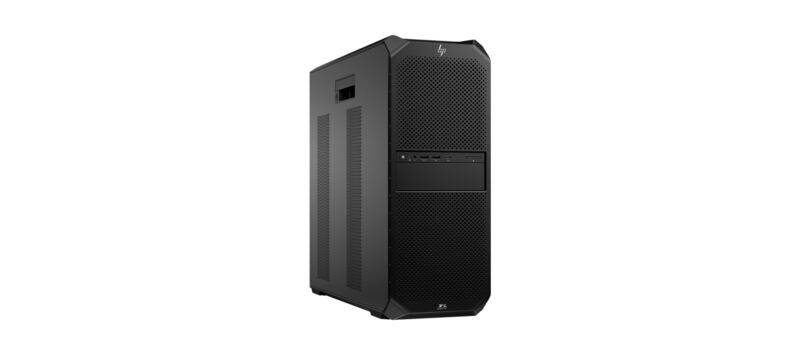
The HP Z6 G5 A is the smallest Threadripper Pro OEM workstation on the market and the rational mid-tier pick under HP's flagship Z8 Fury G5. Reviewers across PCMag, AnandTech, StorageReview, Phoronix, and DEVELOP3D consistently praised its build quality, toolless serviceability, and 96-core CPU ceiling — StorageReview gave it their 'highest recommendation for a high-end tower workstation.' For local-LLM use, configurations with 1–3 RTX 6000 Ada GPUs (48 GB VRAM each at ~960 GB/s) deliver in the 25–40 tokens/sec range on Llama-3-70B Q4 single-GPU and substantially more with multi-GPU tensor parallelism. Note that none of the published professional reviews ran formal Llama-3 70B Q4 benchmarks, so LLM-specific performance numbers here are from single-GPU norms rather than published HP Z6 measurements specifically.

Strengths
  • Smallest Threadripper Pro OEM tower on the market — compact 4U chassis with built-in handle
  • AMD Ryzen Threadripper Pro 7000 WX-Series scales from 12 to 96 cores at the same chassis price floor
  • Toolless serviceability, modular interior, ECC DDR5 — enterprise pedigree at mid-tier pricing
Watch-outs
  • 95°C all-core CPU thermals reported under sustained load (StorageReview)
  • Pricing scales steeply — 96-core configs push $18,000+
  • No published Llama 70B Q4 tokens/sec figures in mainstream reviews — LLM-specific benchmarking is thin
HP Z8 Fury G5
Ranked #4 in Best AI Workstations
HP Z8 Fury G5
$7,995as of Apr 25

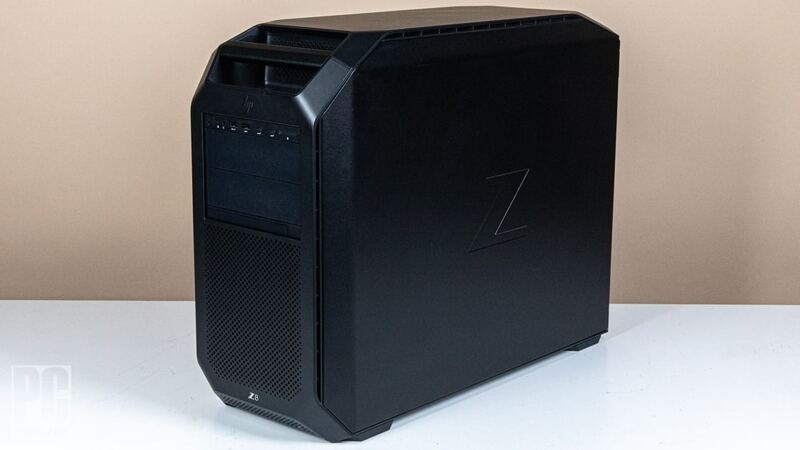
The HP Z8 Fury G5 is HP's flagship workstation — a formidable, highly scalable tower designed specifically for demanding professional media, VFX, and AI creators who need a four-GPU ceiling. Built around Intel's Xeon W9-3495X (56 cores), 128 GB DDR5 ECC, and up to four NVIDIA RTX A6000 cards, it is a credible local-LLM training and inference rig at the upper end. The configured price varies enormously: a 1-GPU base build lands around $7,995, a 2-GPU build around $14,000, and a fully loaded 4x RTX A6000 configuration pushes well past $25,000. The price field below reflects a typical 1-GPU configured build; readers planning multi-GPU AI work should expect to roughly triple that figure.

Strengths
  • Supports up to a four-GPU configuration for extreme parallel AI inference and tensor-parallel training
  • Features an easily accessible design with a built-in handle for serviceability
  • Offers a massive range of customization options for specific workloads
Watch-outs
  • Scaling up configurations becomes prohibitively expensive — 4x A6000 builds push $25,000+
  • Enormous tower chassis requires significant floor or desk space
  • Interior uses plain black plastic rather than premium materials

How they stack up

HP Z6 G5 A

The HP Z6 G5 A is the mid-tier sweet spot in this lineup. Versus the HP Z8 Fury G5 (its flagship sibling), it's a smaller chassis with the same Threadripper Pro CPU family at a noticeably lower entry price — trading the Z8's 4-GPU ceiling for a 3-GPU ceiling and a more desk-friendly footprint. Versus the Puget Genesis II, it offers similar build pedigree without Puget's bespoke configurator and handpicked components, at a meaningfully lower starting price. Versus the DGX Spark, it's a different class of machine — the HP Z6 G5 A is a multi-GPU general workstation, the Spark is a single-purpose 128 GB unified-memory dev box. Pick the HP Z6 G5 A when you need both AI horsepower and traditional workstation workloads (rendering, simulation, multi-app productivity) on the same machine.

HP Z8 Fury G5

Similar to the Dell Precision 7960 Tower, the HP Z8 Fury G5 supports four-GPU configurations for extreme parallel processing, but it differentiates itself with a built-in handle and a design prioritizing easy serviceability. Versus its smaller sibling the HP Z6 G5 A, the Z8 Fury G5 is the right pick when you genuinely need 4 GPUs (versus 3) or the Xeon W9 platform's enterprise ECC and reliability features. Versus the Puget Genesis II, the Z8 Fury G5 brings HP's enterprise service network and parts availability, while Puget brings hand-tuned assembly and a more thoughtful configurator. Versus the Apple Mac Studio M3 Ultra, the Z8 Fury G5 is twice the size and triple the price for a 1-GPU build, but unlocks training-class workloads the Mac Studio cannot touch.

Specs side-by-side

SpecHP Z6 G5 AHP Z8 Fury G5
CPUAMD Ryzen Threadripper Pro 7000 WX-Series (12–96 cores)Intel Xeon W9-3495X (56-core)
GPUUp to 3x dual-height pro GPUs (RTX A6000, RTX 6000 Ada)Up to 4x Nvidia RTX A6000 (192 GB pooled VRAM)
RAMUp to 1 TB DDR5-5600 ECC (8 channels)128 GB DDR5 ECC (configurable to 2 TB)
StorageHP Z Turbo NVMe (multiple M.2 + bays)NVMe SSD (configurable, multiple bays)
Memory Bandwidth~358 GB/s system; ~960 GB/s per RTX 6000 Ada VRAM~307 GB/s system; ~768 GB/s per RTX A6000 VRAM
Form FactorCompact 4U tower (169 x 465 x 445 mm, built-in handle)Full tower
← See the full ranking of best ai workstations