Verdict
Head-to-head · Best Capture Cards for Streaming

AVerMedia Live Gamer 4K (GC573) vs Elgato HD60 X

Which is the better buy? Side-by-side on rating, price, strengths, and watch-outs — with the published ratings we averaged to get there.

The short answer

Elgato HD60 X comes out ahead by a narrow margin (4.3 vs 4.5). The gap is mostly about the default pick for new and intermediate streamers who output 1080p60 to Twitch/YouTube and want zero setup friction — read the strengths below before deciding.

AVerMedia Live Gamer 4K (GC573)
Ranked #5 in Best Capture Cards for Streaming
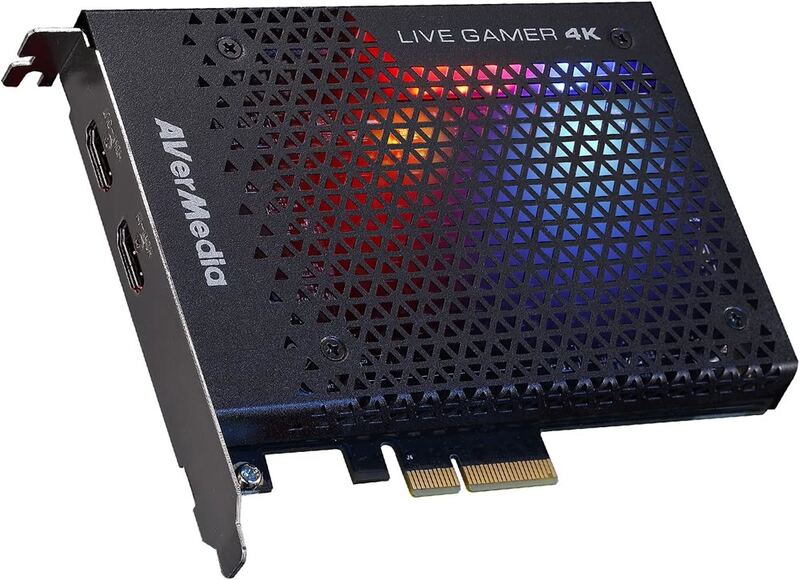
AVerMedia Live Gamer 4K (GC573)
$299as of May 19

The Live Gamer 4K is the pick for streamers running a single-PC setup with a free PCIe slot. Internal PCIe means lower CPU overhead than USB cards and zero USB bandwidth contention, which matters when you're also running USB mics, controllers, and audio interfaces. The trade-off is portability: you can't move this between rigs the way you can a Ripsaw or HD60 X. If your streaming PC is your daily driver and stays put, it's a quietly underrated pick.

Strengths
  • PCIe internal card — frees up a USB port and avoids USB bandwidth contention
  • 4K60 HDR10 capture, 4K HDR passthrough on a single PC
  • RECentral software offers more capture configuration than Elgato's lighter app
Watch-outs
  • Requires a desktop PC with a free PCIe x4 slot — laptops and consoles can't use it
  • Setup is heavier than external USB cards (case open, driver install, BIOS sometimes)
  • Streamers who use a separate streaming PC need to factor in a second machine
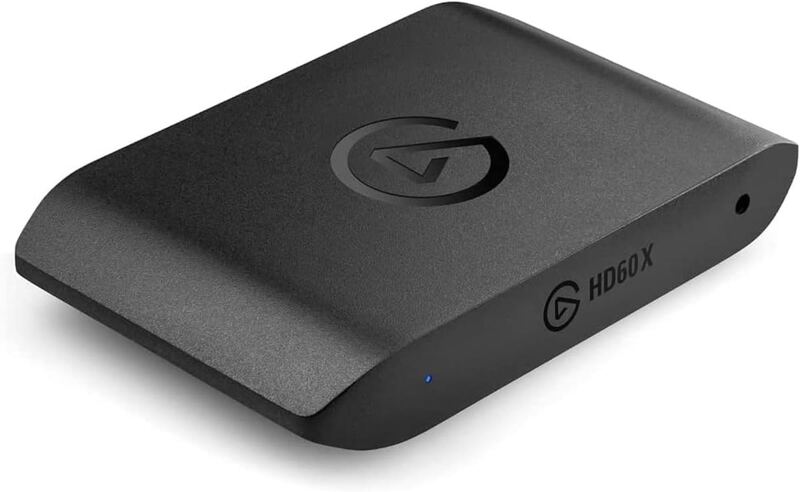
Elgato HD60 X
Higher ratedRanked #3 in Best Capture Cards for Streaming
Elgato HD60 X
$180as of May 19

The HD60 X is the volume seller for good reason — at $180, it hits the 1080p60 sweet spot that 80% of streamers actually use, with 4K60 HDR passthrough so console-attached monitors still get the full signal. Driverless setup makes it the easiest pick for first-time streamers. The 4K X is better; the Razer Ripsaw HD is cheaper. The HD60 X is the safe middle.

Strengths
  • 1080p60 HDR10 capture is the right tier for most Twitch and YouTube streams
  • 4K60 HDR passthrough so console players see the full output even though it captures at 1080p
  • Sub-100 ms latency — practical for streaming where some lag is fine
Watch-outs
  • Capture caps at 1080p60 — not the path for 4K creators
  • Older USB-C 3.0 interface (not Gen 2x2)
  • HDR capture is Windows-only

How they stack up

AVerMedia Live Gamer 4K (GC573)

Only PCIe internal pick in this lineup — the Elgato 4K X, Elgato HD60 X, AVerMedia Live Gamer Ultra S, and Razer Ripsaw HD are all external USB. Matches the AVerMedia Live Gamer Ultra S on 4K60 capture spec but trades the Ultra S's portability for internal-card-only setup. Loses to the Elgato 4K X on 4K144 capability.

Elgato HD60 X

The default 1080p streaming pick. Beats the Razer Ripsaw HD on driver maturity and 4K passthrough quality, but loses on price. Loses to the Elgato 4K X and AVerMedia Live Gamer Ultra S on capture resolution — but those start at twice the price tier. The internal AVerMedia Live Gamer 4K matches Elgato HD60 X on simplicity once installed but requires a desktop with a free PCIe slot.

Specs side-by-side

SpecAVerMedia Live Gamer 4K (GC573)Elgato HD60 X
Capture ResolutionUp to 4K60 HDR10Up to 1080p60 HDR10 (4K30)
PassthroughUp to 4K HDRUp to 4K60 HDR
InterfacePCIe x4USB-C 3.0
ConnectivityHDMI 2.0 in/outHDMI 2.0 in/out
Form FactorInternal expansion cardExternal (4.4 x 2.8 x 0.7 in)
SoftwareRECentral 4
OS SupportWindows 10/11 x64Windows (HDR), Mac
LatencySub-100 ms
← See the full ranking of best capture cards for streaming