Verdict
Head-to-head · Best Laptops For Machine Learning

Asus ROG Flow Z13 vs Razer Blade 16 with RTX 5090

Which is the better buy? Side-by-side on rating, price, strengths, and watch-outs — with the published ratings we averaged to get there.

Verdict is reader-supported. As an Amazon Associate we earn from qualifying purchases. Some links on this page are affiliate links — if you click through and buy, we may earn a small commission at no extra cost to you. Our ratings are sourced from independent publications, not sponsors.
The short answer

Razer Blade 16 with RTX 5090 comes out ahead by a clear margin (4.3 vs 3.9). The gap is mostly about Users who prioritize portability and premium aesthetics over raw thermal efficiency or ergonomic comfort — read the strengths below before deciding.

Asus ROG Flow Z13
Ranked #5 in Best Laptops For Machine Learning
Asus ROG Flow Z13
8 sources

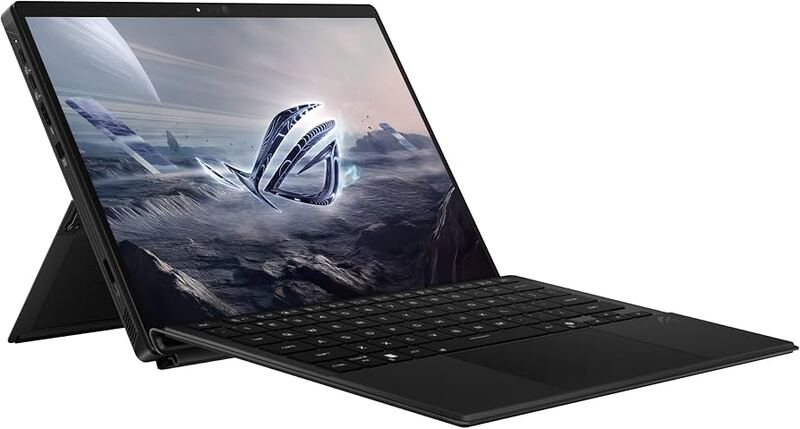
The Asus ROG Flow Z13 delivers exceptional gaming performance in a tablet chassis, leveraging its AMD Ryzen AI Max+ 395 processor and unified memory to handle demanding titles like Cyberpunk 2077 at playable frame rates. overkill.wtf found that enabling FSR3 allows the device to maintain around 60 FPS on Ultra settings when connected to power, while laptopmag confirmed robust multitasking capabilities with high Geekbench scores. The 13.4-inch display offers a sharp QHD+ resolution and smooth 180Hz refresh rate, though rtings measured peak brightness at 455 nits rather than the advertised maximum. However, the device runs hot under load and generates significant fan noise when pushed to maximum performance settings, making it cumbersome for extended handheld use due to its heavy weight of approximately 2.74 lbs. This product fits users seeking a powerful, portable workstation who can tolerate thermal constraints and acoustic trade-offs, while those prioritizing silent operation or true tablet ergonomics should look elsewhere.

Strengths
  • — AMD Ryzen AI Max+ 395 processor delivers exceptional performance, enabling playable frame rates in demanding titles like Cyberpunk 2077 and Assassin's Creed Shadows at native QHD+ resolutions.
  • — 13.4-inch IPS display offers a sharp 2560 x 1600 resolution with an exceptionally smooth 180Hz refresh rate and high brightness of up to 500 nits.
  • — Provides versatile connectivity for its size, including dual USB-C ports supporting USB 4.0/DisplayPort, a standard USB-A port, HDMI 2.1, and a microSD card reader.
Watch-outs
  • — Heavy weight of approximately 2.74 lbs (1.24 kg) makes it cumbersome to hold in tablet mode for extended periods or use on a lap.
  • — Runs hot under load and generates significant fan noise when pushed to maximum performance settings.
Razer Blade 16 with RTX 5090
Higher ratedRanked #3 in Best Laptops For Machine Learning
Razer Blade 16 with RTX 5090
10 sources

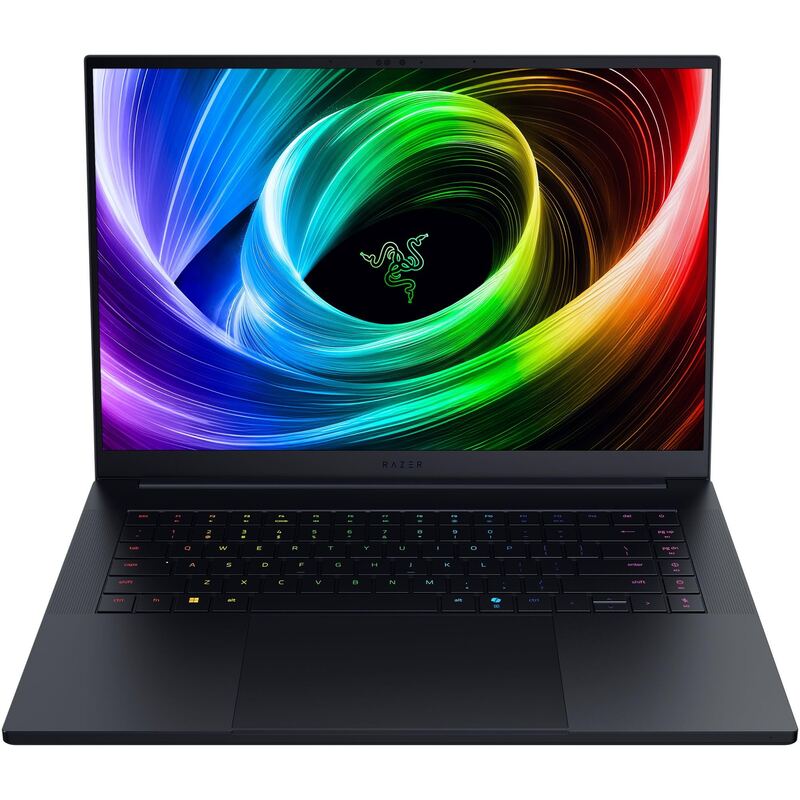
The Razer Blade 16 delivers top-tier gaming performance via the Nvidia GeForce RTX 5090 mobile GPU housed in an exceptionally thin, premium CNC-milled aluminum chassis. Ultrabookreview found that while the build quality is dense and stylish, the device suffers from noticeable flex in the keyboard deck and lid compared to past generations. The glossy OLED display offers stunning contrast and high brightness but lacks an anti-reflective coating, causing significant mirror-like reflections in bright environments. Additionally, a column of non-standard macro keys disrupts muscle memory and leads to frequent accidental presses during typing. This laptop fits users who prioritize portability and premium aesthetics over raw thermal efficiency or ergonomic comfort. Buyers seeking better value, superior battery life for all-day use, or a glare-free screen should look elsewhere.

Strengths
  • — Features a premium CNC-milled aluminum chassis that is exceptionally thin (14.9mm) and lightweight for its class at approximately 2.1kg.
  • — Equipped with a high-end OLED display offering QHD+ resolution, 240Hz refresh rate, and up to 1,100 nits peak brightness in HDR modes.
  • — Includes an extensive port selection such as Thunderbolt 5, HDMI 2.1, USB-A ports, and a UHS-II SD card reader despite the slim profile.
Watch-outs
  • — The glossy OLED screen lacks anti-reflective coating, causing significant mirror-like reflections in bright environments.
  • — Includes a column of non-standard macro keys that disrupts muscle memory and leads to accidental key presses.

How they stack up

Asus ROG Flow Z13

Unlike the stationary Asus ROG Strix Scar 18 which weighs 8.16 lbs, this tablet form factor is significantly lighter at 2.74 lb, though it still runs hot under load like its desktop-class sibling. It offers more flexible memory allocation via unified architecture compared to the soldered RAM in the Razer Blade 16 with RTX 5090, making it better suited for dynamic creative workloads.

Razer Blade 16 with RTX 5090

This laptop features an exceptionally thin CNC-milled aluminum chassis at 4.63 lb, offering better portability than the heavy Asus ROG Strix Scar 18 at 8.16 lb while delivering similar RTX 5090 performance. However, its glossy OLED screen lacks anti-reflective coating, causing more glare in bright environments compared to the matte IPS display on the Asus ROG Flow Z13.

Specs side-by-side

SpecAsus ROG Flow Z13Razer Blade 16 with RTX 5090
ProcessorAMD Ryzen AI Max+ 395Intel Core Ultra 9 / AMD Ryzen AI 9 HX 370
GraphicsRadeon 8060S iGPUNvidia GeForce RTX 5090 (155W-175W)
Display13.4-inch IPS, 2560 x 1600, 180Hz16-inch QHD+ OLED, 240Hz, up to 1100 nits HDR
Memory32 GB LPDDR5X-800032GB LPDDR5X-8000MHz (Soldered)
Storage1x 1 TB SSD (Kioxia BG6)2 TB SSD (Lite On CA6)
Weight2.74 lb4.63 lb
Battery70 Wh90 Wh
← See the full ranking of best laptops for machine learning