Verdict
Head-to-head · Best AI Workstations

Apple Mac Studio M3 Ultra vs Puget Systems Genesis II

Which is the better buy? Side-by-side on rating, price, strengths, and watch-outs — with the published ratings we averaged to get there.

The short answer

Puget Systems Genesis II comes out ahead by a clear margin (4.3 vs 4.7). The gap is mostly about Best for enterprise — multi-GPU training and inference — read the strengths below before deciding.

Apple Mac Studio M3 Ultra
Ranked #5 in Best AI Workstations
Apple Mac Studio M3 Ultra
$3,999as of Apr 25

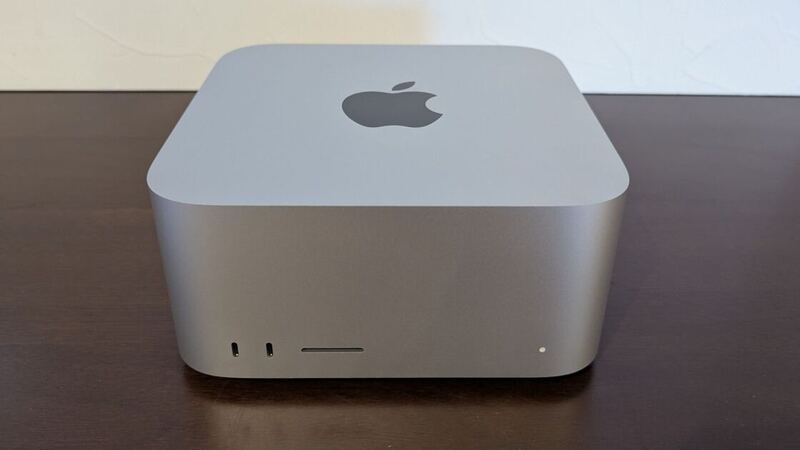
The Apple Mac Studio with the M3 Ultra chip is the highest-memory-bandwidth single-machine pick in this guide. The base 96 GB / 64-GPU-core configuration starts at $3,999 and scales up to 512 GB unified memory — enough to hold a 405B-parameter Q4 model on a single desktop. Memory bandwidth of 819 GB/s is roughly three times that of a Mac mini M4 Pro and gives the Mac Studio the fastest single-user 70B Q4 inference of any machine in this guide that doesn't have a discrete pro GPU. Reviewers across PCMag, TechRadar, Tom's Guide, and Macworld praised its compactness, silent operation, and raw performance in creative workflows; the trade-off is the closed Apple ecosystem (MLX/Metal only, no CUDA) and zero hardware upgradability after purchase. For local-LLM developers who can live within the Mac toolchain and need a 256+ GB unified memory ceiling, this is the most cost-effective path under $10,000.

Strengths
  • Up to 512 GB unified memory at 819 GB/s — the highest memory bandwidth in this entire guide
  • Compact and stylish desktop chassis (3.7 x 7.7 x 7.7 inches) with silent operation
  • Operates quietly even under heavy AI inference load
Watch-outs
  • Internal components like GPU and storage are not upgradable
  • High price for the 256/512 GB unified-memory configs that unlock 405B-class models
  • Lacks Wi-Fi 7 support
Puget Systems Genesis II
Higher ratedRanked #1 in Best AI Workstations
Puget Systems Genesis II
$10,569as of Apr 25

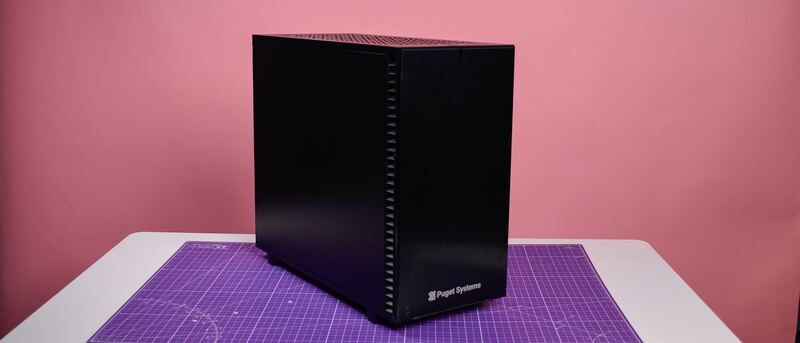
The Puget Systems Genesis II is a highly customizable, professionally built workstation aimed at enterprise buyers who need bespoke configurations the major OEMs can't match. With AMD Threadripper Pro, up to 4x RTX 4090 (or RTX Ada workstation cards), 256 GB ECC DDR4, and Puget's hand-tuned assembly process, it delivers exceptional performance and build quality with options for a quiet edition. For local LLM work specifically, a single RTX 4090 (24 GB VRAM at 1008 GB/s) handles 70B Q4 with system-RAM offload at roughly 10–20 tokens/sec; a 4x RTX 4090 configuration pools 96 GB of VRAM and easily holds 70B Q4 in VRAM at 30–40 tokens/sec via tensor parallelism. The steep entry price makes this a tool for buyers who can justify a $10K+ workstation — if you only need local LLMs, the DGX Spark below delivers comparable model-size headroom at less than half the price.

Strengths
  • Highly customizable with a wide assortment of mainstream and pro-channel components like Nvidia Ada workstation GPUs
  • Serious professional build quality with careful component selection and assembly
  • Exceptional customer experience including an easy-to-use configuration tool with detailed component comments
Watch-outs
  • Extremely expensive, with review units costing over $10,000 and configurations reaching nearly $61,000
  • Configurations with 4x RTX 4090 lose the NVLink that would have helped tensor-parallel LLM inference
  • Price can be prohibitive compared to a DGX Spark or HP Z6 G5 A for buyers whose only need is local LLMs

How they stack up

Apple Mac Studio M3 Ultra

The Apple Mac Studio M3 Ultra is the best Mac-ecosystem AI workstation and competitive on raw local-LLM throughput per dollar. Versus the DGX Spark ($4,699 / 128 GB), the base Mac Studio M3 Ultra ($3,999 / 96 GB) loses on memory ceiling but wins on memory bandwidth (819 vs 273 GB/s) — meaning faster decode tok/s on dense models that fit. Step up to a 256 GB or 512 GB Mac Studio config and you exceed the Spark's memory ceiling at higher bandwidth, at the cost of premium Apple memory pricing. Versus the multi-GPU PC workstations (Puget, HP Z6/Z8), the Mac Studio cannot match peak training throughput but is silent, half the size, and roughly half the price of an equivalent dual-GPU PC build.

Puget Systems Genesis II

The Puget Systems Genesis II is the enterprise pick. Versus the HP Z8 Fury G5, it offers comparable scale-up capability but in a quieter chassis with a more thoughtful configurator. Versus the HP Z6 G5 A, it's two tiers up in price and ceiling. Versus the NVIDIA DGX Spark, it's a different class of machine entirely — the DGX Spark is a 128 GB unified-memory dev box, the Genesis II is a multi-GPU training/inference workstation. For buyers whose only goal is running large local LLMs, the DGX Spark is the more cost-effective answer; the Genesis II earns its premium when training, fine-tuning, or multi-application workstation duty are part of the picture.

Specs side-by-side

SpecApple Mac Studio M3 UltraPuget Systems Genesis II
CPUApple M3 Ultra (up to 32-core)AMD Threadripper Pro 5975WX (32-core)
GPUIntegrated up to 80-core Apple GPUUp to 4x Nvidia RTX 4090 (96 GB pooled VRAM)
RAM96–512 GB unified memory256 GB DDR4-3200 ECC
StorageUp to 16 TB SSD4 TB Sabrent Rocket 4 Plus NVMe
Memory Bandwidth819 GB/s~76 GB/s system; ~1008 GB/s per RTX 4090 VRAM
Form FactorCompact desktopFull tower (Fractal Define 7)
← See the full ranking of best ai workstations