The HS5 is the long-running reference standard for budget nearfield monitoring. MusicRadar called it the best-sounding monitor in its price range by a mile and gave it 4.5 stars, praising imaging and high-frequency detail. Its mid-forward, brutally honest voicing is its whole appeal: it shows you problems, which is exactly what a mixing monitor should do. The trade-off is a shallow low end and a presentation that is the opposite of flattering.
Full review
Stays clear even on a cramped desk
The HS5 earned its reputation as a translation tool, and reviewers test it accordingly. MusicRadar called it the best-sounding monitor in its price range by a mile, gave it 4.5 stars, and highlighted imaging, transient response, and high-frequency detail as standouts. The most repeated practical observation is placement tolerance: where most small nearfields turn muddy on a workstation or console shelf, MusicRadar found the HS5 stays extraordinarily clear, which matters in the cramped desks most home studios actually use.
Sonarworks' measurements paint a more clinical picture. They documented a curious bass voicing with an early but shallow roll-off starting in the low midrange, reaching -3 dB at 80 Hz, plus a roughly +3 dB peak near 1 kHz that pushes voices and instruments forward. That peak is not an accident; it is the source of the mid-forward honesty engineers rely on to catch a muddy or masked midrange before a mix leaves the room.
No RCA input, only XLR and TRS
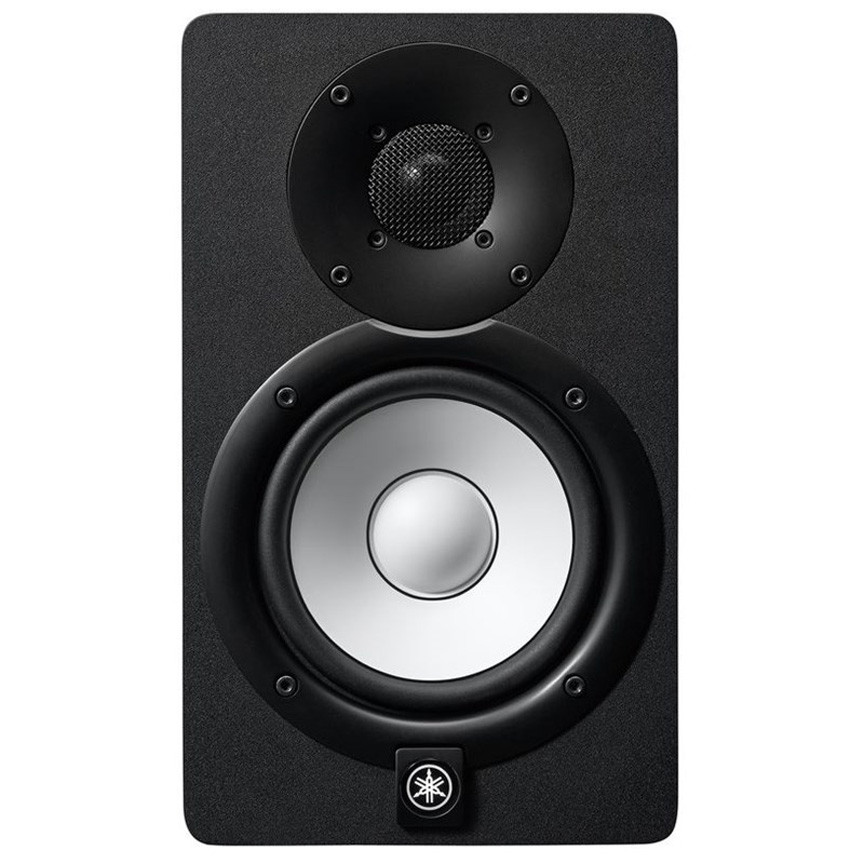
The HS5 is a 2-way bass-reflex bi-amplified nearfield monitor with a 5-inch cone woofer and a 1-inch dome tweeter, driven by separate 45W low-frequency and 25W high-frequency amplifiers for 70W total. The white-cone aesthetic is iconic enough to be a studio cliché, and the build has a deserved reputation for surviving years of daily use, which is part of why so many rooms standardize on it.
Connectivity is pro-oriented: XLR and TRS inputs, but no RCA, so connecting a consumer source means using an adapter. Rear-panel Room Control and High Trim switches let you compensate for boundary bass buildup and tame or lift the top end, the two adjustments most untreated rooms need. There is no DSP voicing system here; the HS5's character is fixed by design.
Called one of the most brutally honest 5-inch monitors
The HS5's voice is its whole identity: mid-forward, detailed, and deliberately unflattering. SoundRef called it one of the most brutally honest 5-inch monitors on the market, and that bluntness is the feature. The midrange peak Sonarworks measured exposes problems in vocals and lead instruments that smoother monitors politely hide, which makes the HS5 a superb mixing reference and a poor casual-listening speaker.
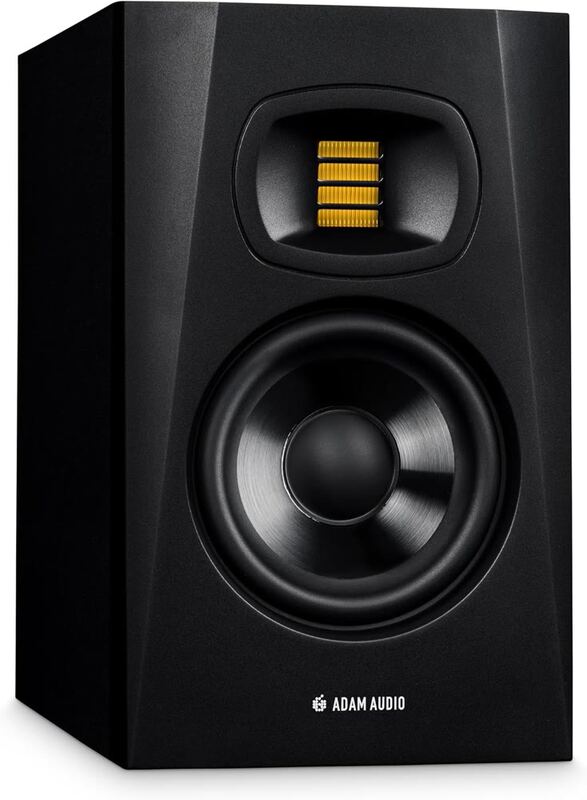
The cost of that honesty is low-end reach. Rated to 54 Hz, the HS5 rolls off earlier than the Adam Audio T5V, and Sonarworks confirmed the shallow early roll-off. Yamaha sells a matching HS8S subwoofer for a reason. In a small, untreated room Sonarworks actually found the HS5 expanded bass better than some ported rivals, but no 5-inch monitor will deliver sub-bass on its own.
Mixes translate reliably to other systems
The consistent praise is for translation and trust. MusicRadar's by-a-mile verdict and 4.5-star score reflect a monitor that engineers believe: mixes made on the HS5 tend to hold up on other systems because the HS5 hid nothing during the mix. The imaging and transient response drew specific praise, and the shelf-placement clarity is a genuine practical advantage for desk-bound producers.
Reviewers also value the HS5 as a known quantity. It is the monitor against which budget rivals are measured, including the Adam Audio T5V comparisons that recur throughout the category's coverage. Buying an HS5 means buying into a decade of accumulated mixing-reference knowledge and a huge base of people who know exactly how it sounds.
Only a one-year warranty versus the T5V's five
The HS5 is the least forgiving monitor in this group, and that is a real downside for some buyers. The mid-forward peak that makes it a great reference also makes it fatiguing for long casual sessions and can sound clinical on already-bright material. If you want a speaker that makes music sound good rather than accurate, the HS5 is the wrong tool.
Practically, the 54 Hz low-end limit is the biggest constraint; bass-forward genres demand a subwoofer to mix confidently. The lack of an RCA input is a minor annoyance for anyone feeding it from a phone or turntable, and the one-year warranty trails the Adam Audio T5V's five years. The HS5 is a specialist, not a generalist.
The reference the rest of this group is measured against
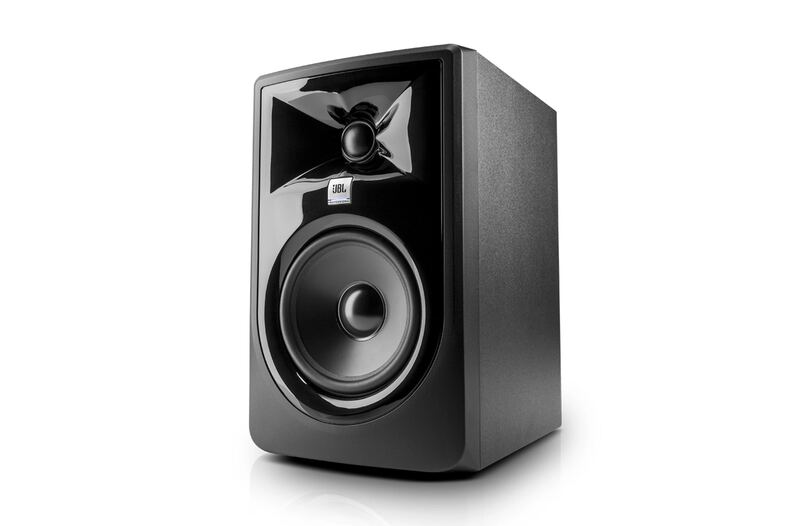
The HS5 is the reference the rest of this group is measured against, and that comparison cuts both ways. Against the Adam Audio T5V it gives up high-frequency air and low-end reach, but it counters with a mid-forward honesty that some engineers prefer for catching masking problems. Against the flattering JBL 305P MkII the HS5 is the stricter, less forgiving monitor, which is a feature for mixing and a drawback for casual listening.
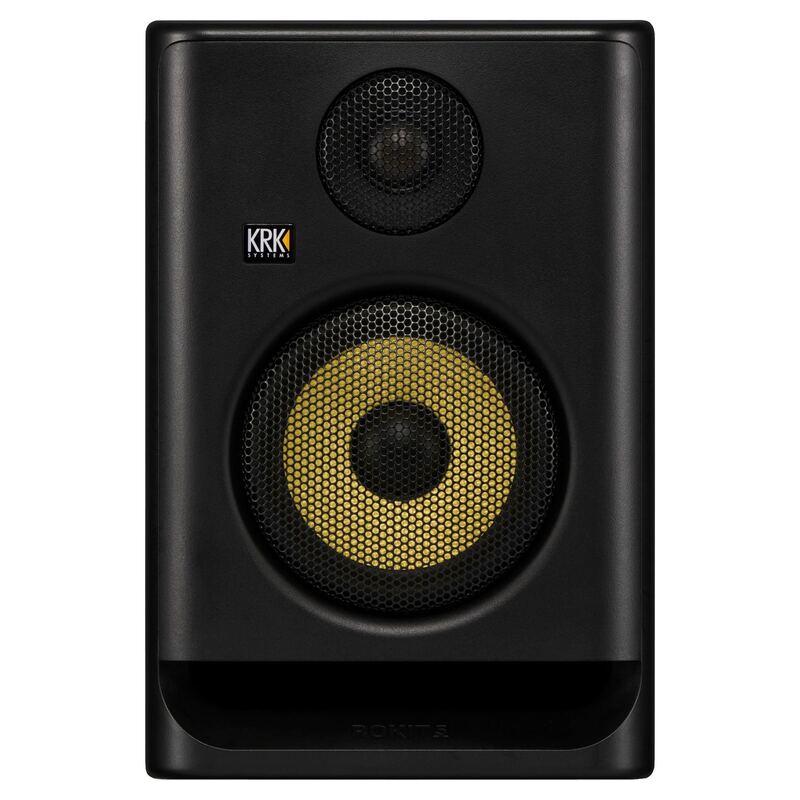
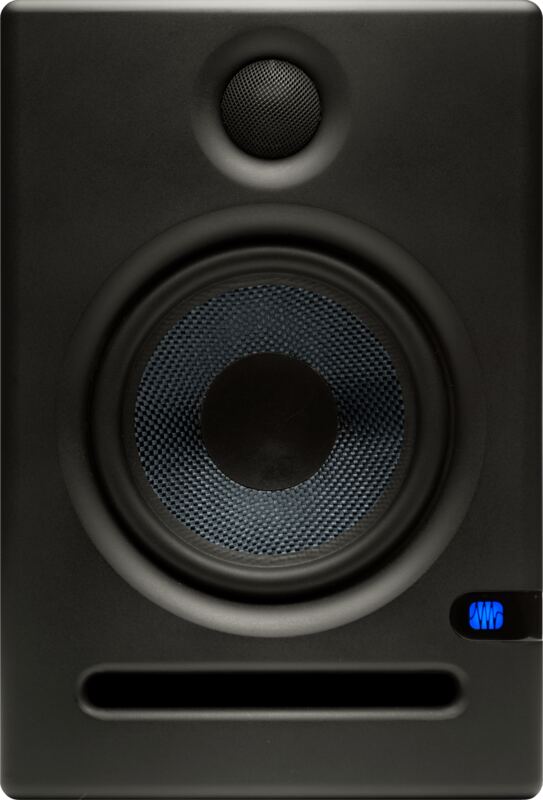
The KRK Rokit 5 G5's whole pitch, switchable DSP voicings, is the opposite of the HS5's fixed character, so the choice between them is really a choice between flexibility and a known constant. The PreSonus Eris E5 is the friendlier, cheaper alternative with onboard RCA the HS5 lacks. If you want one phrase to separate the HS5 from the field, it is consistency: a decade of engineers know exactly how it sounds, which is why it remains the default recommendation despite newer rivals.
Backed by a decade of mixing reference tutorials
The HS5's value is not about being the cheapest, it is about being the safest bet. MusicRadar's best-in-its-price-range-by-a-mile verdict reflects a monitor whose resale value, parts availability, and mixing-reference reputation are all unusually durable. Buying an HS5 is buying into an ecosystem: matching HS7 and HS8 monitors, the HS8S subwoofer, and a vast base of tutorials calibrated to its exact sound.
The catch on pure dollars is that the PreSonus Eris E5 and JBL 305P MkII often cost less per pair while reaching slightly lower in the bass. What the HS5 buys with the premium is the certainty that your mixes will translate and that you are learning on the same reference countless professionals trained on. For a serious beginner, that predictability is worth more than a marginal price saving.
Best paired with a subwoofer for bass work
Choose the HS5 if you want the genre-defining reference voicing and you are mixing in a treated or semi-treated room where its honesty pays off. It is the safe, proven pick for anyone learning to mix, because mistakes are obvious and translation is reliable. Pair it with a subwoofer if you work on bass-heavy material.
Skip it if your priority is enjoyable everyday listening or the most extended top end, where the Adam Audio T5V's ribbon tweeter wins, or if you want a single monitor that can switch voicings for both mixing and casual use, which is the KRK Rokit 5 G5's pitch. The PreSonus Eris E5 is the friendlier, easier-to-live-with alternative at a lower price.
Strengths
- +The benchmark mid-forward reference sound that exposes mix problems other monitors hide
- +Stays clear and articulate even on a console shelf where many nearfields turn muddy
- +70W bi-amped design with separate 45W LF and 25W HF amplifiers
- +Iconic white-cone build with a deserved reputation for long-term reliability
- +Room Control and High Trim switches help compensate for boundary placement
Watch-outs
- −Rated only to 54 Hz, so bass-heavy genres really need a subwoofer
- −The mid-forward voicing is unforgiving and can sound clinical or fatiguing
- −Sonarworks measured a +3 dB peak near 1 kHz that colors the midrange
- −No RCA input, so consumer-source connection needs an adapter
How it compares
The industry-standard mid-forward reference. It does not reach as low as the Adam Audio T5V (45 Hz) and lacks the ribbon-tweeter air the T5V offers, but its midrange honesty exposes mix issues more bluntly than the smoother PreSonus Eris E5 or the flattering JBL 305P MkII. The KRK Rokit 5 G5 offers DSP voicings the fixed-character HS5 deliberately does not.
Rating sources
“the best-sounding monitor in its price range by a mile”
“one of the most brutally honest 5 inch monitors on the market”
Our 4.4 score is the average of these published ratings. Ratings marked * were derived from the reviewer’s written analysis or video transcript — the publisher didn’t print an explicit numeric score, so we inferred one from their own words. Click through to verify. More about methodology.