The TaylorMade TP5 2026 golf ball utilizes a five-piece urethane construction to deliver exceptional greenside spin, consistently producing over 7,000 RPMs on partial wedge shots according to Golferhive. This performance is paired with a soft acoustic feel and high durability that resists shearing during aggressive bunker play, though Breakingeighty notes the premium pricing at $58 per dozen makes losing balls an expensive habit. The enhanced spin can lead to slight distance loss off the driver for high-speed swingers compared to firmer alternatives. This ball fits golfers prioritizing short-game control and consistency, while fast swingers seeking maximum distance should look elsewhere.
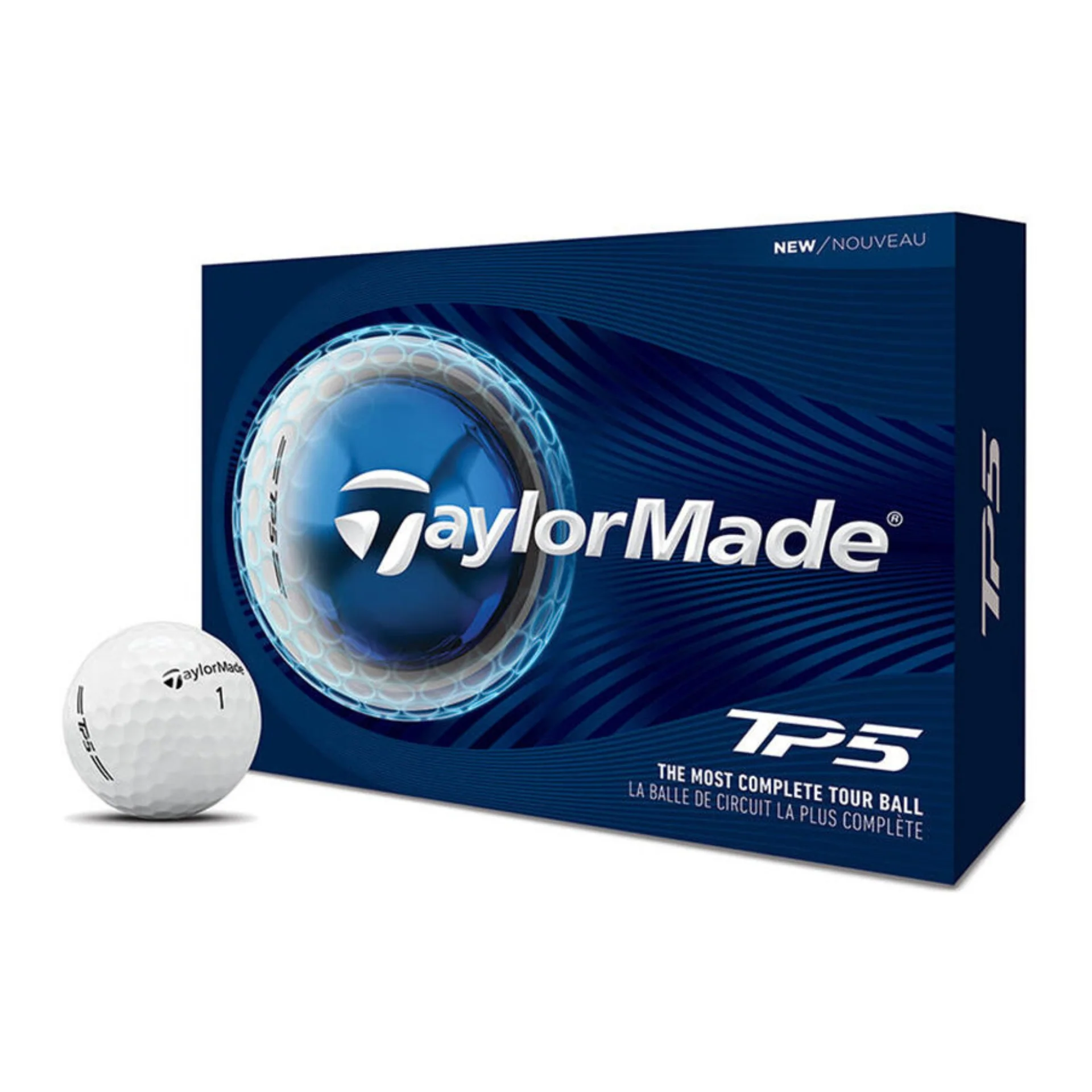
Full review
Five-layer construction and Tour Flight dimple pattern
The TaylorMade TP5 2026 golf ball utilizes a five-piece urethane construction designed to separate performance metrics across different clubs. Golferhive recorded that the Speed-Wrapped Core creates an incredibly muted acoustic feel on lag putts, while the sub-micron cover durability easily survived 36 holes of heavy sand play without tearing. This complex architecture includes three layers in the center and two outer layers, a configuration TaylorMade markets as providing progressive levels of compression to maximize energy transfer from driver to wedge.
Aerodynamic performance relies on the Tour Flight dimple pattern, which Nationalclubgolfer noted produces a more penetrating ball flight than previous iterations. The updated production methods addressed issues with excess paint that previously affected consistency, resulting in a smoother surface profile. This refinement allows the ball to maintain stability through the air while preserving the soft cast urethane cover required for greenside control.
Greenside spin exceeding 7,000 RPMs on wedges
Golferhive measured exceptional greenside spin performance, consistently registering over 7,000 RPMs on partial wedge shots during a 45-day evaluation period. The dual-spin shield design forces the soft urethane cover into wedge grooves to generate maximum friction and stopping power. This level of spin allows mid-to-low handicappers to attack short-sided pins with confidence, knowing the ball will produce a predictable one-hop-and-stop reaction on firm greens.
Soft acoustic feel on milled putters
The Speed-Wrapped Core delivers a notably soft acoustic profile that Golferhive rated highly for its muted response on lag putts. This acoustic feedback provides satisfying confirmation of strike quality without crossing into mushy territory. The specific compression rating of 83, as listed in the product specifications, positions the TP5 between softer and firmer tour alternatives, offering a balanced tactile experience across all short-game shots.
Durability resisting wedge groove shearing
Golferhive found that the cast urethane cover resists wedge groove shearing and maintains structural integrity through aggressive bunker play. The sub-micron durability of the outer layer allowed the ball to survive 36 holes of heavy sand usage without tearing or significant cosmetic degradation. This robustness addresses a common complaint among premium tour balls, where high spin generation often comes at the expense of cover longevity.
Higher driver spin impacting distance for fast swingers
The enhanced greenside spin characteristics of the TP5 occasionally lead to slight distance loss off the driver for high-speed swingers. Golferhive noted that this higher driver spin compared to firmer distance alternatives can balloon ball flight in windy conditions, reducing total carry. Players with elite swing speeds may find they lose marginal distance compared to lower-spinning options like the TP5x.
Premium pricing at $58 per dozen
Breakingeighty reported that the TaylorMade TP5 costs around $58 per dozen, placing it in direct competition with other premium tour-level offerings. This price point makes losing balls an expensive habit for golfers who frequently find their way into rough or water hazards. The investment is justified by the ball's comprehensive performance profile and durability, but it requires a level of consistency to offset the financial risk.
Quality control metrics from MyGolfSpy
Each individual ball compressed evenly across measurement points, demonstrating tight tolerances in production.
Visual alignment aids on pix graphics
Golfmagic highlighted that the TaylorMade TP5 pix variant features ClearPath Alignment technology co-developed with Rickie Fowler. This system positions a single logo and stamp perfectly aligned to form a natural pathway through the center of the ball, framed by twelve multi-color graphics. The design provides immediate feedback on putt quality, showing a clearing in the middle when the ball rolls end-over-end.
Strengths
- +Delivers exceptional greenside spin, consistently producing over 7,000 RPMs on partial wedge shots according to Golferhive.
- +Features a soft acoustic feel on milled putters and forged irons that provides satisfying feedback without feeling mushy.
- +Highly durable cast urethane cover resists wedge groove shearing and survives aggressive bunker play across multiple rounds.
Watch-outs
- −Premium pricing makes losing balls an expensive habit, with a street price around $58 per dozen noted by Breakingeighty.
- −Produces slightly higher driver spin compared to firmer distance alternatives, which can lead to marginal distance loss for high-speed swingers.
How it compares
While both are premium urethane balls, the TP5's five-piece construction offers higher durability against wedge grooves compared to the softer feel of the TaylorMade Tour Response.
Rating sources
Counts as 4.34/5 in our score — this publisher's 6 scores on the site average 4.47, so its scores are adjusted down to compare fairly with other publishers.
Counts as 4.83/5 in our score — this publisher's 2 scores on the site average 4.75, so its scores are adjusted down to compare fairly with other publishers.
Our 4.6 score is the average of the 4 scored reviews above, each adjusted for how strictly its publisher scores; 5 more reviewed it without printing a score and are not in the average. More about methodology.