The Taylor Mechanical Scale operates entirely without batteries or electricity using a spring mechanism, offering reliable performance in off-grid situations where power failures might disrupt digital models (ShopAtDean). It features an antimicrobial housing and shatterproof dial lens for enhanced durability, along with dual-unit measurement on the dial face for clear ounces/grams and pounds/kilograms readings. However, it lacks an electronic tare function, requiring manual adjustment to zero out container weight, which can be cumbersome during multi-ingredient prep. Additionally, mechanical spring design may lose accuracy over time due to wear or loss of tension, and dial readings can suffer from parallax error and are less precise for very small measurements compared to digital models (AWScales). This scale fits users who prioritize portability and low maintenance for portion control but should be avoided by those needing high-precision baking or convenient tare functionality.
Full review
Spring mechanism and zero-power operation
ShopAtDean explains that mechanical scales operate through a spring system where the flat top sits above a compressed spring, which pulls additional springs to move dials for weight readings. This design eliminates any need for batteries or electrical outlets, making the device entirely portable and immune to power failures in busy kitchens. The absence of electronic components means there are no digital displays to burn out or sensors to fail when exposed to moisture, offering a level of reliability that battery-dependent models cannot match.
The mechanical nature of this scale provides a straightforward user experience where weight is translated directly into physical dial movement without software lag or calibration drift common in cheaper electronics. Users who prefer tactile feedback and instant readings appreciate the simplicity of placing an item on the platform and immediately seeing the result. This reliability makes it particularly suitable for environments where consistent power is not guaranteed or where rapid, uninterrupted use is required.
AWScales notes that while digital scales offer advanced features like data storage and connectivity, mechanical models provide moderate accuracy with significantly lower upfront costs and no maintenance related to electronic components. The trade-off involves accepting the limitations of analog measurement in exchange for a device that will function indefinitely as long as the physical springs retain their tension. This makes it an attractive option for users who view a scale as a permanent kitchen fixture rather than a temporary gadget.
16 oz capacity and 0.25 oz measurement increments
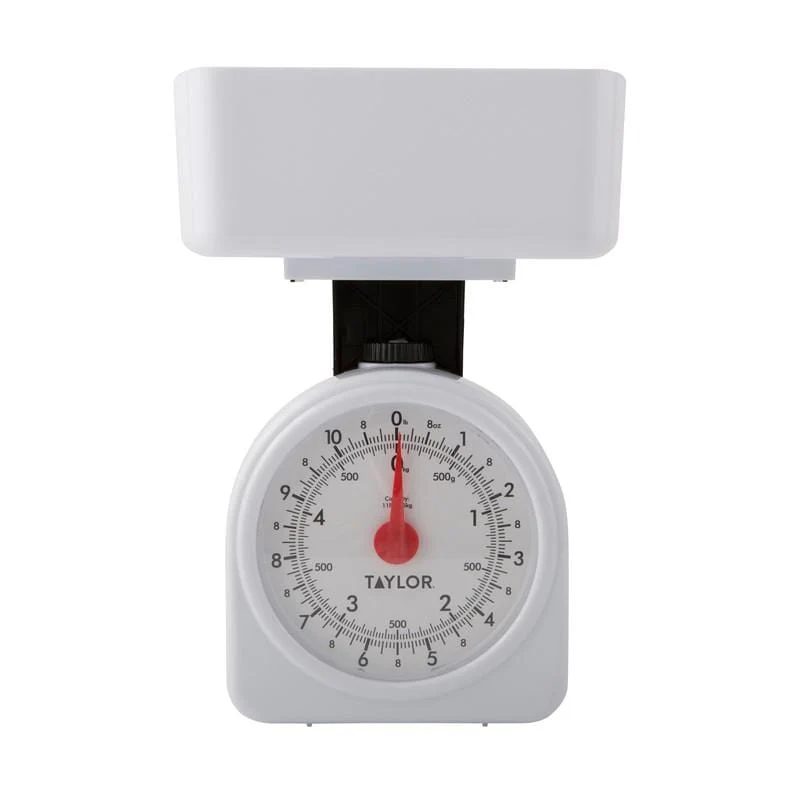
Webstaurantstore found that the Taylor TP16 features a maximum capacity of 16 ounces with measurement increments displayed in one-quarter ounce steps, accompanied by a secondary line for gram measurements. This specific range makes it ideal for portion control tasks such as weighing cheese, herbs, or small batches of ingredients where precision at the lower end of the scale is more critical than measuring heavy loads. The dual-unit dial face allows users to switch between imperial and metric readings without needing to perform manual calculations.
For commercial kitchens or home bakers who frequently measure small quantities of expensive spices or leavening agents, the one-quarter ounce increment offers sufficient granularity to maintain recipe consistency without the complexity of digital interfaces.
While some mechanical scales offer higher capacities for weighing entire roasts or large batches of dough, this model focuses on precision at the lighter end of the spectrum. The limited capacity means it is not suitable for weighing heavy cookware or bulk ingredients, but its specialized design ensures that every quarter-ounce increment is clearly marked and easily readable on the analog dial.
Antimicrobial housing and shatterproof lens durability
Webstaurantstore highlights the inclusion of an antimicrobial housing and a shatterproof dial lens, features designed to enhance sanitation and longevity in high-traffic kitchen environments. The stainless steel construction resists corrosion from acidic foods or frequent washing, while the protective lens ensures that the internal mechanism remains visible even if subjected to accidental impacts. These durability features make it well-suited for commercial establishments where hygiene standards are strict and equipment must withstand daily abuse.
The angled dial face improves readability by allowing users to view measurements without having to lean over or adjust their position, reducing eye strain during prolonged prep sessions. The combination of a robust physical build and sanitary materials means the scale can be wiped down quickly between uses without fear of water damage affecting internal electronics, unlike many digital alternatives that require careful drying.
This focus on durability extends to the internal stop mechanism, which provides fast and accurate readings by preventing the dial from overshooting when heavy items are placed abruptly. The mechanical design inherently avoids the fragile circuit boards found in electronic scales, making it a long-term investment for users who prioritize equipment longevity over digital convenience features.
Manual tare adjustment limitations
Unlike digital models that offer an instant tare function to zero out container weight with the press of a button, this mechanical scale requires manual adjustment to account for bowl or plate weights. Users must physically rotate a dial knob to reset the needle to zero before adding ingredients, which adds a step to the weighing process and can be cumbersome when measuring multiple components sequentially.
This lack of an electronic tare function is a common trade-off in analog scales, as it eliminates the need for complex internal circuitry but sacrifices speed during multi-ingredient recipes. For users who frequently weigh items in containers, this manual reset requires more attention to ensure accuracy, as failing to zero out the container weight will result in incorrect measurements of the actual food product.
The mechanical tare knob is generally reliable and easy to operate once familiar with its placement, but it does not offer the precision or convenience of a digital push-button interface. Users accustomed to modern kitchen gadgets may find this process slower, though it remains effective for single-ingredient weigh-ins where container weight is less of a concern.
Parallax error and small measurement accuracy
AWScales points out that mechanical scales are dependent on a needle pointing to a dial, which can lead to reading mistakes due to viewing angle or lighting conditions. This parallax error means that users must position themselves directly in front of the scale to get an accurate reading, and slight misalignments can result in over- or under-measuring ingredients by a fraction of an ounce.
For very small measurements below one ounce, the spacing between quarter-ounce increments on the dial face makes it difficult to estimate precise weights accurately. While digital scales can display exact gram values down to single digits, this analog model requires users to visually interpolate between marks, which may not satisfy culinary needs that demand high precision for delicate baking recipes or scientific measurements.
Despite these limitations, the scale remains effective for general cooking tasks where minor variations in weight do not significantly impact the final outcome. The clear markings on the dial help mitigate reading errors for standard portions, but users requiring laboratory-grade accuracy should consider digital alternatives with higher resolution displays.
Suitability for commercial portion control
Webstaurantstore rates this scale highly for its ability to help control food costs and portion sizes accurately in both home and commercial settings. Its compact size allows it to fit easily on crowded prep tables without taking up excessive space, while the durable construction ensures it can handle the rigors of daily use by multiple staff members.
The straightforward operation means that new employees or temporary kitchen help can learn how to use it immediately without needing training on digital interfaces or battery management. This ease of use reduces the likelihood of user error and ensures consistent portioning across all dishes, which is critical for maintaining recipe standards and controlling food waste in professional kitchens.
For establishments looking for a reliable, low-maintenance tool to enforce portion control policies, this mechanical scale offers a cost-effective solution that does not require ongoing investment in batteries or electronic repairs. Its focus on core weighing functionality makes it a practical choice for businesses where simplicity and durability are valued over advanced digital features.
Strengths
- +Operates entirely without batteries or electricity using a spring mechanism, making it reliable in off-grid situations.
- +Features an antimicrobial housing and shatterproof dial lens for enhanced durability and sanitation.
- +Provides dual-unit measurement on the dial face with clear markings for both ounces/grams and pounds/kilograms.
Watch-outs
- −Lacks an electronic tare function, requiring manual adjustment to zero out container weight.
- −Mechanical spring design may lose accuracy over time due to wear or loss of tension.
- −Dial readings can suffer from parallax error and are less precise for very small measurements compared to digital models.
How it compares
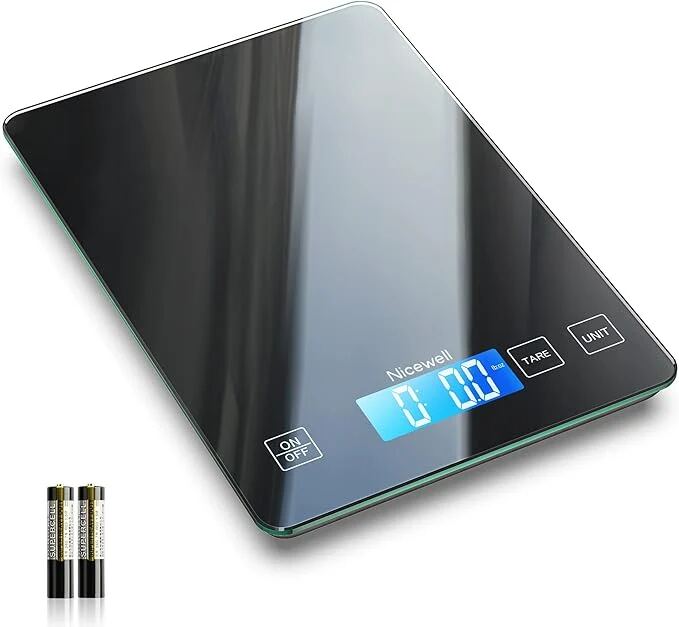
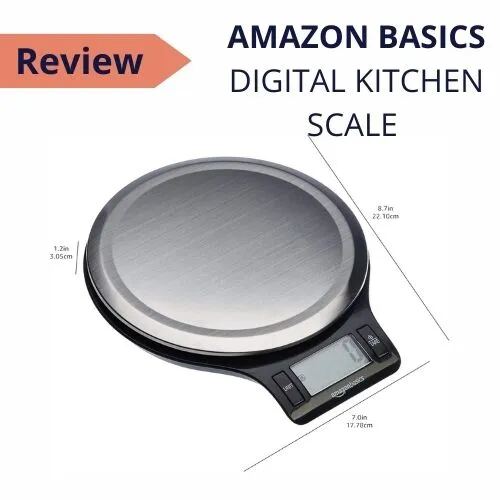
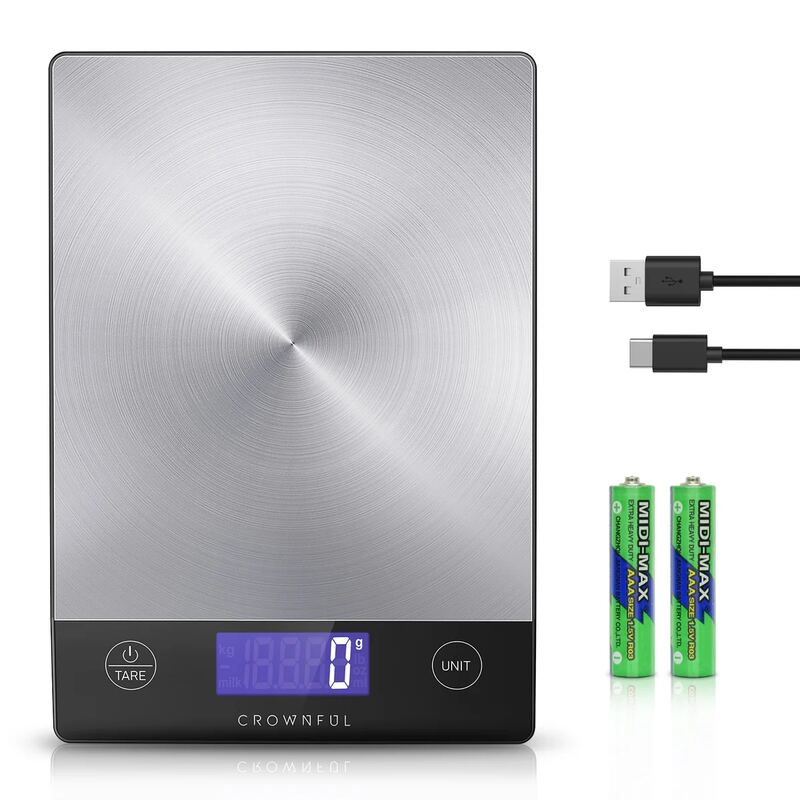
The Taylor Mechanical Scale operates without batteries or electricity, unlike all other digital models listed such as the Amazon Basics and CROWNFUL scales. It has a much lower maximum capacity of 1 pound compared to the multi-pound limits of the electric competitors and lacks an electronic tare function, requiring manual adjustment instead.
Rating sources
“This scale is perfect for weighing portions of cheese. That is the primary use in our cafe for the Taylor scale. It is priced right, functional and accurate.”
Our 4.0 score is the average of the 1 scored review above; 5 more reviewed it without printing a score and are not in the average. Ratings marked * were derived from the reviewer’s written analysis or video transcript — the publisher didn’t print an explicit numeric score, so we inferred one from their own words. Click through to verify. More about methodology.